








 Contact Platform Support
 Help Center
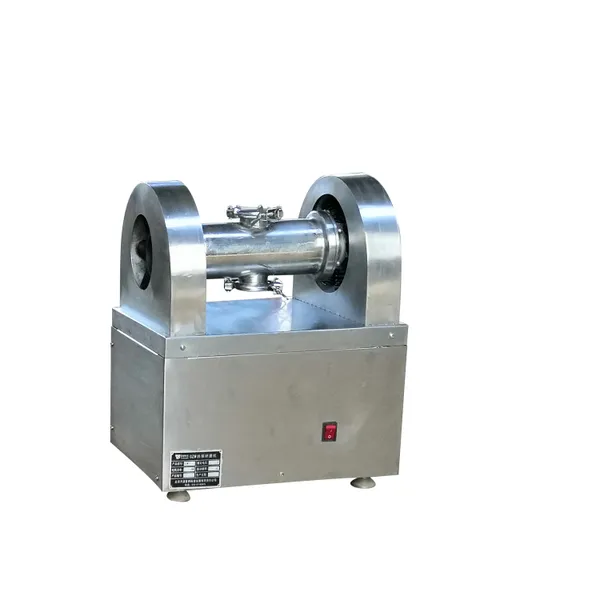
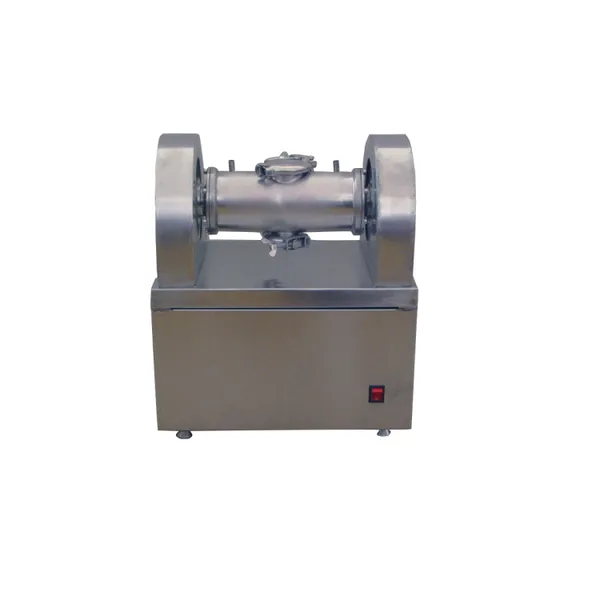
Resonance Mill-Ultrafine Grinding Mill
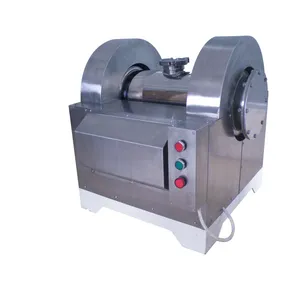
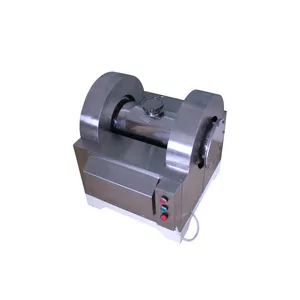
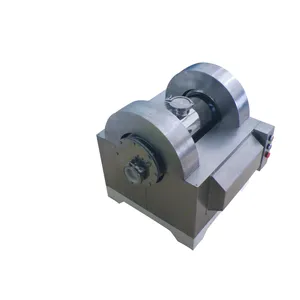
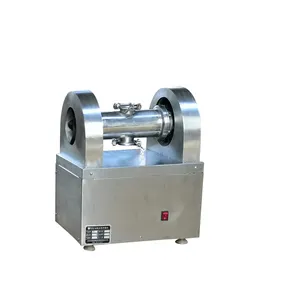
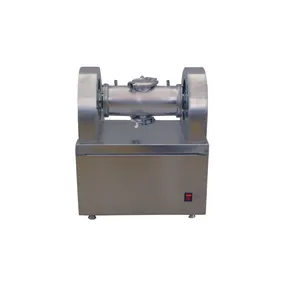
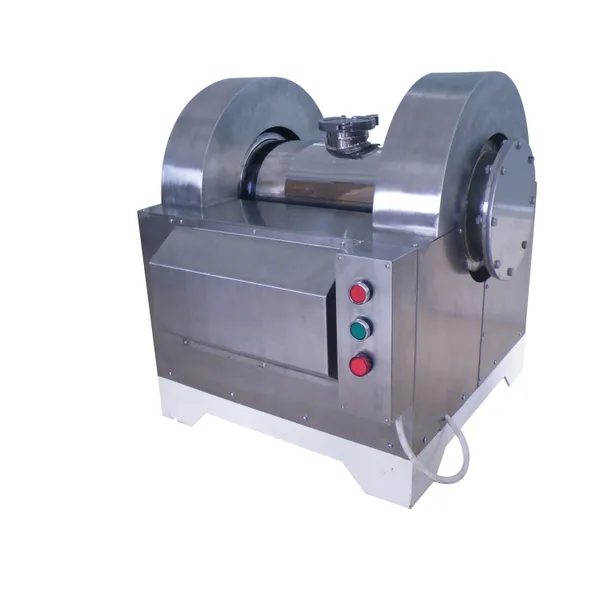
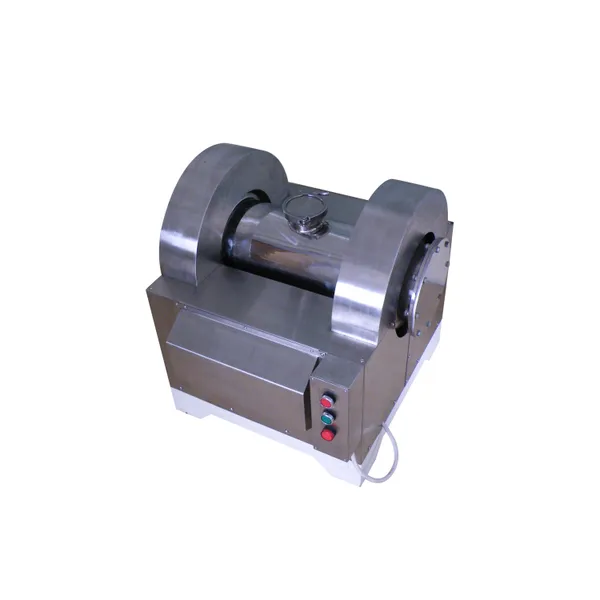
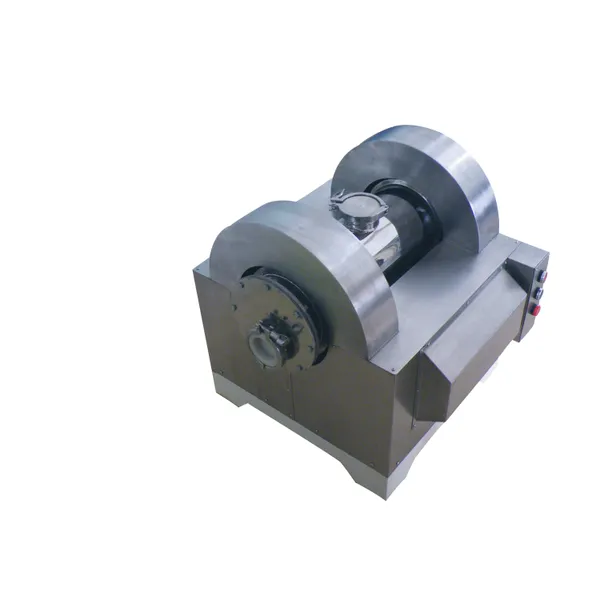
Product Spotlights
2、The second technical advantage is high-efficiency ultrafine grinding with uniform particle size and regular particle shape.


Related Products
-
 Resonance Mill-Ultrafine Grinding MillNegotiableMOQ: 10 Pieces
 -
2015 Well-made and Most Resonable Vegetable Edible Palm Oil Processing Machine | Palm Oil MillUS$ 6,900 - 7,200MOQ: 1 Set
-
Resonable Design Barley Milling EquipmentUS$ 5,000 - 100,000MOQ: 1 Set
-
Resonable Design Rice Flour Milling EquipmentUS$ 5,000 - 100,000MOQ: 1 Set
-
Vibrating Pulverizer Metallurgical Vibrating Mill Vibration Grinding Machine PriceUS$ 5700 - 6000MOQ: 1 Set
Resonance Mill
Working Principle of the Resonance Mill
The resonance mill is a new generation of ultrafine grinding equipment designed based on the high-frequency resonance theory, suitable for producing various micron-sized and nano-sized powders.Its grinding principle is to generate high-frequency vibration through an inertial exciter, exciting the grinding assembly to resonate at a frequency ratio close to 1. The grinding media and materials perform three-dimensional circular vibration at the same frequency.Vibration energy is transmitted into the grinding cylinder, creating a high-speed swirling energy field with a maximum acceleration force of up to 45g (compared to only 1g for conventional ball mills).The grinding media and materials collide, compress, and grind against each other under vibration, while rotating along the cylinder wall as a whole.Due to centrifugal force, the media and materials in the central zone of the cylinder are pressed toward the wall, forming a centrifugal force field.Under the effect of the dual force fields, the media and materials move irregularly in a vortex pattern.During this movement, materials are subjected to impacts, collisions, shearing, compression, and grinding at frequencies dozens of times higher than the excitation frequency, enabling rapid refinement and decomposition, ultimately producing micron-sized or nano-sized powder particles.
Technical Advantages of the Resonance Mill
The primary advantage of the resonance mill is low energy consumption, energy efficiency, and reduced grinding costs. A single 200 kW resonance mill can achieve an output equivalent to a 600 kW ball mill, delivering significant energy-saving benefits.
The second technical advantage is high-efficiency ultrafine grinding with uniform particle size and regular particle shape.In conventional ball milling, grinding media roll and cascade under 1g gravitational acceleration, with only 50–100 cycles per minute.In contrast, the resonance mill enables grinding media to collide and impact at multiple times gravitational acceleration within a range of just a few millimeters, at approximately 1,000 cycles per minute.This difference in grinding mechanism results in high energy density and efficiency, making it far more suitable for ultrafine comminution and grinding.
The resonance mill adopts an annular spring structure, ensuring uniform force distribution in all 360° directions during circular vibration of the grinding assembly.This provides consistent and continuous grinding force on the media and materials inside the cylinder.Compared with vibrating equipment supported only by unidirectional springs, it generates a larger turning moment, allowing full tumbling and mixing of grinding media and materials, thus significantly improving grinding thoroughness and efficiency.
Conventional vibrating grinding equipment often suffers from short bearing life, cracking of welded structures, and excessive vibration impact on the foundation.The resonance mill effectively solves these problems, or inherently avoids such defects.
Features of the Resonance Mill
Low energy consumption and high grinding efficiency.With its vibration frequency close to the resonance point, large vibration energy can be obtained with a small exciting force, reducing system resistance and improving energy utilization efficiency.
Fine particle size enabling nano-scale comminution.The resonance mill completes multiple collisions and compressions within a small space in a short time.The combined effect of high-frequency impact, collision, extrusion, and grinding rapidly refines powder particles into regular and uniform shapes.
Low abrasion.It adopts a grinding mode dominated by impact and collision, supplemented by extrusion grinding.This reduces direct wear between grinding media and liners, resulting in low wear and low heat generation.
Compact structure, small footprint, and strong applicability.The resonance mill can grind both high-hardness materials and tough fibrous materials.It supports both dry and wet grinding, and can perform special grinding processes including cryogenic grinding, vacuum grinding, and inert gas-protected grinding.
Application Fields of the Resonance Mill
The resonance mill is widely used for ultrafine comminution and grinding across various industries, including minerals, coal, industrial solid waste, cement, soil, ceramics, plant fibers, pharmaceuticals, and food.
Non-metallic minerals such as talc, heavy calcium carbonate, and quartz are processed into ultrafine powders using the resonance mill.
Graphite, lithium iron phosphate, electronic materials, rare earths, and other materials are micronized or nano-milled using the resonance mill.Both dry and wet nano-grinding are available, with excellent suitability for high-concentration, large-volume wet grinding.
Industrial solid wastes including fly ash, slag, steel slag, gypsum, and tailings can be modified via ultrafine grinding in the resonance mill and reused in various products, turning waste into valuable resources.
Resonance Mill Models
| Model | GZM5 | GZM10 | GZM50 | GZM300 | GZM1500 | GZM6000 |
|---|---|---|---|---|---|---|
| Grinding Capacity | 3 L | 10 L | 50 L | 350 L | 1500 L | 5800 L |
| Motor Power | 0.1 kW | 0.25 kW | 0.5 kW | 11 kW | 60 kW | 260 kW |
| Machine Weight | 30 kg | 60 kg | 160 kg | 2800 kg | 8000 kg | 50000 kg |
| Reference Output | 50–200 g | 1–5 kg | 10–20 kg | 100–500 kg | 1–8 T | 20–30T |

Send Inquiry to This Supplier


You May Also Like
-
Vibrating Ball Mill/Vibration MillingUS$ 180 - 9,800MOQ: 1 Set
-
Vibrating MillUS$ 1,500 - 30,000MOQ: 1 Set
-
Vibration Mill Lab Vibrating Mill for Rock Ore/metal PowderUS$ 1,600 - 2,000MOQ: 1 Set
-
Low Vibration Long Service Life ZD60 Ball Mill Reducer Mineral Processing EquipmentNegotiableMOQ: 1 Piece
-
Seires HMZ Vibration MillNegotiableMOQ: 1 Set
-
Tianyu 2ZM Series of Vibration Milling Machine With Great Vibration IntensityUS$ 2,000 - 20,000MOQ: 1 Set
-
MR100 Grinding Mill Low Vibration Milling Machine Working PrincipleUS$ 10000 - 200000MOQ: 1 Set
-
Super Fine Crushing and Vibrating Mill For GanodermaNegotiableMOQ: 1 Set
-
High Efficiency Vibrating Mill in Uzbekistan for SaleUS$ 4500 - 28000MOQ: 1 Set
-
On Sell! the Finestand Cheapest Vibration Mill on SellUS$ 10,000 - 10,000MOQ: 1 Set


