Contact Platform Support
 Help Center
Cutting of 316 Stainless Steel Special-shaped Parts | Flanges/filter Screens for Chemical Equipment, Corrosion-resistant Processing


Related Products
-
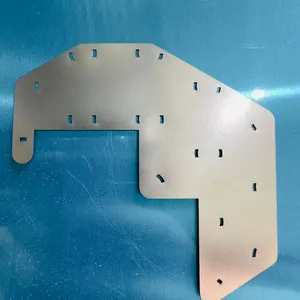
 304 Stainless Steel Laser Cutting | Customized Shelf Brackets / Chassis Enclosures With Right Angles / Round HolesNegotiableMOQ: 0 Kilogram
 -
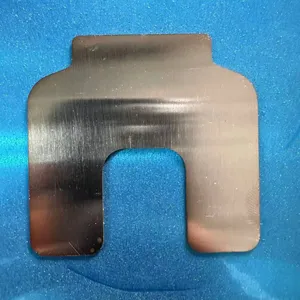
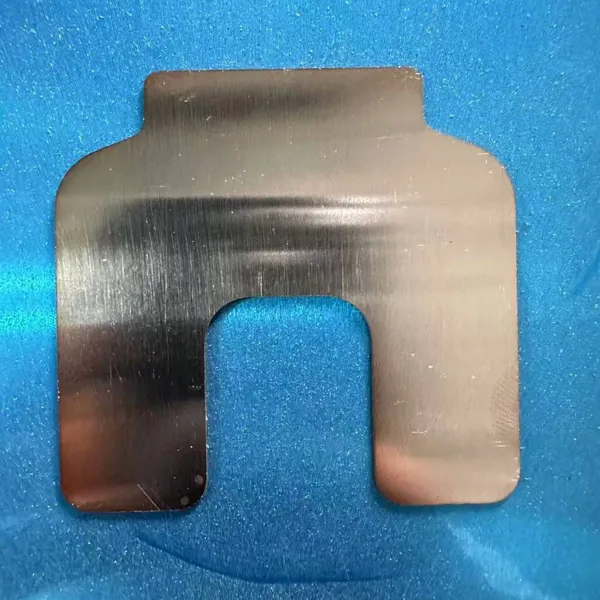
316 Stainless Steel Laser-cut U-shaped Card Slot, Profile Cutting and BendingNegotiableMOQ: 0
-
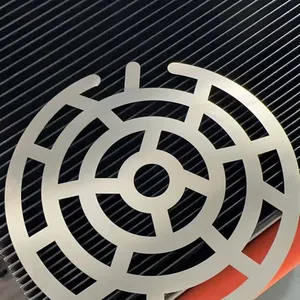
Laser-cut and Hollowed-out Filter Mesh With High-precision HolesNegotiableMOQ: 0
-
Laser Cutting of Stainless Steel Sheets | Customized Hollow Carved Kitchenware Panels / Decorative LatticeworkNegotiableMOQ: 0
-
Extra-large Format Laser Cutting Factory | 3m × 1.5m Sheet Metal Full Sheet ProcessingNegotiableMOQ: 0
316 Stainless Steel Special-shaped Parts Cutting | Corrosion-resistant Processing of Chemical Equipment Flanges/Filter Screens. Don't Fall into These Traps!
Hello, everyone. I'm Lao Zhou. I've been in the stainless steel processing industry for 15 years. Recently, I've taken on a lot of projects involving 316 stainless steel, especially those "tough nuts" like chemical equipment flanges and filter screens. Today, I'll talk to you about the know-how of cutting 316 stainless steel special-shaped parts, and also share some tips on how to choose a manufacturer. You won't lose out after reading this!
What makes 316 stainless steel so powerful?
Many people can't tell the difference between 304 and 316. Actually, it's quite simple: 316 is more corrosion-resistant than 304.
304 stainless steel works fine in ordinary environments, but it's not up to the mark in fields like chemical, marine, and pharmaceutical industries. 316 stainless steel contains molybdenum, which significantly improves its resistance to acids, alkalis, seawater, and high temperatures. So, whenever it comes to chemical equipment or corrosive media, choosing 316 is the right call.
"We're in the chemical reaction business. We used 304 flanges before, and they perforated in less than a year. After switching to 316, they've been working fine for 3 years." - Engineer Wang, the equipment supervisor of a chemical plant
Why do chemical equipment flanges stump so many manufacturers?
Chemical flanges may seem simple, but there are actually a lot of subtleties:
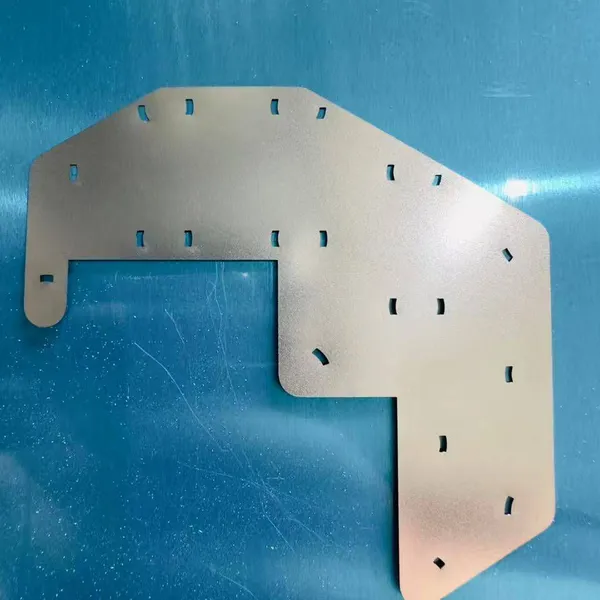
Special-shaped holes: They're not standard round holes. They could be oval, rectangular, or slotted. Traditional stamping can't handle them at all.
Sealing surface processing: The sealing surface of a flange requires extremely high smoothness. Even a slight burr could cause leakage.
High temperature and pressure: Chemical equipment often operates under high temperature and pressure. The material strength and dimensional accuracy can't be compromised at all.
Special materials: Special stainless steels like 316L (low-carbon 316) and 904L are also frequently used, which makes the processing even more difficult.
This is where the advantages of laser cutting come in: high precision, free shape, and a small heat-affected zone, perfectly meeting these "non-standard" requirements.
Cutting filter screens is a real technical challenge
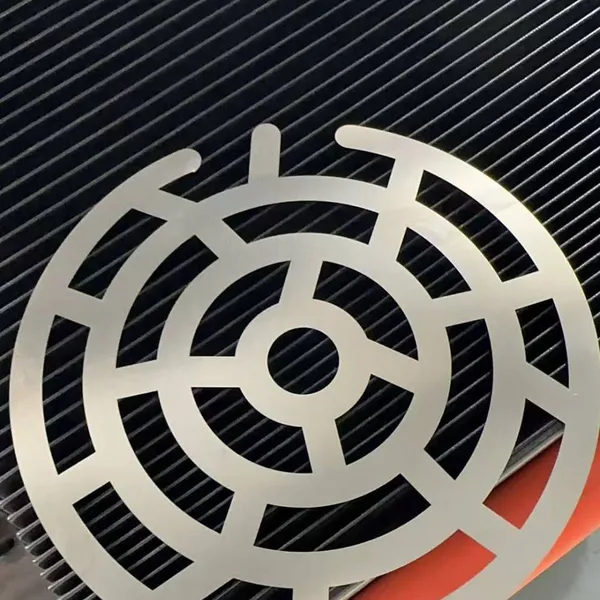
Filter screens are quite tricky in 316 stainless steel processing. Why? Because the holes are too dense and the aperture is too small, and traditional processes can't handle them at all.
We've made the densest filter screen with a 1mm aperture and a 2mm spacing. It's a dense mass, but with laser cutting, it can be formed in one go, and the cut surface is as smooth as a mirror, requiring no secondary processing at all.
"The previous manufacturer we worked with used wire cutting. Not only was it expensive, but the delivery time was also slow. After switching to laser cutting, the price was cut in half, the delivery time was twice as fast, and the quality was even better." - General Manager Zhang, the purchaser of an environmental protection equipment company
Revealing Our Processing Capabilities
Many people worry: "My special-shaped parts are too complex. Can laser cutting handle them?" Today, let me give you the inside story:
| Project | Our Capabilities |
|---|---|
| Material | 316/316L/904L/254SMO |
| Thickness Range | 0.3mm ~ 20mm |
| Format | 3000mm × 1500mm |
| Minimum Hole Diameter | 0.5mm |
| Special-shaped Cutting | Arbitrary shapes, one-time forming |
| Accuracy | ±0.1mm |
Whether it's flanges for chemical equipment, filter screens, sieve plates, or other special-shaped parts, as long as you can think of the shape, we can basically cut it.
Let's have a look at some real cases
Case 1: Flange for chemical reaction kettle
A customer needed a batch of 316 stainless steel flanges with a diameter of 500mm and a thickness of 25mm. There were 12 special-shaped bolt holes to be drilled on them, and the sealing surface also needed to be processed. The traditional process requires molds and machining, which is costly and time-consuming. We used laser cutting for hole drilling and precision machining for the sealing surface, and delivered the goods within a week. The customer exclaimed, "It's so efficient!"
Case 2: Industrial filter screen
An environmental protection company needed 316L stainless steel filter screens for sewage treatment. The hole diameter was 1.2mm, with a total of more than 2000 holes, and the error was required to be within 0.05mm. Laser cutting was fully numerically controlled and programmed, with one-time forming and zero rework.
Case 3: Ship accessories
Accessories used in the marine environment must be resistant to seawater corrosion. A customer ordered a batch of 316 stainless steel special-shaped parts, requiring a salt spray test of more than 1000 hours. We selected high-quality 316 materials, and they passed the third-party inspection directly after processing.
If you choose the wrong manufacturer, all your efforts will be in vain!
There are too many pitfalls in the industry. If you're not careful, you'll step on them. Here are some summarized experiences:
First, look at the equipment. Is the power sufficient? Is it well maintained? The precision and surface quality of the cut parts are completely different when using old equipment.
Second, look at the material source. Some manufacturers use non-standard materials to replace 316 in order to reduce the price, resulting in a significant reduction in corrosion resistance. Regular manufacturers will provide material reports.
Third, look at the process control. If the laser cutting parameters are not set properly, there will be an oxide layer and thermal deformation on the cut surface, which will affect subsequent welding or polishing.
Fourth, consider the delivery time and after-sales service. Do they have the ability to handle emergencies? How do they deal with quality issues?
Among the customers we've cooperated with, several have suffered before - either the cut parts were severely deformed, or inferior materials were used as substitutes. Finding a reliable manufacturer is truly crucial.
How should we view the issue of price?
Often, people ask me, "Lao Zhou, why is it so much more expensive than others?"
Actually, the raw material of 316 stainless steel itself is more expensive than that of 304. Coupled with the high processing difficulty, the cost is naturally a bit higher. But I'd like to remind everyone that products priced below the market price often have hidden problems. Either the materials are incorrect, or the craftsmanship is substandard. The maintenance cost for later problems will far exceed the money saved.
My suggestion is: first, look at the quality, then discuss the price. Request samples from several manufacturers and make a decision after comparing the quality.
To summarize
If you need:
✅ Flanges for chemical equipment (irregular holes, sealing surfaces)
✅ Filter screens/sieve plates (high precision, dense holes)
✅ 316/316L stainless steel irregular parts
✅ Corrosion resistance, high-temperature resistance, high-pressure resistance
✅ Fast delivery, high precision
Laser cutting of 316 stainless steel irregular parts is the most reliable choice.
Related searches:
Manufacturers for cutting 316 stainless steel irregular parts
Laser processing of chemical flanges
Cutting of stainless steel filter screens
Corrosion-resistant processing of 316L stainless steel
Customized quotation for stainless steel irregular parts
Friends with blueprints, just send them over. We'll provide free process evaluation and cost estimates. With 15 years of experience in stainless steel processing, we've seen every kind of problem and will surely handle everything properly for you!
If you have any questions, leave a message in the comment section. You can also tell me what you'd like to see in the next issue!

Send Inquiry to This Supplier


You May Also Like
-
Laser Cutting of Stainless Steel Composite Plates | Integrated Processing of Multi-layer MaterialsNegotiableMOQ: 0
-
7075 Aviation Aluminum Laser Cutting | High-strength Aluminum Parts Precision MachiningUS$ 1.54MOQ: 1 Piece
-
Mirror Stainless Steel Laser Cutting | Decorative Parts Processing, Scratch-free and Burr-freeNegotiableMOQ: 0
-
201 and 304 Stainless Steel Laser Cutting | Decorative Plate Carving, Low-cost CustomizationNegotiableMOQ: 0
-
Laser Cutting of Copper and Aluminum Sheets | Bulk Processing Offers Better Discounts. Tolerance ≤ ±0.1mmNegotiableMOQ: 0
-
Hardware Sheet Metal Laser Cutting Manufacturer - Stainless Steel / Aluminum / Copper Processing, Free DesignNegotiableMOQ: 0
-
Which Company is the Best for Laser Cutting Processing in Dongguan? Guangye Metal, Precision is KingNegotiableMOQ: 0
-
Laser-cut Sheet Metal Parts | Stainless Steel / Aluminum / Copper. Free Design and Sample MakingNegotiableMOQ: 0
-
One-stop Service for Laser Cutting, Bending and Welding | Direct Supply From Sheet Metal Processing ManufacturerUS$ 1.54MOQ: 1 Piece
-
Galvanized Sheet Laser Cutting | Rust-proof Sheet Processing, Customized Sheet Metal EnclosuresNegotiableMOQ: 0