








 Contact Platform Support
 Help Center
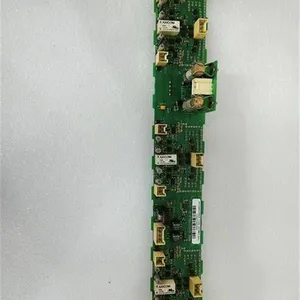
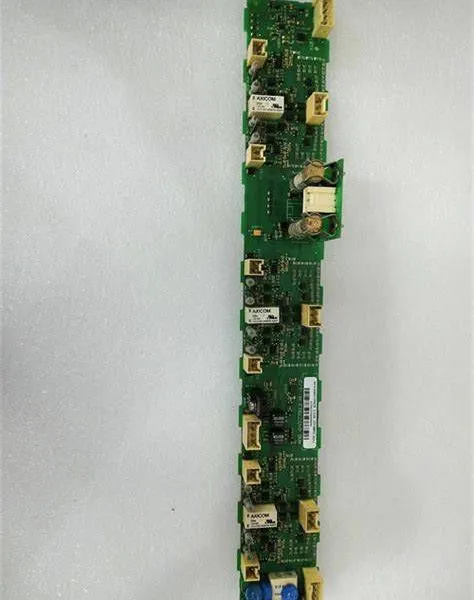
ABB DSMB-02C 3AFE64666606 Control Module



Related Products
-
 ABB 3BHB009175R0001 Control ModuleNegotiableMOQ: 1 Piece
 -
ABB LDSTA-01 63940143B Excitation Controller ModuleNegotiableMOQ: 1 Piece
-
ABB L003748-AR 3BSX108237R300 Voltage Regulation ModuleNegotiableMOQ: 1 Piece
-
ABB PM866-2 3BSE050201R1 Processor UnitNegotiableMOQ: 1 Piece
-
ABB OKYM175W22 Power Module/Drive Assistance ModuleNegotiableMOQ: 1 Piece
ABB DSMB-02C (Order No.: 3AFE64666606) is an industrial-grade high-performance control module, belonging to the core component series of ABB automation control systems. It is positioned as key equipment for signal acquisition, logic control, redundancy guarantee, and data interaction in industrial processes. It integrates five core capabilities: high-speed computing, multi-protocol compatibility, modular expansion, high reliability, and strong anti-interference. As a core component in ABB ACS 800 inverters, 800xA DCS and other systems, it realizes equipment control, process monitoring, fault diagnosis, and safety redundancy, and is widely applicable to harsh industrial scenarios in various industries.
This module mainly undertakes five core tasks: logic control, parameter monitoring, fault diagnosis, data interaction, and redundancy switchover. Equipped with a 32-bit ARM Cortex-M7 high-performance processor, it can quickly complete complex logic control operations, analog/digital signal processing, and control command issuance. It supports dual-channel parallel operation and redundancy switchover mechanism, which can effectively avoid system interruption caused by single-point faults and ensure production continuity. Relying on rich communication interfaces and multi-protocol compatibility, it can seamlessly connect with ABB and third-party automation systems, effectively solving problems such as poor compatibility, control lag, and inconvenient fault troubleshooting in industrial scenarios. Compatible with ABB ACS 800 inverters, 800xA DCS, AC500 PLC and other systems, it is widely used in industrial fields such as mining, aluminum industry, automobile manufacturing, petrochemical engineering, power generation, and water treatment, providing core hardware support for the stable, efficient, and safe operation of industrial automation systems.
It adopts an industrial-grade compact modular design with resin surface protection, suitable for 35mm DIN rail installation or built-in inverter chassis installation, facilitating dense deployment and space optimization in control cabinets. Equipped with high-density pluggable terminals and standardized communication interfaces, it can quickly complete the wiring and replacement of power, signals, and communication lines, greatly improving installation, commissioning, and maintenance efficiency. The enclosure and circuit design comply with industrial EMC standards and IEC 61508 SIL2 safety standards, with IP20 protection level (higher protection requirements can be met when installed internally), offering excellent dustproof and anti-electromagnetic interference performance, which can withstand high-frequency noise from inverters and electromagnetic fields from high-power equipment on industrial sites. It supports hot-swappable function, allowing module replacement without shutdown during maintenance, and supports online configuration, parameter setting, fault diagnosis, and firmware upgrade through ABB special configuration software, making operation and maintenance convenient and efficient.
1. Technical Specifications
1.1 Power Specifications
Power Supply Voltage: Industrial standard 24VDC (compatible with wide-range power supply, suitable for centralized power supply in control cabinets or built-in power supply in inverters);
Power Protection: Equipped with overvoltage, overcurrent, and reverse polarity protection functions; electrical isolation between power circuit and signal circuit to suppress ground loop interference and prevent module damage;
Typical Power Consumption: Low power consumption, suitable for long-term continuous operation without additional heat dissipation burden, no need to install heat dissipation devices;
Redundant Power Supply: Supports N+1 redundant power supply configuration; when a single power supply fails, the load can be automatically transferred to the standby power supply, with a switchover time ≤10μs to ensure power supply continuity;
Power Indication: The panel is equipped with a power LED indicator to intuitively display the module's power supply and redundant power supply status, facilitating quick troubleshooting of power supply faults.
1.2 Computing & Storage Parameters
Processor Type: 32-bit ARM Cortex-M7 embedded processor with a main frequency of up to 200MHz;
Computing Performance: PID algorithm calculation response time ≤1ms, capable of quickly processing complex logic control tasks, 3 times faster than traditional PLC;
Storage Capacity: Built-in 512KB Flash and 128KB RAM, supporting ≥1000 groups of recipe storage, which can store control programs, operation logs, and fault information;
Control Precision: Supports high-precision signal acquisition and control, with robot joint servo drive control precision up to ±0.02mm, enabling 32-axis linkage control;
Self-test Function: Built-in hardware self-test circuit and software watchdog function, analog and digital multiple filtering, which can detect component abnormalities and trigger responses within 10μs.
1.3 Signal & I/O Parameters
Input Signals: Supports 8-channel digital input (24VDC), compatible with SSI instrument input signals, capable of collecting status signals of switches, sensors and other equipment;
Output Signals: Supports relay contact on-off signals and 4~20mA analog output, which can directly drive small actuators or feedback control signals;
Signal Precision: High precision of analog signal conditioning, capable of accurately collecting temperature, pressure, flow and other parameters, with a collection frequency of up to 1 time per second;
Channel Isolation: Electrical isolation between input/output channels and between channels and power supply, effectively suppressing interference intrusion and ensuring stable signal acquisition and output;
Alarm Function: Supports upper limit, lower limit, water filling preset and multi-point alarm settings within the full range, and supports panel touch switches to set and display alarm values.
1.4 Communication & Compatibility Parameters
Communication Interfaces: Integrates dual serial interfaces (COM1: pluggable terminal, COM2: SUB-D plug), 1 FBP slave communication interface, and supports dual Ethernet interfaces (optional);
Communication Protocols: Native support for 7 mainstream industrial protocols such as Modbus RTU/TCP, Profibus-DP, EtherCAT, and Profinet, which can be seamlessly connected with ABB 800xA, Siemens S7-1200 and other systems;
Data Transmission: Dual Ethernet interfaces support ring network redundancy, with automatic switchover time <20ms when network failure occurs, ensuring zero interruption of data transmission;
System Compatibility: Deeply compatible with ABB ACS 800 inverters, 800xA DCS, and AC500 PLC systems, which can be directly connected to the existing automation network without additional conversion modules;
Expansion Capacity: Adopts backplane bus architecture, provides 8 expansion slots, can connect 10 I/O module backplanes, and supports free combination and expansion of 12 types of function modules such as DI, AI, and temperature measurement.
1.5 Environmental Parameters
Operating Temperature: -40℃ to +85℃, wide-temperature design adapts to extreme high and low temperature industrial environments, startup time at -35℃ is only 2 seconds;
Operating Humidity: 5%–95% (non-condensing), capable of stable operation in humid industrial environments;
Anti-Interference Level: Complies with relevant EMC standards, has excellent anti-electromagnetic interference performance, and can withstand strong electromagnetic interference on industrial sites;
Redundancy Switchover: Dual-channel parallel operation, main-standby switchover time ≤50ms, ensuring continuous system operation in case of single-point failure;
Reliability: Certified by CE, UL, and CCC, mean time between failures (MTBF) >50,000 hours, natural heat dissipation, maintenance-free operation.
1.6 Physical & Installation Parameters
Overall Dimensions: Compact design, approximately 70mm×45mm×30mm (subject to actual product), suitable for built-in inverter chassis installation or rail installation;
Installation Method: Supports 35mm DIN rail installation, can be directly installed inside the ABB ACS 800 inverter chassis, saving installation space;
Wiring Terminals: Pluggable high-density wiring terminals, reliable wiring, facilitating quick wiring and module replacement;
Status Indication: The panel is equipped with multi-color LED indicators, which can intuitively display power supply, operation, communication, fault, and redundancy status, facilitating quick fault location;
Weight: Net weight of a single module is 0.3kg, lightweight and easy to install, convenient for spare part management and on-site replacement.
2. Features
High-Speed Computing and Precise Control: Equipped with a 32-bit ARM Cortex-M7 processor with a main frequency of 200MHz, the PID algorithm response time is ≤1ms, which can quickly process complex logic control and signal operation tasks; supports 32-axis linkage control, the robot joint servo drive precision is up to ±0.02mm, which can realize high-speed and precise equipment control, adapting to flexible production, precision manufacturing and other scenarios.
Redundant Design and High Safety: Adopts dual-machine hot standby architecture, supports dual-channel parallel operation and N+1 redundant power supply configuration, the main-standby switchover time is ≤50ms, which can quickly switch in case of single-point failure to avoid system interruption; passes IEC 61508 SIL2 safety standard, has SIL3-level safety function, emergency stop response <10ms, built-in 200+ error code library, can real-time monitor vibration and temperature abnormalities, ensuring industrial production safety.
Multi-Protocol Compatibility and Seamless Integration: Supports 7 mainstream industrial protocols, equipped with rich communication interfaces, which can be seamlessly connected with ABB and third-party automation systems without additional conversion modules; pre-installed with ABB System800xA software library, providing standardized function blocks that engineers can directly call, shortening project delivery cycle and reducing integration difficulty.
Modular Expansion and Flexible Adaptation: Adopts backplane bus architecture, supports 8 expansion slots, can freely combine various function modules to achieve "one machine with multiple functions"; adapts to industrial control scenarios of different scales, supports "on-demand expansion", and enterprises can gradually add function modules according to business growth, reducing initial investment costs.
Convenient Operation and Maintenance, High Reliability: Supports hot-swappable function, allowing maintenance without shutdown, reducing production losses; panel indicators can quickly locate faults, supporting online configuration, parameter setting, fault diagnosis, and firmware upgrade, with high maintenance efficiency; industrial-grade resin protection and wide-temperature design, excellent protection performance, can operate stably in harsh industrial environments for a long time, with low maintenance costs.
3. Operating Principle
Initialization and Link Establishment: After power-on, the module completes a full self-test, initializes the processor, memory, communication interface, I/O channels, and redundancy control circuit, and loads the built-in firmware and pre-configured control parameters; establishes a connection with the upper system (DCS/PLC), inverter, on-site sensors, and actuators through the communication interface, and enters the normal working state after parameter calibration and state synchronization.
Signal Acquisition and Preprocessing: Collects status signals of on-site switches and sensors through digital input channels, compatible with SSI instrument input signals, and can collect analog signals such as temperature, pressure, and flow; filters electromagnetic interference and signal noise on industrial sites through multiple digital filtering processes to ensure the accuracy of signal acquisition; converts analog signals into digital quantities recognizable by the processor through high-precision conditioning circuits.
Computation and Logic Control: According to the preset control program and logic rules, the processor quickly computes the collected signals, completes parameter adjustment and logic judgment through PID adaptive control algorithm, etc.; generates control commands, which are issued to actuators, inverters and other equipment through analog output channels (4-20mA) or relay output channels, realizing control functions such as equipment start-stop and parameter adjustment, and supporting multi-axis synchronous coordination control and trajectory planning.
Redundancy Monitoring and Fault Handling: Real-time monitors the module operation status, communication link, power supply status, and I/O channel status, and real-time monitors the main-standby channel status through heartbeat packets; if abnormalities (such as signal over-range, communication interruption, power failure) are detected, it immediately triggers redundancy switchover, switches to the standby channel or standby power supply within 50ms, records fault information, triggers sound and light alarms, and uploads fault data to the upper system, facilitating operation and maintenance personnel to quickly troubleshoot and handle.
Data Interaction and Maintenance Management: Uploads real-time operation data, equipment status, and fault information to the upper system through the communication interface, and receives control commands and parameter modification commands issued by the upper system; supports hot-swappable maintenance, and can complete program download, parameter configuration, and firmware upgrade online; built-in data storage function records operation logs and fault information, supports log export, providing support for fault tracing and predictive maintenance.
4. Applications and Case Examples
Automobile Manufacturing Industry: In automobile assembly lines and welding production lines, as the core control module, it links with ABB robots, synchronously controls multiple robots through the EtherCAT protocol, realizes precise positioning of robotic arms (repeat positioning accuracy ±0.02mm), and shortens the production cycle by 30%; real-time monitors the safety door status and air pressure parameters, triggers safety interlock, reduces the risk of misoperation, and ensures production safety.
Mining and Aluminum Industry: In deep-sea mining and aluminum production equipment, it undertakes core control tasks. With wide-temperature (-40℃ to +85℃) and strong protection design, it can operate stably in high-pressure, low-temperature, and strong-corrosion environments; the redundant design ensures continuous operation of equipment, avoids interruption of mining and aluminum production, and improves production efficiency.
Power Generation Industry: In wind farm and thermal power plant monitoring systems, it connects anemometers, power transmitters and other equipment, collects real-time data and uploads it to the SCADA system; preprocesses data through edge computing functions, optimizes power generation strategies, and increases annual power generation by 5%-8%; the redundant communication design ensures zero interruption of data transmission, ensuring the continuity of power production.
Petrochemical Industry: In chemical reactors and refinery production systems, it collects parameters such as temperature, pressure, and flow, and accurately adjusts actuators through the PID algorithm to ensure that the production process meets the process requirements; it has the characteristics of strong anti-interference and high reliability, adapting to the harsh environment of high dust and strong electromagnetic interference in chemical plants, supporting fault self-diagnosis, and reducing maintenance downtime.
Intelligent Manufacturing and Infrastructure: In 3C electronic assembly lines, it controls 16-axis servo motors to achieve precision assembly, real-time monitors assembly pressure, and avoids batch defective products; in urban water supply pumping stations and intelligent buildings, it adjusts water pump frequency, integrates lighting and air conditioning systems, realizes energy-saving operation, and saves 20%-30% energy compared with traditional control methods.

Send Inquiry to This Supplier



You May Also Like
-
ABB DSQC609 3HAC14178-1 Power SupplyNegotiableMOQ: 1 Piece
-
ABB UBC717AE01 HIEE300927R0101 High-voltage Inverter Board/power ModuleNegotiableMOQ: 1 Piece
-
ABB TVOC-2-240 1SFA664001R1001 Arc MonitorNegotiableMOQ: 1 Piece
-
ABB XVC772A102 3BHE032285R0102 Embedded Control BoardNegotiableMOQ: 1 Piece
-
ABB REF615E_E HBFHAEAGNCA1BNN1XE Digital Feeder Protection RelayNegotiableMOQ: 1 Piece
-
ABB REU615E_D HBUAEAADNCA1BNN1XD Voltage Protection and Control RelayNegotiableMOQ: 1 Piece
-
ABB SYN5201A-Z,V277 Single-channel Synchronisation Controller / Synchronisation UnitNegotiableMOQ: 1 Piece
-
ABB 3BHB006714R0277 Synchronisation UnitNegotiableMOQ: 1 Piece
-
ABB REF615C-E HCFFAEAGABC2BAA11E Feeder Protection and Control DeviceNegotiableMOQ: 1 Piece
-
ABB 3BHB005245R0101 Power Supply BoardNegotiableMOQ: 1 Piece


