








 Contact Platform Support
 Help Center
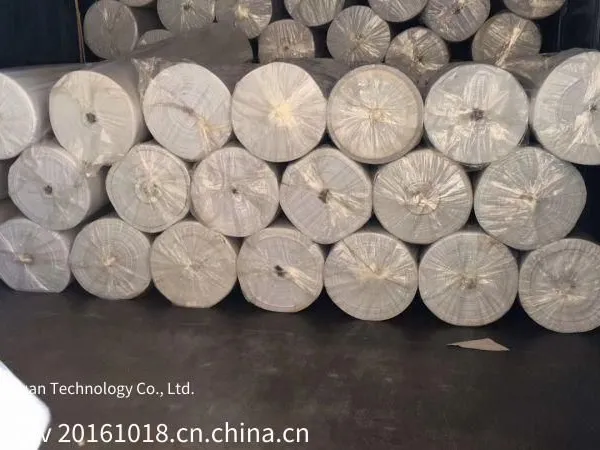
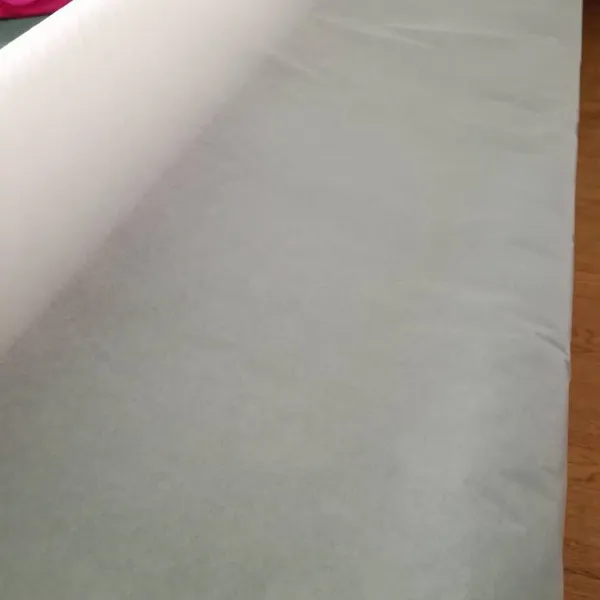
Air Purification Filter Fiber Non-woven Fabric, Skeleton Non-woven Fabric for High-efficiency Filtration


Related Products
-
 Imported From Japan, Hirose Wet-laid Non-woven Fabric With Uniform Thickness and Good Air PermeabilityUS$ 5.77 - 6MOQ: 100 Meters
 -
Rpet White Lixin Cloth, Non-woven Fabric, Medical Bandages, Eye Masks Made of Lixin Cloth, Breathable and Clean, Strong, in StockUS$ 1.15 - 1.17MOQ: 3000 Meters
-
Non-woven Fabric for Honeycomb BlindsUS$ 4.15 - 4.31MOQ: 500 Kilograms
-
Non-woven Fabric for Packaging Pla Pet Nano-superfine Non-woven Fabric Masks With 3d Concave-convex Feeling, Composite Materials for Packaging Household Liquid Laundry Detergents, Etc.US$ 4.62 - 5.38MOQ: 100 Kilograms
-
Acetate Cloth Die-cut Release Paper, Acetate Cloth, Nylon Acetate Cloth Tape, Black and White High-temperature Acetate Adhesive TapeUS$ 2.92MOQ: 500 Meters
Early on, Hills and Nordson from the United States successfully developed the bicomponent melt - blowing technology, including various types such as sheath - core type, side - by - side type, and triangular type. Usually, the fiber fineness is close to 2μm. The number of holes in the melt - blowing spinneret assembly can reach 100 holes per inch, and the extrusion volume per hole can reach 0.5g/min.
Sheath - core type: It can make the non - woven fabric feel soft and can produce concentric, eccentric, and profiled products. Generally, inexpensive materials are used as the core, and expensive polymers with special or desired properties are used as the outer sheath. For example, when the core is polypropylene and the sheath is nylon, the fiber has hygroscopicity; when the core is polypropylene and the sheath is low - melting - point polyethylene for bonding, modified polypropylene, or modified polyester. For carbon - black - based conductive fibers, the conductive core is wrapped inside.
Side - by - side type: It can endow the non - woven fabric with good elasticity. Usually, it is made of two different polymers or the same polymer with different viscosities to form side - by - side bicomponent fibers. Spiral crimped fibers can be made by utilizing the different thermal shrinkage properties of different polymers. For example, 3M developed a non - woven fabric of melt - blown PET/PP bicomponent fibers. Due to different shrinkages, it forms a spiral crimp, making the non - woven fabric have excellent elasticity.
Tip type: Another polymer is compounded at the tips of trilobal, cross - shaped fibers. For example, when making antistatic, moisture - conductive, or conductive fibers, a conductive polymer can be compounded on them. It can conduct moisture, electricity, and resist static electricity, and it also saves the amount of conductive polymer used.
Micro - denier type: Orange - segment - shaped or strip - peeling type spinneret assemblies can be used, or island - in - the - sea type assemblies. An ultrafine fiber web or even a nanofiber web can be made by peeling two incompatible polymers. For example, the peeling - type bicomponent fibers developed by Kimberly - Clark use the characteristic that the two polymers in the bicomponent fibers made of two incompatible polymers can be completely peeled off in hot water in less than one second to make an ultrafine fiber web. For the island - in - the - sea type, the "sea" component is dissolved to obtain a fine "island" fiber web.
Mixed type: It is a fiber web that mixes different materials, different colors, different fibers, different cross - sectional shapes, and even sheath - core and side - by - side fibers. It has both co - spun fibers and bicomponent fibers, endowing the fibers with various desired properties. Compared with ordinary melt - blown fiber products, this type of melt - blown bicomponent fiber non - woven fabric or mixed fiber non - woven fabric can further improve the filtration performance of the filter medium and make the filter medium have antistatic, conductive, hygroscopic, and enhanced barrier properties; or improve the bonding, bulkiness, and breathability of the fiber web.
Bicomponent melt - blown fibers can complement the deficiencies of single - polymer properties. For example, polypropylene is relatively cheap, but when used in medical and health materials, it is not resistant to radiation. In this case, polypropylene can be used as the core, and an appropriate radiation - resistant polymer can be selected to wrap around it to solve the radiation - resistance problem. Thus, the product can be inexpensive and meet the functional requirements. In the medical field, for example, it can be used as a heat and moisture exchanger for the respiratory system, providing appropriate heat and humidity similar to natural conditions. It is lightweight, disposable or easy to disinfect, inexpensive, and can also serve as an additional filter to remove pollutants. It can be composed of two uniformly mixed bicomponent melt - blown fiber webs. Sheath - core bicomponent fibers are used, with the core being polypropylene and the sheath being nylon. Bicomponent fibers can also have profiled cross - sections, such as trilobal or multilobal, to increase the surface area. At the same time, polymers that can improve the filtration performance can be used on the surface or at the tips of the leaves. The melt - blown bicomponent fiber webs of olefins or polyesters can be made into cylindrical liquid and gas filters. Melt - blown bicomponent fiber webs can also be used in cigarette filters; high - end ink - absorbing cores can be made by using the wicking effect; and wicking rods for liquid retention and infusion can also be made.

Send Inquiry to This Supplier


You May Also Like
-
Desiccants Are Packed in Aihua Paper, With Tea Bags. Flower Tea Foot Bath Products Are Packed in Non-woven Fabric.US$ 2461.54MOQ: 1000 Kilograms
-
Insulating and Thermally Conductive Silicone Rubber ClothUS$ 8.46 - 9.23MOQ: 15 Square Meters
-
Flame-retardant Semi-conductive Cloth Tape for Electronic Machine Structural ComponentsUS$ 5.08 - 5.54MOQ: 500 Meters
-
Pet Filament Hot-rolled Non-woven Fabric, Plain Weave, Smooth Surface, High Temperature Resistant, for Water Pump FiltrationUS$ 3.31 - 3.54MOQ: 3000 Kilograms
-
Reemay Polyester Non-woven Fabric, Special Non-woven Fabric for Filtration, Pet Filament Hot-rolled Non-woven FabricUS$ 0.38 - 0.46MOQ: 5000 Meters
-
Non-woven Fabric for Adhesive Backing, Automotive Die-cut Parts, and Electronic Die-cut PartsUS$ 2.92 - 3.08MOQ: 100 Meters
-
Non-woven Fabric for Automotive Wiring Harness TapeUS$ 2.77MOQ: 1000 Meters
-
Non-woven Fabric, Aluminum Powder, and Magnesium Powder Series for Self-heating Lunch Box Packs, Two-layer and Three-layerUS$ 4.38 - 4.92MOQ: 100 Kilograms
-
Functional Lixin Fabric, 14-gauge and 22-gauge Seamed Non-woven FabricUS$ 1.05 - 1.23MOQ: 200 Square Meters
-
Cleaning Paper/non-woven Fabric for CopiersNegotiableMOQ: 10000 Kilograms