








 Contact Platform Support
 Help Center
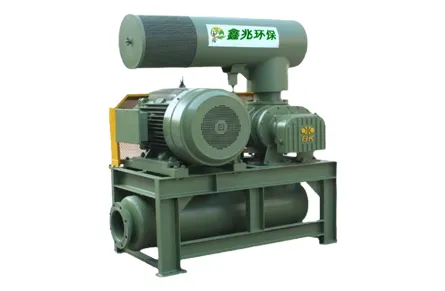
Roots Fan




Related Products
-
 GRP Integrated Lifting Pump Station Sewage Rainwater Collection Factory DirectNegotiableMOQ: 1 Carton
 -
Centrifugal Pump Designed for Large-scale Agricultural Irrigation and Suitable for Long-distance High-flow Double-suction Agricultural Water PumpsNegotiableMOQ: 1 Carton
-
Centrifugal Pump Designed for Large-scale Agricultural Irrigation and Suitable for Long-distance High-flow Double-suction Agricultural Water PumpsNegotiableMOQ: 1 Carton
-
FRP Composite Booster Pumping Station, Underground Wastewater Pumping Station, and Sewage Treatment PlantNegotiableMOQ: 1 Combo
-
Integrated Sewage Lift Pumping Station Prefabricated Sewage Pumping Station With Engine Core 1 Year Warranty ManufacturerNegotiableMOQ: 1 Combo
The roots fan is a volumetric rotary fan, named after its invention in 1854 by the American Roots brothers, whose core principle is that two rotors (usually in the shape of a "figure eight") that mesh, each other rotate within the casing, forming periodic volume changes that realize the suction, compression, and discharge of gases. It has the characteristics of stable flow, wide pressure range, and simple structure, and is widely used in sewage treatment, pneumatic transportation, aquaculture, metallurgy, chemical industry and other fields.
Core structure and working principle
Main components
Shell: usually cast iron or steel plate welded structure, forming a closed working cavity, with inlet and exhaust ports at both ends, and internal cooperation with rotors to form a compression space.
Rotor: The core component, commonly a two-blade or three-blade "figure-8" impeller (three-blade rotor is more commonly used due to low airflow pulsation and low noise), the material is mostly cast iron or cast steel, and the surface is precision machined to ensure the clearance between the casing and another rotor (usually 0.2-0.5mm).
Transmission system: including spindle, bearing, gearbox, etc., drive one side of the rotor through the motor, and then drive the other side of the rotor to rotate in the opposite direction by a pair of synchronous gears (same speed, opposite steering) to ensure that the rotor does not contact meshing.
Sealing device: Packing seal or mechanical seal is set at the shaft end to prevent gas leakage, and some high-pressure models will add a shaft seal cooling system.
Accessories: inlet filter (filters gas impurities), outlet muffler (reduces exhaust noise), safety valve (prevents overpressure), pressure gauge, etc.
How it works:
Suction phase: The two rotors rotate in opposite directions, and as the space on one side formed by the rotor with the casing (suction cavity) gradually expands, the outside gas is drawn in through the air intake.
Compression stage: The rotor continues to rotate, and the sucked gas is enclosed in the space between the rotor and the casing, and is pushed to the exhaust side with the rotation of the rotor.
Exhaust stage: When the compressed gas pressure is higher than the exhaust side pipeline pressure, the gas is discharged through the exhaust port to complete a working cycle.
Since there is no contact between the rotors and between the rotor and the casing (sealed by the gap), and no lubrication is required, the exhaust gas is pure (without oil), which is a characteristic that makes it a clear advantage in scenarios where gas cleanliness is required.
Core features:
Stable flow rate: The flow rate is only directly proportional to the rotational speed, not affected by the exhaust pressure (within the rated pressure range), suitable for working conditions that require constant air volume (such as sewage treatment aeration).
Wide pressure range: The single-stage fan pressure is usually 9.8-98kPa (gauge pressure), and multi-stage series connection can achieve higher pressure, which can meet the boosting needs of different scenarios.
Simple structure: no valves, pistons and other vulnerable parts, low failure rate, easy maintenance (mainly regular replacement of bearings, gear oil).
Wide range of applicable media: can transport air, gas, biogas, inert gas and other gases (anti-corrosion materials need to be selected according to the characteristics of the medium).

Send Inquiry to This Supplier

You May Also Like
-
Volumetric Blower for Aquaculture Aeration Three-blade Roots Blower 30HPNegotiableMOQ: 1 Box
-
Agricultural Irrigation High Head Submersible Pump - Stainless Steel Multi-Stage Pumped Deep Well PumpNegotiableMOQ: 1 Carton
-
High Efficiency Industrial Grating Machine, Automatic Strip Screen Rotary Grille for Wastewater PretreatmentNegotiableMOQ: 1 Combo
-
Industrial Farm Wastewater Treatment System MBR Separation Treatment MBR Slaughterhouse Wastewater TreatmentNegotiableMOQ: 1 Combo
-
Sewage Plant Hot Selling High-energy Industrial Deodorization Ion Deodorization EquipmentNegotiableMOQ: 1 Combo
-
Industrial AC Submersible Pumps for Water and Sewage, With Diameters Ranging From 1.5 to 6 Inches, Come With a 1-year Warranty.NegotiableMOQ: 1 Case
-
Mini Roots Blower for Fish Pond Farming, 4HP/7.5HP High-efficiency Power Supply, Rated AC Voltage of 220VNegotiableMOQ: 1 Box
-
Low-noise Rotary Wastewater Treatment Fan | 220V/380V,50Hz/60Hz Industrial BlowerNegotiableMOQ: 1 Carton
-
High-flow Plasma Waste Gas Wastewater Treatment EquipmentNegotiableMOQ: 1 Combo
-
High-quality, Integrated, Prefabricated Fiberglass-reinforced Plastic Sewage Pump Station; Highly Durable Fiberglass-reinforced Plastic Pump Station.NegotiableMOQ: 1 Combo


