








 Contact Platform Support
 Help Center
Woodward 4565-1115 MicroNet TMR Hardware Kit


Related Products
-
 Woodward 4565-253 Third Function Valve KitNegotiableMOQ: 1 Piece
 -
Woodward 8262-1145 MicroNet TMR Hardware KitNegotiableMOQ: 1 Piece
-
Woodward 8262-3185 Relay DriversNegotiableMOQ: 1 Piece
-
Woodward 8262-3182 24V DC EnvironmentsNegotiableMOQ: 1 Piece
-
Woodward 9904-814 Processor Control ModuleNegotiableMOQ: 1 Piece
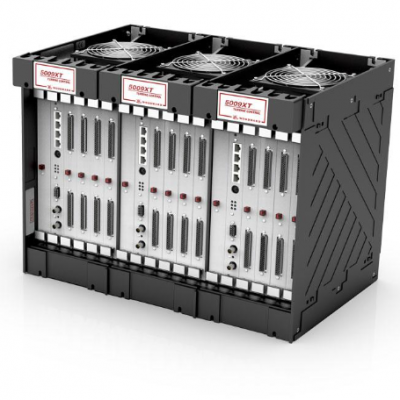
The Woodward 4565-1115 is a combustion control module belonging to Woodward's combustion control system series, specially designed for the precise control and safety protection of the combustion process of industrial boilers, gas turbines, incinerators and other equipment. Integrating core functions such as flame detection, ignition control, combustion regulation and safety interlock, this module features high reliability, strong anti-interference performance and flexible adaptability. It is compatible with Woodward's full range of controllers and mainstream industrial automation systems, and is widely used in the energy, petrochemical, metallurgical and other fields. It provides core control support for the stable, efficient and safe operation of combustion equipment, meeting the dual requirements of energy conservation, consumption reduction and safety protection for industrial combustion systems.
1. Core Product Attributes
| Attribute | Details |
|---|---|
| Model Number | Woodward 4565-1115 |
| Product Type | Industrial-grade combustion control module belonging to Woodward's combustion control series. Different from ordinary signal conversion or interface modules, it focuses on ignition control, flame monitoring, combustion parameter regulation and safety interlock of combustion equipment. As a key core component connecting the control unit and the actuator in an industrial combustion system, it undertakes the functions of full-process control and safety guarantee for the combustion process. |
| Core Application | It receives control instructions from Woodward controllers or DCS/PLC systems and drives ignition actuators to complete ignition; monitors flame status in real time and accurately judges the presence or absence of flame through feedback signals from flame sensors; adjusts fuel supply and air ratio to optimize combustion efficiency and reduce energy consumption; is equipped with a safety interlock function that quickly triggers protective actions such as fuel cut-off and equipment shutdown to prevent safety accidents when dangerous working conditions such as flameout and abnormal pressure are detected; and supports fault self-diagnosis and alarm output for convenient operation and maintenance troubleshooting. |
| Typical Position | As the core control unit of an industrial combustion system, it fills the integrated gap of "instruction reception - execution control - safety monitoring" in the combustion process and connects the front-end control system with the rear-end actuators (igniters, fuel valves, fans, etc.). Through precise combustion regulation and reliable safety interlock, it balances combustion efficiency and operational safety. Cooperating with Woodward controllers, sensors and actuators, it builds a complete industrial combustion control link, suitable for various medium and large combustion equipment scenarios. |
2. Technical Specifications
2.1 Control and Detection Parameters
| Parameter Category | Core Indicators | Explanations |
|---|---|---|
| Ignition Control | Ignition voltage >12kV (at 40pF load), ignition frequency 2.5~60Hz, adjustable ignition time from 0 to safety time | It supports two ignition modes: direct ignition and intermittent pilot ignition. Ignition parameters can be flexibly configured via software or DIP switches, ensuring a high ignition success rate under harsh working conditions such as low temperature and high humidity, and adapting to the ignition requirements of different fuels (gas, fuel oil). |
| Flame Detection | Adaptable to ultraviolet (UV) or ion flame sensors, minimum flame current 0.9μA, response time: ignition response >0.2s, flameout response <1s | It collects flame sensor signals in real time to accurately judge the presence or absence of flame, and is equipped with a flame signal filtering function to resist electromagnetic interference in industrial sites and avoid misjudgment. In case of flameout, it quickly triggers the safety interlock and cuts off fuel supply to ensure equipment safety. |
| I/O Configuration | 2 channels of 4~20mA analog input (adaptable to pressure and temperature sensors), 4 channels of relay output (for controlling fuel valves, igniters, etc.), 6 channels of contact input (for receiving interlock signals) | Analog inputs are used to collect parameters such as pressure and temperature of the combustion system to achieve closed-loop combustion regulation; relay outputs drive front-end actuators; contact inputs receive emergency stop, pressure interlock and other signals to build a comprehensive safety protection system. |
| Communication Interfaces | RS-232/RS-485 interfaces supporting Modbus protocol, optional DeviceNet flexible network interface | RS interfaces are used for local debugging and data transmission; network interfaces enable remote linkage with DCS/PLC systems and Woodward controllers, supporting remote parameter configuration, status monitoring and fault troubleshooting, and adapting to distributed combustion control scenarios. |
| Power Supply Requirement | AC 220~240V (50/60Hz), power consumption ≤4VA; optional DC 18~32V wide voltage power supply version | It is compatible with general power supply specifications in industrial sites and is equipped with reverse polarity protection. The low power consumption design does not increase the system's power load, and it has strong voltage adaptability to cope with voltage fluctuations in industrial sites, meeting the on-site installation requirements of different power supply conditions. |
2.2 Physical and Installation Specifications
| Parameter Category | Core Indicators | Explanations |
|---|---|---|
| Dimensions & Weight | Compact module design, approx. 12cm×6cm×18cm in size, approx. 0.4-0.6kg in weight | Small in size and light in weight, it adopts a Deutsch sealed housing with dual 12-way sealed connectors. Suitable for dense installation scenarios in industrial control cabinets, it can be installed in the same cabinet with Woodward controllers and signal modules without occupying excessive cabinet space, facilitating cable arrangement and internal cabinet layout. |
| Mounting Method | Standard DIN rail mounting, supporting auxiliary flush mounting in control cabinets, adaptable to installation in engine compartments and industrial cabinets | The installation process is simple and adaptable to the general DIN rail of industrial control cabinets, enabling quick fixation and disassembly for convenient later maintenance and replacement. The wiring terminals adopt a screwless spring-loaded design, accepting 0.08~4mm² wires, which enables convenient and reliable wiring and avoids wiring errors. |
| Panel Configuration | Operating status indicator lights, fault alarm indicator lights, ignition indicator, flame indicator, calibration interface, parameter adjustment DIP switches | Indicator lights intuitively display the module's operating information such as power supply, ignition status, flame status and fault alarm; the calibration interface facilitates connection with debugging equipment for parameter calibration and fault troubleshooting; DIP switches enable quick switching of key parameters such as ignition mode and safety time for easy operation. |
2.3 Environmental Adaptability
| Parameter Category | Core Indicators | Explanations |
|---|---|---|
| Temperature Range | Operating temperature: 0℃~+60℃ (optional wide-temperature version of -15℃~+60℃); Storage temperature: -40℃~+85℃ | The wide-temperature design is suitable for scenarios such as industrial on-site control rooms, outdoor cabinets and engine compartments. It can operate stably in extreme high and low temperature environments without additional temperature control equipment, adapting to the high-temperature working conditions around combustion equipment. |
| Protection & Anti-interference | IP54 protection grade (optional IP65 explosion-proof protection), with anti-electromagnetic interference, anti-vibration and anti-surge functions, EMI immunity of 100V/m (200 to 1000MHz) | Adaptable to dusty and high-humidity industrial sites, the electromagnetic shielding design prevents electromagnetic interference from frequency converters, motors and other equipment to avoid control signal distortion; the anti-vibration design (6Gs, 40Hz to 2000Hz) adapts to the vibration environment during the operation of combustion equipment and ensures control stability. |
3. Adapted Systems and Hardware Combinations
3.1 Adapted Equipment and Systems
It is core-compatible with Woodward's full range of control systems (e.g., 5441 series digital controllers, MicroNet series controllers) and can work in conjunction with the same series of signal conversion modules, power supply modules and actuators to build a complete industrial combustion control link. It is adaptable to various combustion equipment such as industrial boilers, gas turbines, incinerators and industrial kilns, and compatible with different fuel types including gas and fuel oil. It is also compatible with mainstream flame sensors such as ultraviolet (UV) and ion flame sensors, and can be directly connected to actuators such as igniters, fuel valves and fans of the combustion system. Meanwhile, it is compatible with mainstream DCS/PLC systems (e.g., ABB, Emerson, Honeywell) to achieve seamless integration and remote control.
3.2 Supporting Software and Debugging Tools
It is matched with Woodward's dedicated debugging software and calibration tools, supporting the precise calibration and configuration of parameters such as ignition parameters, flame detection sensitivity, safety time and combustion ratio. The software features a simple visual operation interface, which can display ignition status, flame signals, operating parameters and fault information in real time, and support fault log reading and data analysis for quick troubleshooting of problems such as ignition failure and flame misjudgment. After debugging, parameters can be solidified and stored with a non-volatile locking function to avoid parameter loss caused by misoperation, and an optional volatile locking function is available to adapt to scenarios with different safety requirements.
3.3 Expansion and Linkage Capabilities
It supports parallel deployment of multiple modules, adapting to the synchronous control scenarios of multi-burner equipment (e.g., multiple sets of burners in large boilers). It can be expanded to connect external devices such as pressure sensors, temperature sensors and flow sensors to enrich the parameter collection dimension of the combustion system, achieve closed-loop combustion regulation and optimize combustion efficiency. Fault alarm signals can be linked with rear-end audible and visual alarm devices and emergency shutdown systems; when dangerous working conditions are detected, it quickly triggers the safety interlock, cuts off fuel supply and stops ignition to ensure all-round equipment safety. It supports linkage with Woodward active power transmitters and other equipment to achieve the collaborative optimization of combustion efficiency and energy consumption.
4. Product Features
Integrated combustion control: Integrating four core functions of ignition control, flame detection, combustion regulation and safety interlock, it realizes full-process automatic control of the combustion process without the need for additional multiple modules, simplifying the system architecture, improving the coordination and stability of combustion control, and adapting to the needs of various industrial combustion equipment.
High-reliability safety protection: Equipped with fast flame detection and safety interlock functions, it has a rapid flameout response and can effectively prevent safety accidents such as backfire and explosion of combustion equipment. It supports the configuration of multiple safety times, complies with the EN 298 standard, and is designed with reverse polarity protection, anti-interference and other features to ensure the long-term stable operation of the module and meet the 7x24-hour continuous operation requirements of industrial combustion equipment.
Flexible adaptation and integration: Compatible with multiple fuel types, flame sensors and actuators, it can be seamlessly connected to Woodward's full range of control systems and mainstream DCS/PLC systems, and supports the optional configuration of multiple communication interfaces and power supply modes. Adapting to different industrial combustion scenarios, it enables rapid integration for the transformation of both old and new systems.
High reliability and convenient maintenance: The design with wide temperature adaptability, anti-vibration and high protection grade can cope with harsh industrial working conditions. Standardized rail mounting, intuitive status indication and convenient calibration functions, combined with dedicated debugging software, reduce the difficulty of installation, debugging and later maintenance, and cut down operation and maintenance costs. The sealed housing design effectively resists the intrusion of dust and water vapor and extends the service life of the module.
5. Application Scenarios
Energy sector: Combustion control of boilers in thermal power plants and combustion systems of gas turbines, combustion regulation of waste heat power generation equipment. Cooperating with Woodward controllers, it realizes the optimization of combustion efficiency and energy consumption control to ensure power generation efficiency and system stability; combustion control of industrial boilers, adapting to single-burner and multi-burner scenarios to achieve precise ignition and stable combustion.
Petrochemical industry: Combustion control of incinerators and heating furnaces in petroleum refining and chemical production processes, adapting to explosion-proof areas (with appropriate explosion-proof housings selected) and harsh working conditions. Through precise combustion regulation and safety interlock, it ensures the safety and efficiency of the production process while reducing energy consumption and pollutant emissions.
Metallurgical and general industry: Combustion control of industrial kilns and heating furnaces in the metallurgical industry, combustion system control of cement kilns in the building materials industry, and combustion control of incinerators in waste incineration plants. Adapting to different fuel types and combustion equipment, it realizes the automatic control and safety protection of the combustion process, balances efficiency and safety, and meets the demand for industrial automation upgrading.

Send Inquiry to This Supplier



You May Also Like
-
Woodward 9904-820 Processor Control ModuleNegotiableMOQ: 1 Piece
-
Woodward 9904-802 Pressure-Reducing Speed RegulatorNegotiableMOQ: 1 Piece
-
Woodward 9904-810 Pressure-Reducing Speed RegulatorNegotiableMOQ: 1 Piece
-
Woodward 8516-178 Pressure-Reducing Speed RegulatorNegotiableMOQ: 1 Piece
-
Woodward 8516-190 Pressure-Reducing Speed RegulatorNegotiableMOQ: 1 Piece
-
Woodward 9904-110 Mechanical Hydraulic Speed ReducerNegotiableMOQ: 1 Piece
-
Woodward 9904-113 Mechanical Hydraulic Speed ReducerNegotiableMOQ: 1 Piece
-
Woodward 2301A 9907-018 Speed Control ControllerNegotiableMOQ: 1 Piece
-
Woodward 2301E 8273-1011 RegulatorNegotiableMOQ: 1 Piece
-
Woodward 5441-693 ControllerNegotiableMOQ: 1 Piece


