








 Contact Platform Support
 Help Center
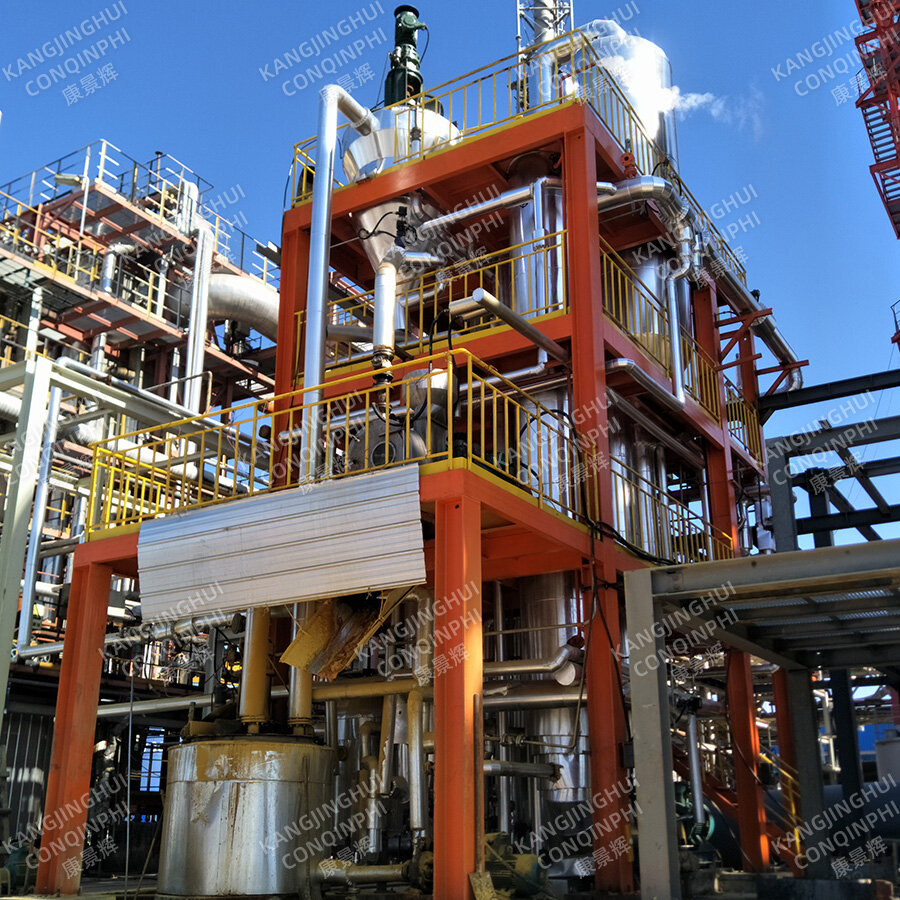
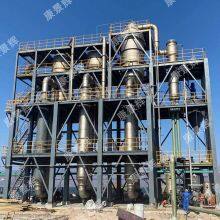
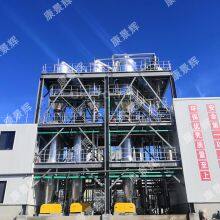
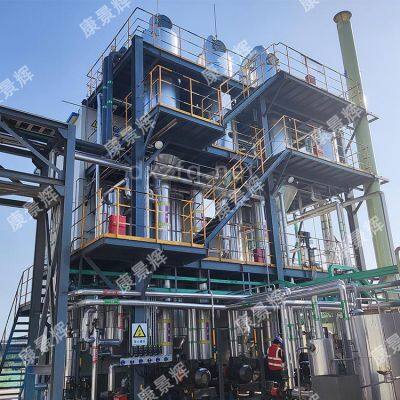
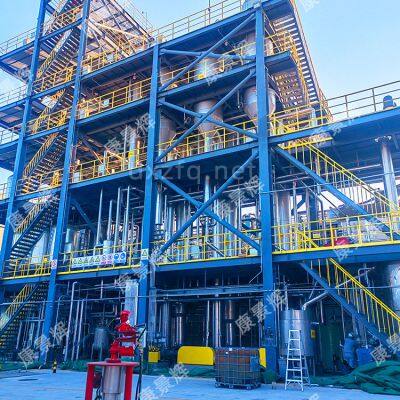
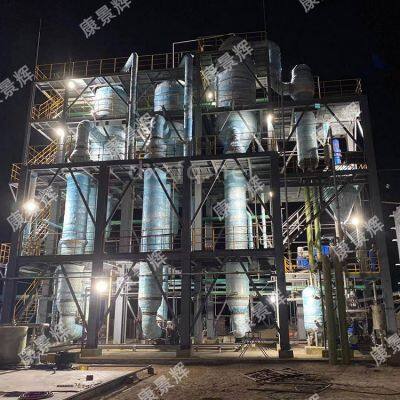
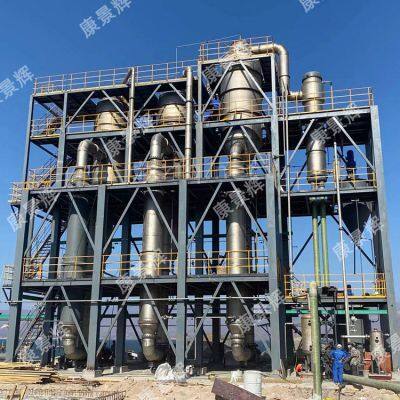
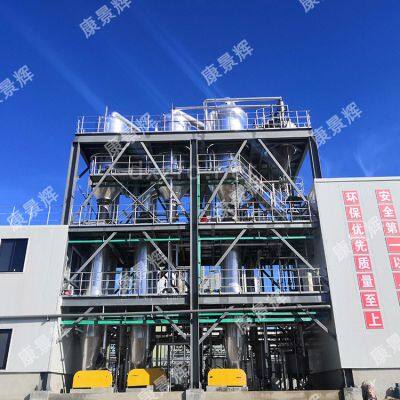
Falling Film Salt Water Purifier Evaporator Mvr Water Filter for Salt Water


Related Products
-
 Industrial Sewage Treatment Plate Shell and Tube Rotary Mvr Water Evaporator PlantUS$ 530 - 62700MOQ: 1 Combo
 -
Plate or Tubular Multi-Effect / MVR Evaporator PlantUS$ 320 - 85900MOQ: 1 Combo
-
≥0.5t/H Mvr & Multi Reverse Osmosis Water Sewage Treatment Evaporator PlantUS$ 16500 - 952000MOQ: 1 Combo
-
Energy Saving Vacuum Falling Film Mvr Evaporator System for Juice ConcentrationUS$ 3850 - 685000MOQ: 1 Combo
-
≥0.5t/H Sugarcane Juice Milk Vacuum Concentration Tank Vacuum Evaporator PlantUS$ 890 - 678000MOQ: 1 Combo
MVR Evaporator Introduction
MVR Evaporator
MVR is called Mechanical Vapor Re-compression. It use the centrifugal compressor to re-compress the secondary vapor(low temperature and low pressure) which is evaporated from the liquid material to rise its temperature and pressure, so as to reuse it as heating source to evaporate the liquid material again. The process is to convert a small amount of electric energy to more heat energy.
MVR evaporator classification.
1. By Compressor Type (Mainstream Classification):
Mechanical Compressor (Impeller): Most commonly used, including centrifugal and Roots compressors. Suitable for most applications and highly efficient.
Steam Ejector (Thermal Compressor): Utilizes high-pressure steam to inject secondary steam. It has no moving parts and is suitable for specific applications involving corrosive or easily crystallized materials.
2. By Material Flow:
Forced Circulation: A pump is used to force the material to flow at high speed. Suitable for high-viscosity, scaling-prone, and crystallizing materials.
Falling Film: The material flows down the tube wall in a thin film, resulting in high evaporation efficiency. Suitable for heat-sensitive and scaling-resistant materials.
Rising Film: The material rises and evaporates as it is heated within the tube. This is now less commonly used.
Plate Heat Exchanger: This utilizes a plate heat exchanger, offering a compact structure and high heat transfer efficiency. Suitable for small and medium-sized operations and heat-sensitive materials.
Often, an MVR evaporator is described by combining the two, such as "centrifugal compressor forced circulation MVR evaporator".
MVR evaporator working process
The core process of an MVR evaporator begins with the material entering the system and being preheated by the subsequent steam in the preheater. The preheated material then enters the heat exchanger, where it exchanges heat with the heat medium and is partially evaporated.
The low-temperature, low-pressure secondary steam produced by evaporation is extracted and compressed by a mechanical compressor, raising its temperature and pressure. This elevated compressed steam is then returned to the shell side of the evaporator and recycled as a heat source for heating the material.
In this way, the latent heat of the steam is reused within the system, requiring only an external heat source during startup. Once operating normally, the cycle is primarily maintained by the work of the compressor. The concentrated material is ultimately discharged from the system, achieving efficient and energy-efficient continuous evaporation.

Send Inquiry to This Supplier


You May Also Like
-
Forced Circulation Falling Film Low-temperature Double-effect MVR EvaporatorUS$ 7450 - 846000MOQ: 1 Combo
-
≥0.5t/H Double-effect MVR Falling Film Evaporation Crystallization EquipmentUS$ 536 - 669000MOQ: 1 Combo
-
≥0.5t/H Skid-mounted Forced Circulation Double-effect MVR Crystallization EvaporatorUS$ 830 - 738000MOQ: 1 Combo
-
≥0.5t/H 316L/304/316/2205/tai Tubular Plate Forced Circulation Double-effect MVR EvaporatorUS$ 490 - 436000MOQ: 1 Combo
-
≥0.5t/H 316L/304/316/2205/tai Tubular Plate Forced Circulation Double-effect MVR EvaporatorUS$ 3150 - 526000MOQ: 1 Combo
-
Mvr and Tvr Evaporators Machine Water Treatment Plant EquipmentUS$ 2140 - 7500MOQ: 1 Combo
-
Sewage Treatment Equipment Salt Wastewater Water Mvr EvaporatorUS$ 2140 - 7500MOQ: 1 Combo
-
Forced Circulation/Falling Film Single-Effect Mvr Evaporation Crystallization EvaporatorUS$ 2140 - 7500MOQ: 1 Combo
-
Lithium Carbonate in Battery Manufacturing Mvr EvaporatorUS$ 2140 - 7500MOQ: 1 Combo
-
Water Thin Film Aluminium Plate Vacuum Mvr EvaporatorUS$ 480 - 879000MOQ: 1 Combo
