








 Contact Platform Support
 Help Center
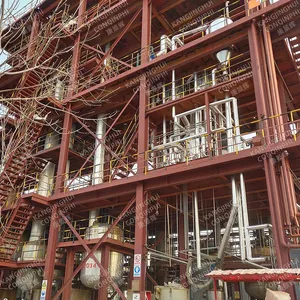
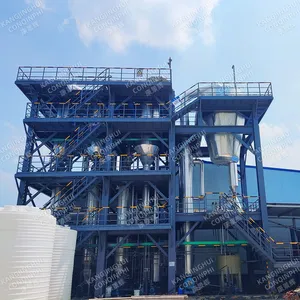
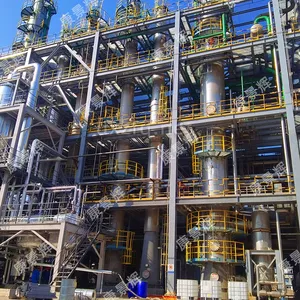
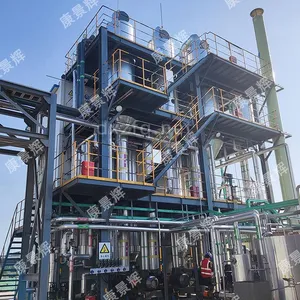
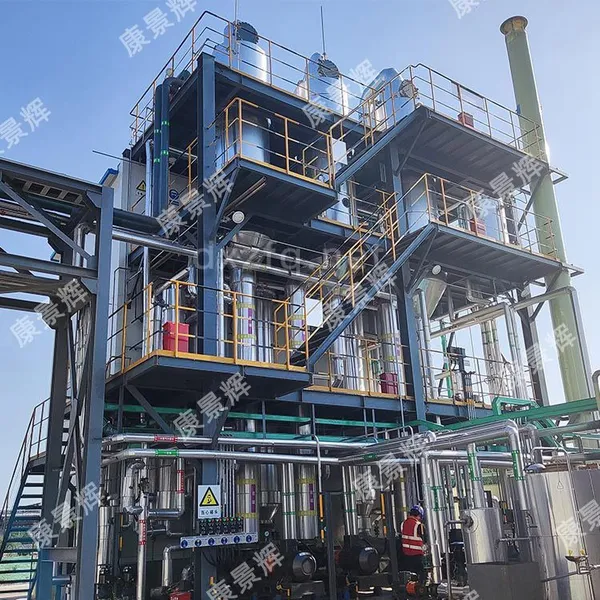
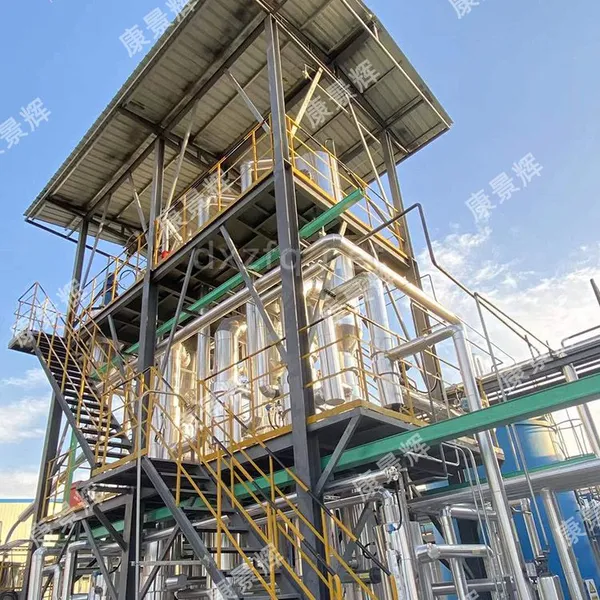
≥0.5t/H 316L/304/316/2205/tai Tubular Plate Forced Circulation Double-effect MVR Evaporator



Related Products
-
 ≥0.5t/H 316L/304/316/2205/tai Tubular Plate Forced Circulation Double-effect MVR EvaporatorUS$ 3150 - 526000MOQ: 1 Combo
 -
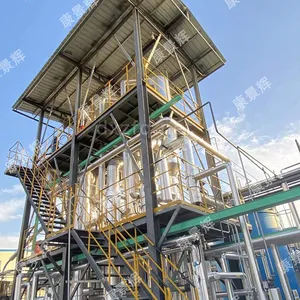
Salt Water Mvr Evaporator for Pharmaceutical IntermediatesNegotiableMOQ: 1 Combo
-
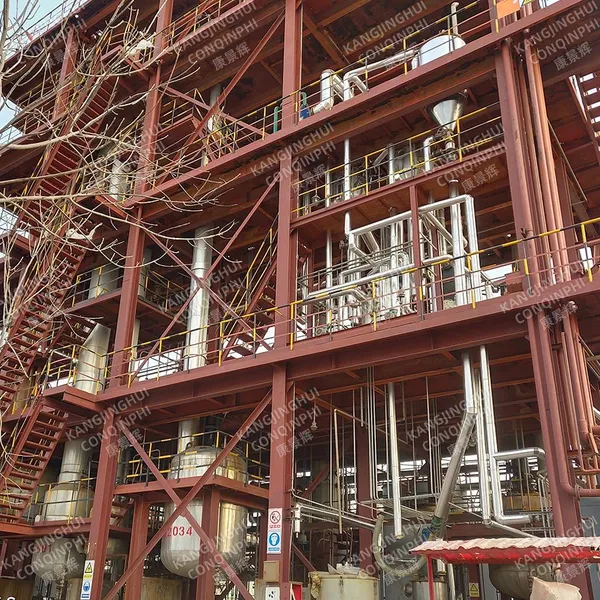
Salt Water Mvr Evaporator for Acidified Oil / Metal Smelting / Rare EarthNegotiableMOQ: 1 Combo
-
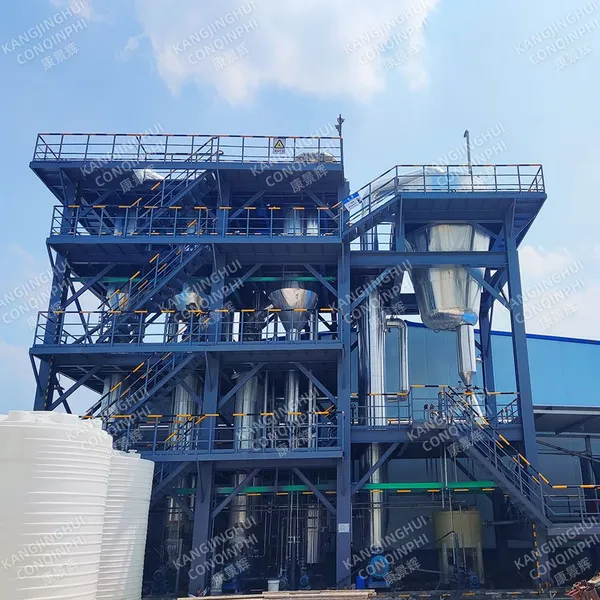
Salt Water Mvr Evaporator for Fluorochemicals / Fertilizer / MedicineNegotiableMOQ: 1 Combo
-
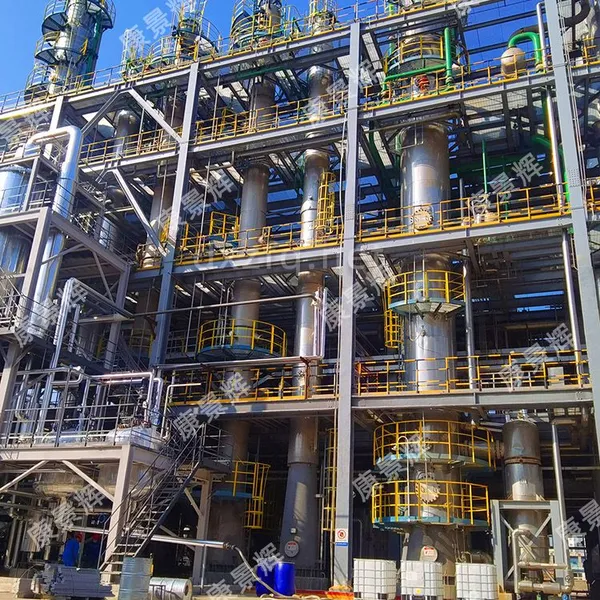
MVR Evaporation Crystallization System for Industrial WastewaterNegotiableMOQ: 1 Combo
Detailed Technical Parameters of Double-Effect MVR Evaporators
Double-effect MVR (Mechanical Vapor Recompression) evaporators are high-efficiency and energy-saving devices combining mechanical vapor recompression technology with double-effect evaporation processes. They are widely used in chemical, pharmaceutical, food, and environmental protection industries, and are particularly suitable for high-salt wastewater treatment, solution concentration, and crystallization processes. Their core advantages lie in significantly reduced energy consumption, improved thermal energy utilization, low-temperature and gentle evaporation, and high automation and stable operation.
The following is a systematic introduction to their working principle, key technical parameters, performance indicators, operating conditions, and system configuration:
I. Brief Description of Working Principle (Technical Basis) The double-effect MVR evaporator combines single-effect MVR evaporation with double-effect series evaporation:
First Effect (High-Temperature Effect): Fresh steam or compressed secondary steam is used to heat the feed liquid, generating secondary steam.
Second Effect (Low-Temperature Effect): The secondary steam generated in the first effect is pressurized and heated by a compressor, serving as the heating source for the second effect, achieving cascaded energy utilization.
Mechanical Vapor Recompression (MVR): The low-temperature, low-pressure secondary steam generated during evaporation is compressed by a centrifugal compressor, increasing its pressure and temperature (typically by 12–30°C) to provide sufficient enthalpy for reuse as a heat source.
The entire system operates in a vacuum environment, lowering the boiling point (achieving evaporation below 40°C) and preventing the decomposition of heat-sensitive substances.
Closed-loop energy utilization: Except for a small amount of live steam preheating during startup, almost no external steam input is required after normal operation, achieving near-zero steam consumption.
II. Core Technical Parameters
|Parameter Category|Typical Values/Range|Explanation and Significance|
|1. Evaporation Capacity|1–50t/h (based on water)|Customized according to project requirements, commonly found in medium-sized systems of 5–20t/h|
|2. Energy Consumption (Electricity Consumption)|23–70kWh/t water|Electricity required to evaporate one ton of water, depending on the compression ratio, material properties, and system optimization level|
|3. Compressor Parameters|Type: Single-stage centrifugal compressor; Compression Ratio: 1.4–2.5; Temperature Rise: 12°C -30K Material: Stainless Steel/Titanium Alloy (Corrosion Resistant) | The compressor is the "heart" of the system, determining the vapor recompression efficiency; titanium is suitable for corrosive vapors. |
4. Operating Temperature | 40–70℃ (Low-Temperature Evaporation) | Can operate below 40℃ without chilled water condensation, suitable for heat-sensitive materials. |
5. Operating Pressure (Absolute Pressure) | 0.1–0.3 bar (corresponding to a saturation temperature of approximately 60–70℃) | Vacuum operation lowers the boiling point and reduces the risk of scaling. |
6. Temperature Difference (Δ) T) | 5–8℃ (between heating steam and feed liquid) | Small temperature difference design protects product quality and prevents tube clogging and coking |
7. System thermal efficiency (equivalent to multi-effect) | Equivalent to 20–30 effects of traditional multi-effect evaporators | Extremely high energy utilization efficiency and significant energy saving effect |
8. Concentration ratio | Can reach 50%–60% solid content | Flash evaporator or crystallizer is recommended when concentrating to above 50% |
9. Effluent water quality (condensate) | COD
|10. Automation Level|PLC/DCS control, fully automatic operation|Supports remote monitoring, fault diagnosis, and CIP cleaning program|
III. Key Performance Characteristics (Technical Advantages)
1. Ultra-High Energy Efficiency
Requires only a small amount of live steam during startup; after normal operation, it almost does not rely on external steam.
Electricity is the main input energy source, resulting in extremely low unit steam consumption.
Energy consumption is only 1/3–1/5 of that of traditional multi-effect evaporators.
2. Low-Temperature and Mild Evaporation
Evaporation temperature can be controlled between 40–70℃, avoiding material decomposition, discoloration, or scaling caused by high temperatures.
Especially suitable for heat-sensitive materials (such as yeast extract, antibiotics, fruit juice, whey, etc.).
3. High Heat Recovery Rate
Secondary steam is reused after compression, with a latent heat recovery rate >90%.
The system has high overall thermal efficiency, equivalent to a traditional 30-effect evaporator.
4. Low Operating Costs: No large boiler system required, saving fuel costs; condensers can be eliminated or significantly reduced, decreasing circulating cooling water consumption; Fewer utility requirements, suitable for site-constrained renovation projects.
5. Anti-scaling and Easy-to-Clean Design: Forced external circulation or falling film flow reduces residence time and scale buildup; Equipped with a CIP (Clean-in-Place) system, supporting single-loop or multi-loop cleaning with no dead zones; Optional automatic scraper or spray device extends continuous operation cycles.
6. Modular and Compact Structure: High equipment integration and small footprint; Can be prefabricated in the factory and assembled on-site, shortening construction time.
IV. Typical Application Scenarios and Parameter Adaptation
|Industry|Suggested Typical Parameter Adjustment|Application Objectives|
|Pharmaceutical Industry|Temperature control at 45–60℃, ΔT≤6℃|Concentrate antibiotics and traditional Chinese medicine extracts to prevent degradation of active ingredients|
|Food Industry|Use sanitary-grade materials, increase CIP frequency|Concentrate fruit juice, whey, and yeast liquid to maintain flavor and nutrition|
|Chemical/Dye Wastewater|Increase compression ratio, use matching crystallizers|Reduce high-salt wastewater volume to achieve salt resource utilization|
|Yeast Industry Wastewater Treatment|Influent COD>10000mg/L, Effluent COD~2000mg/L|Reduce dry powder fertilizer production costs and solve pipe blockage problems|
|Environmental Protection (Zero Discharge) | Combined membrane system (e.g., NF/RO) + MVR, achieving near-zero discharge | Industrial wastewater reuse, meeting environmental discharge standards |
V. Operation and Maintenance Precautions
Start-up Phase: Live steam preheating system must be introduced to the set temperature. The compressor should only be put into operation after secondary steam has been stably generated.
Compressor Maintenance: Regularly check impeller wear, bearing lubrication, and the sealing system to ensure high airtightness.
Anti-clogging Measures: For high-viscosity or high-salt materials, forced circulation + regular backwashing is recommended.
CIP Cleaning Cycle: Generally every 72–168 hours, adjusted according to scaling conditions.
Control System: Should have pressure, temperature, and liquid level interlock protection to prevent dry burning or overpressure.
VI. Development Trends and Technological Upgrade Directions
Intelligent Control: Integrating AI algorithms to predict scaling trends and optimize compressor frequency conversion strategies;
Material Upgrades: Adopting duplex steel, titanium alloys, and graphene coatings to improve corrosion resistance;
Coupled Processes: Integrating with membrane separation, crystallization, and drying systems to form an integrated "evaporation-crystallization-drying" solution;
Carbon Neutrality Contribution: As a key piece of equipment for energy conservation and carbon reduction in high-energy-consuming industries, it aligns with the national "dual-carbon" policy.
Summary
Double-effect MVR evaporators, with their advantages of low energy consumption, high efficiency, low-temperature operation, and strong automation, have become the mainstream choice in modern industrial evaporation. Their technical parameters embody the core concepts of closed-loop energy utilization and green manufacturing, making them particularly suitable for enterprises with high product quality requirements, significant environmental pressure, and sensitive operating costs.
Recommended Application Scenarios: For specific project parameter design, it is recommended to perform customized calculations and simulations based on material characteristics (boiling point rise, viscosity, corrosivity), throughput, and influent concentration.

Send Inquiry to This Supplier



You May Also Like
-
MVR Evaporation Crystallization Equipment for Zinc Oxide /Lithium Batteries WastewaterNegotiableMOQ: 1 Combo
-
Mvr Forced Circulation Plate & Tube-type Evaporator for High-salt and High-COD Organic WastewaterUS$ 3250 - 75900MOQ: 1 Combo
-
MVR Evaporator Desalination System for Shale Backflow Pharmaceutical Acidified OilUS$ 4890 - 698000MOQ: 1 Combo
-
Beverage Processing/tomato Sauce Production Line MVR / Triple Effect Evaporation Concentration SystemUS$ 940 - 74900MOQ: 1 Combo
-
LTE High-salt Crystallizer Wastewater Treatment EquipmentUS$ 42500 - 764000MOQ: 1 Combo
-
High Efficiency MVR Evaporator System for Chemical Industry, 5000 L/H CapacityUS$ 6370 - 87900MOQ: 1 Combo
-
MVR Evaporator With 2-Year Core Components Warranty and Technical SupportUS$ 6370 - 87900MOQ: 1 Combo
-
316L Stainless Steel MVR Evaporator for Pharmaceutical Solvent RecoveryUS$ 6370 - 87900MOQ: 1 Combo
-
Low Energy Consumption MVR Evaporator for Salt Production, Automatic OperationUS$ 6370 - 87900MOQ: 1 Combo
-
MVR Evaporator for Zero Liquid Discharge (ZLD) Applications in Industrial WastewaterUS$ 6370 - 87900MOQ: 1 Combo
