








 Contact Platform Support
 Help Center
Endurance Drone Battery



Related Products
-
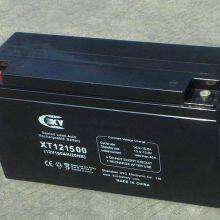
 China Chaoshengtong UAV Battery Core Technology and Safety Performance of UAV BatteryNegotiableMOQ: 1 Blade
 -
Ultra Long Endurance Drone BatteryNegotiableMOQ: 1 Blade
-
Semi-solid-state BatteryNegotiableMOQ: 1 Unit
-
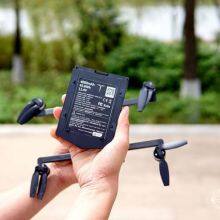
Brand Drone BatteryNegotiableMOQ: 1 Blade
-
Super Drone Battery ProductsNegotiableMOQ: 1 Blade
China Chaoshengtong UAV Battery Core Technology and Safety Performance of UAV Battery
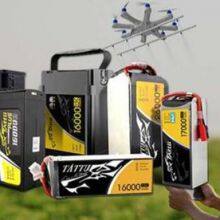
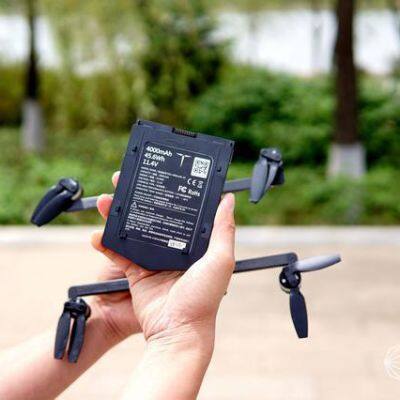
1、 The core technology of drone batteries (what you really need to pay attention to) is essentially a high-energy density lithium-ion battery system, consisting of battery cells, protective boards (BMS), connectors, shells, etc.
1. Battery cell technology (determining performance limits): Mainstream drone batteries use lithium polymer (LiPo) or high nickel ternary lithium (NCM) batteries. Key technical points: • High energy density: generally 180-260 Wh/kg, determining flight time.
• High rate discharge: commonly between 10C and 25C, some racing machines can reach 50C. For example, a 2000mAh, 20C battery has a maximum discharge current of 2000mAh × 20=40A.
• Low internal resistance: usually 5-15m Ω, the lower the heat generation, the less stable the voltage. Lightweight packaging: The LiPo package is lighter than the hard shell and is suitable for drones.
2. Battery Management System (BMS) technology BMS is the "brain" of drone batteries, responsible for: • overcharge protection (generally 4.2V/cell) • overdischarge protection (generally 3.0V-3.2V/cell)
• overcurrent/short circuit protection • temperature protection (usually discharged at 0-45 ° C and charged at 0-40 ° C) • cell balancing (passive balancing is the main method, with active balancing in high-end models). High end drones (such as DJI Mavic 3/4 series) use intelligent batteries, which have: • accurate estimation of remaining capacity (mAh) •
cycle number recording •
cell health (SOH) • flight log data recording • two-way communication with flight control. 3 Battery pack structure technology: Drone batteries are mostly multi string and multi parallel (S/P) structures:
• Consumer grade aerial cameras: 4S (4 strings) most common (14.8V nominal)
• Large industrial machines: 6S-12S
• Racing machines: 4S-6S Example: 4S battery nominal voltage=3.7V × 4=14.8V Full charge voltage=4.2V × 4=16.8V
2、 Drone Battery Safety Standards (Domestic and International) Drone batteries must meet multiple safety standards, especially in terms of transportation and use safety. one Domestic standards (China)
• GB/T 18287-2013 Safety requirements for lithium-ion batteries and battery packs for mobile phones
• GB/T 31484-2015 Cycle life requirements and test methods for power batteries for electric vehicles
• GB/T 31485-2015 Safety requirements and test methods for power batteries for electric vehicles
• GB/T 31467.3-2015 Lithium ion power battery packs and systems for electric vehicles - Part
3: Safety requirements and test methods
• SJ/T 11690-2017 Safety requirements for lithium-ion batteries in civil unmanned aerial vehicle systems (important)
• CAAC (Civil Aviation Administration of China) transportation requirements: Batteries must be carried on hand and cannot be checked in. Rated energy ≤ 100Wh can be carried directly. -160Wh requires airline approval ◦ 160Wh is prohibited from carrying 2 International Standard
• UN 38.3 Lithium ion Battery Air Transport Safety Standard (Global)
• IEC 62133-2 Battery Safety Standard
• UL 1642 Lithium ion Battery Safety Standard
• UL 2054 Battery Pack Safety Standard
• FAA (United States) Transportation Requirements
◦ Similar to CAAC, it is prohibited to transport lithium batteries
◦ Backup batteries must be equipped with anti short circuit measures (such as insulation caps)
◦ III. Common safety risks and causes of drone batteries
◦ Overcharging: voltage exceeding 4.2V/cell → bulging, smoking, fire
• Overdischarge: voltage below 3.0V/ Battery cell → irreversible damage, capacity decrease
• high rate discharge overheating: internal resistance heating+high ambient temperature → thermal runaway
• physical damage: impact, puncture, compression → diaphragm rupture → short circuit
• aging battery cell: high cycle count → internal resistance rise → easier heating
• inferior battery cell/counterfeit battery: unprotected, high internal resistance, poor consistency → high risk 4. How to determine whether a drone battery is safe and relia
ble? You can quickly check the following indicators:
• Low internal resistance and good consistency of battery cells (difference between each string ≤ 5m Ω)
• Clear overcharge/overdischarge/overcurrent/temperature protection
• Flame retardant and impact resistant shell • Certified: UN38.3, CE, FCC, RoHS, etc.
• Cycle life ≥ 300 times (regular brands generally 400-500 times)
• Smart batteries need to support cell balance and health detection

Send Inquiry to This Supplier


You May Also Like
-
Super Drone Battery Products Mobile Power BatteryNegotiableMOQ: 1 Blade
-
Mobile Power BatteryNegotiableMOQ: 1 Blade
-
Polymer Batteries and Consumer BatteriesNegotiableMOQ: 1 Blade
-
Serial Connection BatteryNegotiableMOQ: 1 Blade
-
Electric Vehicle Power BatteryNegotiableMOQ: 1 Blade
-
99.9999% High-purity Copper BlockNegotiableMOQ: 1 Hectare
-
Core Quality Standard for 99.9999% (6N) Copper Powder Represented by China ChaoshengtongNegotiableMOQ: 1 Metric Ton
-
Core Quality Standard for 99.9999% (6N) CopperNegotiableMOQ: 1 Metric Ton
-
99.9999 High-purity Copper PowderNegotiableMOQ: 1 Metric Ton
-
Customized UAV Solid-state BatteryNegotiableMOQ: 1 Unit