








 Contact Platform Support
 Help Center
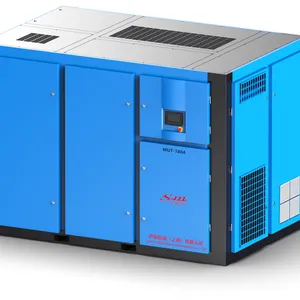
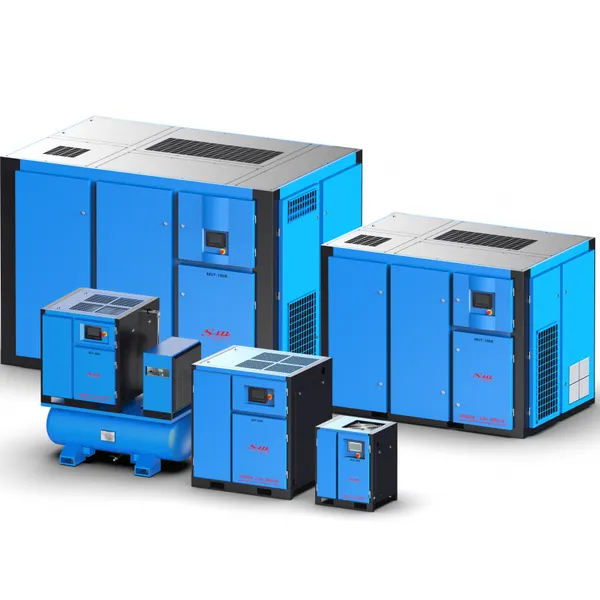
Variable-frequency Screw Air Compressor, Highly Efficient and Energy-saving, With High Gas Output and Low Noise.






Related Products
-
 Saman Screw Air Compressor, Permanent Magnet Variable Frequency Screw Air CompressorNegotiableMOQ: 1 Piece
 -
The Saman Screw Compressor Has Stable Performance and High Gas Output.NegotiableMOQ: 1 Piece
-
The Saman Mobile Screw Air Compressor is Easy to Operate, Highly Reliable and Has Good Power Balance.NegotiableMOQ: 1 Piece
-
Saman Permanent Magnet Screw Air Compressor, Highly Efficient, Energy-saving, Low Rotational Speed, and High Gas Output CapacityNegotiableMOQ: 1 Piece
-
Saman Permanent Magnet Variable Frequency Screw Air Compressor, MV-100A, With a Power of 75KW, Highly Efficient and Energy-savingNegotiableMOQ: 1 Piece
The screw air compressor achieves the intake, compression and discharge of air through a pair of intermeshing screw rotors, featuring high efficiency and stability. Working principle
The working process of a screw air compressor can be divided into three main stages: suction, compression, and exhaust. Here is a detailed analysis of the working principle:
Suction stage:
When the rotor rotates, the space between the male rotor and the female rotor gradually expands, connecting to the intake port. The outside air enters the space between the rotor through the intake port. At this time, the space between the rotors is the largest, and the air is sucked in and sealed in the space between the rotors.
Compression stage:
After the inhalation process is completed, the rotor continues to rotate, and the space in the tooth grooves gradually decreases, forcing the air to be compressed. As the rotor rotates, the pressure of the gas gradually increases, and the temperature also rises. At this time, lubricating oil is sprayed into the compression chamber to lower the temperature and provide sealing.
Exhaust stage:
When the mating surfaces of the rotor connect with the exhaust port, the compressed high-pressure air begins to be discharged. At this point, the space in the tooth grooves is zero, completing the exhaust process. Then, the rotor returns to the inhalation state and starts a new cycle.
Main structure
The main structure of the screw air compressor includes:
Male rotor and female rotor: The male rotor usually has convex teeth, while the female rotor has concave teeth. They mesh with each other to form a compression chamber.
Casing: The casing provides support for the rotor and ensures the precise meshing of the rotor in the cylinder.
Inlet and outlet ports: Used for air intake and the discharge of compressed air.
Lubrication system: Lubricating oil is sprayed in to lower the temperature and provide sealing. Application fields
Lubricated screw air compressors are widely used in industrial production, automotive manufacturing, food processing and other fields. They are favored for their high efficiency and stable performance. By understanding their working principle and structure, better selection and maintenance can be achieved. Through the above analysis, the working principle and structural features of the screw air compressor are clearly presented, helping users better understand its functions and applications.

Send Inquiry to This Supplier

You May Also Like
-
Saman Screw Air Compressor, Permanent Magnet Variable Frequency, High-efficiency Double-stage Air CompressorNegotiableMOQ: 1 Piece
-
The Saman Screw Air Compressor is Widely Used and Can be Applied to Any Industry, Such as Food, Machinery, Healthcare, Industry, Mining, Etc.NegotiableMOQ: 1 Piece
-
Saman Screw Air Compressor MV Permanent Magnet Variable Frequency Series, With Flow Rates Ranging From 1m³ to 60m³NegotiableMOQ: 1 Piece
-
Saman Screw Air Compressor, Highly Efficient and Energy-saving, With a Wide Range of Models and Excellent Environmental Protection Features.NegotiableMOQ: 1 Piece
-
Saman Permanent Magnet Variable Frequency Screw Air Compressor MV-150A, With a Power of 110KW and a Flow Rate of 20m³NegotiableMOQ: 1 Piece
-
The Saman Mobile Screw Air Compressors Can be Divided Into Diesel Mobile Screw Air Compressors and Electric Mobile Screw Air Compressors.NegotiableMOQ: 1 Piece
-
Saman Screw-type Air Compressor, Permanent Magnet Variable-frequency Air Compressor, Double-stage Compression Screw Air CompressorNegotiableMOQ: 1 Piece
-
Saman Permanent Magnet Variable Frequency Screw Air Compressor MV-150ANegotiableMOQ: 1 Piece
-
Saman MV-10A Permanent Magnet Variable Frequency Screw Air CompressorNegotiableMOQ: 1 Piece
-
MA-10A Saman Screw-type Air CompressorNegotiableMOQ: 1 Piece


