








 Contact Platform Support
 Help Center
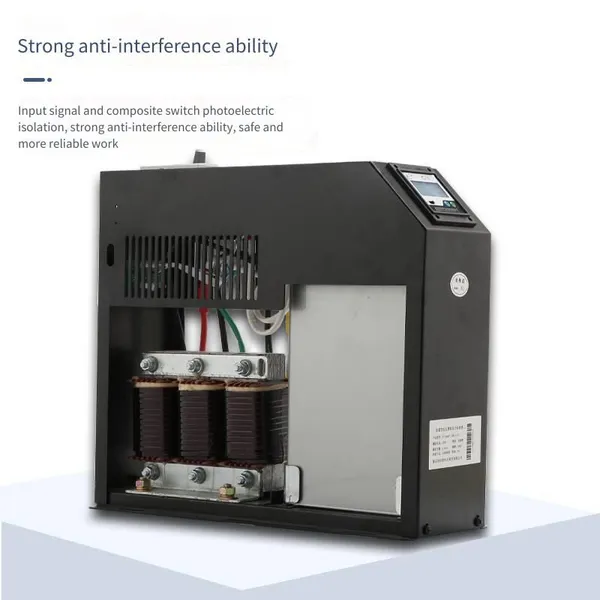
Report on Naqu Capacitor Reactor Vst200-480-30*11-b-7




Related Products
-
 Cangzhou Smart Capacitor Bagb/450/20(10 Manufacturer)NegotiableMOQ: 0 Piece
 -
Principle of Nujiang Capacitor Reactor Rct-30/p14NegotiableMOQ: 0 Piece
-
Principle of Dongying Active Filter Component Pqca-380-100-200fc3NegotiableMOQ: 0 Piece
-
Wiring of Fst-lmzs/250-20 Intelligent Capacitor in Yanqing CountyNegotiableMOQ: 0 Piece
-
Price of Huzhou Active Filtering Device F-box4l380/300aNegotiableMOQ: 0 Piece
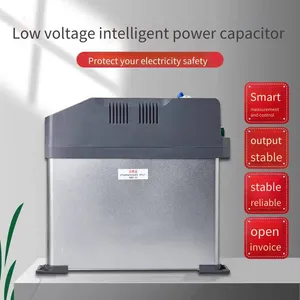
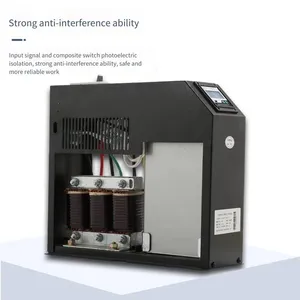
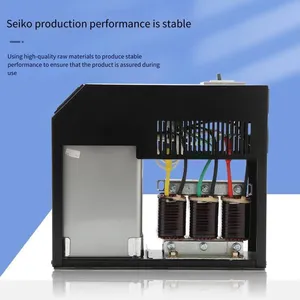
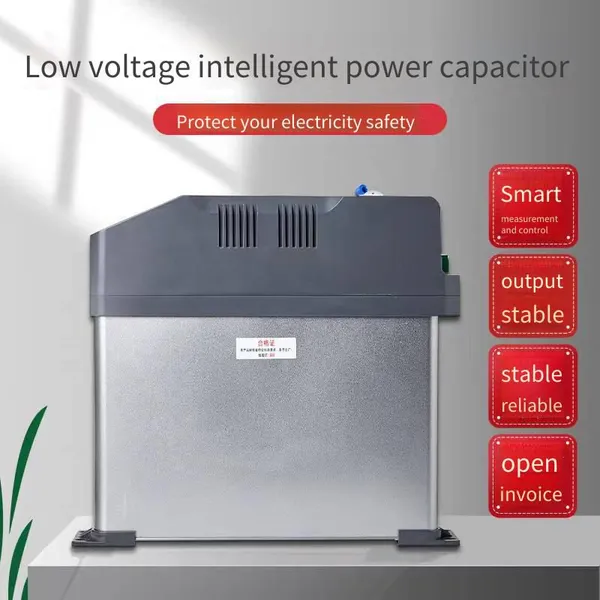
The fast anti-harmonic intelligent power capacitor is designed for the situation where the harmonic content of the power network is large, the reactive power changes rapidly, and ordinary power capacitors cannot operate normally. It uses special technologies and processes and is composed of a circuit breaker, thyristor, reactor, and low-voltage aluminum-shell power capacitor. It has the characteristics of fast response, zero-crossing switching of the capacitor, no inrush current impact, effectively prolonging the service life of the capacitor, no amplification effect on harmonics, and the ability to absorb some harmonics.
High-voltage switchgear in a closed state often experiences a temperature rise inside the cabinet during operation due to poor ventilation and heat dissipation conditions in its space. Once moisture enters, it is difficult to discharge, and it is very easy to form condensation. If it is not detected and controlled in time, it will affect the operation of the equipment. Therefore, taking effective measures to control the temperature and humidity of high-voltage switchgear to ensure the normal operation of high-voltage equipment has become an urgent problem to be solved.
The passive current isolator can isolate and transmit DC current signals without the need for additional power supply during use. It is easy to install and can effectively solve the interference that occurs during the signal transmission process in actual use. The multi-functional harmonic meter can measure various common power parameters, active and reactive power, and harmonic content, and has functions such as digital communication, over-limit alarm, monitoring of switch status, power pulse output, and analog quantity transmission output.Intelligent Reactive Power CompensationCapacitoris an intelligent reactive power compensation device for 0.4kV low-voltage distribution networks to reduce line losses, improve power factor, improve power quality, and save energy and reduce consumption. Based on the intelligentReactive Power CompensationControllerThe reactive power compensation scheme designed can refer to the following principles
| Non-linear Load Ratio | Reactive Power Compensation Design Scheme | | |
|
| Three-phase balanced static load | Three-phase unbalanced static load | Three-phase balanced frequently changing load | Three-phase unbalanced frequently changing load | |
| Non-linear equipment in the load ≤ 15% of transformer capacity (mainly linear load) | Three-phase common compensation, composite switch zero-crossing switching | Phase-separated compensation or hybrid compensation, Composite switch zero-crossing switching; | Three-phase common compensation, thyristor switch dynamic switching | Phase-separated compensation or hybrid compensation, Thyristor switch dynamic switching; |
| 15% | Three-phase common compensation Composite switch zero-crossing switching Connect 6% or 12% filtering reactance in series in the capacitor circuit | Phase-separated compensation or hybrid compensation Composite switch zero-crossing switching Connect 6% or 12% non-tuned filtering reactance in series in the capacitor circuit | Three-phase common compensation Thyristor switch dynamic switching Connect 6% or 12% non-tuned filtering reactance in series in the capacitor circuit | Phase-separated compensation or hybrid compensation Thyristor switch dynamic switching Connect a 6% or 12% non-tuned filtering reactance in series in the capacitor circuit |
| Harmonic governance target | Break the parallel resonance between the capacitor and the system and partially absorb the 3rd, 5th, 7th and higher harmonics in the system | Break the parallel resonance between the capacitor and the system and partially absorb the 3rd, 5th, 7th and higher harmonics in the system | Break the parallel resonance between the capacitor and the system and partially absorb the 3rd, 5th, 7th and higher harmonics in the system | Break the parallel resonance between the capacitor and the system and partially absorb the 3rd, 5th, 7th and higher harmonics in the system |
| The ratio of non-linear equipment in the load > 50% of the transformer capacity (with a large amount of harmonics) | Three-phase common compensation Zero-crossing switching of composite switch Tuned filtering circuit composed of capacitors or reactances | Phase-separated compensation or mixed compensation Zero-crossing switching of composite switch Tuned filtering circuit composed of capacitors or reactances | Three-phase common compensation Dynamic switching of thyristor switch Tuned filtering circuit composed of capacitors or reactances | Phase-separated compensation or mixed compensation Dynamic switching of thyristor switch Tuned filtering circuit composed of capacitors or reactances |
Introduction The wireless room temperature remote acquisition and control system is a control system that has emerged in recent years. It is mainly used in fields such as centralized heating, centralized cooling, and warehousing, and can also be used in industrial fields with low requirements. Its main advantage is to centrally collect the ambient temperatures of multiple channels between existing buildings where wiring is not feasible at a low cost, and control air conditioners and heating to achieve the goal of energy saving and efficiency improvement. When reading the main circuit diagram, first read the main circuit diagram and then read the control circuit in sequence. When looking at the main circuit, usually look from bottom to top, that is, start from the electrical equipment and then look at the power supply through control components and protection components in turn. By looking at the main circuit, you need to figure out how the electrical equipment obtains power, which components the power passes through to reach the load, and what the specifications, models, and functions of these components are. When looking at the control circuit, look from top to bottom and from left to right. That is, first look at the power supply, then look at each loop in turn, and analyze the working conditions of the components in each loop and their control relationship with the main circuit. When looking at the control circuit, you need to figure out the composition of the circuit, the connections between components (such as sequence, interlock, etc.), the control relationship, and under what conditions the circuit forms a path or an open circuit, and how the control circuit controls the operation of the main circuit, so as to figure out the working principle of the whole system, as shown in the figure.
Ammeter YDJ31 - AA75 Leakage circuit breaker UPB6L - 125/3C100
Control and protection switch KB0 - 32C/M32/M12/06MFG Vacuum circuit breaker ZN57B/1250A/25KA
Vacuum circuit breaker VS1 (ZN63A) - 12
Multi - user smart meter PD866EZ - 8S Multi - function meter XH292E - 9X4
Isolation barrier PHD - 11TD - 21 Three - phase ammeter YN8031 - 48/T - 1A
Intelligent control device LXXK - 8400 Vacuum contactor VTCF - 12D/D - M200 - 50
Signal isolator W5DY - AA - M/K Overvoltage protector SHK - DTS - B - 7.2
Heater SB - G - 100W Liquid level display XWP - TX804 - 02 - 12 - 2H2LP (4~20mA output) Surge protector LS4 - 100/4 - 385
Multi - function power meter RST300 Closing electromagnet DC220V
Digital AC voltmeter IDVM05B Small DC circuit breaker BYEM6Z/2P
Protector XRL - 261 Current transmitter HPAX - A1 - F1 - P2 - O3
Power transmitter HPW201 - V1 - A1 - F1 - P2 - O3 Capacitor BSMT0.525 - 30 - 3CT Open - circuit protection ST - CT6
Three - phase ammeter S381I - 9SY Soft starter SEC18C075
Molded case circuit breaker BM30 - 63M/3300 Reactive power compensation controller KLD - MRT18 - H
Active power filter BELAPF - 400A - 400/4L Live display device DXN7 - QIII
Current transformer SY - 0.66 Controller FBS5000 Switchgear intelligent display device MG - 210ZK
Microcomputer line protection and measurement and control device DGR2201 Temperature controller BWD - KXF
Control transformer NDK(BK) - 2000 Circuit breaker HM8H - 160/160A
Intelligent dehumidification device CS820 Frequency transmitter PLDD - F
Reactive power compensation controller SE - CR2002D - 10AS

Send Inquiry to This Supplier


You May Also Like
-
Manufacturer of Hegang Reactor Bg-fd440-20/7%NegotiableMOQ: 0 Piece
-
Wiring of Taiyuan Active Power Filter Sinexcel-25aNegotiableMOQ: 0 Piece
-
Manufacturer of Yanbian Capacitor Apk440-3-45NegotiableMOQ: 0 Piece
-
Price of Hengshui Capacitor Apkr-440-3-25NegotiableMOQ: 0 Piece
-
Manufacturer of Zhuzhou Self-healing Capacitor Ulhbc/50/480/3pNegotiableMOQ: 0 Piece
-
Principle of Foshan Intelligent Capacitor Kld - Bkst - 200/5 - 400NegotiableMOQ: 0 Piece
-
Principle of Meishan Capacitor Reactor Lstcr480-10/7.0NegotiableMOQ: 0 Piece
-
Connection of Sanming Capacitor Mked0.48-30-3NegotiableMOQ: 0 Piece
-
Price of Huangshan Capacitor Bsmj0.48-15-3NegotiableMOQ: 0 Piece
-
Manufacturer of Zhuzhou Filter-type Capacitor Lzs-dlc30NegotiableMOQ: 0 Piece