








 Contact Platform Support
 Help Center
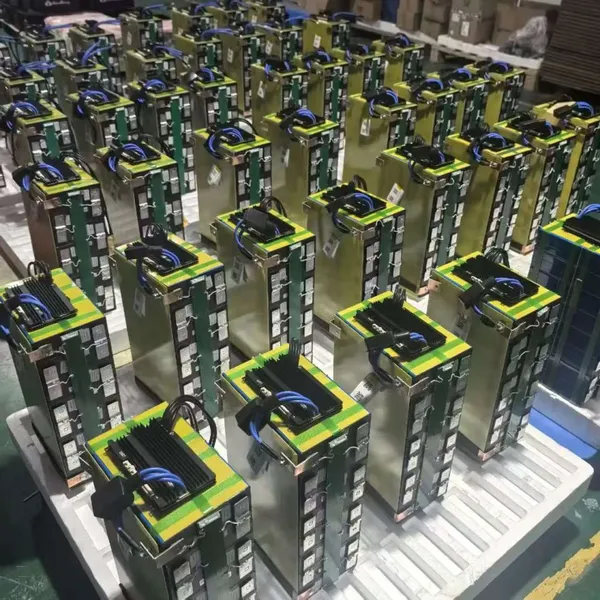
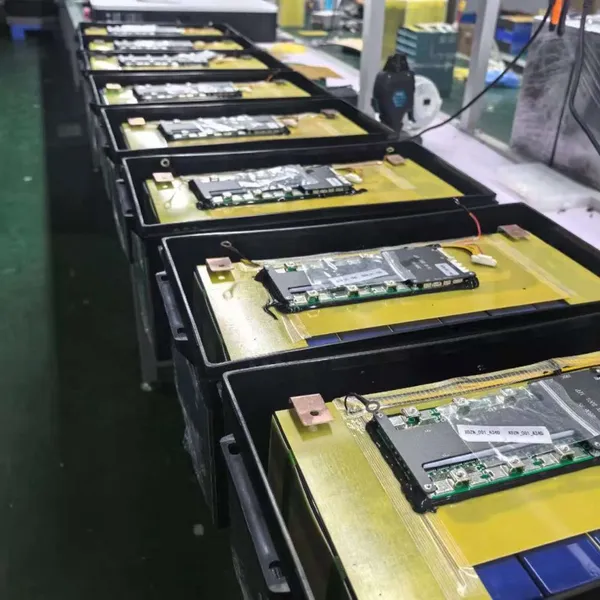
Customized Electric Vehicle Battery,drone Battery




Related Products
Currently, lithium-ion batteries are the mainstream in China's
Chaoshengtong new energy battery technology. Meanwhile, cutting-edge routes such as solid-state batteries and sodium-ion batteries are accelerating commercialization. The core revolves around four dimensions: energy density, fast charging, safety, cost, and resource resilience. By
2026, semi-solid and sodium-ion batteries will be scaled up and the technology of structural integration will undergo a comprehensive upgrade. The following provides a detailed explanation from mainstream routes, cutting-edge directions, structural integration, key technologies, and development trends. Mainstream technology route and core parameters Technical route Core advantages Energy density (mainstream in
2026) Cycle life Cost and resources Typical applications Ternary lithium battery (high nickel 811, etc.) High energy density, long range 200-300Wh/kg 1500-2500 cycles Rely on nickel and cobalt, high cost Mid-to-high-end passenger vehicles, long-range models Lithium iron phosphate battery (LFP) Low cost, high safety, long lifespan 140-160Wh/kg 3000-5000 cycles Cobalt and nickel-free, low cost Economical passenger vehicles, energy storage, commercial vehicles Sodium-ion battery: Low temperature tolerance, low cost, no lithium cobalt nickel, 160-175Wh/kg, 3000-6000 cycles, abundant sodium resources, 30%-40% lower cost compared to LFP, energy storage, commercial vehicles, low temperature scenarios Semi-solid battery: Improved energy density and enhanced safety. 300-400Wh/kg. 2000-3000 cycles. Cost higher than liquid lithium battery, but lower than all-solid-state battery. High-end vehicle models, cutting-edge verification projects All-solid-state battery: Energy density leap, intrinsic safety. 400-500Wh/kg. Target: 5000+ cycles. High cost of mass production, complex process. Gradually entering real vehicle verification in
2026-2027 Frontier technological breakthroughs and key directions Solid-state battery: transitioning from semi-solid to fully solid The core is to replace liquid electrolyte with solid electrolyte (sulfide, oxide, polymer) to block the thermal runaway path, resulting in an energy density increase of over 50% compared to liquid lithium batteries. Semi-solid batteries have been installed in vehicles (such as the Qingtao Energy solution, with a range of 1000km and a 50% improvement in low-temperature performance at -30℃). However, all-solid-state batteries are limited by interface impedance, conductivity, and mass production costs. Toyota plans to mass produce them by
2027, with a range of 1200km and a charging time of 10 minutes. The Chinese national standard clearly defines the threshold for "all-solid-state": the electrolyte is solid and the ionic conductivity at room temperature meets the standard, excluding solid-liquid mixed systems, guiding the industry to focus on core directions such as sulfides/oxides. Sodium-ion battery: prominent resource and cost advantages Without relying on lithium, cobalt, and nickel, the supply chain is resilient, and the cost is 30%-40% lower than that of lithium iron phosphate. It is expected to drop to within 0.4 yuan/Wh by 2026. Performance breakthrough: CATL's "Na-ion" series can operate stably at temperatures ranging from -40℃ to 70℃, with a cycle life of 3000-6000 cycles. Its risk of thermal runaway is significantly lower than that of lithium-ion batteries, making it suitable for energy storage, commercial vehicles, and the passenger car market in northern regions. Application expansion: From low-speed vehicles and energy storage to passenger car penetration, the AB battery system (sodium-lithium hybrid) further improves the balance between endurance and cost. Upgrading of lithium-ion battery materials and processes High-nickel ternary: The 811 system, combined with nano-rivet technology, achieves an energy density of over 300Wh/kg, balancing safety and energy density. Silicon-based anode:
By addressing volume expansion through surface coating and structural design, the silicon content in Tesla's 4680 battery has been increased to 10%, resulting in a 20% increase in energy density. Lamination process: The fourth-generation thermal composite lamination technology from Hive Energy has achieved a more than 50% efficiency improvement, making it compatible with fast charging and solid-state battery development. Its electrode flatness and interface stability surpass that of winding technology. Structural integration technology (CTP/CTC) CTP: The third-generation Qilin battery boasts a volume utilization rate of 72%, with an energy density of 255Wh/kg for the ternary system and 160Wh/kg for lithium iron phosphate. CTC: Integration of battery cells with chassis and body, achieving a breakthrough in endurance of over 1000 kilometers, with electricity consumption per 100 kilometers reduced to below 12 kWh, simplifying structure and reducing weight. Key technical challenges and solutions Technical bottleneck Solution Solid-state electrolyte conductivity and interfacial impedance: Sulfide electrolytes exhibit near-liquid conductivity (10⁻³ S/cm), oxides are resistant to high temperatures, and polymers are easy to process. Impedance can be reduced through compositing and interfacial modification Silicon-based anode volume expansion: Nanostructure design, carbon coating, and pre-lithiation technology to enhance cycle stability Balancing fast charging and thermal management: 800V high-voltage platform, 4C/5C fast charging technology (such as CATL's Shenxing battery, which can recharge 400km in 10 minutes), intelligent thermal management for optimized heat dissipation Resource and cost pressures: Substitution of sodium-ion batteries, cobalt-free cathodes (such as the Dragon Scale battery from Hive Energy),
cascade utilization, and material recycling (with a lithium recovery rate of 92%) Development trends in 2026 Semi-solid batteries are being scaled up for vehicle integration, while all-solid-state batteries are undergoing real-vehicle validation. The national standards are driving technological focus towards "true solid-state" batteries. Sodium-ion batteries have seen explosive growth in the energy storage and commercial vehicle sectors, with gradual penetration into the passenger vehicle market, further highlighting their cost advantages.
CTP/CTC has become mainstream, with the widespread adoption of 800V high-voltage platforms and 4C fast charging, and the electricity consumption per 100 kilometers continues to decrease. The technology for material recycling and cascade utilization is mature, leading to reduced total lifecycle costs and improved environmental friendliness


Send Inquiry to This Supplier


You May Also Like
-
Drone Solid-state Battery,semi-solid-state Batteries?NegotiableMOQ: 1 Blade
-
Mobile Phone BatteryNegotiableMOQ: 1 Blade
-
Elderly Phone BatteryNegotiableMOQ: 1 Blade
-
Mobile Phone Battery,drone BatteryNegotiableMOQ: 1 Unit
-
Smartphone BatteryNegotiableMOQ: 1 Unit
-
Mobile Phone Battery,productionNegotiableMOQ: 1 Blade
-
Brand Drone BatteryNegotiableMOQ: 1 Blade
-
Endurance Drone BatteryNegotiableMOQ: 1 Blade
-
China Chaoshengtong UAV Battery Core Technology and Safety Performance of UAV BatteryNegotiableMOQ: 1 Blade
-
Super Drone Battery ProductsNegotiableMOQ: 1 Blade

