The Distributed Arsenal: Unifying Central Control with Point-of-Need Speed
In the modern supply chain and service economy, efficiency is measured in minutes saved across thousands of locations. For warehouse managers, this means minimizing tool-related downtime during picking, packing, and maintenance. For field service teams, it means ensuring the right technician has the right tool, every single time, without costly return trips to a depot. The traditional model—a central, static tool crib—creates a critical bottleneck. It turns vital equipment into a shared burden, leading to queues, misplaced assets, and a reactive rather than proactive service culture.
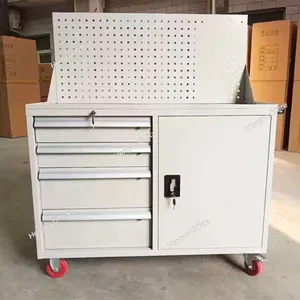
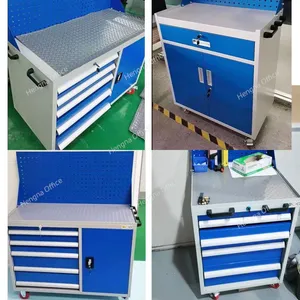
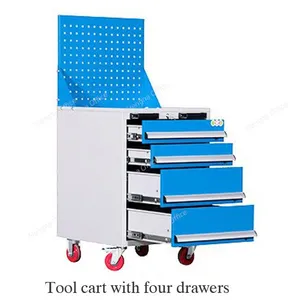
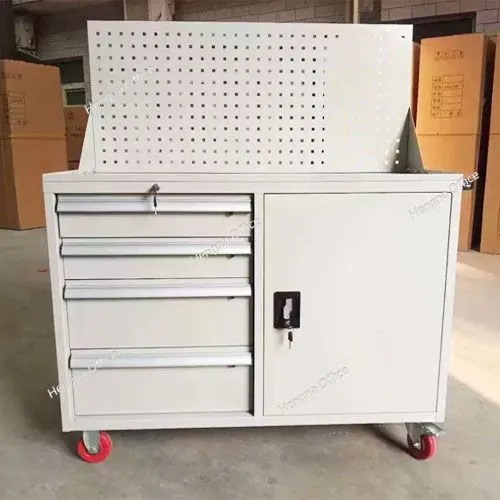
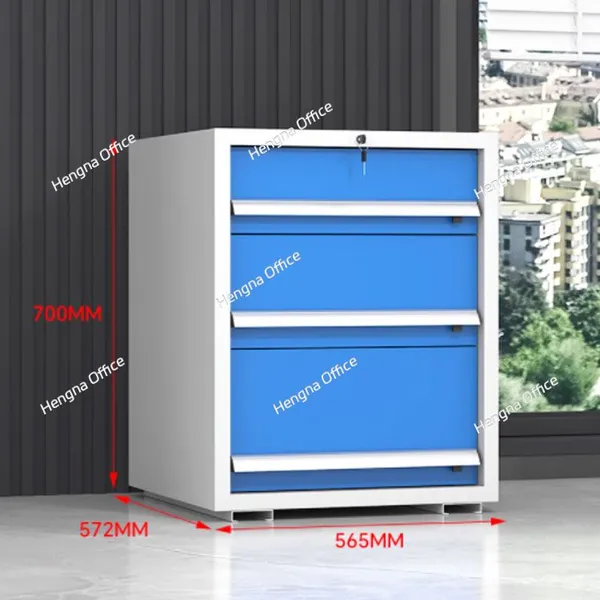
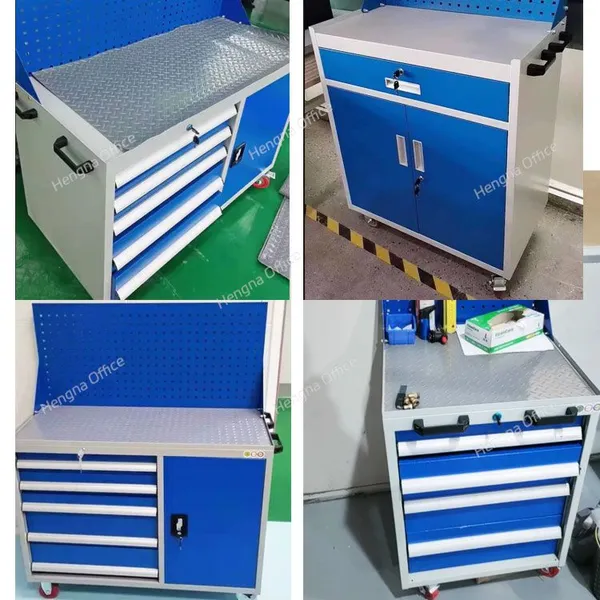
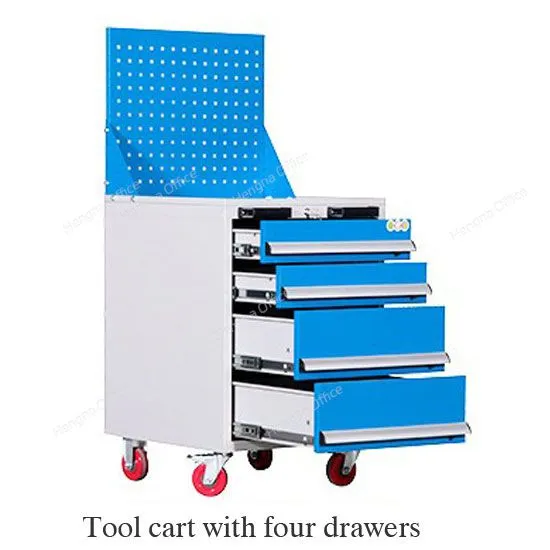
The solution is to distribute intelligence and capability. Enter the Hengna Office Industrial Mobile Tool Cabinet: a secure, rolling armory engineered to bridge the gap between centralized accountability and decentralized need. Built with all-steel construction for depot durability, equipped with a foolproof self-locking system for ironclad accountability, and designed with high mobility to serve dynamic environments, it transforms tool management from a logistical headache into a strategic advantage for warehouse operations and field service fleets alike.
The Command & Control Philosophy: From Static Storage to Dynamic AssetThis cabinet is not a passive container; it’s an active node in your operational network. Its design directly targets the core failures of static tool management.
1. The Accountability Imperative: The Self-Locking System as Your Digital Gatekeeper
Lost tools are lost money. Unaccountable tools create operational risk.
Single-Point Control: The centralized self-locking system acts as a physical analog to a digital check-out system. A tool isn’t just “taken”; it’s accessed by unlocking an assigned cabinet.
Shift & Technician Assignment: Each cabinet can be assigned to a specific warehouse zone (e.g., “Loading Dock Maintenance”) or to an individual field service van/technician. Responsibility is clear.
Audit Trail Simplicity: Inventory checks become fast and precise. Instead of searching an entire warehouse, a manager checks the contents of specific, locked mobile cabinets. Discrepancies are immediately localized.


2. The Mobility Mandate: Bringing the “Crib” to the Crisis
Downtime waits for no one. Whether it’s a broken conveyor belt in Aisle 12 or a service call 50 miles from the depot, speed is critical.
Warehouse Agile: A maintenance issue arises. Instead of a technician walking to a distant crib, a pre-stocked mobile cabinet is rolled or forklifted directly to the fault location, turning a 15-minute fetch mission into a 90-second relocation.
Field-Ready Deployment: At shift start, field technicians load their assigned, locked cabinets into their vans. They depart with a complete, verified kit. At the job site, the cabinet can be unloaded and wheeled directly to the equipment, functioning as a secure, organized workstation away from the workshop.
3. The Durability Doctrine: All-Steel Construction for a Demanding Life
This cabinet lives a tough life—bumped by forklifts, rattled on roadways, exposed to the elements during transfer.
Total-Steel Skeleton: Unlike hybrids with plastic components, the all-steel construction (frame, body, drawers) ensures maximum impact resistance and longevity. It can withstand the incidental contacts of busy warehouses and the rigors of transport.
Integrated Tie-Downs & Forklift Channels: Built-in features allow the cabinet to be securely strapped inside a service vehicle or easily lifted by a forklift for rapid warehouse repositioning.
The Tool Flow Transformation: A Before-and-After ScenarioScenario: Repairing a critical warehouse sorter (A 30-minute target).
Traditional “Central Crib” Model (Inefficient):
Fault Reported (0 min).
Technician walks to central crib (+5 min).
Waits for crib attendant, searches for specific diagnostic tool and parts (+10 min).
Walks to fault location (+5 min).
Discovers wrong connector type was grabbed; walks back to crib (+5 min).
Finally begins repair (Total elapsed: 25+ minutes). TARGET FAILED.
“Distributed Arsenal” Mobile Cabinet Model (Efficient):


Fault Reported (0 min). The “Sorter Zone” mobile cabinet is already pre-stocked with common parts and tools.
Technician (or forklift driver) moves the cabinet to the fault (+2 min).
Technician unlocks the cabinet, confirms all tools/parts are present via shadow board, begins repair immediately (Total elapsed to start work: ).
Repair is completed within the 30-minute window.
Visual: A two-timeline flowchart comparing the two processes, with the “Traditional Model” timeline showing long, red “wait/walk/search” blocks, and the “Mobile Cabinet Model” timeline showing a short green “move” block leading directly to a long blue “repair” block.
Deployment Strategies: Warehouse vs. Field Service
Configuration Example: A Field Service HVAC Technician’s Cabinet
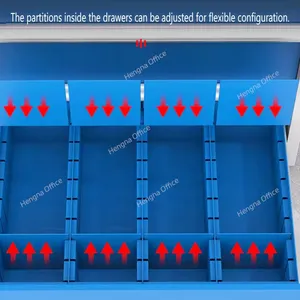
Top Drawer (Shallow): Multimeter, manometer, psychrometer, leak detector, electrical tape, fuses.
Drawer 2 (Medium): Complete wrench and socket set, tubing tools, vacuum pump accessories.
Drawer 3 (Medium): Specialty tools: coil fin combs, valve core tools, refrigerant scale components.
Deep Bottom Drawer: Cordless drill/impact driver, hammer, larger hand tools.
Side Shelf/Compartment: Commonly used capacitors, contactors, filters, and a box of refrigerant connections.
Back Panel (Hooks): Gauges, hoses, and a work light.

Technical Specifications: The Logistics Workhorse
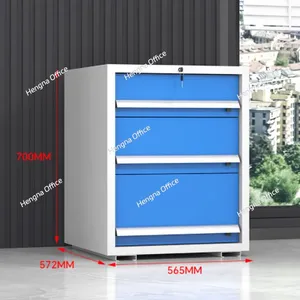
Model: HN-LOG-800
Construction: 100% 1.2mm+ Steel, Full Welded Construction
Locking: Heavy-Duty Central Lock with Steel Shroud
Mobility: 5″ Industrial Casters (Two Locking), Integrated Tow Bar Hook, Forklift Channels Under Base
Environmental Resistance: Powder-Coated for corrosion resistance; optional weather-stripping for draft/dust protection.
Compliance: Designed to meet general industrial equipment safety standards; can be integrated into ISO 55000 asset management systems.
Frequently Asked Questions (FAQ)
Q: How do we manage the weight of a fully loaded cabinet for field service? Loading it into a van seems difficult.
A: The cabinet is designed to be loaded/unloaded using a van-mounted lift gate or a wheeled ramp, which are standard equipment for serious service fleets. The large wheels make rolling it on and off a stable platform straightforward. For manual loading into pickup trucks, two-person handling is recommended.
Q: Can the cabinet be customized with our company logo and color scheme for brand consistency in the field?
A: Yes, this is a key service. We offer custom powder-coat colors and professional vinyl decal or direct-screen printing of your logo. A unified, professional appearance across your mobile assets enhances brand perception at client sites.
Q: What happens if a field technician leaves the company? How do we recover the cabinet and tools?
A: The cabinet itself is a company asset, typically assigned to a vehicle, not a person. The central lock system is re-keyable. Upon employee departure, the cabinet is returned to the depot, re-keyed at low cost, and restocked for the next technician. This process is far simpler and more secure than reconciling a loose collection of individual tools.

Operationalize Your Tools, Optimize Your ResponseThe Hengna Office Industrial Mobile Tool Cabinet is a force multiplier for operations where tools must be both secure and supremely accessible. It replaces the inefficiency of a single, congested point of failure with a resilient, responsive network of capable units. For warehouse managers, it’s the key to uptime. For field service directors, it’s the foundation for first-time-fix excellence and technician empowerment.
Stop managing tools as a cost center. Start deploying them as a distributed competitive advantage. Contact us to design a mobile tool cabinet strategy tailored to your warehouse zones or service fleet.