Material
Other, Global universal model
Condition
Other, Global universal model
Task
Other, Global universal model
Mathematical Model
Other, Global universal model
Signal
Other, Global universal model
Customized
Non-Customized
Structure
Other, Global universal model
Operating Temperature
-20℃~+60℃
Relative Humidity
5%-95% (non-condensing)
I. Product Overview
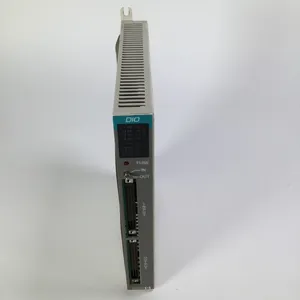
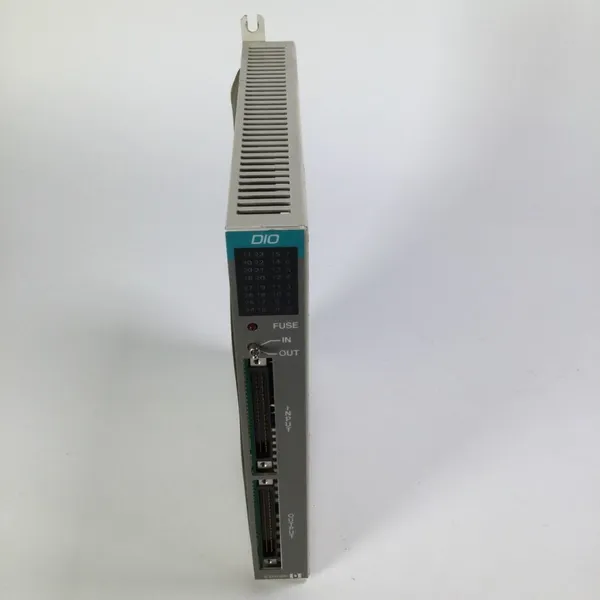
RELIANCE ELECTRIC S-D4006-D is a digital I/O control module whose core functions are to achieve high-speed acquisition and precise control output of digital signals in industrial sites. Specifically designed for discrete control scenarios of industrial automation systems, it can be seamlessly integrated into various PLC systems, DCS systems and industrial control platforms, providing stable digital signal interaction support for scenarios such as mechanical equipment automation, production line control and process monitoring.
Adopting an industrial-grade hardware architecture and compact design, this product features fast signal response speed, strong anti-interference capability and wide compatibility. It is widely used in fields including automobile manufacturing, mechanical processing, chemical process control, food and beverage production lines, and warehousing and logistics automation. It can work collaboratively with Reliance AutoMax series modules, Rockwell ControlLogix series PLCs and third-party industrial control equipment, serving as a key component for realizing digital quantity control in industrial automation systems.
II. Functional Features
Multi-channel Digital Signal Acquisition and Output
Equipped with multiple digital I/O channels (the specific number of channels is configured according to industrial-grade standards), it supports two-way interaction of Digital Input (DI) and Digital Output (DO). It can accurately collect status signals from devices such as limit switches, photoelectric sensors and proximity switches, and output stable digital control signals at the same time to drive executive components such as relays, contactors and solenoid valves, meeting the multi-device linkage requirements of discrete control scenarios.
With fast digital signal response speed, the input signal response time is ≤ 1ms and the output signal switching delay is low. It can quickly capture the status changes of on-site equipment and execute control instructions, ensuring the real-time performance and accuracy of the control system.
Strong Anti-interference Capability and Industrial-grade Stability
Adopting differential input design and electromagnetic interference suppression technology, with a built-in signal filtering circuit, it can effectively resist interference such as electromagnetic radiation and power grid fluctuations in industrial sites, ensure the stability and accuracy of digital signal transmission, and adapt to complex industrial electromagnetic environments.
Selected industrial-grade high-quality components and reinforced circuit design have passed rigorous high-low temperature, vibration and humidity tests, with excellent Mean Time Between Failures (MTBF) performance. It meets the requirements of 24/7 continuous operation in industrial sites, featuring low failure rate and long service life.
Wide Compatibility and Flexible Integration Capability
It is compatible with Reliance AutoMax series PLC systems, Rockwell Automation ControlLogix/CompactLogix series controllers, and supports communication protocols of third-party industrial PLC and DCS systems. It can be integrated into existing control architectures without large-scale modification, reducing system upgrade costs.
Supporting standard industrial communication interfaces and signal levels, it can directly connect to various industrial digital devices, adapt to NPN/PNP type sensors and actuators of different load types, with strong versatility and adaptability to diversified industrial control scenarios.
Convenient Installation and Operation & Maintenance Design
The compact structure design occupies small installation space, supports DIN rail mounting or panel mounting, and realizes quick installation and disassembly through standard card slots and fixing screws, reducing on-site construction difficulty.
The panel is equipped with status indicator lights to feed back the working status of each channel (power-on/fault/signal valid) in real time, facilitating on-site personnel to quickly troubleshoot faults; it adopts spring terminal blocks or screw terminal design, with firm wiring and simple operation, improving wiring efficiency.

III. Technical Parameters
IV. Working Principle
The core working logic of RELIANCE ELECTRIC S-D4006-D is "Digital Signal Acquisition → Signal Filtering → Logic Interaction → Control Output → Status Feedback", with the specific process as follows:
Digital Signal Acquisition: Connect to industrial on-site sensors (such as limit switches and photoelectric sensors) through digital input channels to collect digital signals (high/low level) such as equipment operating status and position detection. The signal type is compatible with two common industrial sensor types: NPN and PNP.
Signal Filtering: The collected original digital signals are processed by the built-in filtering circuit to filter out spike interference and jitter signals in industrial sites, output stable digital signals, avoid false triggering caused by interference, and ensure the reliability of signal acquisition.
Logic Interaction: The filtered digital signals are transmitted to the PLC/controller through the backplane bus or communication interface to participate in system logic operations; at the same time, it receives digital control instructions issued by the controller and executes corresponding output actions according to the instruction content.
Control Output: According to the controller's instructions, output high/low level signals or switch signals through digital output channels to drive the action of executive components such as relays, contactors and solenoid valves, realizing control functions such as equipment start-stop, process switching and interlock protection.
Status Feedback: The module monitors the working status of each I/O channel (signal valid/invalid, output normal/fault) in real time, and feeds back to the controller/upper computer through panel indicator lights or communication interfaces, facilitating operators to grasp the module's operating status in real time and quickly troubleshoot abnormalities.
V. Operation Guide
1. Installation Steps
Installation Environment
Install the module in a well-ventilated control cabinet free from strong electromagnetic interference, avoiding proximity to interference sources such as frequency converters, high-voltage busbars and high-power motors; control the ambient temperature within the range of -20℃~+60℃ and relative humidity of 5%-95% (non-condensing); keep away from dusty, oily, corrosive gas and humid areas.
Mechanical Installation
Adopt 35mm standard DIN rail mounting or panel mounting, fix the screws according to the dimensions of the module mounting holes with a mounting torque of 0.5~0.8N·m to ensure firm installation without loosening; reserve ≥ 3cm heat dissipation space between modules to avoid overheating caused by dense installation.
Check that the module has no appearance damage and the terminals are free from oxidation and deformation, confirm that the model (S-D4006-D) meets the installation requirements; verify the compatibility of the supporting power module and controller to ensure system adaptation.
Wiring Operation
Turn off the main power supply of the control cabinet, and connect the power cable, input signal cable and output control cable according to the wiring diagram: distinguish the positive and negative poles of the power cable to ensure the voltage level is 24VDC±10%; connect the input cable to the signal output end of the sensor, distinguishing NPN/PNP type wiring; connect the output cable to the executive component, and select the relay/transistor output channel according to the load type.
After wiring, check the correctness of the circuit to ensure that the input/output channels correspond correctly, and the terminal screws are tightened to avoid signal abnormalities or equipment damage caused by poor contact; it is recommended to use shielded cables for digital signal cables, with the shield layer grounded at one end (grounding resistance ≤ 4Ω) to enhance anti-interference capability.
2. System Configuration
Parameter Initialization
Power on, the module starts automatically (start-up time ≤ 10 seconds). Connect to the module through PLC programming software or upper computer configuration tools, configure parameters such as input channel type (NPN/PNP), output channel load type (relay/transistor) and signal filtering time to ensure matching with on-site equipment.
Configure interlock protection parameters: Set input signal trigger conditions and output signal action logic according to control requirements, and enable the channel fault detection function to ensure rapid response in case of abnormalities.
Communication Configuration
If the module is connected to the controller through the bus, configure parameters such as bus address and communication baud rate to ensure normal communication with the controller; read the module equipment information and channel status through the configuration tool to verify communication stability.
3. Operation and Maintenance
Daily Operation
Before starting, check that the module power supply and signal lines are connected normally without loosening or short-circuit hazards; after power on, observe the panel status indicator lights to confirm that there is no fault alarm in each channel and the module is initialized normally.
During operation, monitor the status and signal changes of each I/O channel in real time through the upper computer, check the fault records regularly, and handle problems such as signal loss and output abnormality in a timely manner; it is prohibited to arbitrarily plug/unplug the module or modify core configuration parameters during operation.
Regular Maintenance
Weekly: Wipe dust on the module surface with a dry soft cloth, check the terminals for oxidation and heating marks, and confirm that the wiring is firm; observe the status of the indicator lights to troubleshoot potential faults.
Monthly: Back up module parameters through configuration tools; test the effectiveness of input/output channels, simulate sensor signals to verify the acquisition function, test the driving capability of output channels; check the stability of the power supply voltage.
Annually: Conduct a comprehensive inspection of the module, clean internal dust (operated by professionals), and check components for signs of aging and bulging; calibrate the channel response time to ensure performance meets requirements; contact Rockwell after-sales service for professional maintenance if necessary.
4. Common Fault Troubleshooting
| Fault Phenomenon |
Possible Causes |
Troubleshooting Methods |
| No module power supply, indicator lights not on |
Power supply fault, wiring error, loose terminals |
Check whether the input power supply voltage is 24VDC±10%; verify the positive and negative wiring of the power supply; re-tighten the power terminal screws; test with a backup power supply |
| No input signal acquisition / abnormal acquisition |
Sensor fault, wiring error, channel configuration error |
Test whether the sensor output signal is normal; verify the input channel wiring and NPN/PNP configuration; check whether the signal cable shield layer is reliably grounded; test with a backup channel |
| No output signal / abnormal output |
Executive component fault, load exceeding rated value, output channel fault |
Check whether the executive component works normally; verify that the load current/voltage is within the rated range of the module; detect the output channel signal with a multimeter; test with a backup output channel |
| Communication interruption, unable to monitor remotely |
Incorrect communication parameter configuration, bus fault, protocol mismatch |
Re-verify communication parameters such as communication address and baud rate; check the bus cable connection and terminal resistance; confirm that the communication protocol between the module and the controller is consistent; test with a replacement communication cable |
| Frequent module alarms / misoperation |
Electromagnetic interference, excessively short filtering time setting, power supply fluctuation |
Strengthen signal cable shielding and grounding; adjust filtering time parameters; check the stability of the power supply voltage and add a power supply filtering device; rearrange the module away from interference sources |
| Terminal heating / oxidation |
Poor wiring contact, excessive load, humid environment |
Re-tighten the terminal screws and clean the oxide layer; verify that the load does not exceed the rated value; improve the moisture-proof measures of the installation environment |









 Contact Platform Support
 Help Center