








 Contact Platform Support
 Help Center
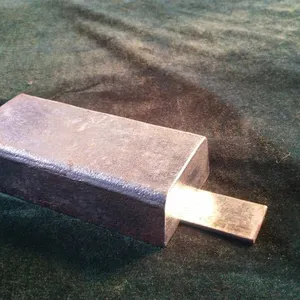
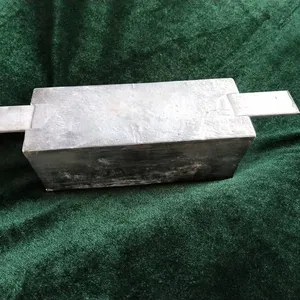
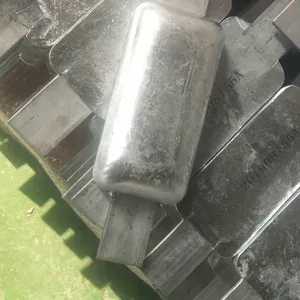
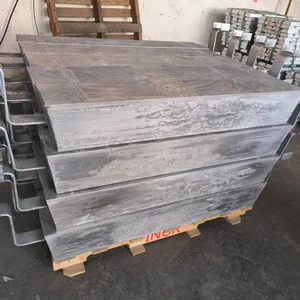
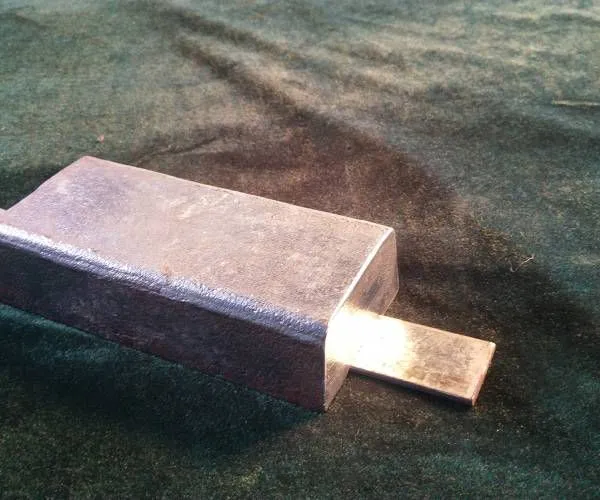
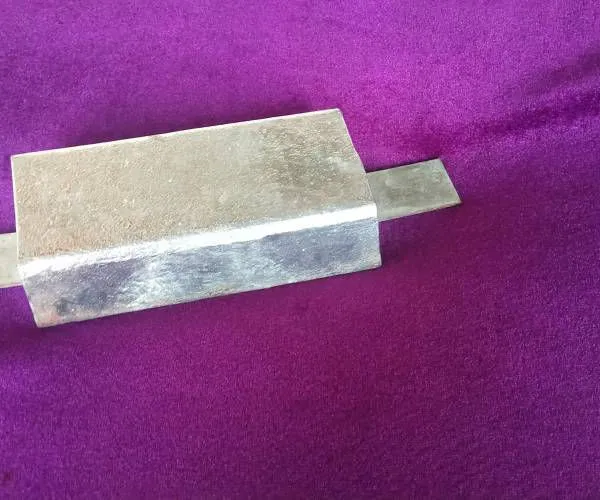
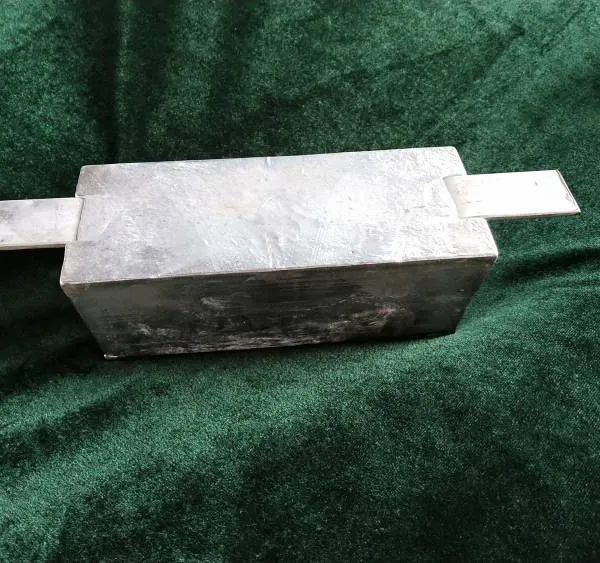
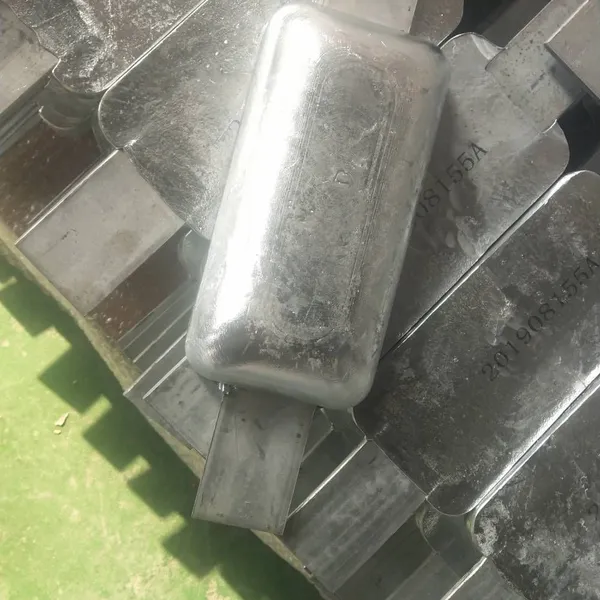
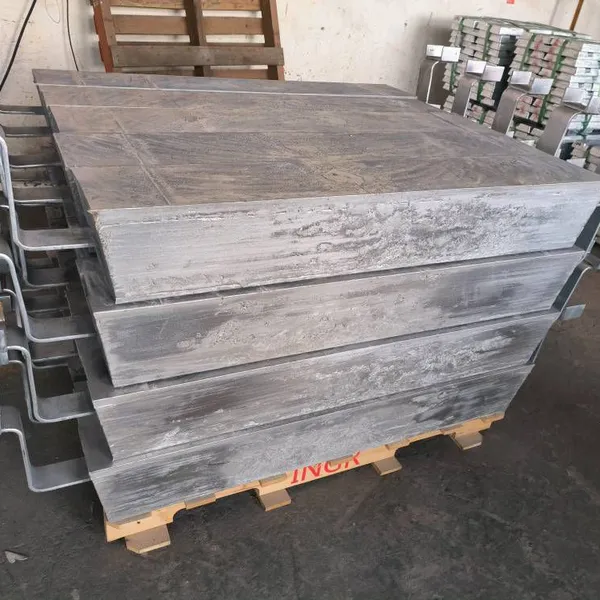
Welded Aluminum Alloy Anode, 16kg Aluminum Anode for the Inner Wall of Storage Tanks




Related Products
-
 National Standard Magnesium Alloy Sacrificial Anodes, Manufacturers of Magnesium AnodesUS$ 4.62MOQ: 1 Kilogram
 -
Magnesium Anodes for Natural Gas Pipelines, Magnesium Anodes for Cathodic Protection ProductsUS$ 2.31MOQ: 10 Kilograms
-
Magnesium Anode With Filling Material, Combined Magnesium Alloy Sacrificial AnodeUS$ 1.54MOQ: 2 Kilograms
-
8kg Magnesium Alloy Anode for Reservoir GatesUS$ 1.85MOQ: 1 Rod
-
High-quality Magnesium Anodes, Magnesium Alloy Sacrificial Anodes for Drainage Pipelines, Libo Anti-corrosionUS$ 3.23 - 3.54MOQ: 2 Kilograms
Welded aluminum alloy anode, 16kg aluminum anode for the inner wall of storage tanks
In industrial production, seawater is often used as cooling water. Since seawater contains salt, the corrosion it causes to the inner walls of containers and pipes cannot be underestimated. During the exploitation and transportation of oil and gas fields, a large amount of oily sewage also acts on the inner walls of storage tanks and pipes. Due to the salt content and temperature in the oily sewage, the corrosion rate of the inner walls is very high. In the domestic hot water supply system, the corrosion of the inner walls of storage tanks, pumps and pipes is also higher than that of conventional cold water.
In recent years, some small magnesium plants have emerged across the country, producing magnesium using the silicothermic method. This method is also called the Pidgeon process. It uses ferrosilicon to reduce calcined dolomite under vacuum and high temperature to directly produce metallic magnesium. The magnesium produced by this method is obtained by crystallization after magnesium distillation, so it contains very few impurities and is suitable for manufacturing relatively low - cost magnesium alloy anodes.
The corrosion control measures for the inner wall include: selecting corrosion - resistant materials, lining with coatings (such as enamel), using composite materials, thermal spraying metals (such as aluminum and zinc), and applying cathodic protection.
Storage tanks and pipes are mostly closed systems. Applying cathodic protection is often restricted by the closed space. For management, maintenance and testing, they are also different from those of the external. Therefore, more factors need to be considered during the design, mainly including:
1. There is not enough space, and sometimes the inner surface is irregular, making it difficult to distribute the anodes and achieve a uniform current distribution.
2. The condition of the coating on most inner surfaces is unclear, and some have no coating, making it difficult to determine the protective current density. Sometimes, due to inconsistent surface conditions, when the anode distribution is inappropriate, the current may also be too concentrated.
3. Cathodic protection is only effective under closed conditions. Similar to water electrolysis, as products of the process, oxygen and hydrogen produced may cause an explosion. This is a safety factor that cannot be ignored.
4. Temperature has a great impact on the performance of sacrificial anodes. The consumption rate of magnesium anodes and the polarity reversal problem of zinc anodes should be considered in the design.
5. The layout of the testing system should be considered in advance in the design so that the measured parameters can truly reflect the protection level.
The auxiliary anode materials used in the impressed current method have been discussed in other chapters. This section involves the shape, distribution and support methods of the auxiliary anodes.
In principle, the auxiliary anodes used for the external cathodic protection of equipment can basically also be used inside the equipment. However, it is not easy to replace and detect them inside. Therefore, when applying cathodic protection to the inner wall, small - sized and long - life anodes such as platinum and platinum - plated anodes are usually selected.
In the past, sacrificial anodes were mostly used for the internal protection of storage tanks, and some are still in use today. However, the impressed current method using inert anodes has greater flexibility than sacrificial anodes. In highly corrosive electrolytes, sacrificial anodes are easily corroded by local batteries. The anodes are consumed quickly and need to be replaced frequently, making the sacrificial anode method uneconomical.
Aluminum alloy sacrificial anodes
For the corrosion prevention of ports and wharves, a combined corrosion prevention method of coating and cathodic protection can be used. Cathodic protection can also be applied to the underwater area. To prevent the current from flowing to the surfaces of other nearby structures, insulation treatment must be carried out to avoid current loss. For example, insulate the joint between the submarine pipeline and the onshore pipeline.
When using the impressed current cathodic protection system, special attention should be paid to preventing adjacent facilities not included in the cathodic protection from suffering from interference corrosion. A high-quality insulating coating with high surface resistance can be applied to the protected structure parts adjacent to the unprotected structure to reduce the current flowing through this part. An adjustable resistor can also be connected in series between the protected part and the unprotected part to reduce and control the current flowing to the unprotected structure and avoid interference corrosion.
For the corrosion prevention of port and wharf facilities in seawater, a thick paste-type coating should be applied to the parts above the tidal range area for corrosion prevention. For the underwater parts, impressed current cathodic protection was mostly used in the past. From the 1980s to the present, due to the continuous improvement of the performance of aluminum alloy anodes and the continuous accumulation of people's experience parameters in cathodic protection, the number of ports and wharves using sacrificial anode protection has increased rapidly. The following aspects should be mainly considered when choosing which way to implement protection:
1. Reliability of the protection system
2. Influence of adjacent structures
3. Required protection current
4. Complexity of the structure
5. Structure service life
6. Environmental conditions, etc. (sometimes on-site sampling and investigation are required)
From the perspectives of the reliability of the protection system, the influence on adjacent structures and the complexity of the structure, sacrificial anode cathodic protection should be preferred. From the perspective of the required protection current, large structures requiring a large protection current should preferably use sacrificial anode cathodic protection, while small structures requiring a small protection current should preferably use sacrificial anode cathodic protection. When implementing impressed current cathodic protection, special attention should be paid to the loss of the anode cable and the sealing of the joint between the anode and the cable. Otherwise, it is difficult to ensure the service life. The service life of the cathodic protection system should be the same as the design service life of the structure.

Send Inquiry to This Supplier


You May Also Like
-
Manufacturer of Aluminum Alloy Sacrificial Anodes, Anti-corrosion Bracelet-type Aluminum Anodes, 142.2kgUS$ 3.54 - 3.85MOQ: 2 Kilograms
-
Bolt-type Zinc Anode, Bolt-connected Zinc Alloy Sacrificial Anode for Ship Hull, 400*100*40mmUS$ 3.54 - 4MOQ: 2 Kilograms
-
Zinc-aluminum-cadmium Alloy Sacrificial Anode, Zinc Anode, Hull Zh-1 Zinc Block, 800*140*60mmUS$ 3.69 - 4.31MOQ: 2 Kilograms
-
21.5kg High-temperature-resistant Aluminum Sacrificial Anode, Single Iron Leg Welded Aluminum Alloy Sacrificial Anode for Liquid TanksUS$ 3.54 - 3.85MOQ: 2 Kilograms
-
Custom Processing of High-efficiency Aluminum Alloy Sacrificial Anodes. High-efficiency Aluminum Anodes. High-quality SupplierUS$ 3.85 - 4MOQ: 2 Kilograms
-
35kg Aluminum Alloy Sacrificial Anode for Anti - Corrosion of Sewage Tanks, Aluminum Anode With Iron FeetUS$ 3.54 - 3.85MOQ: 2 Kilograms
-
What Specifications Are Available for Aluminum Alloy Sacrificial Anodes Used in Power Plants? 35kg Aluminum Sacrificial AnodeUS$ 3.85 - 4MOQ: 2 Kilograms
-
80kg Aluminum Anode for Storage Tanks, Aluminum Alloy Sacrificial Anode, How to Use Aluminum Sacrificial Anodes for Storage TanksUS$ 3.85 - 4MOQ: 2 Kilograms
-
Bracelet-style Aluminum Sacrificial Anodes, Reliable Cooperation Manufacturers, Aluminum-zinc-indium Sacrificial AnodesUS$ 3.85 - 4MOQ: 2 Kilograms
-
22kg Magnesium Anode for Oil Pipeline, Magnesium Alloy Sacrificial Anode for Long - Distance Pipeline Anti - Corrosion, Libo Anti - CorrosionUS$ 3.23 - 3.38MOQ: 2 Kilograms
