








 Contact Platform Support
 Help Center
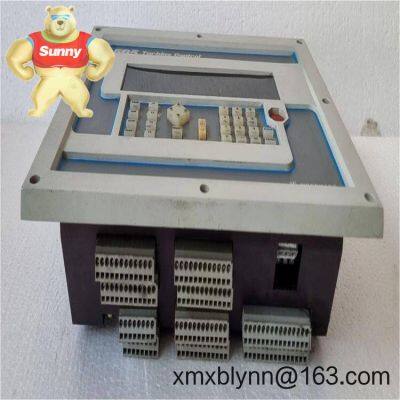
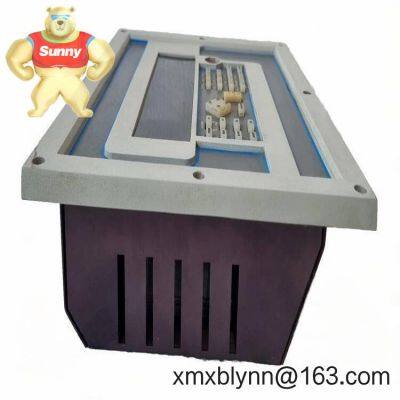
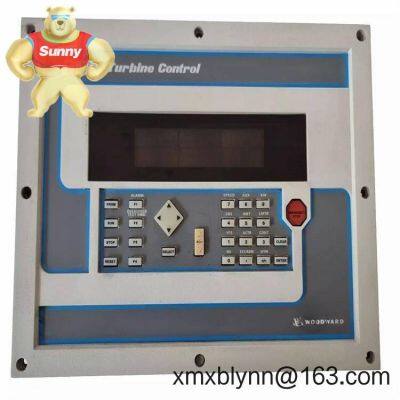
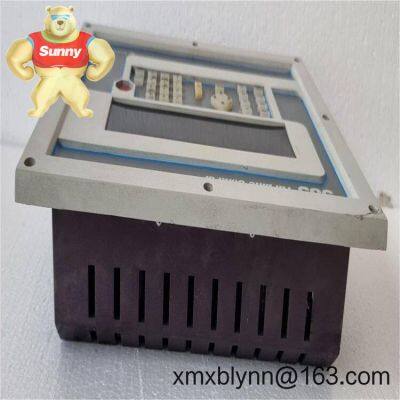
Woodward 9907-149 – Load Sharing & Speed Control for Engines and Generator Sets
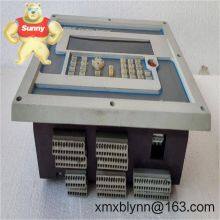
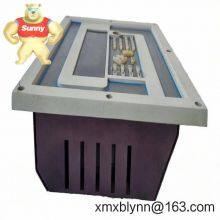
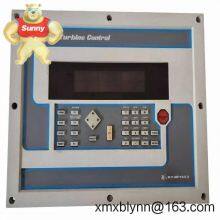
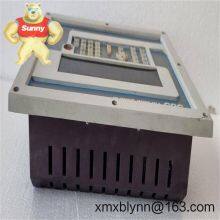


Related Products
-
 Woodward 9907-162 (2301E Series) – Digital Load Sharing & Speed Control for Engines and GensetsNegotiableMOQ: 1 Bag
 -
Woodhead PCU2000ETH: Bridge Legacy PLCs to Modern Ethernet NetworksNegotiableMOQ: 1 Bag
-
Woodward 5466-1035 Controller Module: Rock-Solid Control for Critical Power SystemsNegotiableMOQ: 1 Bag
-
Woodward 8256-021: Reliable Speed Control for Industrial Turbines and EnginesNegotiableMOQ: 1 Bag
-
Woodward 8237-1600: Rock-Solid Speed Control for Gas Turbines When It Matters MostNegotiableMOQ: 1 Bag
The Woodward 9907-149 is a load sharing and speed control module from the proven 2301 family, designed to synchronize engine or genset speed and share load accurately across multiple units. It’s typically used in power generation, marine, and oil & gas applications where tight isochronous control and stable parallel operation matter day in, day out. From my experience, it slots neatly into retrofit projects when a dependable 24 Vdc control is needed with minimal fuss.
Key FeaturesIsochronous load sharing – Shares kW among units via the Woodward load share line for smooth parallel operation.
Stable speed regulation – Isochronous or droop modes, with adjustable gain/stability for steady control under varying loads.
Actuator driver output – 0–200 mA current output (typical) compatible with Woodward EG/PG and many proportional actuators.
Magnetic pickup (MPU) speed sensing – Reliable speed feedback from the engine flywheel, common in industrial and marine sets.
Remote speed trim – 4–20 mA speed reference input lets operators fine-tune setpoints from a panel or PLC.
Start and ramp features – Idle/run select, ramped acceleration, and start-fuel limiting to reduce overshoot and smoke.
Analog simplicity – No fieldbus headaches; straightforward wiring and front-panel adjustments cut commissioning time.
Rugged 24 Vdc operation – Typically powered from 18–32 Vdc to suit standard control cabinets on existing sites.
| Brand / Model | Woodward 9907-149 (2301 family Load Sharing & Speed Control) |
| Power Requirements | 24 Vdc nominal (typically 18–32 Vdc) |
| Signal Input Types | Magnetic Pickup (MPU) speed input; 4–20 mA remote speed reference; load share line |
| Signal Output Types | 0–200 mA actuator drive (typical) for proportional fuel/steam actuators |
| Communication Interfaces | Analog adjustments and terminals; no digital fieldbus |
| Installation Method | Panel/chassis mount in a protected control cabinet; screw-terminal wiring |
| Operating Temperature | Industrial ambient range (commonly cabinet-mounted; verify for your site conditions) |
| Dimensions & Weight | Panel-mount chassis form factor; typically under 2 kg |
You’ll usually see the 9907-149 on multi-genset systems that need stable paralleling and fast load transients without hunting. It also fits nicely on mechanical engines upgraded with electronic actuators.
Power generation: diesel or gas gensets, islanded microgrids, peak shaving, standby sets with auto-synchronizing systems.
Marine propulsion and auxiliary generators where isochronous sharing keeps frequency tight under changing hotel loads.
Oil & gas: compressor drives and pump engines requiring consistent speed and coordinated load sharing.
Industrial engines and steam turbines using proportional actuators and MPU feedback.
A maintenance lead told me they swapped a legacy unit for the 9907-149 during a short outage and had two gens synchronized and sharing within an hour—no PLC edits needed, just careful pot adjustments.
Proven reliability – The 2301 lineage has a long field record; parts and knowledge are widely available.
Compatibility – Works with common Woodward and third‑party proportional actuators using a 0–200 mA drive.
Lower commissioning effort – Analog trim and clear terminals mean faster retrofit on brownfield sites.
Cost-conscious – No need for a complex digital controller when precise analog load sharing does the job.
Serviceability – Front-panel adjustments let technicians tune behavior on the spot, which, in many cases, reduces downtime.
Cabinet & environment – Mount in a clean, dry control cabinet with ventilation. Keep vibration low and allow access to the front controls.
Power & wiring – Supply from a stable 24 Vdc source. Use shielded twisted pair for the MPU and route away from high-current cables.
Actuator loop – Verify actuator resistance/current rating; confirm polarity and fail-safe direction before energizing.
Load share line – Use consistent grounding and wiring practices across all paralleled units to avoid noise or offsets.
Tuning – Start with conservative gain/stability settings; step-load tests help dial in response without overshoot.
Routine care – Periodically inspect terminals, clean dust, and check MPU air-gap. Reconfirm calibration after actuator or engine work.
CE-compliant EMC/Low Voltage (typical for this series and build variations)
UL/cUL recognition on many variants; RoHS compliance may apply depending on production date
Manufacturer warranty: typically 12 months (conditions vary by region and production run)
Proportional actuators – Woodward EG/PG-series or equivalent 0–200 mA types for fuel or steam valves.
Magnetic pickup – Standard engine flywheel MPUs (e.g., 1/2-20 UNF thread) matched to your ring-gear tooth count.
Speed trim source – 4–20 mA panel potentiometer module or PLC analog output for remote speed reference.

Send Inquiry to This Supplier



You May Also Like
-
Woodward 8256-016: Reliable Speed Control for Industrial Turbines & GeneratorsNegotiableMOQ: 1 Bag
-
Woodward 8290-184: Your Go-To Electronic Governor for Diesel Engine Speed StabilityNegotiableMOQ: 1 Bag
-
WOODWARD 8407-523 Gas Controller Valve: Precision Fuel Management for Critical Combustion SystemsNegotiableMOQ: 1 Bag
-
WOODWARD 8440-1934: The No-Nonsense Turbine Guardian You Can Rely OnNegotiableMOQ: 1 Bag
-
Woodward 8577-825 Linear Actuator: Precision Turbine Control for Demanding EnvironmentsNegotiableMOQ: 1 Bag
-
Woodward 9907-163 Digital Turbine Controller: Precision Control for Critical Power AssetsNegotiableMOQ: 1 Bag
-
WOODWARD 9908-201 Hydraulic Hose Assembly for Critical Control SystemsNegotiableMOQ: 1 Bag
-
Woodward EGCP-2: Precision Turbine Control Where Reliability MattersNegotiableMOQ: 1 Bag
-
Woodward MSLC-2 (8440-1977): Your No-Fuss Load-Sharing Partner for Critical Power SystemsNegotiableMOQ: 1 Bag
-
Woodward SPM-D2-11 Synchronizer Module: Precision Grid Synchronization for Critical Power SystemsNegotiableMOQ: 1 Bag

