








 Contact Platform Support
 Help Center
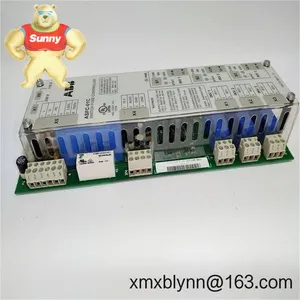
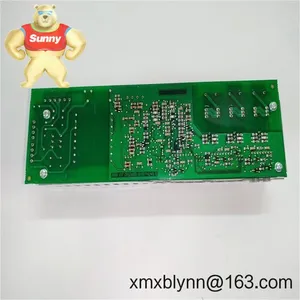
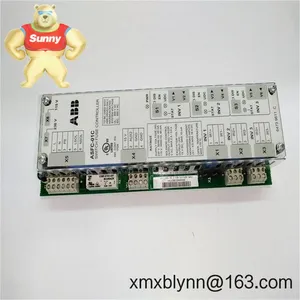
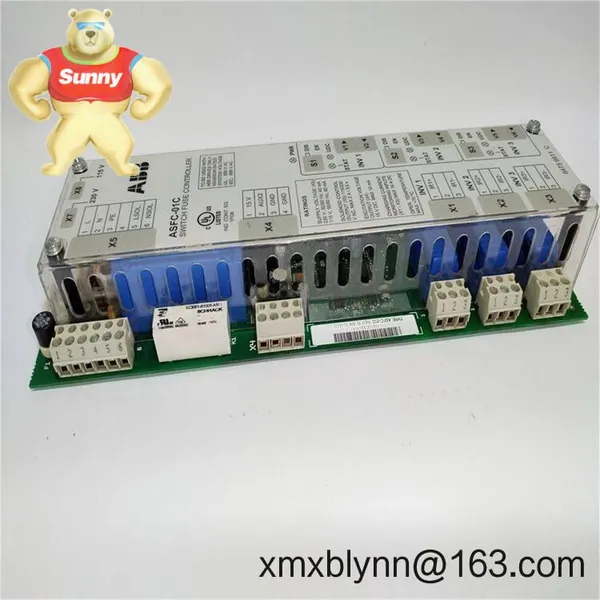
ABB ASFC-01C — Automatic Synchronizing & Frequency Controller for Generator Sets and Microgrids



Related Products
-
 ABB AX670 (3BSE000566R1) — Modular Control/Interface Module for Drive & Automation SystemsNegotiableMOQ: 1 Combo
 -
ABB AX722F (3BDH000377R0001) — I/O & Interface Module for ABB Control SystemsNegotiableMOQ: 1 Combo
-
ABB B5LA HENF327886R0001 — Control Interface Module for Motor & PLC IntegrationNegotiableMOQ: 1 Combo
-
ABB S-093N (3BHB009885R0021) — Medium‑Duty Servo Motor for Motion ControlNegotiableMOQ: 1 Combo
-
ABB 12KG04G-V0002 (3EGM031400R0002) – Rotary Cam Switch for Reliable Machine Control and IsolationNegotiableMOQ: 1 Combo
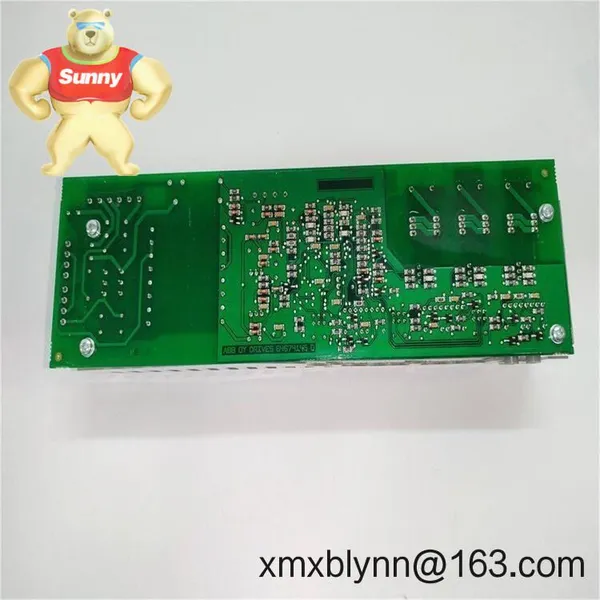
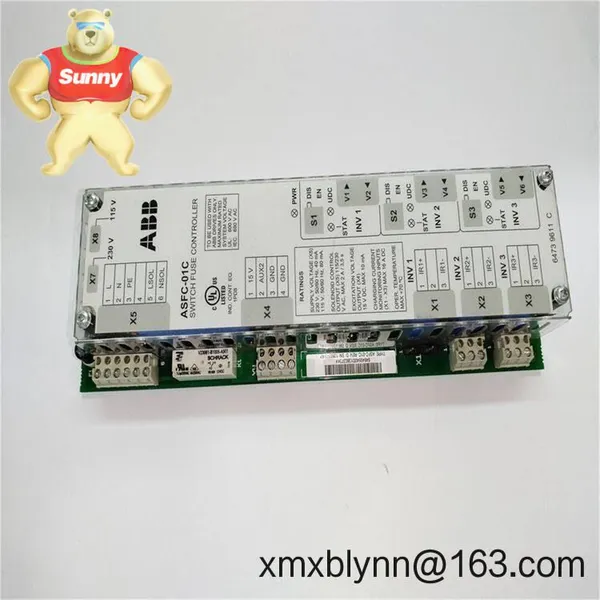
The ABB ASFC-01C is a compact synchronizing and frequency control module designed for low-voltage generator sets, paralleling applications and small microgrid control. It typically handles automatic sync, dead‑bus closing, and basic load sharing tasks while providing common industrial communication options — useful where space is limited but reliable synchronizing is required.
Core summaryDesigned as a panel-mount controller, the ASFC-01C seems to be aimed at OEMs and service providers who need straightforward synchronizing functionality without a large control cabinet. From my experience, this sort of module is typically used to automate generator pick-up and drop-off, monitor phase sequence, and provide remote status over standard serial links.
Automatic synchronizing — Includes phase, frequency and voltage matching logic for safe close‑in of breakers; reduces manual intervention during generator paralleling.
Frequency & load control — Basic governor/frequency control setpoints for preventing out‑of‑step conditions and assisting in load sharing.
Digital & analog I/O — Typical mix of volt-free contacts and analogue inputs for speed, frequency and voltage monitoring (used for alarms and interlocks).
Industrial communications — Often supports Modbus RTU over RS485 for integration into SCADA or PLC systems; convenient for remote monitoring and logging.
Panel / DIN friendly — Compact footprint suited for small control panels; mounting hardware and panel cutout are typically included.
Wide supply options — Usually accepts 24 VDC control supply or 110–240 VAC auxiliary supply, providing flexibility across installations.
| Parameter | Typical value / notes |
|---|---|
| Brand / Model | ABB ASFC-01C |
| Power requirements | Typical auxiliary 24 VDC or 110–240 VAC (model variants possible) — confirm supply version before procurement. |
| Dimensions & weight | Compact panel module; typical package ~160 × 90 × 60 mm, weight ≈ 0.5–0.9 kg (approximate) |
| Operating temperature | Usually -20 °C to +60 °C; verify thermal derating for hot, enclosed cabinets. |
| Signal input / output types | Digital inputs/outputs (volt‑free or 24 VDC), analogue inputs for frequency/voltage, relay outputs for trip/close alarms. |
| Communication interfaces | RS485 (Modbus RTU) is typical; some installations support dry-contact remote starts or simple serial logging. |
| Installation method | Panel cutout / flush mounting; accessible from front for configuration and status LEDs. |
The ASFC-01C fits industries that run backup or prime generator sets: commercial buildings, data centers (smaller installations), industrial plants with standby generation, remote sites and islanded microgrids. One thing I appreciate is that in many cases this sort of controller can be retrofitted into existing panels to add safe auto-sync without replacing the whole control system.
Reliability — Proven ABB control logic typically reduces false trips and nuisance alarms; reliable synchronizing lowers equipment wear from manual closes.
Compatibility — Works with common breaker and relay interfaces; in most cases you can reuse existing MCBs/CTs and wiring harnesses.
Cost-effective upgrade — For retrofit projects it often costs less than replacing a full PLC-based control panel while delivering essential synchronizing features.
Serviceability — Standard communication and I/O make troubleshooting and remote support straightforward; spare parts are typically available through industrial distributors.
From my experience, keep the ASFC-01C in a ventilated cabinet (IP20 or better) away from high heat sources. Typical cabinet requirements: standard 19" or custom panel cutout, adequate clearance for wiring, and a clean, low-dust environment.
Wiring — Use shielded cables for analogue/frequency inputs when possible and separate power and signal runs to minimize interference.
Safety — De-energize mains and control supplies before wiring; respect local electrical codes and provide proper earthing/grounding.
Routine maintenance — Check terminal tightness after initial commissioning, inspect connectors annually, and verify sync setpoints during scheduled maintenance windows.
Firmware & calibration — If firmware updates are supported, apply them under controlled conditions; calibrate analogue inputs if accuracy is required for protection thresholds.
Typical certifications for modules in this category include CE, RoHS and often additional regional safety marks such as UL or others depending on ordering region. Warranty policies are usually manufacturer-backed — many ABB industrial control modules carry a 12‑month limited warranty, though extended coverage or local distributor warranties are commonly available.
Practical notes before orderingIf you plan to use the ASFC-01C for critical paralleling tasks, confirm the exact I/O and auxiliary supply option for your part number. In many cases it's worth specifying whether you need 24 VDC or 110–240 VAC auxiliary and checking for an RS485/Modbus option if SCADA integration is required. From my experience, this avoids late-stage change orders and keeps commissioning smooth.

Send Inquiry to This Supplier



You May Also Like
-
ABB 12KG04J‑V0002 (Ordering Code: 3EGM031400R0002) – Industrial Control Module for ABB CabinetsNegotiableMOQ: 1 Combo
-
ABB 12KG04N-V0002 (3EGM031400R0002) – OEM Control/Automation Spare for Fast, Like‑for‑Like ReplacementNegotiableMOQ: 1 Combo
-
ABB 12KG04O‑V0002 (3EGM031400R0002) – OEM Control Module / Spare Part for ABB Industrial SystemsNegotiableMOQ: 1 Combo
-
ABB Bailey IEMMU21 Module Mounting Unit – Backplane Chassis for INFI 90/Harmony I/O ElectronicsNegotiableMOQ: 1 Combo
-
ABB Bailey IEPAS02 Power Module – Reliable Backplane Power for INFI 90 Process Control RacksNegotiableMOQ: 1 Combo
-
ABB Bailey IMCIS02 Control I/O Slave Module – Remote I/O Expansion for INFI 90 / Network 90 SystemsNegotiableMOQ: 1 Combo
-
ABB Bailey IIMCP01 Digital Input Module – Reliable Discrete Signal Acquisition for INFI 90/NET 90 SystemsNegotiableMOQ: 1 Combo
-
ABB Bailey IMDSI02 Digital Slave Input Module – Stable, Field‑proven Discrete Signal Acquisition for INFI 90/NET 90 SystemsNegotiableMOQ: 1 Combo
-
ABB Bailey IMDSM04 Digital Slave Input/Output Module – Reliable Digital I/O Expansion for INFI 90 SystemsNegotiableMOQ: 1 Combo
-
ABB Bailey IMDSO14 Digital Output Module – Reliable Discrete Control for INFI 90/Symphony SystemsNegotiableMOQ: 1 Combo


