








 Contact Platform Support
 Help Center
HG005 Water Filled Inflatable Seamless Rubber Dam for Hydropower Farmland Irrigation, River Landscape, Interception of Water Flow



Related Products
-
 HG005 Integral Seamless EPDM Rubber Dam for Combined Water-Air Inflation | River Retention, Landscape, Irrigation & HydropowerUS$ 291 - 295MOQ: 20 Meters
 -
HG005 Flood Discharge and Flood Control Gate Rubber Dam, Spillway Dam, Water-filling and Air-inflated Rubber Dam, River Water-blocking Dam ReplacementUS$ 290 - 300MOQ: 20 Meters
-
HG005 Rubber Dam, Rubber Water Dam Bags for River Blocking, Large Rubber Dam, Inflatable and Water-filled Rubber Dam, Rubber Sluice GateUS$ 290 - 300MOQ: 20 Meters
-
Seamless Rubber Dam, Air Shield Dam, Inflatable Water Gate, Flood Control Water BarrierUS$ 290 - 300MOQ: 20 Meters
-
Inflatable Water-filled Landscape Rubber Dam Manufacturer, Flood Control and Risk-resistant River-blocking Rubber DamUS$ 290 - 300MOQ: 20 Meters
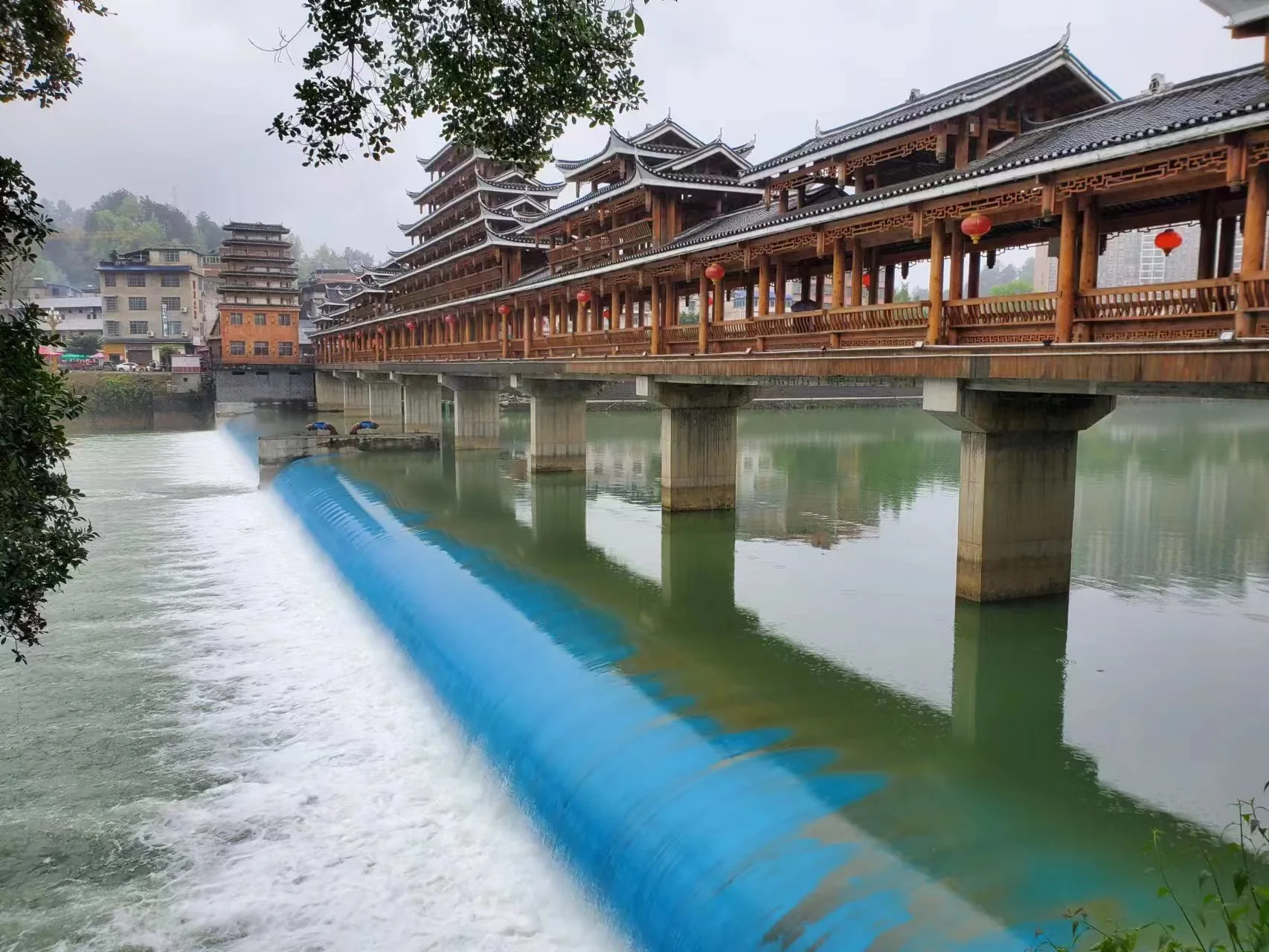
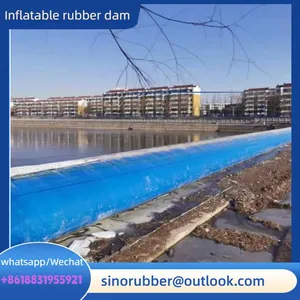
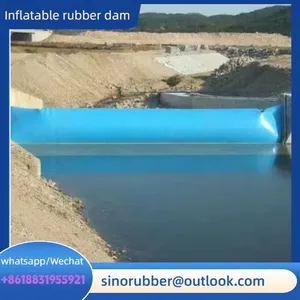
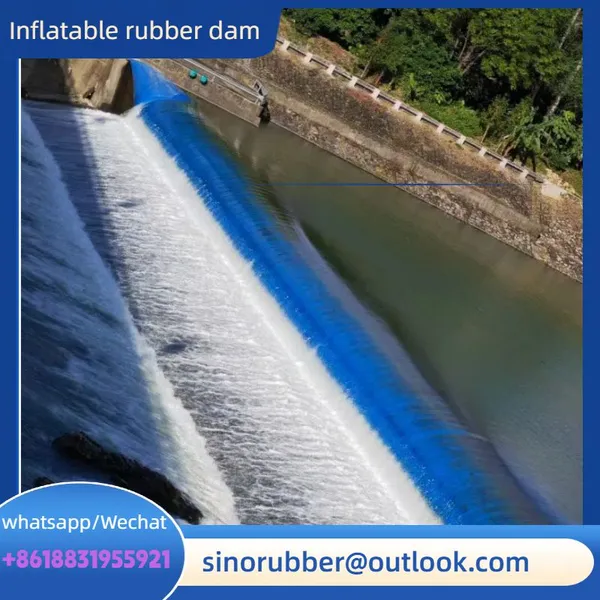
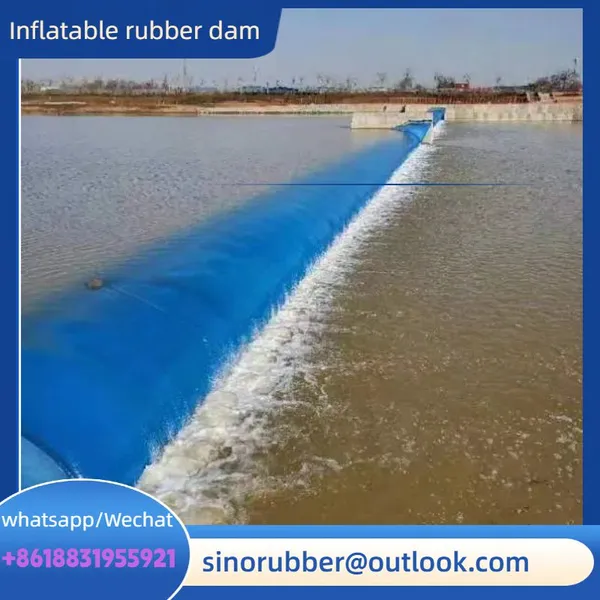
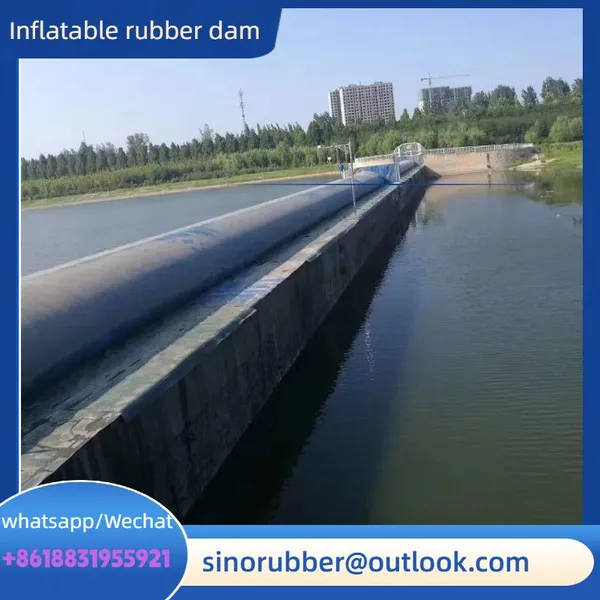
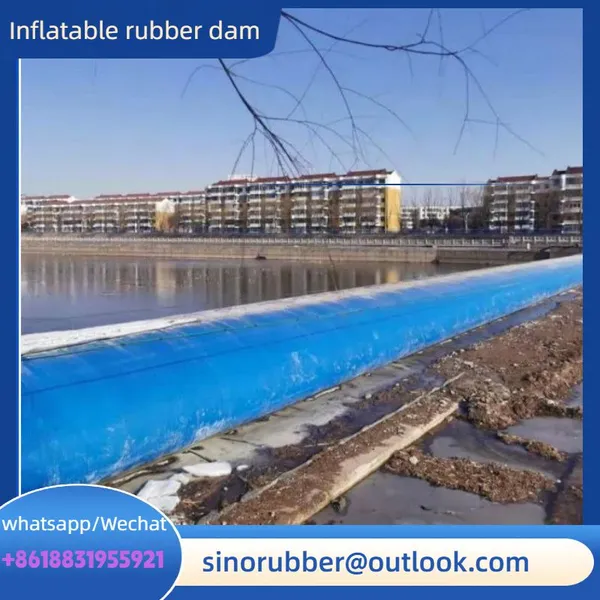
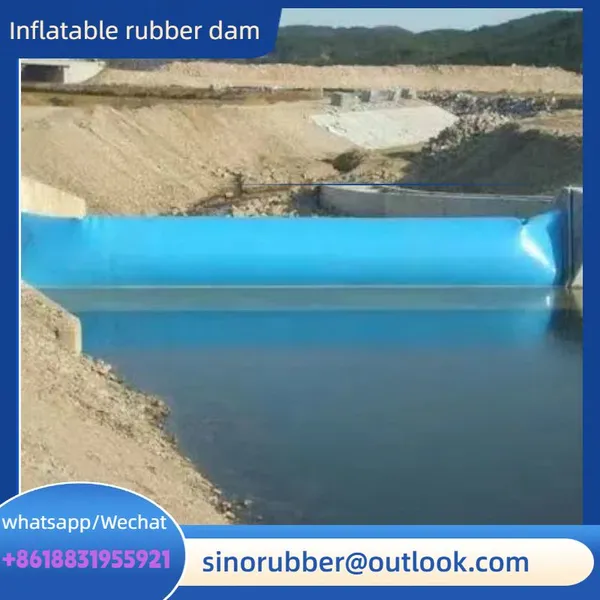
Composition of Inflatable Rubber Dams An inflatable rubber dam is a flexible water conservancy facility that forms a water-retaining structure through internal inflation. Its composition is designed around four core requirements: *inflation forming, stable water retention, safety protection, and convenient control*. Specifically, it can be divided into four modules: **Dam Body System, Inflation System, Anchoring System, and Foundation & Protection System. All components work synergistically to ensure the dam has both flexible water-retaining capabilities and structural safety.
I. Core Module: Dam Body System (Water-Retaining Main Body) The dam body is the core water-retaining component of the inflatable rubber dam, which must meet requirements such as **sealability, tensile strength, weather resistance, and resistance to water impact**. It mainly consists of the "dam bag" and auxiliary sealing structures:
1. Dam Bag (Main Structure) The dam bag is a flexible rubber composite material, which is key to forming the water-retaining shape after inflation. It usually adopts a "multi-layer composite structure", divided from the inside out into: - Inner Sealing Layer**: Made of high-elastic synthetic rubber (e.g., neoprene (CR), ethylene-propylene-diene monomer (EPDM)), with a thickness of 1-2mm. Its core function is to prevent gas leakage and ensure long-term pressure retention of the dam bag. EPDM also has excellent ozone and UV resistance, making it suitable for open-air water conservancy scenarios. - Load-Bearing Framework Layer: Located between the sealing layers, it uses high-strength textile materials (e.g., nylon canvas, polyester canvas) as the "tensile framework". The number of layers is determined by the dam height and design pressure (usually 3-8 layers), which can withstand radial tension after inflation and water impact force, preventing the dam bag from stretching and rupturing. - Outer Wear-Resistant Protective Layer**: The outer rubber layer is 2-3mm thick, added with anti-aging and anti-wear additives (e.g., carbon black, anti-aging agents). It resists water scouring, sediment friction, floating object impact, and exposure to sun and rain, extending the service life of the dam bag. The shape of the dam bag is designed according to water-retaining needs. Common types include **single-curved arch type** (suitable for medium-low water heads and wide river channels) and **double-curved arch type** (suitable for high water heads and narrow river channels). Both ends are connected to the bank slope anchoring structure to form a closed water-retaining interface. 2. Joints and Sealing Structures* The splicing of the dam bag (e.g., longitudinal splicing, transverse joints) adopts a "hot vulcanization joint" process, which fuses rubber and the framework layer to ensure the tensile strength of the joint is not less than 80% of the dam bag itself. Meanwhile, at the connection between the dam bag and the anchoring system, **sealing strips, pressure-sensitive tapes**, or "vulcanized sealing edges" are installed to prevent gas leakage from the connection gaps and ensure stable pressure retention of the dam bag.
II. Power Module: Inflation System (Forming and Pressure Retention) The inflation system provides air pressure support for the dam body, which is core to realizing the functions of "inflation for water retention and deflation for dam collapse". It must meet the requirements of **high inflation efficiency, stable pressure, and safety protection**, and mainly includes: 1. Inflation Equipment - **Main Inflation Device**: Screw air compressors (for small and medium-sized dams) or centrifugal blowers (for large-sized dams) are usually used. The air volume is determined according to the dam bag volume and designed inflation time (generally 30 minutes to 2 hours), which can pressurize air to 0.03-0.15MPa (the specific pressure is designed based on the dam height—the higher the dam, the greater the required pressure). - **Backup Inflation Device**: A small diesel air compressor is equipped to deal with main power failures, ensuring normal inflation or deflation in emergency situations. 2. Air Conveyance and Control Pipes - Air Conveyance Pipes Galvanized steel pipes or high-pressure rubber hoses are used to connect the inflation equipment to the "inflation interface" of the dam bag. The pipe diameter is designed according to the air volume (usually DN50-DN150), and **globe valves and check valves** (to prevent gas backflow) are installed. - **Pressure Control Components**: Including **pressure gauges (for real-time monitoring of internal dam pressure)**, **safety valves (for automatic deflation when pressure exceeds the design value to prevent dam bag explosion)**, and **pressure sensors (connected to the control system to realize automatic pressure adjustment)**. 3. **Air Supplement and Deflation Devices** - **Automatic Air Supplement Device**: Due to slight air leakage of the dam bag (pressure loss ≤5% per day during long-term pressure retention), a small air compressor is linked via a pressure sensor. When the pressure is 10% lower than the design value, it automatically supplements air to maintain the stable shape of the dam body. - **Quick Deflation Valves**: Installed at the bottom or side of the dam bag, large-diameter butterfly valves (DN100-DN200) are used. They are quickly opened when dam collapse is needed to discharge the gas inside the dam bag (deflation time is usually 15-30 minutes), facilitating flood passage or equipment maintenance.
## III. Fixing Module: Anchoring System (Anti-Slippage and Positioning) After inflation, the inflatable rubber dam is subject to water thrust, buoyancy, and lateral tension. The anchoring system must firmly fix the dam body on the foundation to prevent the dam body from slipping, floating, or detaching from the bank slope. It mainly includes: 1. **Bottom Anchoring Structure** - Between the bottom of the dam bag and the concrete foundation, "bolt-plate" anchoring is adopted: The "anchoring lugs" (rubber lugs with built-in metal frameworks) at the bottom of the dam bag are pressed against the pre-embedded steel plates of the concrete foundation via stainless steel bolts (with a spacing of 200-300mm). The bolts need to be coated with anti-rust grease, and rubber gaskets are placed between the pressing plates and the dam bag to balance fixing strength and sealability. - The concrete foundation must be flat and solid, with "anti-slip grooves" on the surface to enhance friction between the dam bag and the foundation, preventing the dam body from slipping along the water flow direction. 2. **Bank Slope Anchoring Structure** - The two ends of the dam bag are connected to the concrete retaining walls of the bank slopes on both sides, using "wedge-shaped anchoring grooves" or "flange anchoring": The end of the dam bag is embedded in the wedge-shaped grooves of the bank slope and fixed by concrete pouring, or connected to the pre-embedded bolts of the bank slope via flanges to adapt to the inclination angle of the bank slope (usually 1:2-1:3). Meanwhile, waterstops are installed at the connection to prevent water seepage from the bank slope. - The anchoring strength must meet the tensile requirements: For example, for a rubber dam with a height of 3m, the tensile bearing capacity of the bottom anchoring bolts should be ≥50kN per bolt to resist the horizontal thrust of water on the dam body.
## IV. Support and Protection Module: Foundation & Protection System The foundation serves as the bearing base of the dam body, while the protection system is used to resist damage to the dam body from the external environment. Both work together to ensure the long-term stable operation of the inflatable rubber dam: 1. **Concrete Foundation** - The foundation is a "strip-shaped concrete base", arranged along the dam axis. Its width is 300-500mm wider than the bottom of the dam bag, and its thickness is determined by geological conditions (≥800mm for soft soil foundations, ≥500mm for rock foundations). A steel mesh (φ12-φ16@200) is installed inside to enhance crack resistance. - An **anti-seepage layer** (e.g., cement-based permeable crystalline coatings, PVC waterproof membranes) must be installed on the foundation surface to prevent the foundation from being hollowed out by water seepage under the dam. Meanwhile, an "anti-seepage cut-off wall" (depth ≥1m) is set on the upstream side of the foundation to block the seepage path of upstream groundwater. 2. **Protection Facilities** - **Anti-Scouring Devices**: An "energy dissipation pool" (length 3-5 times the dam height) and an "apron" (poured with mortar masonry or concrete) are set at the downstream dam toe to dissipate the energy of the water flowing down from the dam and prevent water from scouring the dam toe foundation. A "protective net" (e.g., galvanized steel wire mesh) can be laid on the upstream dam surface to resist friction between sediment, floating objects, and the dam bag. - **Anti-Floating and Anti-Collision Devices**: When the river water level changes significantly, "counterweights" (concrete blocks or cast iron blocks) are set at the bottom of the dam bag to prevent the dam body from floating. In navigable river channels, "anti-collision piers" (with a spacing of 10-15m) are set upstream of the dam body to avoid collision between ships or floating objects and the dam bag. - **Anti-Freezing and Maintenance Facilities**: In cold areas, a "hot air device" must be added to the inflation system to prevent the inflation pipes from freezing in winter. "Maintenance platforms" (width ≥1.2m) are set on both sides of the dam body to facilitate daily inspection of the dam bag, anchoring, and sealing conditions.
## V. Auxiliary Module: Control System (Intelligent Operation and Maintenance) Modern inflatable rubber dams are usually equipped with **automatic control systems** to realize unattended operation and safety early warning: - **Sensor Unit**: Includes internal dam pressure sensors (for real-time monitoring of air pressure), upstream and downstream water level sensors (for monitoring water-retaining height), and dam bag displacement sensors (for monitoring dam body deformation). Data is transmitted to the control cabinet in real time. - **Control Unit**: The PLC control cabinet realizes automatic inflation (when the water level is lower than the design value), automatic deflation (when the water level exceeds the limit), and abnormal pressure alarm (sound and light alarm triggered when overpressure/underpressure occurs). Some systems can be connected to a remote monitoring platform, supporting remote operation via mobile phones or computers. In summary, the composition of an inflatable rubber dam is an organic combination of "flexible dam body + rigid anchoring + power inflation + protective foundation". It not only uses the flexibility of rubber to realize flexible water retention (capable of collapsing and standing) but also ensures structural safety through the anchoring and protection systems. It is suitable for small and medium-sized water conservancy projects such as irrigation, flood control, power generation, and landscape.

Send Inquiry to This Supplier



You May Also Like
-
Inflatable Rubber Dam, Water-retaining Dam, Sluice Gate, Irrigation System, Flood Control Gate, Hydraulic River-blocking Roller Dam,US$ 290 - 300MOQ: 20 Meters
-
Rubber Dam Inflation and Water-filled Type Floodgate, Rubber Sluice Gate, River Dam Sluice Gate, Rubber Flood Barrier, WaterproofUS$ 290 - 300MOQ: 20 Meters
-
Rubber Dam Flood Control Inflatable Water Barrier, River Diversion Rubber Sluice Gate, Flood Control and Flood Prevention Water-filling GateUS$ 290 - 300MOQ: 20 Meters
-
Inflatable Rubber DamUS$ 290 - 300MOQ: 20 Meters
-
Manufacturer Supplies Inflatable and Water-filled Rubber Dams, Waterproof River Landscape Rubber Sluice Gates, Airbag-style Rubber DamsUS$ 290 - 300MOQ: 20 Meters
-
Rubber Dam, Inflatable Type, River-blocking and Water-retaining, Seamless, High-temperature ResistantUS$ 290 - 300MOQ: 20 Meters
-
Direct Supply From Rubber Dam Manufacturers, Seamless Overlapping Air Shield Dam, Complete Specifications, Customized as NeededUS$ 290 - 300MOQ: 20 Meters
-
Rubber Dam Manufacturer, Seamless Splicing, Customized as Needed, Small Inflatable Rubber Dam, Water-injection Rubber Dam, Dam Bag Water BarrierUS$ 290 - 300MOQ: 20 Meters
-
Rubber DamUS$ 290 - 300MOQ: 20 Meters
-
Inflatable and Water-filled Rubber Dam for River Waterproofing and Landscape Water ControlUS$ 290 - 300MOQ: 20 Meters


