








 Contact Platform Support
 Help Center
Home > Electrical & Electronics > Electrical Control System > ABB PM645B 3BSE010535R1 Processor Module
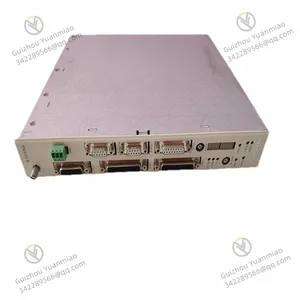
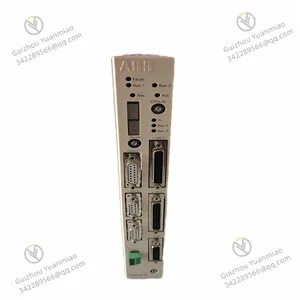
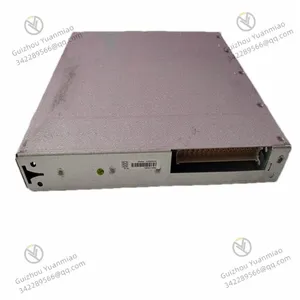
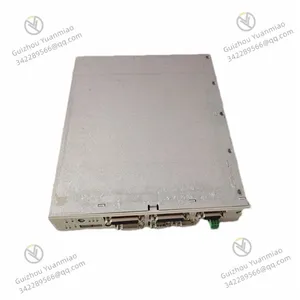
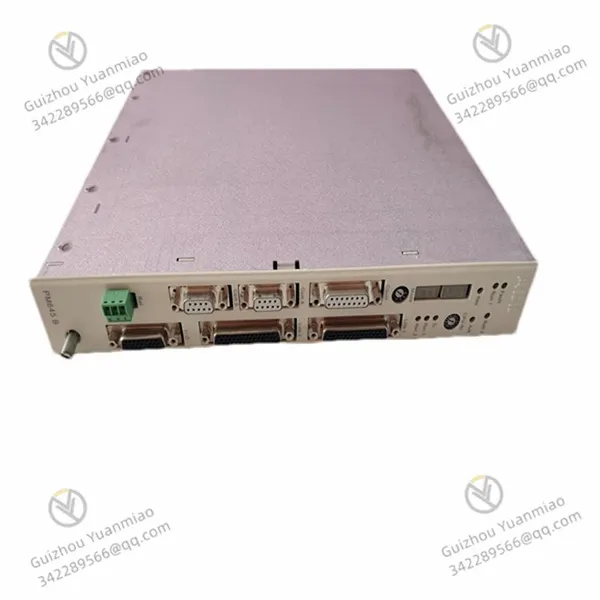
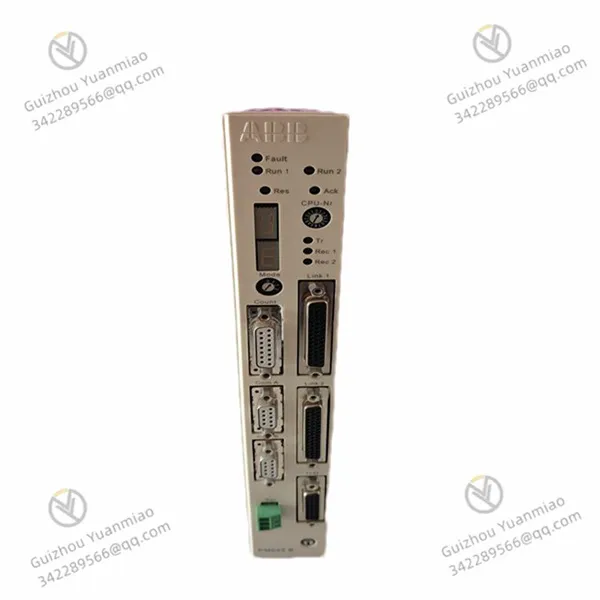
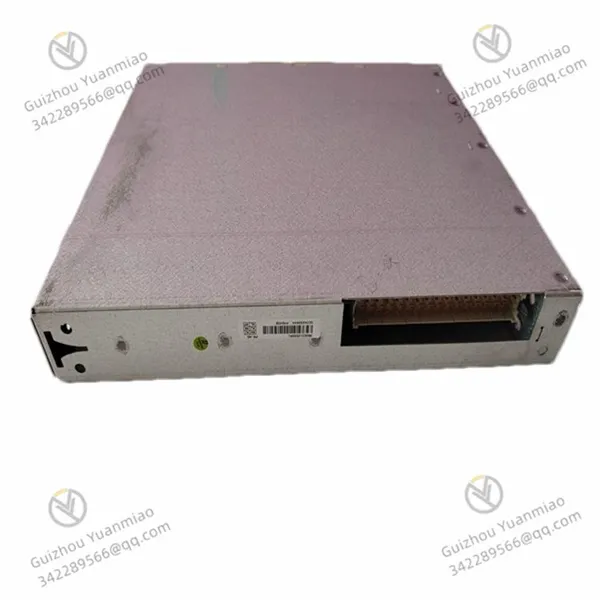
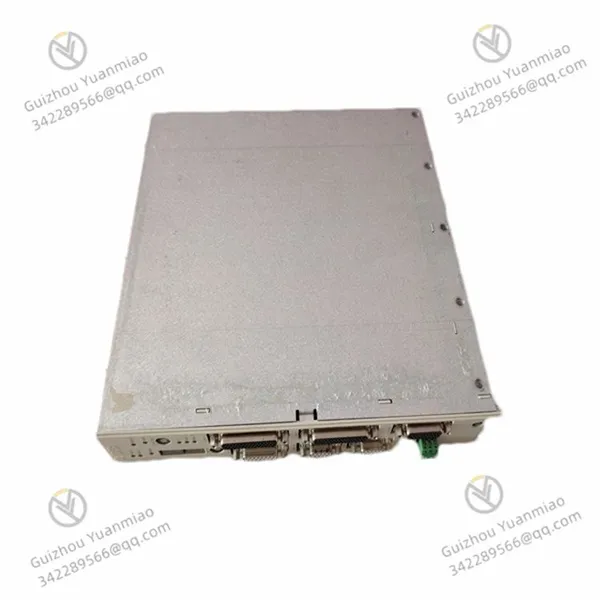
ABB PM645B 3BSE010535R1 Processor Module

Negotiable
MOQ: 1 Piece (Price negotiable depending on order volume and customization)
Key Specifications
Get Latest Price
Material:
Other, Global universal model
Certification:
CE
Condition:
New

Payment & Shipping
Payment Methods:

Port of Shipment:
China
Delivery Detail:
Delivery time depends on order quantity.
Related Products
-
 ABB LD 810HSE EX Fieldbus Linking DeviceNegotiableMOQ: 1 Piece
 -
ABB GRID BREAKER UNIT GBU72 3BHB030310R0001NegotiableMOQ: 1 Piece
-
ABB PCS6000 Medium-Voltage Full-Power ConverterNegotiableMOQ: 1 Combo
-
ABB PCD235B101 3BHE032025R0101 Exciter Control ModuleNegotiableMOQ: 1 Piece
-
ABB REM620A_F NAMBBABA33E5BNN1XF Motor Protection and Control RelaysNegotiableMOQ: 1 Piece
Material
Other, Global universal model
Certification
CE
Condition
New
Customized
Non-Customized
The ABB PM645B Processor Module is a core component of the ABB Advant series control systems, featuring industrial-grade high reliability and complex task processing capabilities. It is widely adapted to the automation needs of process industries, discrete manufacturing, and other scenarios. Below is a comprehensive breakdown of its technical details and application insights across 10 dimensions: basic specifications, core performance, hardware architecture, software functions, communication protocols, redundancy design, installation & maintenance, compatible systems, typical application cases, and industry adaptation advantages.
I. Detailed Basic Specifications| Category | Specific Parameters | Remarks |
|---|---|---|
| Power Supply | Input Voltage: 24VDC (Allowable Fluctuation Range: 19.2VDC - 28.8VDC) | Complies with industrial wide-voltage standards to adapt to on-site voltage fluctuations |
| Power Consumption: Typical 20W, Peak 25W (Under full load, including power supply for expansion modules) | Requires a separate ABB-compliant power module (e.g., PS600 series) | |
| Processing Performance | Processor Architecture: 32-bit multi-core processor (CPU Frequency ≥ 800MHz) | Supports parallel processing of control algorithms, data acquisition, and communication tasks without task blocking risks |
| Program Storage Capacity: Built-in 16MB Flash (Expandable to 64MB) | Used for storing control programs, process parameters, and system configurations; non-volatile (data retained after power outage) | |
| Data Cache Capacity: 8MB RAM (High-speed caching of real-time data to improve operation response speed) | Supports instantaneous high-concurrency data processing (e.g., multi-channel I/O signal acquisition) | |
| I/O Expansion Capability | Digital I/O: Basic support for 64-channel DI (Digital Input), 32-channel DO (Digital Output); max expandable to 256 points | Requires ABB expansion modules (e.g., DI650/DO650); supports dry/wet contact signals |
| Analog I/O: Basic support for 16-channel AI (Analog Input, 4-20mA/0-10V), 8-channel AO (Analog Output) | AI accuracy: ±0.1% FS (Full Scale); AO output ripple: ≤0.1%; compatible with sensors and actuators | |
| Special I/O Support: Expandable pulse input (max 1kHz) and frequency input (0-10kHz) modules | Compatible with flowmeters, encoders, etc., for speed/flow parameter acquisition | |
| Environmental Adaptability | Operating Temperature: -25°C ~ +70°C (No condensation) | Suitable for harsh environments such as high-temperature industrial workshops and outdoor control cabinets |
| Storage Temperature: -40°C ~ +85°C | Adapts to long-distance transportation and low-temperature storage needs | |
| Humidity Range: 5% ~ 95% RH (Non-condensing) | No additional dehumidification equipment required; suitable for humid environments (e.g., paper mills, water treatment plants) | |
| Protection Class: Module body IP20 (Requires matching control cabinet with IP54 or higher) | Prevents dust ingress; must be installed in a sealed control cabinet | |
| Physical Dimensions & Weight | Dimensions (L×W×H): 250mm × 130mm × 35mm (Depth/Length × Width × Height) | Compact design saves rack space; compatible with standard 19-inch industrial cabinets |
| Weight: 1.5kg (Excluding expansion modules) | Lightweight design for easy single-person installation and maintenance | |
| Certification Standards | Safety Certifications: IEC 61508 (SIL 2), UL 508 | Meets functional safety requirements; applicable to safety loops such as Emergency Shutdown (ESD) and fire alarms |
| Electromagnetic Compatibility (EMC): EN 61000-6-2 (Industrial environment interference resistance), EN 61000-6-4 (Radiation limits) | Resists electromagnetic radiation and conducted interference; suitable for industrial sites with dense motors and high-voltage equipment |
II. Core Performance Features1. High Reliability & Stability2. Efficient Processing & Real-Time Control3. Flexible Expansion & Redundancy ProtectionIII. Hardware Architecture & Interface Design1. Internal Hardware Architecture2. External Communication InterfacesThe PM645B provides multiple communication interfaces for seamless integration with upstream and downstream equipment, as detailed below:
| Interface Type | Specifications | Application Scenarios |
|---|---|---|
| Ethernet Interface | 2 RJ45 ports, 10/100Mbps auto-negotiation | Connects to upper computers (e.g., ABB Operator Panel) and SCADA systems for remote monitoring |
| Profibus-DP Interface | 1 DB9 port, max transmission rate 12Mbps | Connects to on-site equipment (e.g., inverters, servo drives) for high-speed control signal transmission |
| RS485 Interface | 1 terminal interface, supports Modbus RTU protocol | Connects to instruments (e.g., flowmeters, level gauges) for process parameter acquisition |
| Advant Bus Interface | Dedicated backplane interface, 100Mbps transmission rate | Connects to expansion I/O modules and redundant processor modules |
| Diagnostic Interface | 1 Mini USB port | Local connection to computers for program downloading and fault diagnosis |
IV. Software Functions & Development Tools1. Core Software Functions2. Supporting Development & Operation ToolsV. Compatible Systems & Components1. Product Series AffiliationThe PM645B is a core processor of the ABB Advant Controller 110/160 and Advant OCS (Open Control System) series, mainly compatible with the following systems:
| Component Type | Model Example | Function & Application |
|---|---|---|
| Power Module | PS600 (3BSE003693R1) | Provides stable 24VDC power for the PM645B and expansion modules |
| Digital I/O Module | DI650 (3BSE008511R1) | Expands digital input channels; supports dry contact signal acquisition |
| DO650 (3BSE008512R1) | Expands digital output channels; supports relay/transistor output | |
| Analog I/O Module | AI620 (3BSE008501R1) | Expands analog input channels; compatible with 4-20mA sensors |
| AO620 (3BSE008502R1) | Expands analog output channels; controls actuators (e.g., valves, inverters) | |
| Communication Module | PB620 (3BSE008521R1) | Expands Profibus-DP master interface; connects to on-site equipment |
| ETH610 (3BSE008531R1) | Expands Gigabit Ethernet interface; improves data transmission rate | |
| Operator Panel | OP100 (3BSE013269R1) | Local human-machine interaction; displays process parameters and control buttons |
Compared with similar processor modules from other brands (e.g., Siemens S7-400, Rockwell ControlLogix), the PM645B’s core advantages lie in:

Send Inquiry to This Supplier


Business Type
Trading Company
Year Established
2014
Factory Size
1,000-3,000 square meters
Product Certifications
SA8000
You May Also Like
-
ABB DDC779BE02 3BHE006805R0002 Circuit CardNegotiableMOQ: 1 Piece
-
ABB AIM0006 2RCA021397A0001P PC Board InterfaceNegotiableMOQ: 1 Piece
-
ABB P8431 TMR Analog Input ModuleNegotiableMOQ: 1 Piece
-
ABB P8151B Communication Interface ModuleNegotiableMOQ: 1 Piece
-
ABB PPD115A02 3BHE017628R0002 Communication System (FOCS) ModuleNegotiableMOQ: 1 Piece
-
ABB PPD513A0E110110 3BHE039724R0E41 ControllerNegotiableMOQ: 1 Piece
-
ABB PCD237A1011 3BHE028915R0101 Excitation Control ModuleNegotiableMOQ: 1 Piece
-
ABB XZC826A102 3BHE036348R0102 Controller ModuleNegotiableMOQ: 1 Piece
-
ABB UNS0017A-P,V1 HIEE305106R0001 Firing BoardNegotiableMOQ: 1 Piece
-
ABB UPC325AE01 3BHB000644R0001 Fieldbus Opto InterfaceNegotiableMOQ: 1 Piece


