Home > Electrical & Electronics > Electrical Control System > TOKYO ELECTRON TEB207-12 OGSI EC80-000157-12 Electronic Module

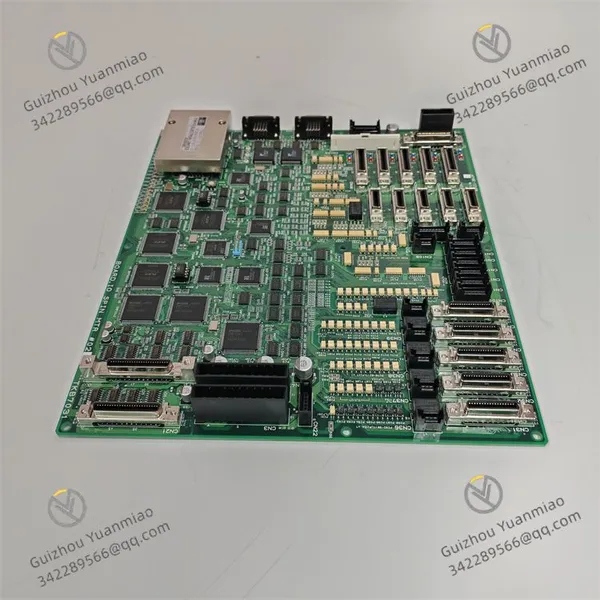
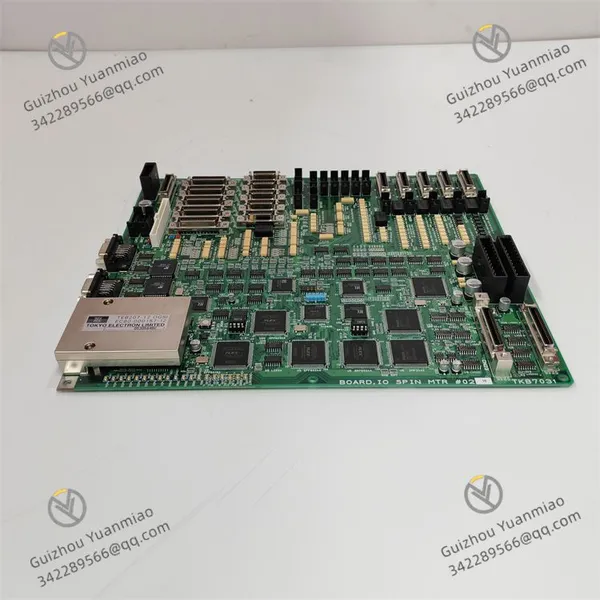
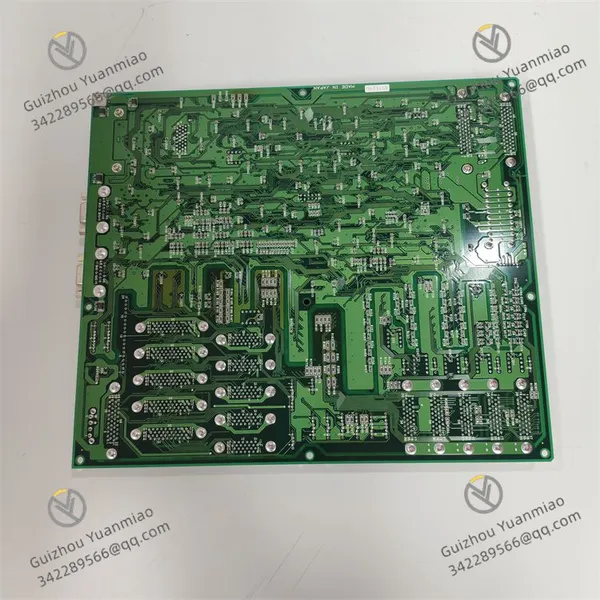
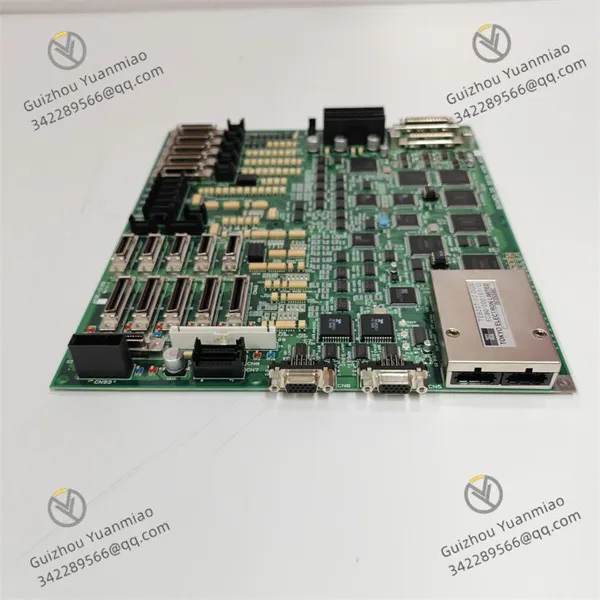
TOKYO ELECTRON TEB207-12 OGSI EC80-000157-12 Electronic Module
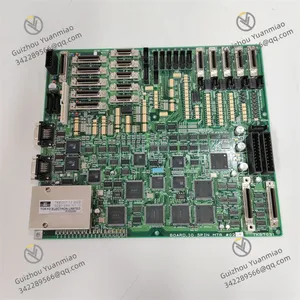
TOKYO ELECTRON TEB207-12 OGSI EC80-000157-12 Electronic Module photo-1
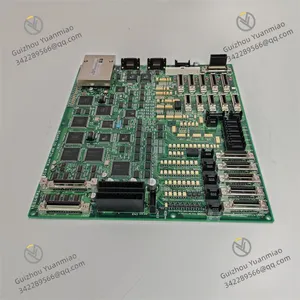
TOKYO ELECTRON TEB207-12 OGSI EC80-000157-12 Electronic Module photo-2
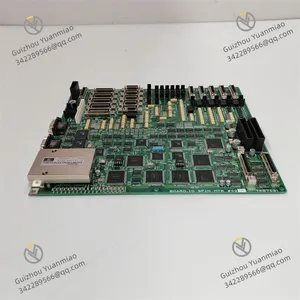
TOKYO ELECTRON TEB207-12 OGSI EC80-000157-12 Electronic Module photo-3
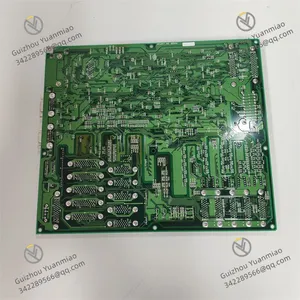
TOKYO ELECTRON TEB207-12 OGSI EC80-000157-12 Electronic Module photo-4
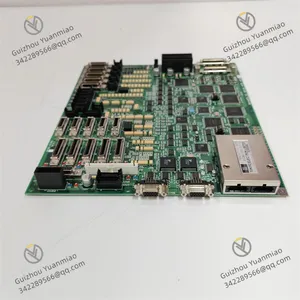
TOKYO ELECTRON TEB207-12 OGSI EC80-000157-12 Electronic Module photo-5
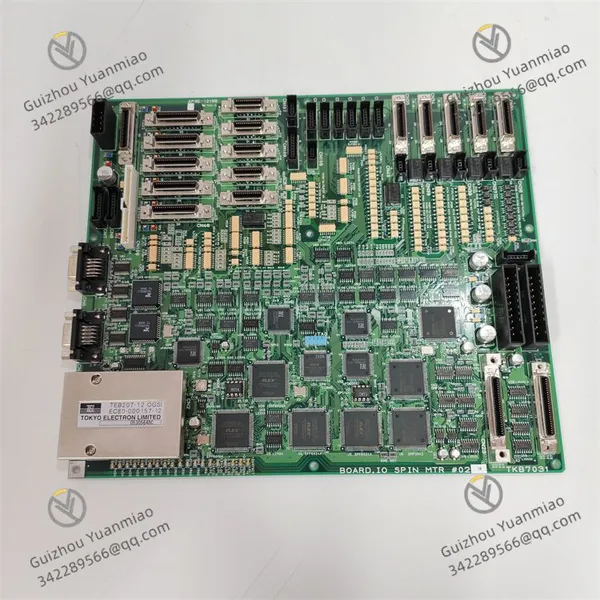
Negotiable MOQ: 1 Piece (Price negotiable depending on order volume and customization)
Key Specifications
Get Latest Price
Material:
Other, Global universal model
Condition:
Other, Global universal model
Task:
Other, Global universal model

Payment & Shipping
Payment Methods:
Port of Shipment:
guizhou
Delivery Detail:
Delivery time depends on order quantity.
Material Other, Global universal model
Condition Other, Global universal model
Task Other, Global universal model
Mathematical Model Other, Global universal model
Signal Other, Global universal model
Customized Non-Customized
Structure Other, Global universal model
Operating Temperature 20℃~28℃
Relative Humidity 30%~60% (non-condensing)
Storage Temperature -40℃~85℃
Dimensions 150mm×100mm×40mm

I. Overview


The TOKYO ELECTRON TEB207-12 (model: OGSI EC80-000157-12) is a process control module specifically designed for TEL (Tokyo Electron Limited) plasma process equipment, such as Telius etchers and Ceria thin-film deposition equipment. It must be used in conjunction with the equipment’s main controller (e.g., TEL TC2000), radio frequency (RF) power supply (e.g., TEL RF300), and mass flow controller (MFC, e.g., Brooks SLA5800). Its core functions include:


  • Sending process control commands to actuators via 6 analog outputs (AO), such as 0-10V for MFC flow commands and 4-20mA for RF power supply power commands, with 16-bit resolution;

  • Collecting actuator status feedback via 4 analog inputs (AI), such as actual MFC flow and RF power supply reflected power, with a sampling rate of 100Hz;

  • Enabling process start/stop control via 8 digital outputs (DO), such as plasma ignition enable and ESC (Electrostatic Chuck) voltage switching, with a response time ≤200μs;

  • Monitoring equipment status via 4 digital inputs (DI), such as MFC faults and vacuum valve status;

  • Incorporating a microcontroller unit (MCU) that supports parameter calling based on process recipes (e.g., 28nm etching recipe, 14nm thin-film deposition recipe);

  • Featuring signal filtering (50Hz/60Hz notch filtering) and fault self-diagnosis (AO short circuit, AI signal overrange);

  • Supporting recipe configuration and status monitoring via TEL Process Control Software (TPCS).


TOKYO ELECTRON TEB207-12 OGSI EC80-000157-12 (3)


Its core advantages lie in "process parameter control accuracy (AO error ≤0.1% FS), plasma interference protection (shielding effectiveness ≥40dB), high reliability (MTBF ≥40,000 hours), and exclusive adaptation to TEL equipment". It is only used in TEL etchers and thin-film deposition equipment, and serves as a critical component for mass production of chips at the 7nm~28nm process nodes.


In the silicon etching process of the TEL Telius etcher, the TEB207-12 controls the MFC via 3 AO outputs: 1 channel of 0-10V signal for controlling CF₄ gas flow (accuracy ±0.5sccm), 1 channel of 0-10V signal for controlling O₂ gas flow (accuracy ±0.3sccm), and 1 channel of 4-20mA signal for controlling RF power supply power (accuracy ±0.5% of the set value). Meanwhile, it collects the actual MFC flow (sampling rate 100Hz) and RF power supply reflected power via AI, and the MCU adjusts the output commands in real time, controlling the etching rate fluctuation within ±3%. This ensures that the etching pattern depth deviation of 28nm process chips is ≤5nm (design value 100nm), increasing the yield from 92% to 97%. In Ceria thin-film deposition equipment, the module controls the SiH₄ and N₂O gas flows of the MFC (ratio 1:5) via 2 AO channels, controls plasma ignition via DO, and collects feedback from the thin-film thickness sensor via AI, controlling the thin-film thickness uniformity within ±2% (for 300mm-diameter wafers) and avoiding chip leakage caused by uneven thickness. During 24/7 mass production in a semiconductor wafer fab, the TEB207-12 operated continuously for 300 days without faults, with a Mean Time Between Failures (MTBF) ≥40,000 hours. It meets the "year-round non-stop" mass production requirements of semiconductor fabs and reduces capacity losses caused by equipment downtime (daily loss exceeding RMB 4 million).


In terms of hardware design, the module adopts a "plasma interference protection + high-precision signal processing" architecture:


  • I/O Channels and Anti-Interference Design: 6 AO channels (4 channels of 0-10V / 2 channels of 4-20mA, 16-bit resolution), 4 AI channels (4 channels of 0-10V, 16-bit resolution, sampling rate 100Hz), 8 DO channels (TTL level, response time ≤200μs), 4 DI channels (24V DC dry contacts). All analog channels are equipped with optoelectronic isolation (isolation voltage ≥2kVrms) and plasma shielding (using stainless steel grounded shielding case + electromagnetic sealing tape) to prevent signal interference from electromagnetic radiation (frequency 13.56MHz/27.12MHz) generated by plasma. Digital channels have overvoltage protection (±24V ESD protection).

  • Core Control Unit: Built-in 32-bit MCU (ARM Cortex-M4, operating rate 80MHz) that supports storage of 100 process recipes (each containing 20 process parameters). It is equipped with 32MB Flash (for storing recipes and firmware) and 8MB RAM (for caching real-time data), supporting online firmware upgrades via TPCS (without interrupting the process).

  • Housing and Protection: Compact stainless steel housing (resistant to plasma corrosion) with dimensions 150mm×100mm×40mm (suitable for the narrow internal space of the equipment). It has an IP20 protection rating (dust-proof and plasma splash-proof). The operating temperature ranges from 20℃ to 28℃ (constant temperature environment of the equipment), storage temperature ranges from -40℃ to 85℃, and relative humidity ranges from 30% to 60% (non-condensing), making it suitable for Class 1 cleanrooms.

  • Safety and Redundancy Design: Supports dual-channel output for critical parameters (e.g., main and standby AO channels for RF power commands). If a single channel fails, it automatically switches to the standby channel. It complies with SEMI F47 (voltage fluctuation tolerance of ±10% without abnormality) and SEMI S2 standards. Critical circuits (e.g., MCU, power supply) adopt overcurrent protection design to avoid module damage caused by abnormal plasma.


TOKYO ELECTRON TEB207-12 OGSI EC80-000157-12 (5)


II. Technical Parameters


1. I/O Channel and Signal Parameters

Parameter CategorySpecific Specifications
Analog Output (AO)6 channels: 4 channels of 0-10V (16-bit resolution, accuracy ±0.1% FS), 2 channels of 4-20mA (16-bit resolution, accuracy ±0.2% FS); Output load: ≥1kΩ for voltage signals, ≤500Ω for current signals; Response time ≤10ms
Analog Input (AI)4 channels of 0-10V (16-bit resolution, sampling rate 100Hz, accuracy ±0.1% FS); Input impedance ≥1MΩ; Supports 50Hz/60Hz notch filtering
Digital Output (DO)8 channels of TTL level (high level ≥2.4V, low level ≤0.4V); Response time ≤200μs; Output current ≤100mA; Supports normally open/normally closed configuration
Digital Input (DI)4 channels of 24V DC dry contacts (high level ≥18V, low level ≤5V); Input current ≤5mA; Response time ≤1ms; Supports edge detection
Signal Isolation and ShieldingAnalog channels: Optoelectronic isolation of 2kVrms (IEC 61010-1); Plasma shielding: Shielding effectiveness ≥40dB (13.56MHz)

2. Control Performance Parameters

Parameter CategorySpecific Specifications
Processor32-bit ARM Cortex-M4 MCU, operating rate 80MHz, supports floating-point arithmetic
Recipe StorageSupports 100 process recipes, each configurable with 20 parameters (AO/DO/DI thresholds, etc.); Recipe calling time ≤100ms
Process Parameter AccuracyGas flow control accuracy ±0.5sccm (adapts to MFC range 0-100sccm); RF power control accuracy ±0.5% of the set value
Fault DiagnosisSupports diagnosis of AO short circuit/overvoltage, AI signal loss/overrange, and DO output faults; Fault response time ≤100ms; Alarm method: DO output + software prompt
Communication InterfaceSupports TEL-exclusive RS485 protocol (baud rate 115200bps), communication delay with main controller ≤10ms; Supports EtherCAT (optional)

TOKYO ELECTRON TEB207-12 OGSI EC80-000157-12 (4)


3. Environmental and Reliability Parameters

Parameter CategorySpecific Specifications
Operating Temperature20℃~28℃ (constant temperature ±1℃, relying on equipment heat dissipation)
Storage Temperature-40℃~85℃
Relative Humidity30%~60% (non-condensing), complies with SEMI E12 standard
Electromagnetic/Plasma Interference ResistanceEmission: EN 55032 Class B; Immunity: EN 61000-6-2 (ESD ±8kV contact discharge, RF radiation 30V/m (13.56MHz)); Plasma shielding effectiveness ≥40dB (13.56MHz/27.12MHz)
Vibration ResistanceComplies with SEMI F27 standard: 5-500Hz, 0.1g acceleration (continuous operation)
Power Supply RequirementPowered by the equipment’s internal power supply: +5V DC (±0.1V), maximum power consumption ≤10W; +24V DC (±10%), used for I/O isolation, maximum power consumption ≤5W
Safety CertificationsSEMI F47, SEMI S2, UL 61010-1, IEC 61326-1 (Electromagnetic Compatibility)
Mean Time Between Failures (MTBF)≥40,000 hours (Telcordia standard, 25℃ environment)

TOKYO ELECTRON TEB207-12 OGSI EC80-000157-12 (1)


III. Functional Features


1. Precise Process Parameter Control for Advanced Etching/Deposition Processes

With "high-precision signal output" at its core, the TEB207-12 addresses the pain point of "parameter drift in plasma environments" faced by traditional modules:


  • High-Resolution Signal Output: The AO channel features 16-bit resolution and ±0.1% FS accuracy. When controlling MFC flow, the minimum adjustment step is 0.03sccm (range 0-100sccm). In 28nm silicon etching, the CF₄ gas flow is stabilized at 50±0.3sccm, reducing etching rate deviation caused by flow fluctuations from ±5% to ±3%. The 4-20mA signal for RF power commands has an accuracy of ±0.2% FS; when controlling an RF power supply to output 1000W, the actual output deviation is ≤2W, ensuring stable plasma density.

  • Recipe-Based Parameter Management: It supports storage of 100 process recipes, each corresponding to a specific process node (e.g., 28nm logic chip etching, 14nm memory chip deposition). Maintenance personnel can call recipes with one click via TPCS without manual parameter adjustment. A wafer fab reduced process switching time from 30 minutes to 5 minutes, minimizing non-production time.

  • Real-Time Feedback Adjustment: The AI channel collects actual MFC flow and RF reflected power at a 100Hz sampling rate, and the MCU updates the AO output every 10ms, forming a "command-feedback-adjustment" closed loop. During etching, if the MFC flow drops by 2sccm due to pressure fluctuations, the module increases the AO output within 100ms to restore the flow to the set value, avoiding etching pattern depth deviation.


2. Strong Plasma/Electromagnetic Interference Protection for Harsh Process Environments

Semiconductor plasma equipment generates 13.56MHz/27.12MHz RF radiation and plasma electromagnetic noise. The TEB207-12 ensures signal stability through multiple protection measures:


  • Plasma Shielding Design: The stainless steel grounded shielding case and electromagnetic sealing tape provide a shielding effectiveness of ≥40dB (13.56MHz). When the RF power supply operates at full power (3000W), the AO output signal fluctuation is ≤0.05% FS, with no process abnormalities caused by false commands.

  • Optoelectronic Isolation and Notch Filtering: The 2kVrms optoelectronic isolation of analog channels eliminates ground loop interference, and the 50Hz/60Hz notch filtering removes power grid noise. The signal-to-noise ratio of the MFC flow signal collected by AI is ≥85dB, with no false feedback caused by noise.

  • Corrosion-Resistant Housing: The stainless steel housing is resistant to plasma sputtering (e.g., fluorine-based plasma). After 300 days of continuous operation in an etcher, the housing shows no corrosion, and internal circuits have no plasma contamination, ensuring long-term stability.


TOKYO ELECTRON TEB207-12 OGSI EC80-000157-12 (2)


3. High Reliability and Safety Design for Uninterrupted Mass Production

Semiconductor mass production requires "zero unexpected downtime". The TEB207-12 minimizes the impact of faults through redundancy and safety design:


  • Critical Channel Redundancy: Dual AO channels are used for RF power commands and main MFC flow commands. If the main channel fails, it switches to the standby channel within 50ms. In a practical application at a wafer fab, the etching process was not interrupted during the main AO channel failure switchover, with no wafer scrapping.

  • Long-Life Components: Components resistant to plasma corrosion (e.g., PTFE wires, ceramic capacitors) are used. In a constant temperature environment of 20℃~28℃, the MTBF is ≥40,000 hours, with an average annual downtime of ≤2.19 hours—far below the ≤5 hours/year downtime requirement for semiconductor equipment.

  • Fault Early Warning and Protection: It real-time monitors module temperature, power supply voltage, and AO output status. When the temperature exceeds 30℃ or the power supply voltage fluctuates by more than ±10%, it triggers an early warning and adjusts the output in advance to avoid module damage. If abnormal plasma is detected (e.g., reflected power exceeding 10%), the DO immediately outputs a "plasma shutdown" command to protect wafers and equipment.


4. Exclusive Adaptation to TEL Equipment for System Synergy

The TEB207-12 is an exclusive module for TEL equipment, achieving seamless synergy with other components through in-depth adaptation:


  • Protocol and Interface Adaptation: It supports TEL’s exclusive RS485 communication protocol, with a communication delay of ≤10ms with the main controller (TC2000) and RF power supply (RF300), ensuring multi-actuator synchronization (e.g., synchronization error between MFC flow and RF power activation ≤50ms).

  • Customized Process Logic: It incorporates TEL’s exclusive process control logic (e.g., "flow-power-pressure" linkage control for etchers, "temperature-flow" ratio algorithm for thin-film deposition). No secondary development by the user is required—it can be used with Telius etchers/Ceria deposition equipment right out of the box.

  • Integrated Status Monitoring: Via TPCS software, users can real-time view the module’s AO output values, AI collected values, and fault logs (e.g., "AO2 short circuit", "DI3 signal loss"). Maintenance personnel can remotely locate faults, reducing troubleshooting time from the traditional 3 hours to 20 minutes.

Product Tags: TEB207-12 OGSI , EC80-000157-12

Send Inquiry to This Supplier

Message
0/5000
Want the best price? Post an RFQ now!
1Yr
Business Type
Trading Company
Year Established
2014
Factory Size
1,000-3,000 square meters
Product Certifications
SA8000