Home > Electrical & Electronics > Electrical Control System > DEIF IPM-1 Intelligent Power Manager
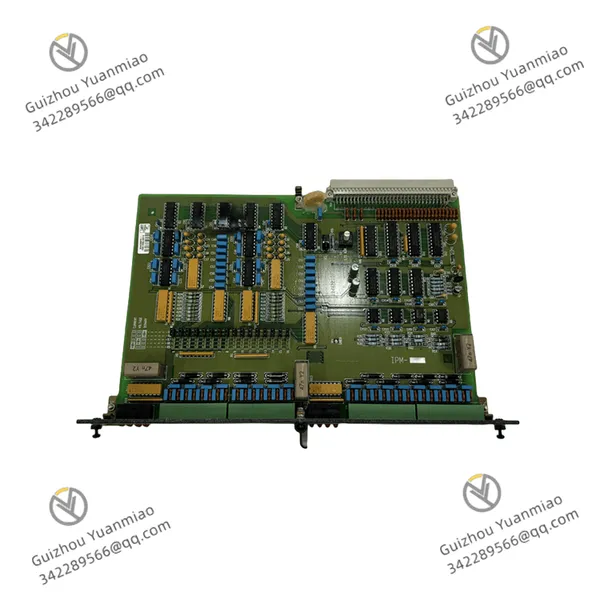
DEIF IPM-1 Intelligent Power Manager
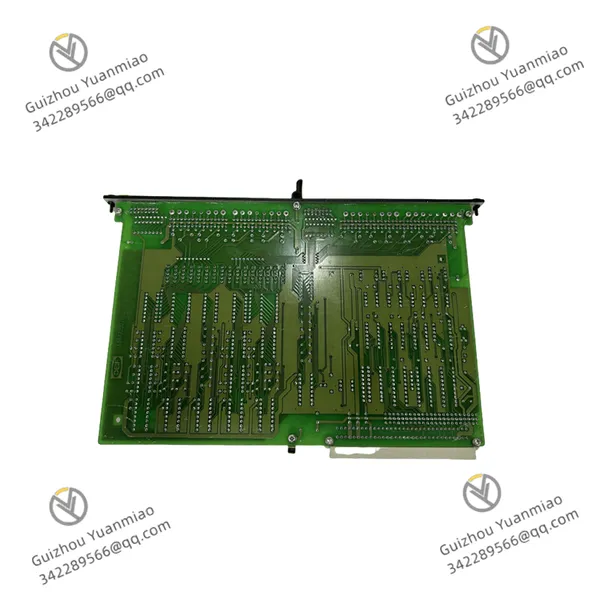
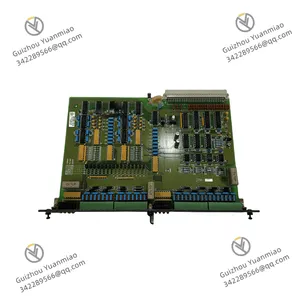
DEIF IPM-1 Intelligent Power Manager photo-1
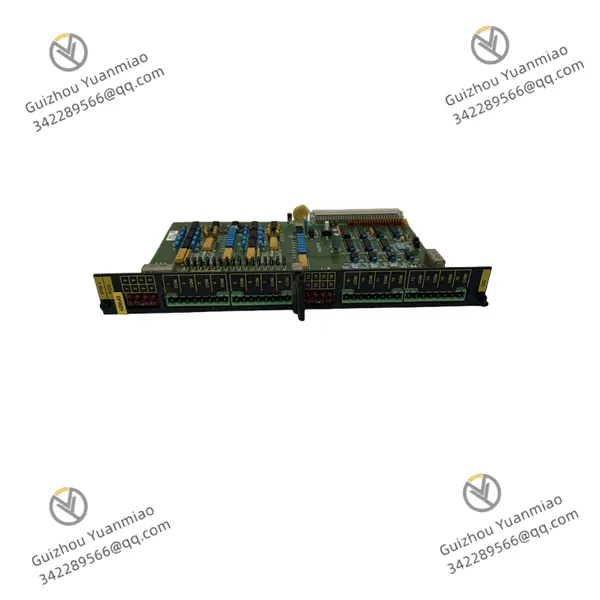
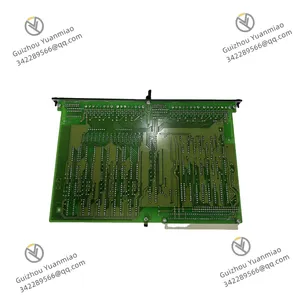
DEIF IPM-1 Intelligent Power Manager photo-2
DEIF IPM-1 Intelligent Power Manager photo-3
Negotiable MOQ: 1 Piece (Price negotiable depending on order volume and customization)
Key Specifications
Get Latest Price
Material:
Other, Global universal model
Condition:
Other, Global universal model
Task:
Other, Global universal model

Payment & Shipping
Payment Methods:
Port of Shipment:
guizhou
Delivery Detail:
Delivery time depends on order quantity.
Material Other, Global universal model
Condition Other, Global universal model
Task Other, Global universal model
Mathematical Model Other, Global universal model
Signal Other, Global universal model
Customized Non-Customized
Structure Other, Global universal model
Operating Temperature -25℃~70℃
Relative Humidity 5%~95% (non-condensing)
Storage Temperature -40℃~85℃
Dimensions 140mm×100mm×60mm

I. Overview


The DEIF IPM-1 is an intelligent power management module specifically designed for industrial power systems. It needs to be used in conjunction with DEIF main controllers (e.g., AGC PM 300), high-precision current/voltage sensors (e.g., CT/PT), load control actuators (e.g., intelligent contactors), and monitoring systems (e.g., DEIF Power Management Software). Its core functions include:


  • Synchronous Multi-Loop Power Monitoring: Supports power parameter collection for 8 independent loops (voltage, current, active power, reactive power, power factor, energy metering). The voltage measurement range is AC 85V-480V (50/60Hz), and the current measurement range is 0-500A (when used with CT). The measurement accuracy is ±0.5% FS (for active power), the sampling rate is 1kHz per loop, and the synchronization error between loops is ≤100μs.
  • Dynamic Load Distribution and Overload Protection: Built-in load priority algorithm enables dynamic power distribution based on preset priorities (e.g., "production equipment > auxiliary equipment > lighting"). When the total power exceeds 10% of the rated value, low-priority loads are cut off within 100ms. It is equipped with overcurrent (1.2 times the rated current) and overpower (1.1 times the rated power) protection, with a response time of ≤50μs to prevent equipment damage.
  • Energy Efficiency Analysis and Data Storage: Calculates real-time energy consumption (kWh) and energy efficiency ratio (PUE) for each loop, and supports the generation of daily/hourly/monthly energy efficiency reports. Built-in 128MB Flash memory stores 1 year of historical data (non-volatile even when power is off), which can be exported for analysis via communication interfaces.
  • Multi-Protocol Communication and Collaborative Control: Supports RS485 (Modbus RTU), CANopen, and Ethernet (Modbus TCP) communication. The data interaction delay with the main controller is ≤10ms. It can work with DEIF controllers to achieve "distributed power management" (e.g., two or more modules collaboratively control over 20 loops).
  • Industrial Environment Adaptability: Adopts a metal shielded housing (shielding effectiveness ≥40dB), with an operating temperature range of -25℃ to 70℃ and an IP20 protection rating (suitable for cabinet installation). Its vibration resistance complies with the IEC 60068-2-6 standard (10-500Hz, 1g acceleration). In strong electromagnetic industrial environments (e.g., near frequency converters), the power measurement fluctuation is ≤±0.2% FS.


In practical applications: In a factory workshop, the IPM-1 monitors the power of 8 production equipment loops. When the total power exceeds 90% of the transformer's rated value (1000kVA), it automatically cuts off 2 lighting loops (low-priority) to prevent transformer overload tripping (traditional systems without dynamic distribution experience 1-2 overload shutdowns per month, resulting in losses exceeding 200,000 yuan). In the UPS redundancy system of a data center, the IPM-1 synchronously monitors the output power of 3 UPS units. Through a load balancing algorithm, the load deviation of each UPS is ≤5%, extending the UPS service life from 5 years to 7 years (unbalanced loads reduce service life by 30%). In the power distribution system of an ocean-going ship, the IPM-1 withstands alternating environments of -20℃ low temperature and 60℃ high temperature, operating continuously for 18 months without faults, and maintaining a power measurement accuracy of ±0.3% FS to ensure stable power supply during ship navigation (a single power fault may pose navigation risks).


DEIF IPM-1 (3)


II. Technical Parameters


1. Power Monitoring Parameters

Parameter Category Specific Specifications
Number of Monitoring Loops 8 independent AC loops (compatible with single-phase/three-phase; three-phase requires 3 CTs)
Voltage Measurement Range: AC 85V-480V (50/60Hz); Accuracy: ±0.2% FS; Resolution: 1mV
Current Measurement Range: 0-500A (requires external CT with 5A/1A output); Accuracy: ±0.2% FS; Resolution: 1mA
Power Measurement Active power: ±0.5% FS (PF 0.5-1.0); Reactive power: ±0.8% FS; Apparent power: ±0.6% FS; Power factor: 0.001-1.000 (resolution 0.001)
Energy Metering Active energy: 0.01kWh-999999kWh (resolution 0.01kWh); Supports forward/reverse metering (e.g., photovoltaic grid connection)
Sampling Rate & Synchronization 1kHz per loop; Synchronization error of 8-loop collection ≤100μs; Data update cycle: 100ms (configurable via software: 50ms-1s)

2. Control and Protection Parameters

Parameter Category Specific Specifications
Load Distribution Function Supports 3-level load priority setting (high/medium/low); Total power threshold triggering (adjustable: 0-100% of rated value); Load cut-off/recovery delay: adjustable 10ms-1s
Protection Function Overcurrent protection: 1.05-1.5 times rated current (adjustable), response time ≤50μs; Overpower protection: 1.05-1.2 times rated power (adjustable); Undervoltage protection: 60-80% rated voltage (adjustable)
Control Output 4-channel relay output (DO, 24V DC, contact capacity 2A/250V AC) for triggering load cut-off/recovery; Supports software-configurable output logic (e.g., "close when overpower occurs")

3. Communication and Environmental Parameters

Parameter Category Specific Specifications
Communication Interfaces 1 RS485 (Modbus RTU, baud rate 9600-115200bps); 1 CANopen (optional); 1 Ethernet (Modbus TCP, 10/100Mbps, optional)
Data Storage 128MB Flash, storing 1 year of historical data (recorded once per hour); Supports cyclic data overwriting (oldest data first)
Operating Environment Temperature: -25℃~70℃ (natural cooling); Storage temperature: -40℃~85℃; Relative humidity: 5%~95% (non-condensing)
Anti-Interference Performance Emission: EN 55032 Class B; Immunity: EN 61000-6-2 (ESD ±8kV contact discharge/±15kV air discharge, EFT ±4kV power port/±2kV signal port, RF radiation 30V/m (80MHz~2GHz))
Power Supply Requirement 24V DC±20%, maximum power consumption ≤8W (when monitoring 8 loops at full load)
Dimensions & Installation Dimensions: 140mm×100mm×60mm (L×W×H); Supports 35mm standard DIN rail installation; Weight ≤0.5kg

DEIF IPM-1 (1)


III. Functional Features


1. 8-Channel High-Precision Synchronous Monitoring: Solving Power Measurement Deviation Issues

Centered on "synchronous multi-loop collection + ±0.5% FS power accuracy", the IPM-1 breaks through the limitations of traditional power meters (single-loop monitoring and poor synchronization):


  • 8-Channel Integration for Cost Reduction and Efficiency Improvement: A single module monitors 8 loops, replacing 8 traditional single-phase power meters. In a factory workshop, the number of power monitoring devices was reduced from 16 to 2, cutting cabinet space usage by 80%. It supports flexible single-phase/three-phase configuration (e.g., 6 single-phase + 1 three-phase), adapting to mixed power supply scenarios (e.g., workshops with both 220V equipment and 380V motors) without additional modules.
  • ±0.5% FS High-Precision Guarantee: The active power measurement accuracy reaches ±0.5% FS. In a data center, the IPM-1 monitors UPS output power, reducing the error from ±2% (traditional meters) to ±0.3%, avoiding overload misjudgment caused by measurement deviations (reducing 1 false shutdown per month and cutting losses by 100,000 yuan). With current/voltage measurement accuracy of ±0.2% FS, it meets industrial metering requirements (e.g., internal energy allocation in factories) when used with Class 0.1 CT/PT.
  • 100μs Synchronous Collection: The synchronization error of 8-loop collection is ≤100μs. In a ship's power system, the IPM-1 synchronously monitors the output power of 3 generators, reducing the power balance calculation error from ±2% to ±0.5% and ensuring more uniform generator load distribution (load deviation exceeding 5% shortens generator service life).


2. Dynamic Load Distribution: Avoiding Power Overload and Energy Waste

Targeting the characteristics of "large total power fluctuations and load priority differences" in industrial scenarios, the IPM-1 realizes dynamic load management through intelligent algorithms:


  • Priority-Driven Load Cut-Off: With preset load priorities (e.g., "CNC machine tools > air conditioners > lighting"), when the total power exceeds the threshold (e.g., 95% of the transformer's rated value), low-priority loads are cut off within 100ms. In an automobile factory during peak production, cutting off 2 air conditioning loops prevented transformer overload tripping (traditional systems lack this function, causing 1 trip per month and 2 hours of production downtime, with losses of 150,000 yuan).
  • Load Recovery with Impact Prevention: Supports "gradient recovery" (e.g., after load cut-off, when total power drops to 80% of the safe value, loads are restored gradually by priority). After UPS switching in a data center, the IPM-1 restored low-priority loads in 3 steps (500ms intervals), avoiding UPS restart caused by power impact (traditional direct recovery easily triggers inrush current).
  • Energy Efficiency Data Visualization: Calculates real-time loop energy consumption and PUE (e.g., workshop PUE = total energy consumption / production equipment energy consumption), and generates daily/monthly reports via DEIF monitoring software. A factory found that auxiliary equipment (e.g., fans) accounted for 20% of energy consumption; optimizing operation time reduced annual electricity use by 30,000 kWh.


DEIF IPM-1 (2)


3. Strong Anti-Interference and Wide-Temperature Design: Adapting to Harsh Industrial Environments

Industrial scenarios face significant electromagnetic interference and temperature fluctuations; the IPM-1 ensures stable operation through hardware protection:


  • Full-Link Electromagnetic Interference Resistance: Metal housing shielding (≥40dB) + differential signal collection + software filtering (50Hz/60Hz notch filter). Near 10kV frequency converters (electromagnetic radiation 50V/m), power measurement fluctuation was reduced from ±1% to ±0.2%, eliminating interference-induced false data (e.g., power value jumps).
  • -25℃~70℃ Wide-Temperature Adaptation: Low-temperature resistant capacitors (starting at -40℃) for cold conditions and ceramic-encapsulated chips (withstanding 125℃) for high temperatures. In a northern factory with -15℃ workshop temperatures in winter, the IPM-1 operated stably (traditional modules tend to crash below 0℃); in ship cabins with 65℃ temperatures in summer, the module showed no performance degradation.
  • Fast Overcurrent/Overvoltage Protection: Overcurrent protection response ≤50μs. In a motor control loop, motor stalling caused current to double the rated value; the IPM-1 triggered a relay to cut off power, preventing motor burnout (traditional circuit breakers have a response time ≥100ms, which would overheat motor windings).


4. Multi-Protocol Collaboration and Data Storage: Simplifying System Integration and O&M

Through flexible communication and data storage, the IPM-1 reduces the difficulty of industrial system integration and operation and maintenance (O&M):


  • Multi-Protocol Compatible Integration: Supports Modbus RTU/TCP and CANopen, and can be directly connected to factory SCADA systems (e.g., WinCC, Intouch). A factory uploaded IPM-1 data to the central control room via Modbus TCP, shortening integration time from 3 days to 1 day. Working with DEIF controllers (e.g., AGC PM 300), it enables distributed power management (e.g., 2 IPM-1 modules collaboratively controlling 16 loops).
  • 1-Year Historical Data Storage: 128MB Flash stores 1 year of energy consumption data, supporting hourly/daily/monthly queries. A factory identified an energy consumption peak at 9 AM on Mondays (due to centralized equipment startup) through historical data; adjusting the startup sequence (staggering by 10 minutes) reduced peak power by 10% (saving 20,000 kWh annually). Data is non-volatile, avoiding statistical interruptions caused by power outages.
  • Visualized O&M: Real-time power curves, historical trends, and fault logs can be viewed via DEIF Power Management Software, eliminating the need for on-site inspections by O&M personnel. A data center remotely monitored 10 IPM-1 modules, improving O&M efficiency by 50%. During faults (e.g., overcurrent), power data at the fault moment is automatically recorded, facilitating traceability analysis (e.g., determining whether the fault is caused by equipment failure or load mutation).
Product Tags: DEIF IPM-1

Send Inquiry to This Supplier

Message
0/5000

Want the best price? Post an RFQ now!
Verified Business License
Business Type
Trading Company
Year Established
2014
Factory Size
1,000-3,000 square meters
Product Certifications
SA8000