Home > Electrical & Electronics > Electrical Control System > Bently 330130-040-01-CN 3300 XL Extension Cable

Bently 330130-040-01-CN 3300 XL Extension Cable
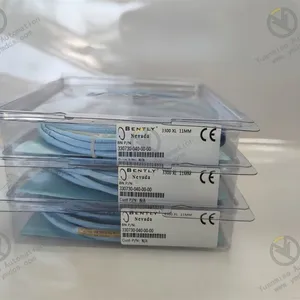
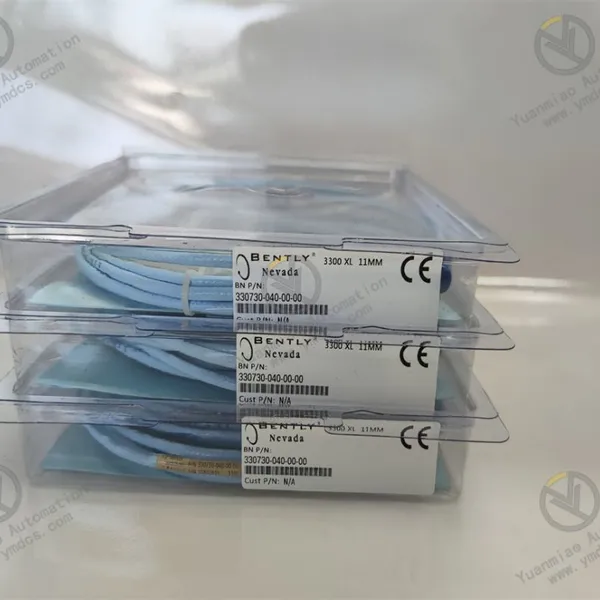
Bently 330130-040-01-CN 3300 XL Extension Cable photo-1
Negotiable MOQ: 1 Piece (Price negotiable depending on order volume and customization)
Key Specifications
Get Latest Price
Material:
Other, Global universal model
Condition:
Other, Global universal model
Task:
Other, Global universal model

Payment & Shipping
Payment Methods:
Port of Shipment:
guizhou
Delivery Detail:
Delivery time depends on order quantity.
Material Other, Global universal model
Condition Other, Global universal model
Task Other, Global universal model
Mathematical Model Other, Global universal model
Signal Other, Global universal model
Customized Non-Customized
Structure Other, Global universal model
Operating Temperature -20°C~70°C
Relative Humidity 5% - 95% (non-condensing)
Storage Temperature -40℃~85℃

I. Overview


The Bently 330130-040-01-CN is an eddy current effect monitoring system composed of a "probe + extension cable + preamplifier". It must be used in conjunction with Bently 3300/3500 monitoring frameworks (such as the 3500/40 monitoring module). Its core functions include: non-contact measurement of the radial vibration (peak-to-peak value), axial displacement (thrust bearing clearance), and shafting eccentricity of rotating machinery rotors via the eddy current effect; conversion of mechanical displacement into a standard electrical signal (-4V~+4V DC); real-time output of measurement data to the backend monitoring system; and self-diagnostic capabilities for faults such as probe open/short circuits and cable impedance mismatch. Its core advantages lie in "wide measurement range (0~40 mil, approximately 1.016 mm), micron-level accuracy (resolution of 0.1 mil, approximately 2.54 μm), high-temperature resistance (probe temperature resistance up to 210°C), and strong anti-interference performance". It is particularly suitable for rotating equipment scenarios with high rotational speeds (supporting a maximum of 100,000 r/min), high-precision monitoring (e.g., ±0.1 mil for turbogenerator shaft vibration), and harsh working conditions (high temperature, oil contamination, strong electromagnetic fields).


The 330130-040-01-CN probe monitors the radial vibration of high-pressure rotors (measurement range: 0~40 mil, accuracy: ±0.1 mil). When the rotor exhibits 5 mil (approximately 0.127 mm) eccentric vibration due to blade fouling, the probe captures the signal within 0.05 seconds and transmits it to the 3500 monitoring framework, providing a 20-day advance warning of the "rotor unbalance" fault. Maintenance personnel perform on-line dynamic balance correction to prevent the vibration from increasing to 25 mil (shutdown threshold), avoiding a single unit shutdown loss of over 3 million yuan. In a propylene compressor (rotational speed: 18,000 r/min) of a petrochemical plant, the probe measures axial displacement (measurement range: 0~30 mil). When thrust bearing wear causes the displacement to increase from 8 mil to 18 mil, an alarm is triggered and the compressor load is reduced in linkage, preventing equipment scrapping caused by bearing seizure (maintenance cost exceeding 6 million yuan). In a blast furnace blower of an iron and steel plant (operating temperature: 190°C, high dust concentration), the 330130-040-01-CN, with its high-temperature material and IP67 protection design, operates continuously for 3 years without signal drift, and its Mean Time Between Failures (MTBF) is ≥400,000 hours, meeting the high reliability requirements for monitoring in the 24-hour continuous oxygen supply of the blast furnace.


This monitoring system adopts a "three-component modular" architecture:


  • Probe (330130-040-01-CN): Features a stainless steel housing (AISI 416, with strong corrosion resistance), a probe diameter of 0.5 inches (approximately 12.7 mm), a measuring surface plated with hard alloy (hardness HRC 65+, wear-resistant), an operating temperature range of -30°C~210°C (high-temperature customized version up to 315°C), a measurement range of 0~40 mil (1 mil = 0.001 inches, approximately 25.4 μm), and compatibility with target materials (conductive metals such as steel, cast iron, and aluminum alloy).

  • Extension Cable: Standard 10-foot (approximately 3.05 m) low-noise cable (5 ft/20 ft optional), made of fluororubber insulation material (resistant to mineral oil and high/low temperatures of -40°C~200°C), with a shielding layer of double-layer copper mesh + aluminum foil (electromagnetic interference resistance increased by 60% compared to traditional shielding), a characteristic impedance of 50Ω±5%, and a capacitance of ≤100 pF/ft to ensure no attenuation of high-frequency signals.

  • Preamplifier: Uses an industrial-grade cast aluminum housing with an IP54 protection rating, an operating temperature range of -20°C~70°C, a supply voltage of -24V DC (±10%), an output signal of -4V~+4V DC (corresponding to 0~40 mil displacement), a built-in fault diagnosis circuit (LED indicator: green = normal, red = fault), and supports communication with the 3500 monitoring framework via analog or digital signals (Modbus RTU).


330730-040-00-00 - 3300

II. Technical Parameters


1. Measurement Performance Parameters

Parameter Category Specific Specifications
Measurement Principle Eddy current effect non-contact measurement, sensitive only to conductive materials (resistivity 1~1000 μΩ·cm), not affected by non-conductive contaminants (dust, oil mist)
Measurement Range Standard range: 0~40 mil (approximately 1.016 mm), configurable to 0~20 mil/0~30 mil via the preamplifier, resolution: 0.1 mil (approximately 2.54 μm)
Linearity ±0.5% full scale (typical value: ±0.2%), linear error ≤0.2 mil (for 0~40 mil range), ensuring consistent measurement accuracy across the full range
Frequency Response 0~10 kHz (-3 dB), covering common fault frequencies of rotating machinery (1x frequency for rotor unbalance, 2x frequency for misalignment, high frequency for bearing faults (2000~8000 Hz))
Sensitivity 8 mV/mil (standard configuration, outputting -4V~+4V DC corresponding to 0~40 mil displacement), fine-tunable by ±10% via the preamplifier to adapt to different signal gain requirements
Measurement Objects Rotor radial vibration amplitude (peak-to-peak value/RMS value/peak value), axial displacement (absolute/relative), shafting eccentricity, rotor runout, keyphasor speed
Output Signal Preamplifier output: -4V~+4V DC (four-wire system), load resistance ≥1 kΩ; some models support 4-20 mA DC output (requires a signal converter)

2. Environmental Adaptability Parameters

Parameter Category Specific Specifications
Operating Temperature Range Probe: -30°C~210°C (high-temperature customized version: -30°C~315°C); Extension cable: -40°C~200°C; Preamplifier: -20°C~70°C
Storage Temperature Range Probe/cable: -50°C~250°C; Preamplifier: -40°C~85°C
Protection Rating Probe: IP67 (dustproof and waterproof, can be briefly immersed in 1m deep water); Preamplifier: IP54 (dustproof and splash-proof); Cable: IP65
Electromagnetic Interference Resistance Complies with EN 55022 Class A EMC standard, ESD protection: ±15 kV (air discharge)/±8 kV (contact discharge), RF radiation immunity: 20 V/m (80 MHz~1 GHz)
Vibration Resistance Probe: Complies with IEC 60068-2-6 standard, 10-2000 Hz, 15 g acceleration (continuous operation); Preamplifier: 10-500 Hz, 5 g acceleration
Shock Resistance Probe: Complies with IEC 60068-2-27 standard, 50 g acceleration, 1 ms pulse width (half-sine wave); Preamplifier: 30 g acceleration, 11 ms pulse width
Corrosion Resistance Probe housing: AISI 416 stainless steel, salt spray resistant (5% NaCl solution, no corrosion for 1000 hours), oil contamination resistant (no aging after 500 hours of immersion in mineral oil)

3. Electrical and Connection Parameters

Parameter Category Specific Specifications
Power Supply Requirement Preamplifier power supply: -24V DC (±10%), maximum power consumption ≤2 W (including probe and cable); supports reverse polarity protection (no damage when input voltage is -30V~-20V)
Cable Parameters Extension cable: Length 10 ft (approximately 3.05 m), characteristic impedance 50Ω±5%, capacitance 90 pF/ft±10%, insulation resistance ≥100 MΩ (500V DC), voltage resistance 2 kV AC (no breakdown for 1 minute)
Connection Method Probe and cable: M10×1 threaded connector (anti-loose design, equipped with fluororubber sealing ring, IP67 waterproof rating); Cable and preamplifier: BNC connector (or terminal connection, optional)
Diagnostic Function Supports probe open/short circuit diagnosis (preamplifier output voltage ≤-5V or ≥+5V), cable impedance mismatch alarm (output voltage ≤-4.5V or ≥+4.5V); fault information displayed via LED indicator (steady red = fault)
Temperature Compensation Built-in temperature compensation circuit (within -30°C~210°C range), temperature drift ≤0.01 mil/°C, ensuring no attenuation of measurement accuracy when temperature changes


III. Functional Characteristics


1. Non-Contact Wide-Range Measurement, Balancing Accuracy and Rotor Protection

With the "eddy current effect" as its core, the 330130-040-01-CN addresses the dual pain points of "rotor wear" and "narrow range" of traditional contact sensors:


  • Wear-Free Monitoring: The probe maintains a 5~40 mil measurement gap with the rotor (no physical contact), avoiding rotor scratches caused by friction from traditional piezoelectric acceleration sensors. In an aircraft engine test bench, the probe continuously monitored rotor vibration for 10,000 hours without any wear marks on the rotor surface.

  • Wide-Range Adaptability: The 0~40 mil (1.016 mm) measurement range covers the vibration/displacement requirements of most rotating machinery, such as the radial vibration of turbogenerators (typically 0~25 mil) and the axial displacement of compressors (typically 0~30 mil). It can adapt to different equipment without replacing the probe. In a multi-compressor monitoring project of a petrochemical plant, one type of probe covered the needs of 4 types of equipment, reducing spare parts inventory costs by 40%.

  • Micron-Level Accuracy: The 0.1 mil (2.54 μm) resolution can capture tiny vibration changes of the rotor. For example, it can accurately identify and output stable data for the 0.5 mil axial displacement of a nuclear power turbogenerator rotor caused by thermal expansion, providing a basis for the thermal alignment adjustment of the shafting.


2. Full-Working-Condition Environmental Tolerance, Adapting to Extreme Industrial Scenarios

In response to the complex working conditions of rotating machinery (high temperature, oil contamination, dust, strong electromagnetic fields), the probe achieves stable operation through hardware reinforcement design:


  • High-Temperature and Corrosion Resistance: The probe uses high-temperature resistant ceramic insulation materials and an AISI 416 stainless steel housing, enabling long-term operation in the 210°C bearing box of turbogenerators without performance attenuation. The fluororubber cable is resistant to mineral oil and lubricating oil corrosion; in the oil-contaminated environment of a residue hydrocracking compressor in an oil refinery, the cable was used for 4 years without aging or cracking.

  • Dust and Water Resistance: The probe has an IP67 protection rating, allowing normal operation in the high-dust environment of a blast furnace blower in an iron and steel plant, even if briefly sprayed with cooling water without affecting the signal. The preamplifier has an IP54 protection rating, adapting to the dusty environment of control rooms or equipment rooms.

  • Strong Electromagnetic Shielding: The double-layer shielded cable and the EMC design of the preamplifier ensure that the signal-to-noise ratio (SNR) of the vibration signal collected by the probe is ≥75 dB (compared to only 55 dB for traditional sensors) without false fluctuations, even near the rolling mill motor of an iron and steel plant (with 10 kV high-voltage frequency converters nearby).

  • Temperature Compensation: The built-in temperature compensation circuit ensures a temperature drift of ≤0.01 mil/°C within the range of -30°C~210°C. In the monitoring of outdoor wind turbine main shafts (-30°C) in northern winters, the signal deviation is ≤0.1 mil, ensuring measurement accuracy in low-temperature environments.

Product Tags: 330130-040-01-CN

Send Inquiry to This Supplier

* Message
0/5000

Want the best price? Post an RFQ now!
Verified Business License
Business Type
Trading Company
Year Established
2014
Factory Size
1,000-3,000 square meters
Product Certifications
SA8000