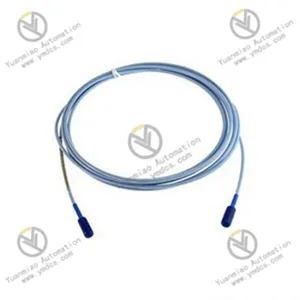
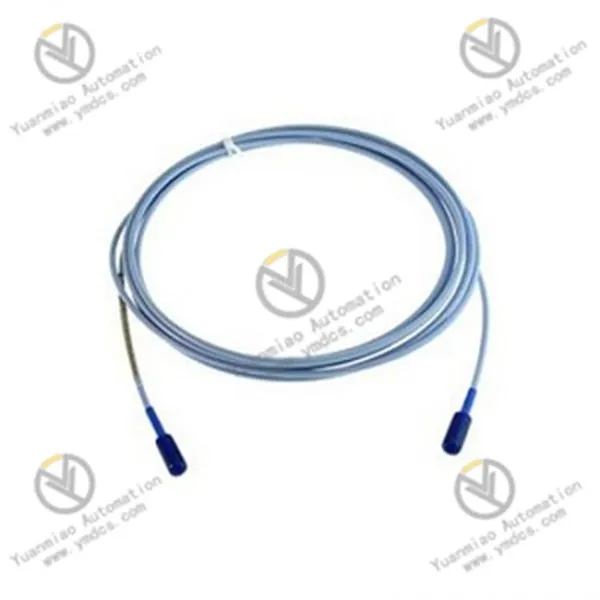
Material
Other, Global universal model
Condition
Other, Global universal model
Task
Other, Global universal model
Mathematical Model
Other, Global universal model
Signal
Other, Global universal model
Customized
Non-Customized
Structure
Other, Global universal model
Operating Temperature
-40℃~+70℃
Relative Humidity
5% - 95% (non-condensing)
Storage Temperature
-55℃~+85℃
Dimensions
100mm×160mm×220mm
I. Overview
BENTLY NEVADA 330901-05-32-05-02-00 is a core vibration monitoring module specifically designed for condition monitoring of rotating machinery. Its primary function is to real-time collect vibration signals from rotating equipment in industrial sites (such as steam turbines, generators, compressors, and pump sets). Through high-precision signal processing and analysis, it provides reliable data support for equipment health status assessment, fault early warning, and safety interlock control. It serves as a key monitoring component to ensure the long-term stable operation of rotating machinery and prevent sudden equipment failures.
This module integrates decades of technical expertise of BENTLY NEVADA in rotating machinery monitoring. It adopts customized high-precision sensor signal conditioning circuits, digital filtering algorithms, and enhanced industrial environment adaptation designs, enabling continuous and stable operation under harsh working conditions (such as power plant turbine rooms and petrochemical compressor plants) characterized by high temperature, high vibration, and strong electromagnetic interference. Compared with general-purpose vibration monitoring equipment, the 330901-05-32-05-02-00 focuses more on "specialized monitoring of rotating machinery". It is optimized for the monitoring needs of key parameters such as shaft vibration and shaft displacement, and supports seamless integration with BENTLY NEVADA 3300 series monitoring frameworks and industrial control systems (DCS, PLC). It is suitable for fields with extremely high requirements for equipment reliability, including power generation, petrochemicals, metallurgy, and aerospace.
II. Technical Specifications
(1) Signal Acquisition Parameters
(2) Signal Processing and Output Parameters
Filtering Function: Built-in multi-order digital filter, supporting adjustable high-pass filtering (0.1Hz~100Hz) and low-pass filtering (100Hz~10kHz); capable of suppressing environmental noise interference and extracting effective vibration signals.
Monitoring Parameters: Real-time calculation and output of characteristic parameters such as vibration Peak-to-Peak (Pk-Pk), Peak (Pk), Root Mean Square (RMS), and crest factor.
Alarm Thresholds: Supports 2-level alarms (Early Warning/Danger). Thresholds can be configured via software or hardware DIP switches, with alarm accuracy of ±0.2% F.S.
Output Interfaces:
Analog Output: 2 channels of 4-20mA current signals (corresponding to vibration Peak-to-Peak), load impedance ≤ 500Ω.
Digital Output: 2 channels of relay outputs (configurable as normally closed/normally open) for alarm interlocking, with contact rating of 2A/250V AC.
Communication Interface: Compatible with BENTLY NEVADA dedicated monitoring buses (e.g., 3300/3500 framework bus), supporting data interaction with framework controllers.
(3) Environmental and Protection Parameters
Operating Temperature Range: -40℃~+70℃, suitable for power plants in extremely cold regions (e.g., Northeast China, Northwest China) and high-temperature workshops (e.g., near rolling mills in metallurgical plants).
Storage Temperature Range: -55℃~+85℃, adapting to long-distance transportation and storage environments.
Protection Rating: IP40 (front panel), with dust-proof performance meeting the requirements of dusty industrial workshop environments.
Vibration Resistance: 10g acceleration (10Hz~2000Hz), compliant with IEC 60068-2-6 standard, capable of resisting the impact of equipment’s own vibration on the module.
Electromagnetic Interference (EMI) Resistance:
Common-mode interference rejection ≥ 80dB (250Vpp, 50Hz~60Hz).
Differential-mode interference rejection ≥ 60dB (20Vpp, 50Hz~60Hz).
Compliant with EN 61000-6-2 EMC standard for industrial environments.
(4) Physical and Reliability Parameters
Dimensions: 100mm×160mm×220mm (L×W×H), compatible with BENTLY NEVADA 3300 series standard monitoring frameworks (19-inch cabinet, 1U height).
Weight: Approximately 1.2kg, lightweight design facilitating module insertion/removal and framework integration.
Power Supply: 24V DC±10%, power consumption ≤ 5W (under full load).
Mean Time Between Failures (MTBF): ≥ 1,000,000 hours (compliant with MIL-HDBK-217 standard, at 25℃).
Calibration Cycle: Recommended calibration every 24 months, supporting on-site online calibration (no module disassembly required).

III. Functional Features
(1) High-Precision Vibration Signal Acquisition and Specialized Signal Processing
Targeting the specificity of rotating machinery vibration monitoring, the 330901-05-32-05-02-00 adopts dedicated conditioning circuits for eddy current sensor signals and vibration feature extraction algorithms for rotating machinery to ensure the accuracy and validity of monitoring data:
The input circuit adopts a differential amplification design, combined with a low-temperature-drift operational amplifier (temperature drift ≤ 5μV/℃), which can effectively suppress common-mode interference. Even in strong electromagnetic environments (e.g., near power plant generators), it can maintain a vibration signal acquisition accuracy of ≤ ±0.5% F.S.
The built-in vibration filtering algorithm for rotating machinery can specifically filter out irrelevant noise during equipment operation (e.g., pipeline vibration, motor electromagnetic noise) and focus on extracting characteristic frequency signals corresponding to faults such as rotor unbalance, misalignment, and bearing wear (e.g., 1× speed, 2× speed, 0.5× speed frequencies), providing effective data for fault diagnosis.
It supports synchronous output of time-domain/frequency-domain vibration signal data. In addition to real-time output of time-domain parameters such as Peak-to-Peak, it can also upload raw vibration waveform data via the monitoring framework. Combined with BENTLY NEVADA diagnostic software (e.g., System 1) for spectrum analysis, it enables early fault warning (e.g., early warning of bearing inner ring wear up to 3 months in advance).
For example, in a 300MW steam turbine generator set of a thermal power plant, when the rotor has slight unbalance (vibration increment of 5μm), the module can accurately capture this change, feed it back to the DCS in real time via a 4-20mA analog signal, and trigger an early warning simultaneously to prevent rotor bending accidents caused by further vibration amplification.
(2) Multi-Level Alarm and Safety Interlock Mechanism
To meet the safe operation requirements of rotating machinery, the module builds a hierarchical alarm and rapid interlock response system to ensure timely intervention when equipment is abnormal:
It supports 2-level alarm configuration (Early Warning/Danger). Thresholds can be customized according to equipment operation standards (e.g., ISO 10816 vibration standard for rotating machinery). For example, for the high-pressure rotor of a steam turbine, the early warning threshold can be set to 125μm (Pk-Pk) and the danger threshold to 250μm (Pk-Pk).
The alarm response speed is ≤ 10ms. When the vibration value reaches the danger threshold, the module can directly trigger the equipment’s emergency shutdown interlock via relay output, and simultaneously upload the alarm signal to the DCS and on-site sound-light alarm to avoid equipment damage caused by response delay.
It is equipped with alarm memory and reset functions. After an alarm is triggered, it automatically records information such as alarm time and vibration value at the time of the alarm. Even if the module is powered off, the alarm records will not be lost, facilitating maintenance personnel to trace the cause of the fault. The reset method supports manual reset (on-site button) and remote reset (DCS command), adapting to different maintenance scenarios.
In the centrifugal compressor system of a petrochemical plant, if the vibration suddenly rises from 80μm to 280μm (danger threshold) due to bearing wear, the module can trigger the emergency shutdown interlock within 8ms and report the "vibration over-limit" fault simultaneously to prevent major equipment accidents caused by compressor rotor jamming.
(3) Strong Environmental Adaptability and High-Reliability Design
To cope with harsh working conditions in industrial sites, the 330901-05-32-05-02-00 adopts industrial-grade component selection and enhanced protection design to ensure long-term stable operation:
Key components (e.g., operational amplifiers, AD conversion chips, relays) are all industrial-grade wide-temperature models, capable of stable operation in the temperature range of -40℃~+70℃, avoiding circuit drift caused by low temperature or component failure caused by high temperature.
The circuit substrate adopts a gold-plating process to improve corrosion resistance, adapting to harsh environments such as oil-gas-rich petrochemical plants and dusty metallurgical plants, and reducing poor circuit contact caused by corrosion.
The module is equipped with an independent power isolation circuit (isolation voltage ≥ 2500Vrms), which completely isolates the input power supply from the signal circuit, avoiding the impact of power grid fluctuations or equipment grounding faults on the module.
It supports hot-swapping function. When the 3300 series monitoring framework is powered on, the module can be directly inserted or removed for replacement without affecting the monitoring of other channels, meeting the "non-stop maintenance" needs of industrial production.
In a power plant in northern China during winter (ambient temperature of -35℃), the 330901-05-32-05-02-00 can start normally and maintain monitoring accuracy, avoiding vibration signal acquisition deviations caused by low temperature and ensuring the stable operation of the steam turbine in winter.
(4) Flexible Integration and System Collaboration Capability
The module adopts standardized interfaces and modular design, facilitating in-depth integration with rotating machinery monitoring systems and industrial automation systems:
It is compatible with the BENTLY NEVADA 3300 series monitoring framework and can work in collaboration with other modules in the framework (e.g., shaft displacement monitoring modules, temperature monitoring modules) to achieve multi-parameter comprehensive monitoring of rotating equipment. Data is uniformly uploaded to the diagnostic software via the framework bus.
The analog output (4-20mA) can be directly connected to mainstream DCS systems (e.g., Siemens PCS 7, Rockwell ControlLogix), and the digital output can be connected to the equipment’s PLC interlock circuit without additional signal conversion modules, reducing system integration costs.
It supports remote calibration and parameter configuration. Through BENTLY NEVADA dedicated software (e.g., 3300 Configuration Tool), maintenance personnel can remotely modify the module’s alarm thresholds, range settings, filtering parameters, etc., without on-site operations, reducing on-site maintenance workload.
In the blast furnace blower system of a large iron and steel plant, the 330901-05-32-05-02-00 is integrated into the 3300 monitoring framework together with the shaft displacement module and temperature module. Through the DCS, centralized monitoring of vibration, displacement, and temperature parameters is realized. When any parameter is abnormal, the blower can be linked to reduce load or shut down, ensuring stable air supply to the blast furnace.