Material
Other, Global universal model
Condition
Other, Global universal model
Task
Other, Global universal model
Mathematical Model
Other, Global universal model
Signal
Other, Global universal model
Customized
Non-Customized
Structure
Other, Global universal model
Operating temperature
0°C - 60°C
Humidity
5% - 95% (non - condensing)
Output voltage
24V DC
Dimensions
160mm×100mm×150mm
I. Product Overview
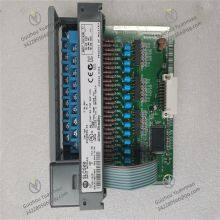
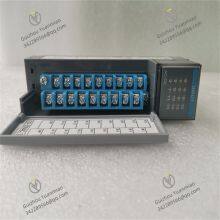
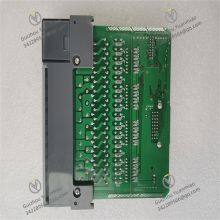
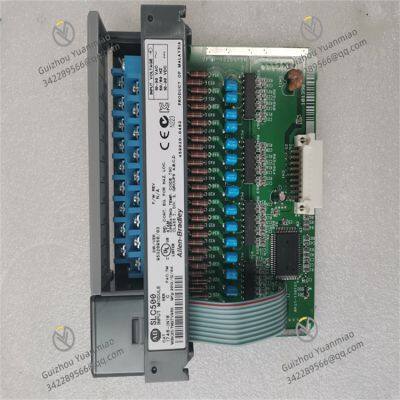
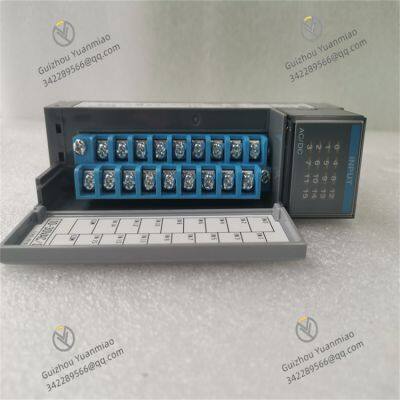
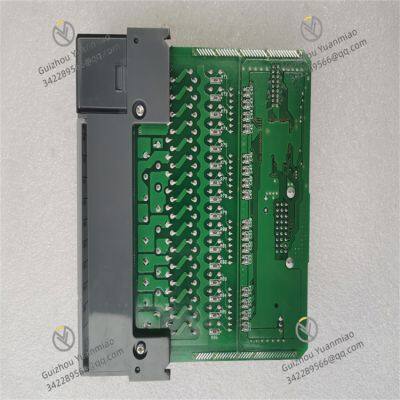
Allen-Bradley 1746-IN16 is a 16-channel digital input module in the SLC 500 series, specially designed for industrial automation control systems to accurately collect on-site digital signals. This module can adapt to both AC and DC signal inputs and is widely used in automated production lines, equipment control, and monitoring systems in fields such as manufacturing, energy industry, and transportation. In these complex industrial scenarios, it can be connected to on-site devices such as buttons, sensors, and auxiliary contacts of contactors, converting digital signals such as the switch status of devices into signals recognizable by PLC. It provides basic data for the system's logical operations and control decisions, and is a key link in building a reliable automated control system.

II. Functional Features
Multi-channel signal acquisition: It has 16 independent input channels and can collect 16 channels of on-site digital signals simultaneously. In large-scale automated production lines, it can monitor the operating status of many devices at the same time without the need for additional modules, reducing the complexity and cost of the system and improving system integration.
Wide voltage range compatibility: It supports an input voltage range of 10-30V AC or 10-30V DC (sinking current type), and can adapt to the output voltage standards of various sensors, switching power supplies, and control equipment in industrial sites. Whether it is traditional DC-powered equipment or AC-driven devices, it can match well with them, greatly enhancing the versatility and flexibility of the module in different application scenarios.
Stable and reliable signal processing: Equipped with advanced signal shaping and filtering circuits, it can effectively suppress common electromagnetic interference, voltage fluctuations, and high-frequency noise in industrial environments, ensuring that the collected signals are stable and accurate. It avoids signal misjudgment caused by interference, ensures the stable operation of the control system, and reduces equipment failure rates.
Intuitive status indication: Each input channel is equipped with an independent LED indicator. When the channel receives an effective signal, the indicator will light up, allowing operators to intuitively understand the working status of each channel. It facilitates quick judgment of whether the signal is transmitted normally during system debugging, daily inspection, and fault Investigation,greatly improving maintenance efficiency.
Convenient installation and maintenance: Adopting the standard installation method of the SLC 500 series, it can be easily installed on the rack of this series to work with other modules. The terminal block adopts a plug-in design, which allows quick completion of wiring operations without complex tools during on-site installation and later maintenance, reducing downtime and improving equipment availability.
Good system compatibility: As a standard module of the SLC 500 series, it has a high degree of compatibility with the rack, power module, and CPU module of this series. It can be seamlessly integrated into the SLC 500 control system, ensuring the stable operation of the entire system, and providing convenient conditions for the subsequent expansion and upgrading of the system, thus protecting users' early investment.

III. Technical Parameters
Input parameters:
Number of input points: 16 points, which can access 16 channels of digital signals simultaneously.
Input type: Supports digital AC/DC input, adapting to various on-site signal types.
Input voltage range: 10-30V AC or 10-30V DC (sinking current type).
Input current: At 24V AC/DC, the typical value per channel is 8mA, which has minimal impact on the load of on-site equipment.
ON/OFF voltage threshold: ON voltage ≥10V AC/DC, OFF voltage ≤3V AC/DC, ensuring accurate signal recognition.
Response time: For DC signals, the signal delay is usually 15ms; for AC signals, the signal delay is usually 25ms. It can quickly respond to changes in on-site signals and meet the real-time requirements of most industrial controls.
Physical parameters:
Dimensions: Length is approximately 160mm, width is approximately 100mm, height is approximately 150mm (compatible with other modules in the SLC 500 series), facilitating installation in standard racks.
Weight: Approximately 0.75kg, with moderate weight, convenient for installation and transportation.
Environmental parameters:
Operating temperature: 0°C - 60°C, which can work stably in the common temperature environment of industrial sites.
Relative humidity: 5% - 95% (non-condensing), with certain moisture resistance, adapting to humid industrial environments.
Anti-vibration performance: Can withstand vibration with a frequency of 10-55Hz and an amplitude of 0.38mm, maintaining stable operation in vibrating environments.
Impact resistance: Can withstand an impact with a peak acceleration of 15g (duration 11ms), and can withstand the impact during transportation and installation.

IV. Working Principle
Signal access: The 16 input channels of 1746-IN16 are connected to on-site devices such as buttons, sensors, and auxiliary contacts of contactors through terminal blocks. When the status of on-site devices changes (such as a button being pressed, a sensor detecting an object), corresponding switching signals (high level or low level) will be generated, and these signals are transmitted to the corresponding input channels.
Signal conditioning: The input signal first enters the signal conditioning circuit inside the module. This circuit filters the signal to remove high-frequency noise and interference components; at the same time, it shapes the signal, converting the irregular signal waveform into a standard rectangular wave, ensuring the stability and integrity of the signal, and preparing for subsequent signal conversion.
Signal conversion and transmission: The conditioned signal is converted into a logic signal recognizable by the PLC system (usually "1" indicates signal ON, "0" indicates signal OFF). These logic signals are transmitted to the CPU module through the backplane bus of the SLC 500 series. The CPU module performs logical operations and judgments based on these signals, and then issues corresponding control instructions.
Status indication: The LED indicators on the module will light up or turn off synchronously according to the signal status of each channel, feeding back the input signal situation in real time. By observing the status of the indicators, operators can intuitively understand the operating status of on-site equipment and whether the signal is normally transmitted to the module, facilitating system debugging and fault Investigation. For example, in an automated assembly line, when a sensor at a certain workstation detects a product arrival signal, the indicator of the corresponding channel lights up, and the signal is transmitted to the CPU module of the PLC. The CPU controls the actions of subsequent equipment according to the preset program, such as starting the conveyor belt and controlling the robotic arm to grab the product.