Contact Platform Support
 Help Center
Air-heated Vaporizer


Related Products
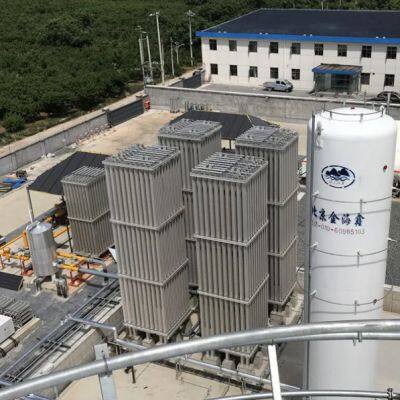
An ambient air vaporizer is a specialized device designed to vaporize cryogenic liquids, such as liquefied natural gas (LNG), liquid oxygen (LO₂), liquid nitrogen (LN₂), liquid argon (LAr), liquid carbon dioxide (LCO₂), and liquefied petroleum gas (LPG), by utilizing the heat from the ambient air. This type of vaporizer has found wide applications in various industries due to its unique characteristics and operational advantages.
Working PrincipleThe fundamental working principle of an ambient air vaporizer is based on heat transfer. The cryogenic liquid flows through a series of finned tubes within the vaporizer. The fins, which are usually made of highly thermally conductive materials like aluminum alloy, have a large surface area. As the ambient air passes over these fins, heat is transferred from the air to the fins and then to the cryogenic liquid inside the tubes. This heat transfer causes the cryogenic liquid to absorb energy and change its state from liquid to gas, achieving the vaporization process. Since it relies on the natural convection of ambient air as the heat source, it generally does not require an external power source for heating, making it an energy - efficient option.
Structure1. Finned Tubes: The star - shaped or other specially designed finned tubes are the core components for heat transfer. These fins are often made of LF rust - proof aluminum alloy. The star - shaped design significantly increases the surface area in contact with the ambient air, enhancing the heat transfer efficiency. For example, in some high - performance ambient air vaporizers, the fins are precisely extruded to ensure a large heat - transfer area while maintaining good structural integrity.
2. Liquid and Gas Guide Tubes: These tubes are responsible for guiding the cryogenic liquid into the heat - exchange section of the vaporizer and then directing the vaporized gas out for further use. They are typically made of materials that can withstand the low temperatures of the cryogenic liquid and the high pressure of the vaporized gas, such as stainless steel.
3. Base and Bracket: The base provides a stable support for the entire vaporizer, ensuring it remains in place during operation. The bracket is used to hold the finned tubes and other components in position, maintaining the overall structure of the vaporizer.
4. Inlet and Outlet Joints: These joints are used to connect the vaporizer to the cryogenic liquid storage tank at the inlet and to the gas - using equipment or pipeline network at the outlet. They are designed to ensure a tight seal to prevent any leakage of the cryogenic liquid or the vaporized gas.
Advantages1. Energy - Saving and Environment - Friendly: Since ambient air vaporizers use the natural heat of the air for vaporization, they do not consume additional energy sources such as electricity or steam. This not only reduces operating costs but also minimizes environmental pollution, making them an ideal choice for sustainable industrial operations.
2. Simple Installation and Maintenance: With no complex moving parts or external heating systems, ambient air vaporizers are relatively easy to install. They also require less maintenance compared to other types of vaporizers. Regular inspections for any signs of corrosion, leakage, or blockage are usually sufficient to keep them in good working condition.
3. High - Efficiency Heat Exchange: The use of high - quality aluminum alloy fins and advanced manufacturing techniques ensures efficient heat transfer. The special connection technology between the finned tubes and the pressure - bearing pipes reduces thermal resistance, allowing for a high - speed transfer of heat from the air to the cryogenic liquid.
4. Durability: The materials used in the construction of ambient air vaporizers, such as aluminum alloy and stainless steel, have good corrosion resistance and weathering resistance. This enables the vaporizers to withstand harsh environmental conditions and have a long service life, often up to 20 years or more under normal operating conditions.
Applications1. Industrial Gas Production: In industries that produce and use industrial gases like oxygen, nitrogen, and argon, ambient air vaporizers are used to vaporize the cryogenic liquid gases stored in tanks. This vaporized gas can then be used in various manufacturing processes, such as metal cutting, welding, and heat treatment.
2. Natural Gas Industry: For the storage and distribution of liquefied natural gas (LNG), ambient air vaporizers play a crucial role. They are used to vaporize LNG before it is fed into the natural gas pipeline network for residential, commercial, or industrial use. In LNG filling stations, these vaporizers are used to convert LNG into gaseous natural gas for vehicle refueling.
3. Cryogenic Applications: In applications involving cryogenic temperatures, such as the cooling of superconducting magnets in scientific research facilities or medical MRI machines, ambient air vaporizers are used to vaporize cryogenic liquids that are used for cooling purposes.
Considerations1. Ambient Temperature and Humidity: The performance of ambient air vaporizers can be affected by changes in ambient temperature and humidity. In extremely cold weather, the heat transfer rate may decrease, resulting in a lower vaporization efficiency. High humidity levels can also cause ice formation on the fins, which may reduce the heat - transfer area and require additional defrosting measures.
2. Flow Rate Requirements: Ambient air vaporizers may not be suitable for applications that require extremely high flow rates of vaporized gas. Their vaporization capacity is limited by the available heat from the ambient air. For applications with high - flow - rate demands, additional vaporizers or alternative types of vaporizers may need to be considered.
3. Safety Precautions: When handling cryogenic liquids and using ambient air vaporizers, proper safety precautions must be taken. Workers should be trained in handling cryogenic substances, and safety devices such as pressure relief valves, leak detectors, and emergency shutdown systems should be installed and regularly maintained to ensure safe operation.
In conclusion, ambient air vaporizers are a vital component in many industries that deal with cryogenic liquids. Their energy - saving, efficient, and environmentally friendly characteristics make them a popular choice for vaporizing cryogenic liquids, provided that the operational conditions and limitations are well - understood and managed.

Send Inquiry to This Supplier


You May Also Like
-
 Air-heated VaporizerUS$ 900 - 1000MOQ: 1 Combo
 -
Forced Air Heated VaporizerUS$ 500 - 15,000MOQ: 1 Set
-
Air Heated Vaporizer,liquid Refill Vaporizer,liquid Gas VaporizerUS$ 2,000 - 1,000,000MOQ: 1 Set
-
Air Conditioning Heat ExchangerNegotiableMOQ: 10 Pieces
-
Ambient Air Vaporizer, Liquid Nitrogen Air-heated Vaporizer, Liquid Oxygen Air-heated VaporizerNegotiableMOQ: 1 Set
-
Self Acting Control Valve for Hot Water Heating Air Conditioning Chilled Water Systems Spot Stock FactoryNegotiableMOQ: 1 Piece
-
Danfoss Electric Control Valve ABQM Air Conditioning Heating Fan Coil Dynamic Differential Pressure Balance Type Electric Temperature Control ValveNegotiableMOQ: 1 Piece
-
Radiant Barrier Foil Insulation Fabric Woven Aluminum Heat Shield Vapor BarrierNegotiableMOQ: 1 Ton
-
DC INVERTER AIR TO WATER HEAT PUMPNegotiableMOQ: 1 Set
-
Cross Flow Air Curtain Air Heating Curtain Electric Air CurtainNegotiableMOQ: 1