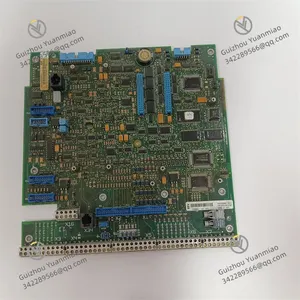
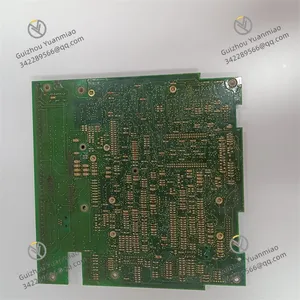
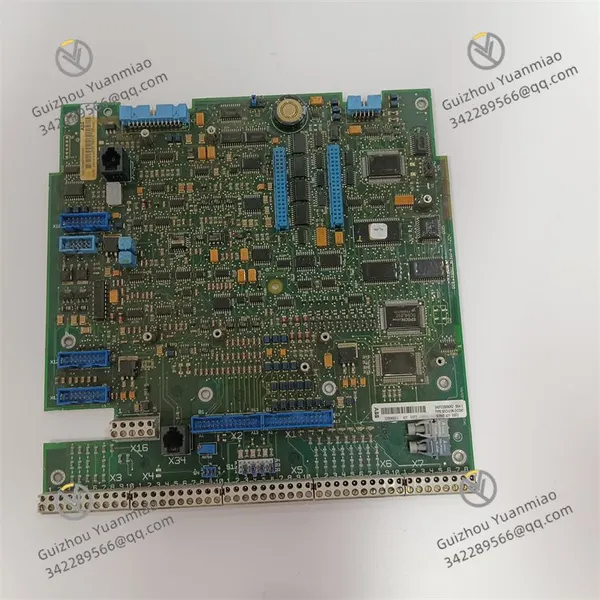
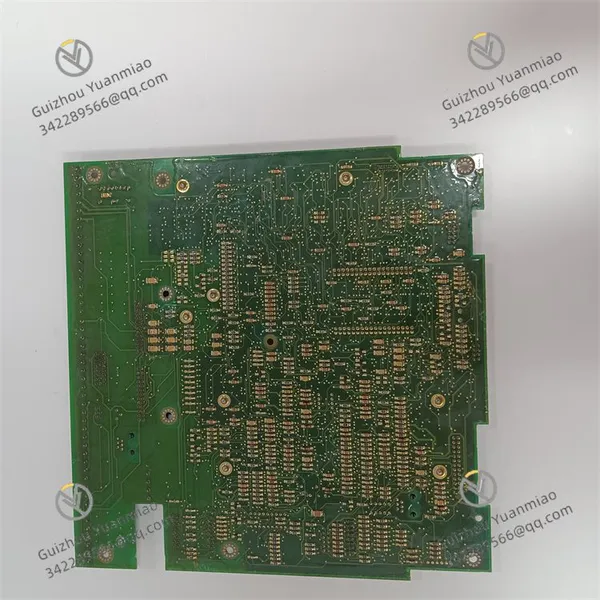
ABB SDCS - CON - 2 - COAAT is a high-performance control module specially designed for industrial automation control systems. With advanced technology and reliable performance, it plays a key role in complex industrial environments, providing a solid guarantee for the efficient and stable operation of industrial production.
I. Technical Specifications
Electrical Parameters
Operating Voltage: It adopts a 24VDC operating voltage. This common DC voltage input can be well adapted to many industrial power supply systems, ensuring the stable operation of the module under different power supply conditions, reducing potential failure risks caused by voltage adaptation problems, and ensuring reliable power supply in various industrial scenarios.
Power Consumption: The power consumption of the module is low, with a maximum value of 15W. While meeting the requirements of high-performance operation, it maintains a low energy consumption level, which helps reduce the overall operating cost of the industrial system, conforms to the current green and energy-saving development trend of the industry, and realizes efficient use of energy.
Physical Specifications
Dimensions: Its external dimensions are 36cm × 5cm × 20cm. The compact structural design enables it to effectively save space during installation. Whether in the limited space inside the control cabinet or in industrial equipment with strict requirements on installation layout, it can easily find a suitable installation position, facilitating integration into the existing industrial system architecture and improving the convenience of system integration.
Weight: It weighs only 0.65kg. The lightweight feature makes the installation and maintenance personnel more relaxed during operation, reducing the labor intensity during handling and installation. Especially in cases where the module position needs to be frequently replaced or adjusted, its convenience is more prominent, improving the efficiency of equipment maintenance.
Input and Output Configuration
Input Channels: Equipped with multiple analog input channels, it can flexibly access various industrial sensor signals, such as analog signals output by temperature sensors, pressure sensors, flow sensors, etc. Through these channels, the module can accurately collect various data on the industrial site, providing a rich and accurate data basis for subsequent control decisions, and meeting the diverse data collection needs of different industrial application scenarios.
Output Capacity: It has strong output driving capability, with each channel able to withstand a current of up to 2A, which is sufficient to drive various industrial actuators, such as relays and solenoid valves. It can accurately transmit the processed control signals to the actuators, realizing precise control of industrial equipment and ensuring that the production process runs stably according to the preset process flow.
Communication Capability: It supports ABB's proprietary communication protocol and is compatible with the Modbus RTU communication protocol. This enables it to conduct efficient data interaction with industrial equipment and control systems of different brands and types. Through the proprietary protocol, it can achieve seamless connection with other automation products of ABB, giving full play to the synergistic advantages of ABB's industrial ecosystem; the support of the Modbus RTU protocol expands its communication compatibility, facilitating integration with third-party equipment, realizing interconnection and intercommunication of a wider range of industrial automation systems, and enabling remote monitoring, centralized management and collaborative work with other systems.

II. Functional Characteristics
Precise Analog Signal Processing: Focusing on the accurate processing of analog signals, it has built-in advanced signal conditioning circuits and high-performance A/D converters, which can quickly and accurately sample and convert the input analog signals. In complex industrial environments, even in the presence of various interference factors, it can effectively filter noise, extract real and reliable signal data, and analyze and process them according to preset algorithms, providing high-precision signal support for industrial control and ensuring the accuracy of control decisions.
Flexible Channel Configuration: Users can flexibly configure the input and output channels according to actual industrial application needs. Parameters of the channels, such as signal type, range, and filtering mode, can be set according to different sensor types and actuator specifications. This flexible configuration capability enables the module to adapt to diverse industrial production scenarios. Whether it is simple single-parameter control or complex multi-parameter collaborative control, it can meet the needs through reasonable channel configuration, improving the versatility and applicability of the equipment.
Reliable Fault Diagnosis: It has a complete self-diagnosis function and can monitor its own operating status in real-time. During operation, it continuously checks the hardware circuit, communication connection, and signal processing process. Once an abnormal situation is detected, such as sensor failure, communication interruption, or hardware damage, it can quickly issue an alarm and transmit detailed fault information to the upper control system through the communication interface. At the same time, the module can record the time, type of the fault, and related operating parameters, providing a strong basis for subsequent fault troubleshooting and maintenance, helping maintenance personnel quickly locate the root cause of the problem, shortening equipment downtime, and improving the availability of the production system.
Strong Environmental Adaptability: It has excellent environmental adaptability, with an operating temperature range of -20°C to +60°C, and can run stably in different temperature environments such as cold northern industrial plants and hot southern production workshops without additional temperature control equipment. In addition, the module meets the IP20 protection level standard, has a certain dust-proof capability, can effectively resist dust erosion in the industrial environment, ensure that the internal circuit is not affected by dust, prolong the service life of the equipment, and ensure the long-term reliable operation of the equipment in harsh industrial environments.
Easy Installation and Programming: The design fully considers the convenience of installation and programming. Its mechanical structure is designed for easy installation, using standard installation interfaces and fixing methods, which can be quickly installed in the designated position of the industrial control cabinet or equipment. In terms of programming, it provides an intuitive and concise programming interface and a rich set of programming instructions. Both experienced engineers and technicians new to industrial automation can easily get started with parameter setting, function configuration, and control program writing, reducing the threshold for use and improving the promotion and application efficiency of the equipment.

III. Application Fields
Metallurgical Industry
Steel Production: In the process of steel smelting, precise control of various process parameters is crucial. SDCS - CON - 2 - COAAT can be used to monitor and control parameters such as temperature, pressure, and flow of equipment such as blast furnaces and converters. For example, by accurately collecting temperature and pressure signals in the blast furnace, the air volume and raw material input can be adjusted in real-time to ensure that the chemical reactions in the blast furnace proceed under optimal conditions, improving the quality and efficiency of steel production, while reducing energy consumption and production costs.
Metal Processing: In metal processing production lines, such as rolling and forging links, the module can be used to control parameters such as the operating speed and pressure of the equipment. According to different metal materials and processing technology requirements, the input and output channels can be flexibly configured to realize precise control of the processing process. For example, in the steel rolling process, by precisely controlling the rotation speed and pressure of the rolls, the thickness and surface quality of the steel can meet the standards, improving the product qualification rate and market competitiveness.
Petrochemical Industry
Oil Refining Process: In oil refineries, this module can be used to monitor and control key parameters in process processes such as crude oil distillation and catalytic cracking. By processing analog signals such as flow, temperature, and liquid level collected by various sensors, precise control of equipment such as valves and pumps is realized. For example, in the crude oil distillation tower, according to the temperature and pressure signals at the top and bottom of the tower, the feed flow and reflux ratio are automatically adjusted to ensure the stable operation of the distillation process and improve the separation accuracy and output of oil products.
Chemical Production: In the production process of chemical products, such as ammonia synthesis and ethylene production, strict control of the reaction process is required. SDCS - CON - 2 - COAAT can monitor parameters such as temperature, pressure, and reactant concentration in the reactor in real-time, and automatically adjust the reaction conditions according to preset control strategies to ensure the safe and efficient progress of chemical reactions. At the same time, through monitoring and controlling the flow of various material conveying pipelines, the stable supply of materials in the production process is guaranteed, and the safety and stability of chemical production are improved.
Power Energy
Thermal Power Generation: In thermal power plants, the module can be used to monitor and control the operating parameters of key equipment such as boilers and steam turbines. For example, by collecting signals such as water level, steam pressure, and temperature in the boiler, automatic control of equipment such as feed water pumps and fans is realized to ensure the safe and stable operation of the boiler. In terms of steam turbine control, according to signals such as speed and load, the opening of the steam inlet valve is adjusted to ensure the efficient operation of the steam turbine, improve power generation efficiency, and reduce energy consumption.
New Energy Power Generation: This module also plays an important role in wind power generation and solar photovoltaic power generation systems. In wind farms, it can be used to monitor parameters such as wind speed, wind direction, and rotational speed of wind turbines, and control the yaw system and pitch system to keep the wind turbines in the optimal power generation state. In solar photovoltaic power stations, it can monitor and analyze parameters such as the temperature and light intensity of photovoltaic panels, and improve the conversion efficiency of photovoltaic power generation by controlling the working state of the inverter, ensuring the stable operation and power quality of new energy power generation systems.