Material
Other, Global universal model
Condition
Other, Global universal model
Task
Other, Global universal model
Mathematical Model
Other, Global universal model
Signal
Other, Global universal model
Customized
Non-Customized
Structure
Other, Global universal model
Power Supply
24VDC
Operating temperature
-40°C to 70°C
Size
83 x 42 x 121 mm
I. Overview
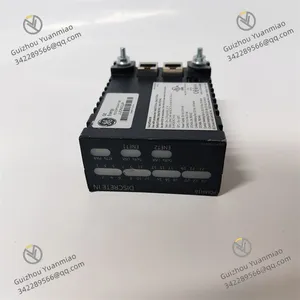
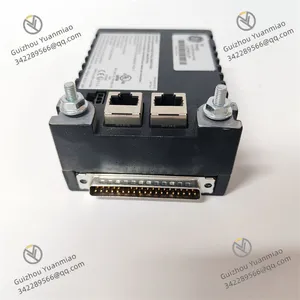
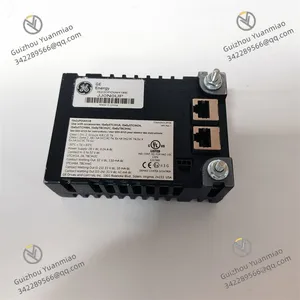
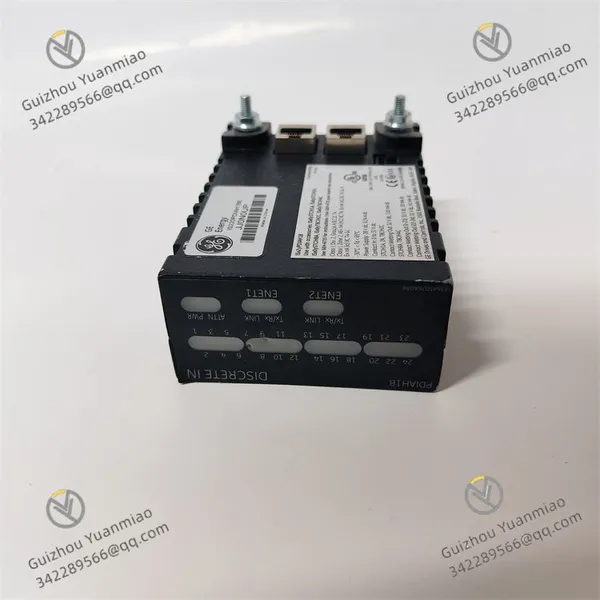
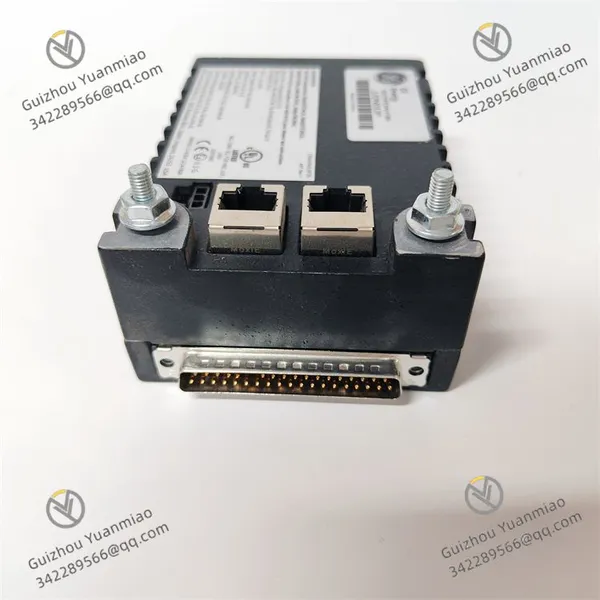
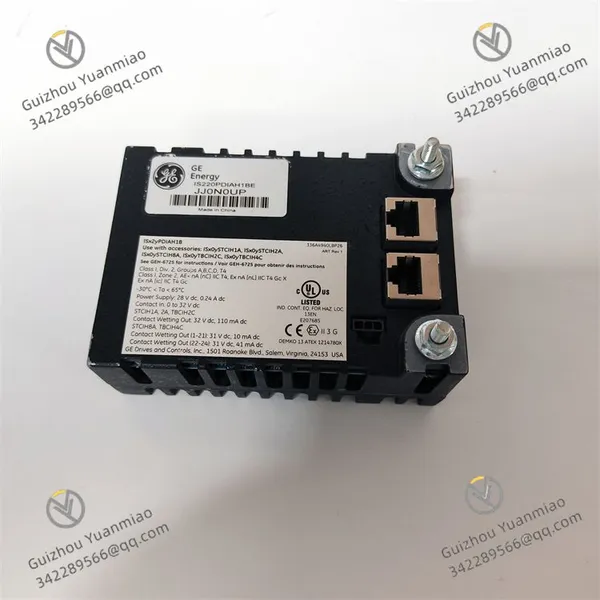
GE IS220PDIAH1BE is a high-performance serial communication input/output module, playing an extremely crucial role in the field of industrial automation. As an important member of the Mark VIe series, it is deeply compatible with the needs of complex industrial scenarios such as gas turbine control systems. With advanced technology and elaborate design, it lays a solid foundation for efficient data interaction and precise control between industrial equipment, helping industrial production stride forward towards intelligence and high efficiency.

II. Functional Characteristics
Compatibility with multiple serial communication protocols: It shows excellent compatibility with mainstream serial communication protocols such as Modbus RTU and Modbus ASCII. This means it can act like a translator proficient in multiple languages, smoothly connecting various devices that support the Modbus protocol, easily breaking down communication barriers between different devices, and realizing free and stable exchange of data. In industrial automation networks, whether it is sensors, actuators, or other intelligent devices, as long as they follow the Modbus protocol, GE IS220PDIAH1BE can seamlessly interface with them, greatly improving the flexibility and compatibility of system communication.
Flexible and configurable interfaces: It supports RS-485 half-duplex, RS-232, and RS-422 standard interfaces, and has six independently configurable serial transceiver channels. Engineers can flexibly switch interface types according to actual project requirements, accurately adapting to different communication environments and equipment connection requirements. For example, in long-distance communication scenarios, the RS-485 interface, with its advantages of strong anti-interference ability and long transmission distance, ensures reliable data transmission; while when connecting with traditional equipment, the RS-232 interface can exert its good compatibility feature to ensure stable operation of the system.
Powerful self-diagnosis capability: It is equipped with a complete self-diagnosis function, which can real-time monitor analog input signals and precisely control key parameters such as equipment position and pressure. By setting configurable high and low level thresholds, it can intelligently judge the operating status of the equipment and timely detect abnormalities. Once it is monitored that the parameters exceed the preset range, it will quickly perform operations such as enabling or disabling related functions, locking or unlocking the equipment status, and trigger corresponding alarms. For example, alarms with different numbers such as 32-67 and 114-119 correspond to different types of errors respectively, helping engineers quickly locate and solve problems, and effectively ensuring the stability and reliability of system operation.

III. Technical Parameters
Communication interface parameters: It has dual 100-Mb Ethernet ports, opening up a fast channel for high-speed data transmission, meeting the needs of real-time status monitoring of equipment and rapid issuance of control commands in scenarios such as smart factories. In the industrial Internet of Things environment, a large amount of equipment data needs to be uploaded to the cloud or superior control systems for analysis and processing in real-time, and the dual Ethernet ports can ensure efficient and stable data transmission without Laggy or delay. At the same time, it supports a baud rate of 300 to 115,200 bps (RS-232 and RS-485 half-duplex), which can flexibly adapt to the data transmission rate requirements of different devices, easily coping with everything from low-speed sensor data collection to high-speed communication between devices.
Power parameters: It supports two power input modes: 24/28 VDC or 120/240 VAC, which can flexibly adapt to the power supply environments of different industrial sites. Whether it is automated equipment using DC power or traditional industrial facilities relying on AC power, GE IS220PDIAH1BE can operate stably, effectively reducing the application difficulty caused by power adaptation problems, and providing great convenience for industrial enterprises in equipment selection and system construction.
Physical specification parameters: It has a size of 3.25 x 1.65 x 4.78 inches (approximately 83 x 42 x 121 mm) and a weight of only 0.25 pounds (approximately 118 grams). The overall design is compact and lightweight, facilitating installation and deployment in various equipment. Meanwhile, it has an IP65 protection rating, with excellent dustproof and waterproof capabilities, being able to work stably in harsh industrial environments such as dusty and humid ones, ensuring long-term and reliable operation of the system.

IV. Application Fields
Power industry: In power facilities such as power plants and substations, GE IS220PDIAH1BE undertakes the important task of equipment monitoring and control. It communicates with various power sensors and actuators, collects key parameters such as voltage, current, and power in real-time, and accurately issues control commands to corresponding equipment to ensure the stable operation of the power system. For example, in substation automation systems, it can realize remote control of switchgear, real-time monitoring and analysis of power parameters, providing reliable data support for power dispatching, and improving the reliability and stability of power supply.
Petrochemical industry: In petrochemical production sites such as oil refineries and chemical plants, this module plays an indispensable role. It real-time monitors process parameters such as the temperature, pressure, and flow of reaction kettles, conducts efficient data interaction with production equipment by virtue of the Modbus communication protocol, and precisely regulates the production process to ensure that chemical reactions are carried out under safe and stable conditions. In the chemical synthesis process, it strictly controls reaction conditions to avoid safety accidents or product quality problems caused by parameter out of control, effectively improving production efficiency and product quality.
Metallurgical industry: In metallurgical enterprises such as steel mills, GE IS220PDIAH1BE helps realize precise control and coordinated operation of smelting equipment. By connecting sensors and actuators of key equipment such as blast furnaces and converters, it grasps the operating status of equipment in real-time and optimizes the production process. In the blast furnace ironmaking process, according to parameters such as temperature and pressure in the furnace, it precisely adjusts equipment such as the air supply system and the burden distribution system to ensure the smooth operation of the blast furnace, improve the quality of molten iron and production efficiency, and reduce energy consumption and production costs.