Home > Electrical & Electronics > Electrical Control System > TRICONEX 4352B Communication Module
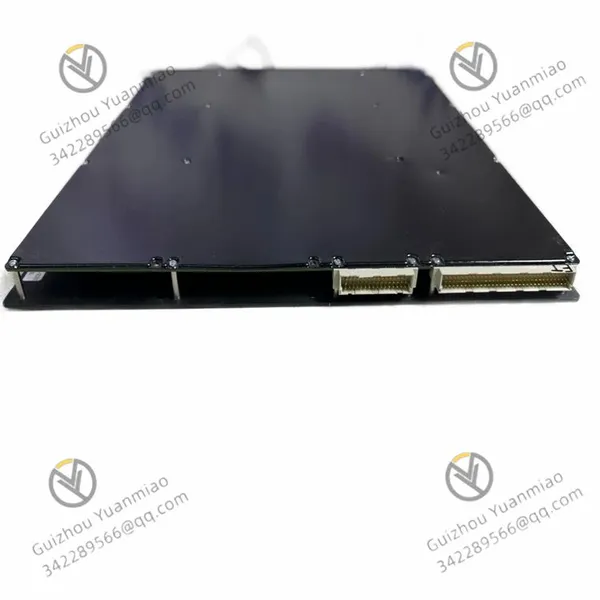
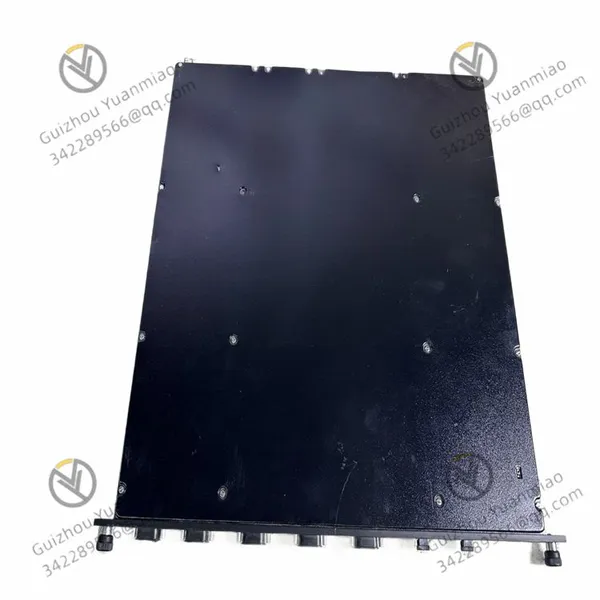
TRICONEX 4352B Communication Module
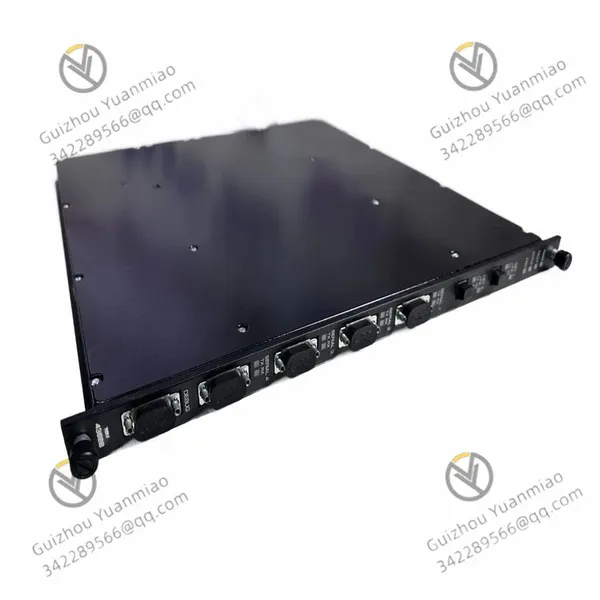
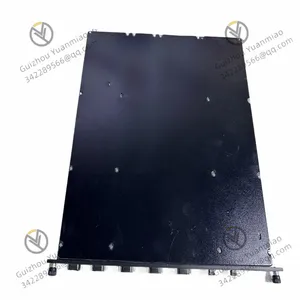
TRICONEX 4352B Communication Module photo-1
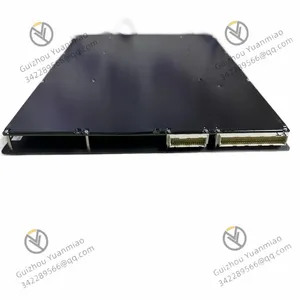
TRICONEX 4352B Communication Module photo-2
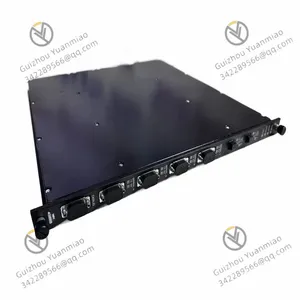
TRICONEX 4352B Communication Module photo-3
Negotiable MOQ: 1 Piece (Price negotiable depending on order volume and customization)
Key Specifications
Get Latest Price
Material:
Other
Certification:
Other
Function:
Other

Payment & Shipping
Payment Methods:
Port of Shipment:
China
Delivery Detail:
Delivery time depends on order quantity.
Material Other
Certification Other
Function Other
Condition Other
Task Other
Mathematical Model Other
Signal Other
Customized Other
Structure Other
TRICONEX 4352B Communication Module

4352B—04


TRICONEX 4352B is a communication module in the Triconex Safety Instrumented System (SIS). The following is its relevant introduction:


Functional Features:


  • Multiple Communication Interfaces: It provides two 100Mbps fiber optic Ethernet ports and four RS-232/RS-485 serial ports, which can connect Triconex safety controllers to devices and networks such as HMI, SCADA systems, and remote I/O.

  • Support for Multiple Protocols: It supports various communication protocols including TriStation, Modbus, TCP/IP, ICMP, and SNTP, which can meet the communication needs between different devices.

  • Redundant Design: It adopts a Triple Modular Redundancy (TMR) architecture, has self-diagnostic functions, complies with the IEC 61508 SIL 3 safety level requirements, and can ensure the stable operation of the system in harsh environments. Even if some components fail, the system can still maintain normal operation.

  • Data Processing Function: It supports data parsing, conversion, and filtering, and can process the transmitted data to better compatibility with other devices or systems. It can also transmit safety data such as alarm signals and control commands.


Technical Parameters:


  • Power Supply Voltage: Usually 24VDC, and some parameters show that there is a 5V DC version.

  • Power Consumption: Approximately 5W.

  • Communication Rate: The Ethernet port rate is 100Mbps, and the serial port can reach up to 12Mbps.

  • Operating Temperature: -20℃ to +60℃, and some data show that its ambient temperature range is -40℃ to 85℃.

  • Protection Level: Meets the requirements of IP65 protection level.


Application Fields:


  • Petrochemical Industry: Used in dangerous processes in production processes such as petroleum refining and natural gas chemical industry to realize communication between safety controllers and monitor and control on-site equipment.

  • Power Industry: Can be applied to thermal power plants, nuclear power plants, hydropower stations, etc. It ensures the data communication of the safety instrumented system during power production, transmission, and distribution, and ensures the stable operation of the system.

  • Metallurgical Industry: Suitable for scenarios such as iron and steel smelting and non-ferrous metal smelting. It can effectively monitor the status of safety equipment, participate in process control, and provide guarantees for the safety of metallurgical production.


4352B—03

Working Principle


  1. Foundation of Redundant Architecture
    Triple Modular Design
    The module contains three independent communication channels (Channel A, B, and C) inside, and each channel has an independent processor, memory, and I/O interface. These three channels process the same communication tasks in parallel, forming physical redundancy.


2oo3 Voting Mechanism
The output results of the three channels are compared in real-time through a hardware voting circuit. For digital signals, the "2oo3" (two-out-of-three) voting rule is adopted: if the outputs of two channels are consistent, the system accepts this result; for analog signals, the median value is taken as the final output. This mechanism ensures that a single channel failure will not affect the system's decision-making.


  1. Communication Processing Flow
    Signal Reception and Isolation
    Multi-protocol Interface: The module receives data from external devices through Ethernet ports (supporting TCP/IP, Modbus TCP) and serial ports (supporting Modbus RTU, ASCII).
    Optoelectronic Isolation: Each communication interface adopts optoelectronic isolation technology (with an isolation voltage of up to 2500V AC) to prevent external interference or faults from affecting internal circuits.


Data Synchronization and Verification
TRIBUS Bus: The three channels realize data synchronization through the internal high-speed TRIBUS bus to ensure that each channel processes the same input data.
CRC Verification: The transmitted data frame contains a Cyclic Redundancy Check (CRC) code, and the receiving end detects data transmission errors through the check code.

4352B—01

Protocol Parsing and Processing
The communication processor parses the received protocol messages (such as Modbus commands), converts them into an internal data format, and transmits them to the main controller through the backplane bus.
Supports transparent transmission mode (directly forwarding data) and protocol conversion mode (such as Modbus RTU to TCP).


  1. Fault Detection and Fault Tolerance
    Online Self-Diagnosis
    Each channel monitors its own hardware status in real-time (such as power supply voltage, processor operating status) and detects potential faults by comparing the processing results of the three channels.
    The diagnostic coverage rate is over 99%, which can detect problems such as processor faults, memory errors, and communication link interruptions.


Fault Response Mechanism
Degraded Operation: If a single channel fails, the system automatically isolates it, and the remaining two channels continue to operate in 2oo3 mode to maintain communication functions.
Hot-Swap Replacement: Faulty modules can be replaced online without shutting down the machine, and the new module automatically synchronizes the current system state after being added.


Fault Recording and Alarm
All fault information is recorded in non-volatile memory and can be queried remotely through TriStation software.
When a fault occurs, the module sends an alarm signal to the main controller through LED indicators and the system bus.


  1. Collaboration with the Main System
    Backplane Bus Communication
    The module exchanges data with the main controller (such as the 3700 series CPU) through the dedicated backplane bus of the Tricon system (such as the VME bus). The communication cycle is usually 10-50ms to ensure real-time performance.

4352B—02

Secure Data Transmission
Security-related data (such as emergency shutdown commands) during transmission adopts encryption and timestamp mechanisms to prevent data tampering or replay.
Supports redundant communication paths, which automatically switch to the backup path when the main path fails.


  1. Typical Application Scenarios
    Integration with DCS Systems: Serves as a communication bridge between the Tricon SIS and DCS systems such as Honeywell Experion and Emerson DeltaV, realizing the interaction between safety data and process data.
    Remote I/O Connection: Connects remote I/O stations through optical fibers or RS-485 to expand the monitoring range of the system.
    HMI/SCADA Communication: Transmits safety system data to the operation station or SCADA system to support operators in real-time monitoring of the safety status.


Summary
TRICONEX 4352B ensures high reliability and security of the communication process through four mechanisms: physical redundancy, real-time voting, online diagnosis, and fault-tolerant switching. Its design meets the requirements of SIL 3 safety integrity level and is suitable for key communication scenarios in high-risk industries such as petrochemical and nuclear power, providing an uninterrupted data transmission channel for safety instrumented systems.


Product Tags: 4352B

Send Inquiry to This Supplier

Message
0/5000

Want the best price? Post an RFQ now!
Verified Business License
Business Type
Trading Company
Year Established
2014
Factory Size
1,000-3,000 square meters
Product Certifications
SA8000