Home > Electrical & Electronics > Electrical Control System > ABB PU519 3BSE018681R1 Real Time Accelerator (RTA) Board

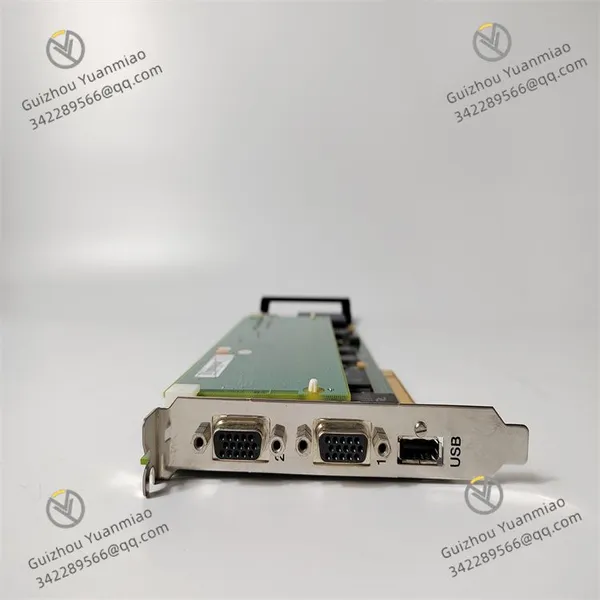
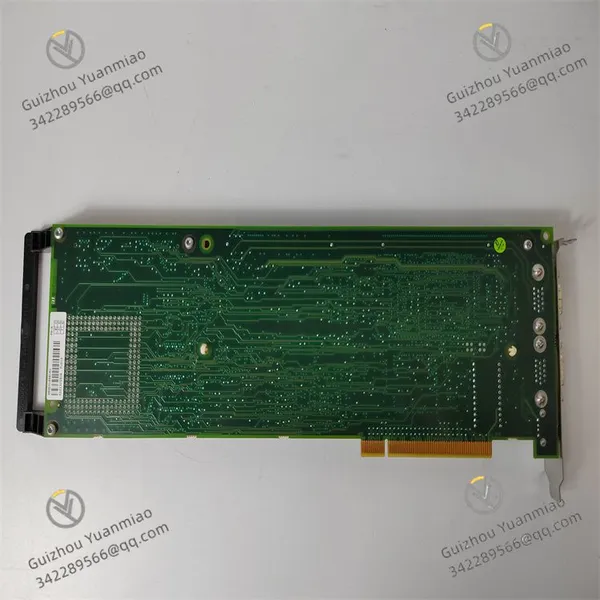
ABB PU519 3BSE018681R1 Real Time Accelerator (RTA) Board
ABB PU519 3BSE018681R1 Real Time Accelerator (RTA) Board photo-1
ABB PU519 3BSE018681R1 Real Time Accelerator (RTA) Board photo-2
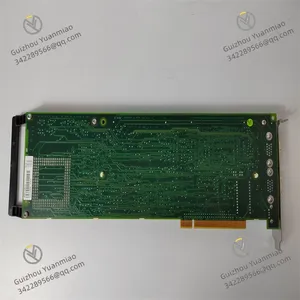
ABB PU519 3BSE018681R1 Real Time Accelerator (RTA) Board photo-3
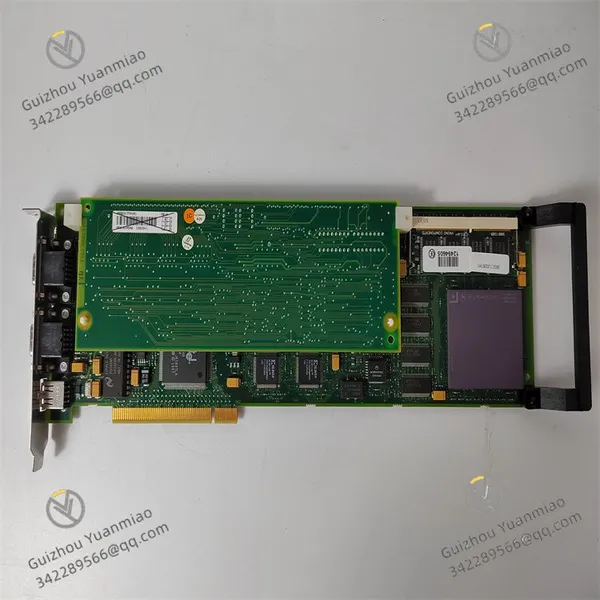
Negotiable MOQ: 1 Piece (Price negotiable depending on order volume and customization)
Key Specifications
Get Latest Price
Material:
Other
Condition:
Other
Task:
Other

Payment & Shipping
Payment Methods:
Port of Shipment:
China
Delivery Detail:
Delivery time depends on order quantity.
Material Other
Condition Other
Task Other
Mathematical Model Other
Signal Other
Customized Non-Customized
Structure Other
Operating Temperature -20°C to +60°C
Power Input DC 24V (±10%)
The ABB PU519 3BSE018681R1 is a controller module of the ABB Ability™ System 800xA automation platform. As the core processing unit of the system, it is primarily used for logical control, data processing, and real-time monitoring in industrial automation systems. Its application scenarios cover fields such as power, chemical, manufacturing, and energy, supporting complex process control, sequential control, and safety system integration.

I. Core Functional Features1. High-performance Processing Capability

  • Processor Architecture: Equipped with high-performance microprocessors (such as multi-core processors), supporting fast execution of control algorithms, logical operations, and data processing to meet industrial scenarios with high real-time requirements.

  • Memory and Storage: Features large-capacity random access memory (RAM) and non-volatile storage (such as flash memory), capable of storing programs, configuration data, and historical records, with support for data retention during power outages.

  • Computing Power: Supports floating-point operations, PID control, complex logical operations, etc., suitable for advanced applications such as multi-variable control and optimization algorithms.

2. Communication and System Integration

  • Communication Interfaces:

    • Integrates Ethernet interfaces (e.g., 10/100/1000Mbps), supporting industrial communication protocols (such as Modbus TCP, EtherNet/IP, Profinet, etc.) to enable data interaction with upper computers, HMIs, and other devices.

    • Supports dedicated communication buses (such as ABB's internal bus), enabling fast communication with I/O modules (e.g., S800 I/O, Select I/O) to ensure real-time transmission of control signals.

  • Redundant Communication Support: Supports Ethernet redundancy configuration (such as ring network architecture), enhancing system communication reliability and reducing communication interruptions caused by single-point failures.

3. High-reliability Design

  • Hardware Redundancy: Supports hot standby redundancy configuration (such as automatic switching between primary and standby controllers). When the primary controller fails, the standby controller can seamlessly take over control tasks to ensure continuous system operation.

  • Hot-swapping Function: Supports online hot-swapping, allowing module replacement without shutdown, reducing downtime costs in industrial production.

  • Optical Isolation and Anti-interference: Key circuits adopt optical isolation technology to suppress electromagnetic interference (EMI) and voltage fluctuations, adapting to harsh electrical environments in industrial fields.

4. Diagnostic and Maintenance Functions

  • Real-time Status Monitoring: Intuitively displays the module's working status through LED indicators (such as operation, fault, and communication status lights). The built-in diagnostic circuit can monitor temperature, power supply voltage, and internal faults.

  • Fault Self-diagnosis and Alarm: Supports self-diagnosis of hardware faults (such as memory errors, processor abnormalities) and software faults (such as program errors, logical conflicts), generating alarm information through system software to facilitate quick problem localization.

  • Remote Maintenance Interface: Enables remote program downloading, firmware updating, or diagnostic log viewing via the network, improving maintenance efficiency.

5. Programming and Configuration Flexibility

  • Programming Language Support: Compatible with multiple industrial control programming languages, such as ladder diagram (LD), structured text (ST), function block diagram (FBD), etc., in accordance with the IEC 61131-3 standard, facilitating users to develop control programs based on requirements.

  • Engineering Tool Integration: Configures and programs through ABB's engineering software (such as ABB Engineering Tool, System 800xA Designer), supporting visual programming, parameter debugging, and system simulation.

PU519 3BSE018681R1 (3)

PU519 3BSE018681R1 (2)

PU519 3BSE018681R1 (1)

II. Technical Specifications

Parameter Category Specific Indicators
Processor Multi-core processor, main frequency ≥1GHz (specific model subject to the manual)
Memory RAM ≥2GB, flash memory ≥8GB (expandable storage)
Communication Interfaces 2×10/100/1000Mbps Ethernet ports, 2×RS-485/RS-232 serial interfaces, dedicated I/O bus interface
Power Input DC 24V (±10%), supporting single power supply or redundant power input
Operating Temperature -20°C to +60°C (fanless design, adapting to wide temperature environments)
Protection Class Module body IP20, suitable for installation in control cabinets
Redundancy Support Supports 1:1 hot standby redundancy, switching time ≤50ms

III. Typical Application Scenarios

  • Process Control: Controls process parameters such as reactor temperature, flow rate, and pressure in industries like chemical, petroleum, and pharmaceuticals to achieve closed-loop regulation.

  • Power Systems: Used for substation automation and power distribution control, driving devices such as circuit breakers and relays to realize power protection and monitoring.

  • Manufacturing Production Lines: Coordinates the movements of robotic arms, conveyors, and processing equipment, executes sequential control and logical interlocking, and improves production efficiency.

  • Energy Management: Optimizes energy distribution and equipment start/stop in new energy systems such as photovoltaic and wind power to achieve efficient system operation.

IV. Differentiated Advantages over Similar Products

  • Digital Integration Capability: As a core module of the ABB Ability™ platform, it supports docking with industrial Internet of Things (IIoT) and cloud computing platforms to achieve data visualization, predictive maintenance, and remote optimization.

  • Flexible Expansion Architecture: Can expand I/O modules, communication interfaces, and redundancy configurations according to system scale, adapting to different needs from small single-machine control to large distributed systems.

  • High Availability Design: Hardware redundancy and hot standby mechanisms, combined with perfect diagnostic functions, ensure the continuity of critical processes, suitable for scenarios with extremely high reliability requirements (such as safety instrument systems).

V. Common Faults and Troubleshooting StrategiesStartup Failure

  • Phenomenon: The indicator light does not turn on or the module fails to enter the operating state after power-on.

  • Solution: Check whether the power input is normal (24V DC) and confirm that the power wiring has no short circuits or open circuits; attempt to reset the module or update the firmware (operate via engineering software).

Communication Interruption

  • Phenomenon: Communication timeout with I/O modules or upper computers, with an error message "Communication Failure".

  • Solution: Check whether the network cable connection is loose and test the network link for continuity; verify that communication parameters (IP address, subnet mask, protocol settings) match the system; if it is a redundant network, check whether the primary and standby link switching is abnormal.

Abnormal Program Operation

  • Phenomenon: Control logic errors, data calculation deviations, or program crashes.

  • Solution: Use engineering software to debug the program, investigate syntax errors or logical conflicts; check whether input signals are abnormal (such as incorrect data caused by sensor failures), and verify whether program parameter settings (such as PID parameters) are reasonable.

Hardware Fault Alarm

  • Phenomenon: The module fault light is always on, and the system prompts "Processor Error" or "Memory Error".

  • Solution: For hot standby systems, check whether the status switching between primary and standby modules is normal; for non-redundant systems, power off and inspect the module's appearance (such as swollen capacitors or overheated chips). If hardware damage is found, contact ABB after-sales service for module replacement.

Product Tags: PU515A , 3BSE032401R1 , 3BSE013064R1

Send Inquiry to This Supplier

* Message
0/5000

Want the best price? Post an RFQ now!
Verified Business License
Business Type
Trading Company
Year Established
2014
Factory Size
1,000-3,000 square meters
Product Certifications
SA8000