








 Contact Platform Support
 Help Center
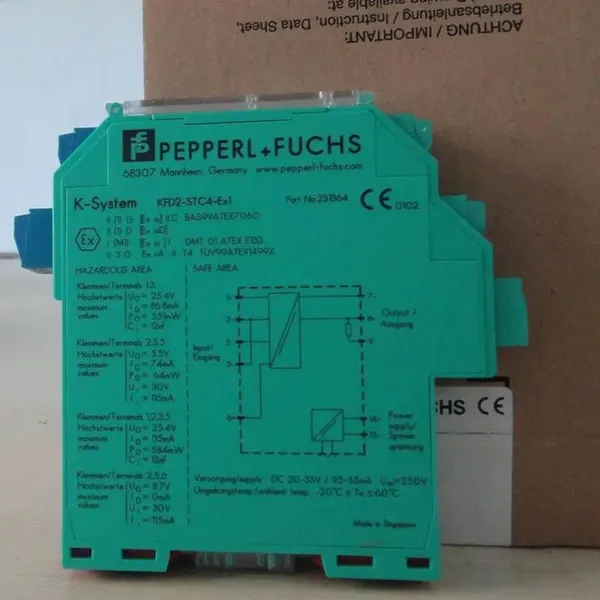
Pepperl+Fuchs Intrinsic Safety Barriers




Related Products
Research on the Application of Pepperl+Fuchs Intrinsic Safety Barriers
1. Overview of Pepperl+Fuchs Intrinsic Safety Barriers
Pepperl+Fuchs offers a comprehensive range of intrinsic safety barriers that cater to various applications and hazardous area classifications. These barriers are designed to comply with international standards and regulations, ensuring reliable and safe operation in challenging environments.
Types of Barriers: Pepperl+Fuchs provides different types of intrinsic safety barriers, including galvanic isolators, zener barriers, and isolated barriers, each suited for specific applications and requirements.
Certifications and Standards: The company's safety barriers are certified to meet international standards such as IEC 60079-11, ensuring compliance with global safety regulations.
Product Range: Pepperl+Fuchs offers a diverse product range, including barriers for various fieldbus systems, signal types, and power levels, providing flexibility and scalability for different industrial applications.
2. Applications of Pepperl+Fuchs Intrinsic Safety Barriers
Pepperl+Fuchs safety barriers find extensive application in various industries where explosion protection is critical. Here are some of the key applications:
Oil and Gas Industry: In oil and gas exploration, production, and refining, safety barriers are used to protect equipment and personnel from the risks associated with flammable gases and vapors. They enable the safe use of sensors, actuators, and communication devices in hazardous areas.
Chemical and Pharmaceutical Industry: In chemical plants and pharmaceutical manufacturing facilities, safety barriers are essential for preventing explosions caused by reactive or flammable chemicals. They ensure the safe operation of process control systems and monitoring equipment.
Mining Industry: In mining operations, where the presence of combustible dusts is common, safety barriers are used to protect electrical equipment and prevent ignition of explosive atmospheres. They enable the safe use of automation systems in underground mines and processing plants.
Food and Beverage Industry: In facilities handling flammable materials or operating in environments where explosive dusts may be present, safety barriers are used to ensure the safe operation of processing and packaging equipment.
Renewable Energy Sector: In wind farms and solar power plants, safety barriers are used to protect electrical systems from the risks associated with lightning strikes and other electrical hazards, ensuring reliable and safe operation.
3. Benefits of Using Pepperl+Fuchs Intrinsic Safety Barriers
Using Pepperl+Fuchs safety barriers offers several benefits to users, including:
Enhanced Safety: By limiting the energy available in electrical circuits, safety barriers significantly reduce the risk of ignition in hazardous areas, ensuring the safety of personnel and equipment.
Compliance with Regulations: Pepperl+Fuchs safety barriers are designed to meet international safety standards and regulations, ensuring compliance and avoiding potential legal and financial penalties.
Improved Reliability: The high reliability and stability of Pepperl+Fuchs safety barriers reduce the risk of equipment failure and downtime, improving overall system reliability.
Cost Savings: By preventing explosions and reducing the need for frequent maintenance and replacements, safety barriers contribute to significant cost savings over time.
Scalability and Flexibility: The diverse product range and modular design of Pepperl+Fuchs safety barriers provide scalability and flexibility, enabling easy integration into existing systems and adaptation to changing requirements.
4. Case Studies: Pepperl+Fuchs Intrinsic Safety Barriers in Action
To illustrate the effectiveness of Pepperl+Fuchs safety barriers, here are a few case studies:
Case Study 1: Offshore Oil Platform: An offshore oil platform implemented Pepperl+Fuchs safety barriers to protect its process control systems from the risks associated with flammable gases. The barriers ensured the safe operation of sensors and actuators in hazardous areas, preventing potential explosions and ensuring personnel safety.
Case Study 2: Chemical Processing Plant: A chemical processing plant used Pepperl+Fuchs safety barriers to protect its automation systems from the risks of reactive chemicals. The barriers enabled the safe use of fieldbus devices and control panels in Zone 1 areas, improving process efficiency and safety.
Case Study 3: Underground Mine: An underground mine installed Pepperl+Fuchs safety barriers to protect its electrical equipment from the risks of combustible dusts. The barriers ensured the safe operation of conveyor systems and monitoring devices, reducing the risk of explosions and improving mine safety.
Pepperl+Fuchs intrinsic safety barriers play a critical role in ensuring safe operations in hazardous areas, providing reliable protection against the risks of explosion and ignition. Their key features, such as high reliability, wide temperature range, and compliance with international standards, offer numerous benefits to users, including enhanced safety, improved reliability, and cost savings. From the oil and gas industry to chemical processing and mining, Pepperl+Fuchs safety barriers are essential components in maintaining safe and efficient industrial operations.

Send Inquiry to This Supplier

You May Also Like
-
 SICK Ultrasonic Distance SensorsNegotiableMOQ: 1 Unit
 -
SICK Incremental EncodersNegotiableMOQ: 1 Unit
-
ABB DrivesNegotiableMOQ: 1 Unit
-
ABB Soft StartersNegotiableMOQ: 1 Unit
-
ABB MotorsNegotiableMOQ: 1 Unit
-
Siemens Soft StartersNegotiableMOQ: 1 Unit
-
Siemens Variable Frequency DrivesNegotiableMOQ: 1 Unit
-
Siemens MotorsNegotiableMOQ: 1 Unit
-
Schneider Variable Speed DrivesNegotiableMOQ: 1 Unit
-
Schneider Soft StartersNegotiableMOQ: 1 Unit


