








 Contact Platform Support
 Help Center
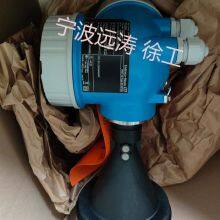
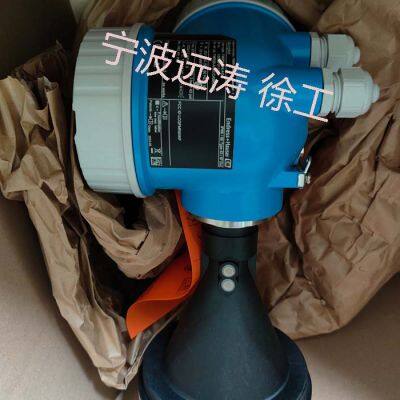


Related Products
-
 Endress+Hauser Guided Radar Level TransmittersNegotiableMOQ: 1 Unit
 -
Endress+Hauser Ultrasonic Level TransmittersNegotiableMOQ: 1 Unit
-
Endress+Hauser Pressure TransmittersNegotiableMOQ: 1 Unit
-
Endress+Hauser Differential Pressure TransmittersNegotiableMOQ: 1 Unit
-
Endress+Hauser Temperature TransmittersNegotiableMOQ: 1 Unit
Endress+Hauser Radar Level Transmitters Maintenance Manual
Introduction
The Endress+Hauser radar level transmitters are precision instruments renowned for their high accuracy and reliability. They are widely used in industries such as chemical processing, petroleum refining, environmental protection, and many more. This maintenance manual is designed to provide comprehensive guidelines for the proper maintenance and troubleshooting of E+H radar level transmitters, ensuring their optimal performance and longevity.
Understanding the Working Principle
The Endress+Hauser radar level transmitters operate based on Guided Wave Radar (GWR) technology. The transmitter emits an energy wave, typically in the form of a pulse signal, which travels through a waveguide tube. When this energy wave encounters an obstacle, such as the surface of a liquid, it reflects back and is received by the receiver unit. The receiver then calculates the change in level by measuring the time difference between the emission and reception of the energy wave.
Maintenance Procedures
1. Power Supply and Output Current Check
Regularly check the power supply voltage and output current of the E+H radar level transmitter to ensure they fluctuate within normal ranges. Abnormal fluctuations in voltage and current can indicate potential equipment failures. If anomalies are detected, promptly investigate the cause and take corrective actions.
2. Display Monitoring
Observe the display screen of the E+H radar level transmitter for any abnormal indications or alarm messages. The display screen often provides alerts regarding equipment faults or abnormal states, which should be addressed promptly.
3. Debugging and Settings
After installation or maintenance, debug and configure the E+H radar level transmitter to ensure its measurement accuracy and stability. Debugging and settings include adjusting instrument parameters, setting alarm thresholds, and more. During this process, follow the instrument's manual to ensure correct operations.
Maintenance Records
After each maintenance session, record relevant information, including maintenance time, maintenance content, and replaced components, for subsequent tracking and reference. Keeping these records helps identify trends in equipment failures and take preventive measures in advance.
Specific Maintenance Tips for Endress+Hauser Radar Level Transmitters
1. Micropilot M FMR Series
The Micropilot M FMR series radar level transmitters are classic products of E+H, characterized by high accuracy, high reliability, ease of installation, and maintenance.
FMR230: Particularly suitable for level measurement in buffer tanks and process tanks, with measurements largely unaffected by medium properties.
FMR231: Designed for measurements requiring high chemical compatibility.
FMR240: Equipped with a small horn antenna, ideal for level measurement in small containers.
FMR244: Features a horn antenna with strong chemical corrosion resistance, suitable for material level measurement.
FMR245: Highest operating temperature of 200°C. When using a high-temperature antenna, the temperature can reach up to 400°C.
For this series, regularly check the power supply voltage and output current, ensuring they fluctuate within normal ranges. When cleaning the antenna surface, avoid using alkaline solvents and ensure the connection between the antenna and the tank remains dry. Regular calibration is necessary to maintain measurement accuracy. Check the installation environment to avoid interference sources such as strong magnetic fields, electric fields, or heat sources.
2. Levelflex M Guided Wave Radar Level Transmitter
The Levelflex M guided wave radar level transmitter adopts GWR technology, known for its high accuracy, high reliability, ease of installation, and maintenance.
Regularly check the power supply voltage and output current, ensuring they remain within normal ranges. Monitor the display screen for any alarm messages and address any abnormal states promptly. When cleaning the antenna surface, avoid using alkaline solvents and ensure the connection between the antenna and the tank remains dry. Regular calibration is necessary to maintain measurement accuracy. Check the installation environment to avoid interference sources such as strong magnetic fields, electric fields, or heat sources.
Conclusion
The Endress+Hauser radar level transmitters are precision instruments known for their high accuracy and reliability, widely used in industries such as chemical processing, petroleum refining, and environmental protection. To ensure their normal operation and measurement accuracy, regular maintenance is crucial, including checks on power supply voltage and output current, monitoring the display screen, cleaning the antenna surface, calibration, debugging and settings, and inspecting the installation environment.

Send Inquiry to This Supplier


You May Also Like
-
Endress+Hauser pH SensorsNegotiableMOQ: 1 Unit
-
Endress+Hauser Dissolved Oxygen SensorsNegotiableMOQ: 1 Unit
-
Endress+Hauser Conductivity SensorsNegotiableMOQ: 1 Unit
-
Endress+Hauser Turbidity SensorsNegotiableMOQ: 1 Unit
-
Endress+Hauser pH TransmittersNegotiableMOQ: 1 Unit
-
Endress+Hauser Conductivity TransmittersNegotiableMOQ: 1 Unit
-
Endress+Hauser Dissolved Oxygen TransmittersNegotiableMOQ: 1 Unit
-
Endress+Hauser Gas AnalyzersNegotiableMOQ: 1 Unit
-
Endress+Hauser FlowmetersNegotiableMOQ: 1 Unit
-
Endress+Hauser Coriolis Mass FlowmetersNegotiableMOQ: 1 Unit


