








 Contact Platform Support
 Help Center
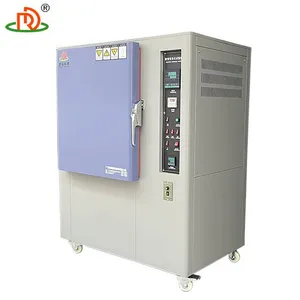
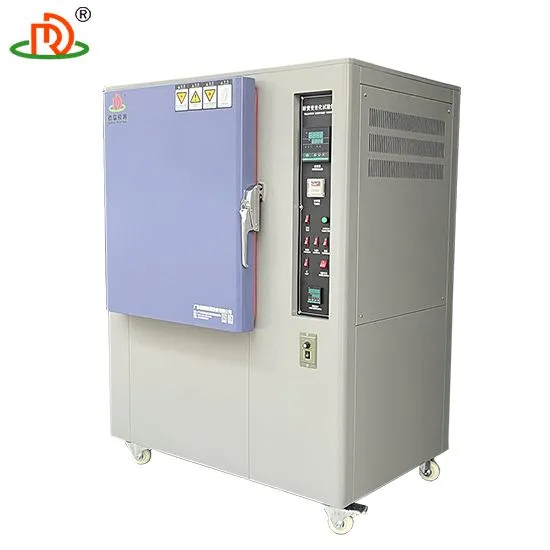
High Temperature Yellowing Resistance Testing Machine


Related Products
-
 300W UV Lamp Yellowing Resistance TesterUS$ 1875 - 3500MOQ: 1 Set
 -
Inner Liner 304 Stainless Steel Yellowing Resistance TesterUS$ 1875 - 3500MOQ: 1 Set
-
Inner Liner 304 Stainless Steel Yellowing Resistance TesterUS$ 1875 - 3500MOQ: 1 Set
-
Textile Yellowing Resistance Testing InstrumentUS$ 1875 - 3500MOQ: 1 Set
-
Ink Yellowing Resistance Test Chamber ManufacturerUS$ 1875 - 3500MOQ: 1 Set
SPECIFICATION
| Inner Box Size: | 500*500*600mm |
| TemperatureRange: | Normal Temperature~200C |
| Control Mode: | Automatic Calculation Controller |
| Temperature Display: | 0.1C |
| Control Accuracy: | 3C |
| Distribution Accuracy: | 1C(at-100C) |
| Time Memory: | 0-999 hours, Power Failure Memory Type, with Buzzer |
| Wheel Speed: | 45cm,102 round/ min |
| UV Light Source: | UV300W Bulb |
| Standard Accessories: | Shelf Board 2 pieces |
| Heating Method: | Hot Air Circulation |
| Security Devices: | Over-temperature power-off indicator light; Safety overload switch ammeter |
| Manufacturing Material: | Internal Stainless Steel SUS304; External Advanced Baking Varnish |
| Outside Dimension (LWH): | 11494130cm |
| Weight: | 140kg |
A test box for evaluating the resistance to yellowing and aging of exterior wall coatings is designed to simulate the environmental conditions that exterior surfaces face over time. This includes exposure to UV light, high temperature, humidity, and other environmental factors that lead to color degradation, yellowing, and material aging. Below is an overview of the features, applicable standards, and environmental conditions for this type of test chamber.
Product Features:
UV Light Simulation: The test box is equipped with UV lamps that replicate sunlight's ultraviolet rays. The intensity and exposure time can be controlled to accelerate the degradation process of exterior wall coatings, providing insights into their long-term performance in outdoor conditions.
Temperature and Humidity Control: The chamber can simulate the effect of different climates on exterior coatings. It typically operates within a temperature range of 40°C to 80°C, while humidity levels can be controlled from 40% to 90%. This allows testing of coatings under various high-humidity or dry heat conditions.
Accelerated Aging: By using a combination of UV radiation, heat, and humidity, the test box speeds up the natural aging process. This helps assess the potential for yellowing, cracking, and other forms of deterioration that might occur over several years in actual outdoor exposure.
Automatic Control and Monitoring: The test box is equipped with advanced digital controllers that enable precise regulation of temperature, humidity, and UV exposure. Real-time monitoring of the test conditions is possible, ensuring accuracy and consistency throughout the testing process.
Energy Efficiency: Many test boxes are designed to be energy-efficient by using high-performance UV lamps and thermal insulation materials, which help to minimize energy consumption during extended tests.
Applicable Standards:
The testing of yellowing and aging resistance of exterior wall coatings generally follows recognized industry standards:
ISO 4892-3: This international standard outlines the method for accelerated weathering testing of plastics and coatings, which includes UV exposure, and is used to evaluate the aging and yellowing resistance of exterior coatings.
ASTM G154: This standard from the American Society for Testing and Materials specifies procedures for accelerated exposure to UV light and is often used to evaluate coatings, paints, and other materials.
GB/T 16422.1: This Chinese national standard provides a methodology for accelerated weathering testing on coatings and materials exposed to UV light, ensuring that coatings can withstand outdoor conditions.
EN 927-6: This European standard applies to the weathering testing of exterior wood coatings and is used to assess the durability and yellowing resistance of such coatings, though it may also be relevant for other coatings on exterior surfaces.
Environmental Conditions:
Ambient Temperature: The test box typically operates within a temperature range of 10°C to 40°C, to simulate outdoor environmental conditions.
Power Supply: The box typically requires a power supply of 220V ± 10%, 50Hz, although specific models may have different power specifications depending on the system.
Humidity Control: The chamber is capable of regulating relative humidity, typically ranging from 40% to 80%, to simulate various climates and assess how different humidity levels influence the coating's aging and yellowing.
Ventilation: Adequate ventilation is crucial to ensure proper airflow and to avoid overheating during testing, which could distort the results or damage the chamber components.
Testing Procedure:
Sample Preparation: Exterior wall coating samples are applied to standardized substrates such as metal, plastic, or wood.
UV Exposure: The test box's UV lamps are activated for a set period, typically several hundred to a thousand hours, depending on the accelerated aging schedule.
Temperature and Humidity Cycling: The chamber will cycle between temperature and humidity conditions to simulate the real-world effects of temperature fluctuations and moisture exposure.
Post-Test Evaluation: After the test cycle, the samples are assessed for changes in color (yellowing), cracking, chalking, or other forms of deterioration.
By accurately replicating environmental conditions and following established standards, this test box allows manufacturers to assess the durability, yellowing resistance, and overall performance of exterior wall coatings under accelerated aging conditions.
Frequently Asked Questions (FAQ)
Q1: What is the temperature range of the high temperature yellowing tester?
A1: The temperature range of High Temperature Yellowing Tester is from 50℃ to 200℃, and the temperature can be adjusted according to different materials and test requirements to simulate the real high temperature environment.
Q2: Is it possible to customize the test mode?
A2: Yes, the equipment provides a variety of test modes, including static high temperature test and cyclic high temperature test, etc. Users can choose the appropriate test mode according to the specific needs to meet the testing requirements of different materials.
Q3: How to ensure the temperature uniformity of the high temperature yellowing tester?
A3: The high temperature yellowing tester adopts advanced heating technology and precise temperature control system to ensure uniform temperature distribution in the test chamber, avoiding localized overheating or excessive temperature difference, thus ensuring the accuracy of the test results.
Q4: Is the operation of the equipment complicated?
A4: The equipment is easy to operate, equipped with an intelligent control system and a clear touch screen interface, users can realize the test through simple settings, and even people without professional background can operate it easily.
Q5: What is the service life of the high temperature yellowing tester?
A5: The high temperature yellowing tester is made of high quality materials and precision design, with strong high temperature resistance and durability, it can still maintain efficient operation after a long period of high temperature testing, and usually has a long service life.

Send Inquiry to This Supplier


You May Also Like
-
Model Parameter Table of Yellowing Resistance Test ChamberUS$ 1875 - 3500MOQ: 1 Set
-
Model Parameter Table of Yellowing Resistance Test ChamberUS$ 1875 - 3500MOQ: 1 Set
-
Wire and Cable Yellowing and Aging Resistance Testing MachineUS$ 1875 - 3500MOQ: 1 Set
-
Solution for Yellowing and Aging Resistance in the Paint IndustryUS$ 1875 - 3500MOQ: 1 Set
-
High Temperature Ventilation Aging Test ChamberUS$ 3250 - 7000MOQ: 1 Set
-
Rotary Ventilation Aging Testing MachineUS$ 3250 - 7000MOQ: 1 Set
-
Rotary Ventilation Aging Testing MachineUS$ 3250 - 7000MOQ: 1 Set
-
Electronic Component Hot Air Aging Testing MachineUS$ 3250 - 7000MOQ: 1 Set
-
Industrial Hardware Salt Spray Corrosion Performance Testing MachineUS$ 1250 - 6250MOQ: 1 Set
-
Industrial Hardware Salt Spray Corrosion Performance Testing MachineUS$ 1250 - 6250MOQ: 1 Set


