








 Contact Platform Support
 Help Center
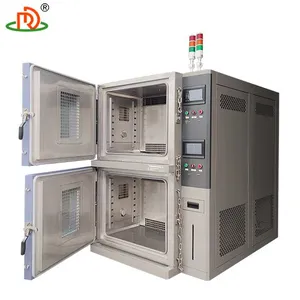
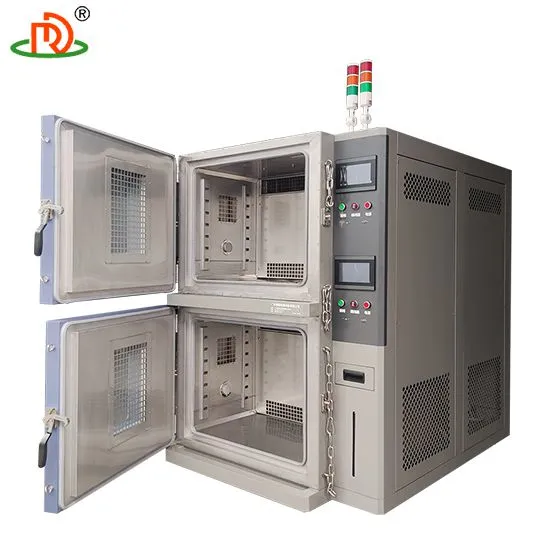
Double Layer Constant Temperature and Humidity Test Chamber for Electronic Components


Related Products
-
 Supplier of Double-layer Constant Temperature and Humidity Test ChamberUS$ 7000 - 15000MOQ: 1 Barrel
 -
Composite Material Performance Double-layer Constant Temperature and Humidity Test ChamberUS$ 7000 - 15000MOQ: 1 Barrel
-
Double Layer Constant Temperature and Humidity Test Chamber for Solar PanelsUS$ 7000 - 15000MOQ: 1 Barrel
-
Temperature and Humidity Control Step in Constant Temperature and Humidity Test ChamberUS$ 22500 - 37800MOQ: 1 Set
-
IEC Standard Walk-in Constant Temperature and Humidity Test ChamberUS$ 22500 - 37800MOQ: 1 Set
SPECIFICATION
Selection Guide for Double-Layer Constant Temperature and Humidity Test Chambers for Electronic Components
Electronic components are affected by temperature and humidity changes over time, which may lead to performance degradation, failure, or reduced lifespan. Therefore, temperature and humidity testing is an essential method to ensure the reliability of electronic components. Double-layer constant temperature and humidity test chambers offer excellent temperature and humidity control performance, making them suitable for environmental reliability testing of electronic components.
Factors to Consider for SelectionTemperature and Humidity Range
Temperature Range: The typical temperature range is from -20°C to +150°C. Depending on testing requirements, some tests may require a wider range (such as -70°C to +180°C).
Humidity Range: The humidity range generally spans from 30% RH to 98% RH. High-end models may support a range from 0% RH to 100% RH, especially for high-precision tests.
Temperature and Humidity Fluctuation
The precision of temperature and humidity control is critical. Generally, the temperature fluctuation should not exceed ±0.5°C, and the humidity fluctuation should be within ±2% RH. For high-precision electronic component testing, it is recommended to choose equipment with lower fluctuation.
Chamber Structure and Design
Double-Layer Structure: Double-layer test chambers typically feature an inner and outer design, with the inner chamber used for actual testing and the outer chamber serving to insulate and protect the inner environment. This design improves energy efficiency and reduces external interference with the internal temperature and humidity.
Inner Chamber Material: The inner chamber is usually made of stainless steel, which is corrosion-resistant and easy to clean. The outer casing may be made of cold-rolled steel or stainless steel, and the surface can be coated to enhance durability.
Capacity and Size
Choose the chamber's capacity based on the number, size, and shape of the electronic components being tested. Common capacities range from 50L to 1500L. For testing small electronic components in small batches, a smaller capacity is suitable; for larger components or large-scale tests, a larger capacity is required.
Control System and Display
The test chamber should be equipped with a high-precision temperature and humidity control system, supporting digital display and automatic adjustment. It is advisable to select models with touchscreen, PLC control, or computer remote control for ease of operation and monitoring.
PID Control System: Temperature and humidity are typically controlled using a PID algorithm, ensuring stability.
Data Logging and Analysis Functions: The chamber should have a data logging function to record temperature and humidity history, facilitating post-test analysis and report generation.
Cooling and Heating Systems
Cooling Method: The cooling system of double-layer test chambers usually employs air cooling or water cooling. For larger capacity chambers, water cooling systems may be more suitable, providing more stable temperature control.
Heating Method: Electric heating systems are commonly used, and some models may also feature far-infrared heating tubes to ensure fast heating and uniform temperature distribution.
Humidity Control and Humidification System
The humidity control system typically consists of a steam humidifier and a humidity sensor, capable of precise humidity adjustment. For tests requiring high humidity, choose models with more powerful humidification systems.
Safety Features and Protection Design
Over-temperature Protection: Prevents the equipment from operating for extended periods at high temperatures, which could cause failure.
Over-humidity Protection: Ensures automatic power off when humidity exceeds set limits.
Alarm System: An alarm system for temperature and humidity anomalies ensures the safety of both the equipment and samples during testing.
Testing Standards and Certification
Choose test chambers that comply with international standards (such as IEC, MIL-STD, JIS, etc.) to ensure the accuracy and reliability of testing. Additionally, certifications such as ISO9001 guarantee the quality of the equipment.
Small Double-Layer Constant Temperature and Humidity Test Chamber (for testing small quantities of electronic components)
Temperature Range: -20°C~+80°C
Humidity Range: 40% RH~95% RH
Capacity: 50L or 100L
Features: PID control system, touchscreen operation, real-time data monitoring, over-temperature protection
Medium Double-Layer Constant Temperature and Humidity Test Chamber (for batch testing)
Temperature Range: -40°C~+150°C
Humidity Range: 30% RH~98% RH
Capacity: 250L~500L
Features: PLC control system, remote computer monitoring, stable temperature and humidity control, alarm system
Large Double-Layer Constant Temperature and Humidity Test Chamber (for testing large electronic components or production lines)
Temperature Range: -70°C~+180°C
Humidity Range: 0% RH~100% RH
Capacity: 1000L~1500L
Features: Multiple safety protections, data logging and analysis functions, dual humidification and cooling systems
When selecting a double-layer constant temperature and humidity test chamber for electronic components, key factors to consider include temperature and humidity control precision, chamber capacity, structural design, safety protections, and control systems. Choosing the right equipment based on specific testing requirements ensures accurate testing results and the reliability of electronic components.

Send Inquiry to This Supplier


You May Also Like
-
Customizable Temperature and Humidity Change Curve Walk-in Test ChamberUS$ 22500 - 37800MOQ: 1 Set
-
Step in Constant Temperature and Humidity Test Chamber for Automotive PartsUS$ 22500 - 37800MOQ: 1 Set
-
Large Scale Constant Temperature and Humidity Test Chamber for Durability of Industrial RobotsUS$ 22500 - 37800MOQ: 1 Set
-
Real Time Monitoring of Temperature and Humidity Walk-in Constant Temperature and Humidity Test ChamberUS$ 22500 - 37800MOQ: 1 Set
-
Step in Constant Temperature and Humidity Test Chamber for Aging of Semiconductor Packaging MaterialsUS$ 22500 - 50000MOQ: 1 Set
-
Step in Constant Temperature and Humidity Test Chamber for Comprehensive Temperature and Humidity EnvironmentUS$ 22500 - 50000MOQ: 1 Set
-
Instrument Panel Aging Test Walk-in Constant Temperature and Humidity Test ChamberUS$ 22500 - 50000MOQ: 1 Set
-
Step in Constant Temperature and Humidity Test Chamber for Large Power Battery PacksUS$ 22500 - 37800MOQ: 1 Set
-
Multi Stage Temperature and Humidity Control Walk-in Constant Temperature and Humidity Test ChamberUS$ 22500 - 37800MOQ: 1 Set
-
Automatic Data Statistics Walk-in Constant Temperature and Humidity Test ChamberUS$ 22500 - 37800MOQ: 1 Set


