








 Contact Platform Support
 Help Center
Customized Cemented Carbide Nozzle Valve Disk Shaft Inserts Blanks Saw Blades Flow Orifice Scraper Strips Rods


Related Products
-
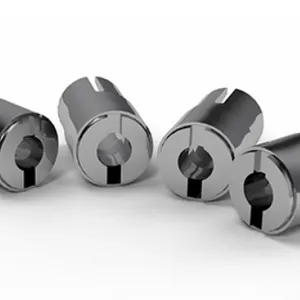
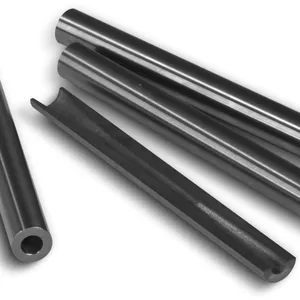
 Customized Cemented Pulse Threaded Carbide Nozzle S or A or E Type ExchangeableUS$ 10 - 500MOQ: 1 Set
 -
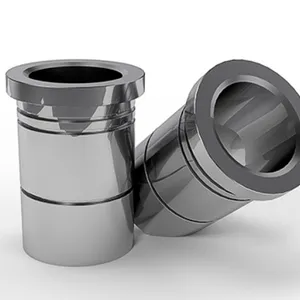
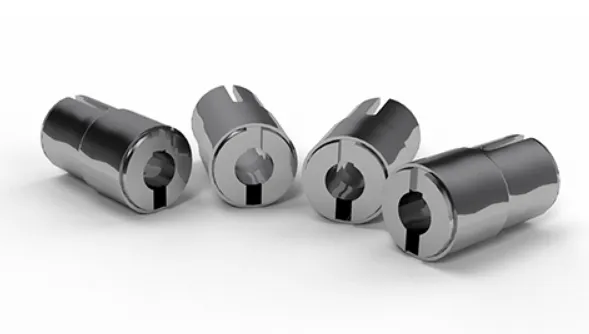
Customized Cemented Carbide Ring Parts Stator Rotator Sleeve Valve Seat Shaft Bearing Cap for MWD LWDUS$ 10 - 500MOQ: 1 Set
-
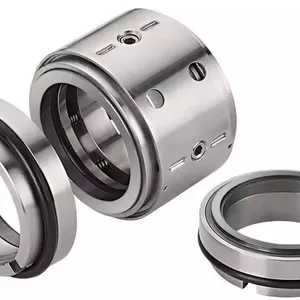
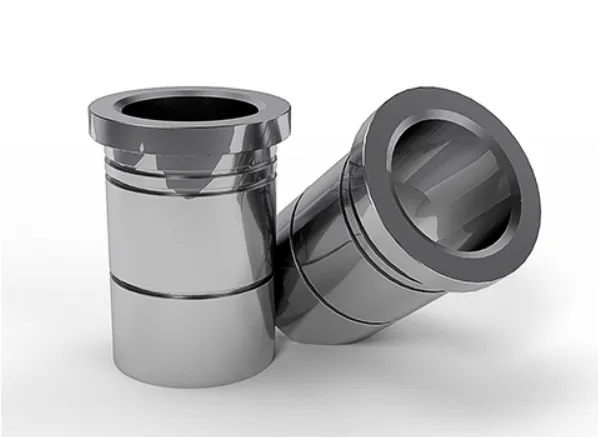
Customized Cemented Carbide Sleeve Seat Choke Nipple for Oil and Gas Layer Fracturing Hydraulic EjectorUS$ 10 - 500MOQ: 1 Set
-
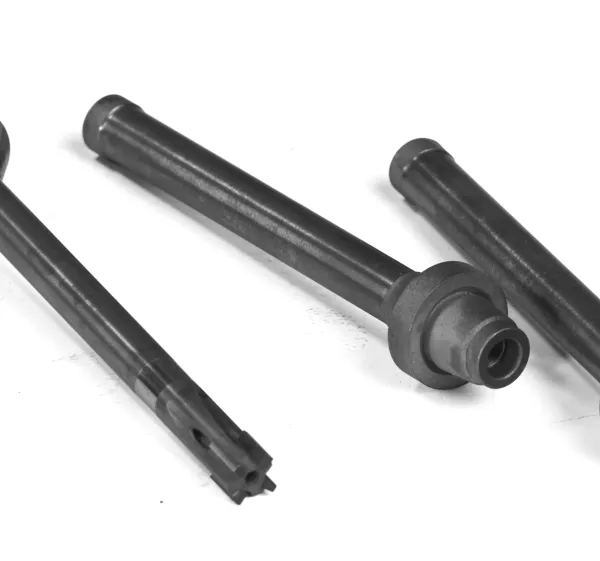
Customized Cemented Carbide for PDM Drill CentralizersUS$ 10 - 500MOQ: 1 Set
-
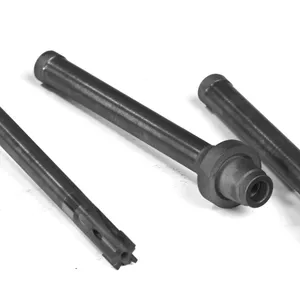
Tungsten Carbide RodsUS$ 1 - 10,000MOQ: 5 Kilograms
Cemented carbide is an alloy material made of hard compounds of refractory metals and bonding metals through powder metallurgy.
Cemented carbide has a series of excellent properties such as high hardness, wear resistance, good strength and toughness, heat resistance, and corrosion resistance. In particular, its high hardness and wear resistance remain basically unchanged even at a temperature of 500°C, and it still has a high hardness at 1000°C.
Cemented carbide is widely used as a tool material, such as turning tools, milling cutters, planers, drills, boring tools, etc., for cutting cast iron, non-ferrous metals, plastics, chemical fibers, graphite, glass, stone and ordinary steel. It can also be used to cut difficult-to-process materials such as heat-resistant steel, stainless steel, high manganese steel, and tool steel.
Advantages
Cemented carbide has high hardness, strength, wear resistance and corrosion resistance. It is known as the "teeth of industry" and is used to manufacture cutting tools, knives, cobalt tools and wear-resistant parts. It is widely used in military industry, aerospace, mechanical processing, metallurgy, oil drilling, mining tools, electronic communications, construction and other fields. With the development of downstream industries, the market demand for cemented carbide continues to increase. In addition, the future high-tech weapons and equipment manufacturing, the progress of cutting-edge science and technology, and the rapid development of nuclear energy will greatly increase the demand for cemented carbide products with high technology content and high quality stability.
Usage
In 1923, Schletter of Germany added 10% to 20% cobalt as a binder to tungsten carbide powder and invented a new alloy of tungsten carbide and cobalt, which is second only to diamond in hardness. This is the first artificial cemented carbide in the world. When cutting steel with a tool made of this alloy, the blade will wear out quickly, or even crack. In 1929, Schwarzkopf of the United States added a certain amount of tungsten carbide and titanium carbide compound carbides to the original composition, which improved the performance of the tool in cutting steel. This is another achievement in the history of cemented carbide development.
Cemented carbide can also be used to make rock drilling tools, mining tools, drilling tools, measuring tools, wear-resistant parts, metal abrasives, cylinder liners, precision bearings, nozzles, hardware molds (such as wire drawing molds, bolt molds, nut molds, and various fastener molds. The excellent performance of cemented carbide has gradually replaced the previous steel molds).
In the past two decades, coated cemented carbide has also come out. In 1969, Sweden successfully developed titanium carbide coated tools. The base of the tool is tungsten-titanium-cobalt cemented carbide or tungsten-cobalt cemented carbide. The thickness of the titanium carbide coating on the surface is only a few microns, but compared with the alloy tool of the same brand, the service life is extended by 3 times and the cutting speed is increased by 25% to 50%. In the 1970s, the fourth generation of coated tools appeared, which can be used to cut difficult materials.
How is cemented carbide sintered?
Cemented carbide is a metal material made by powder metallurgy of carbides of one or more refractory metals and binder metals.
Performance characteristics
Carbide welding blade
High hardness (86-93HRA, equivalent to 69-81HRC);
Good hot hardness (up to 900-1000℃, maintain 60HRC);
Good wear resistance.
Carbide cutting tools have a cutting speed 4-7 times higher than high-speed steel and a tool life 5-80 times higher. For manufacturing molds and measuring tools, the life is 20-150 times higher than that of alloy tool steel. It can cut hard materials of about 50HRC.
However, carbide is brittle and cannot be cut. It is difficult to make a complex integral tool. Therefore, it is often made into blades of different shapes and installed on the tool body or mold body by welding, bonding, mechanical clamping and other methods.
Products material
1. Cemented carbide plate
Cemented carbide plate is also known as cemented carbide plate and cemented carbide sheet. It is one of the many cemented carbide materials and is named because of its rectangular plate (or block) shape.
Cemented carbide plate is mainly made of metal WC tungsten carbide powder and Co cobalt mixed by metallurgical method through powder making, ball milling, pressing and low-pressure sintering. The product has good body density, no holes and sand holes, high dimensional precision (blank tolerance is controlled at ±2.2~±2.2, and fine blank is controlled at ±0.01), and small processing allowance, which can effectively improve your production efficiency and greatly reduce processing costs.
Common metal carbides are tungsten carbide, titanium carbide, niobium carbide and vanadium carbide, all of which can make cemented carbide have high hardness and high wear resistance. The binder of cemented carbide is mainly metal cobalt or metal nickel, which can ensure that cemented carbide has certain strength and toughness.
The main alloy components of cemented carbide plates are WC and Co. The content of WC and Co in cemented carbide plates for different purposes is not consistent, and the scope of use is extremely wide.
2. Production process
Powder making → Formula according to the purpose requirements → Wet grinding → Mixing → Crushing → Drying → Screening → Adding molding agent → Drying again → Screening to obtain a mixture → Granulation → Pressing → Molding → Sintering → Molding (blank) → Flaw detection → Packing → Warehousing.
3. Material performance characteristics of cemented carbide plates
Cemented carbide plates have the characteristics of red hardness, high hardness, good wear resistance, high elastic modulus, high compressive strength, good chemical stability (acid, alkali, high temperature oxidation resistance), low impact toughness, low expansion coefficient, and thermal and electrical conductivity similar to iron and its alloys.
4. Instructions for use of tungsten steel materials are as follows:
1. The tungsten steel material is made of high-quality tungsten steel. Due to its extremely high hardness, tungsten steel is brittle and easily broken by external force impact. In particular, the thickness of the tungsten steel slitting blade is relatively thin, which is more likely to break by external force punching. Therefore, it is forbidden to knock or throw tungsten steel materials when installing and using various tungsten steel materials.
2. The edges of tungsten steel materials are extremely sharp. Please pay special attention to safety during installation to avoid unnecessary personal injury.
3. The series of tungsten steel products made of tungsten steel materials are particularly wear-resistant, and their service life is dozens of times that of high-speed steel (white steel), which can greatly improve your work efficiency and reduce your costs.
4. Due to its extremely high hardness, tungsten steel materials are particularly difficult to process. The feasible processing methods are as follows:
A. Electrospark machining (medium wire, slow wire, fast wire machining)
B. Welding: copper welding, silver welding.
C. Grinding: centerless grinding, internal grinding, surface grinding, tool grinding. The grinding wheel used is generally a diamond grinding wheel, which is selected according to the process requirements.
D. Laser processing: Laser cutting and drilling can be used, but the cutting thickness is limited by the power of the laser machine.
Thank you .
Peggy Peng
+8617607198993
hubei kingco material technology co.,ltd

Send Inquiry to This Supplier


You May Also Like
-
6" (150mm) Tungsten Carbide Rod SawUS$ 1 - 20MOQ: 600 Pieces
-
Ningbo High Precision Material Removal Processes For Carbide RodsUS$ 0.1 - 0.2MOQ: 1 Piece
-
Carbide Rod/Tungsten Carbide Rod/Solid Carbide RodUS$ 13.00 - 18.00MOQ: 20 Pieces
-
Carbide Rod/tungsten Carbide RodUS$ 45 - 80MOQ: 1 Piece
-
Carbide Rods Tungsten Carbide RodUS$ 50 - 80MOQ: 20 Kilograms
-
ISO Tungsten Carbide Rod Cemented Carbide Rod Carbide RodUS$ 10 - 80MOQ: 1 Kilogram
-
Tungsten Carbide Round Rod, Solid Carbide Rod, Ground Carbide RodUS$ 47 - 59MOQ: 5 Kilograms
-
Polished Tungsten Carbide Rod/330mm Carbide Rod/ground Carbide RodUS$ 40 - 80MOQ: 3 Kilograms
-
High Performance Carbide Rod With High Quality Carbide Rod Carbide RodUS$ 15.00 - 15.00MOQ: 10 Pieces
-
Carbide RodsUS$ 50 - 80MOQ: 10 Kilograms


