








 Contact Platform Support
 Help Center
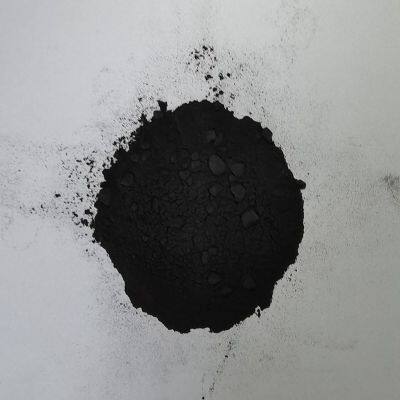
Anti-Static Heat Balancer-1 Type


Related Products
-
 Anti-Static Heat Balancer-1 TypeNegotiableMOQ: 1 Ton
 -
NFJ-07R Metal Composite Impact-resistant Flooring MaterialNegotiableMOQ: 1 Ton
-
NFJ-O6D (Metal Anti-static Floor)NegotiableMOQ: 1 Ton
-
NFJ Rust-Proof Foam Reinforced Metal CottonNegotiableMOQ: 1 Ton
-
NFJ Inorganic Medium to High-Temperature Secondary BinderNegotiableMOQ: 1 Ton
Anti-Static Heat Balancer-1 Type
Production Principle of Anti-Static Heat Balancer:
Utilizing the iron-carbon principle for rust prevention and foaming treatment, nitrogen is introduced during low-temperature passivation for additional surface rust prevention, ensuring the material remains rust-free permanently. This balancer possesses conductivity, eliminating static electricity, especially effective for preventing the agglomeration and uneven dispersion of organic fibers during mixing. It alters the metal microstructure composition, preventing sparks and metal embedding during friction with counterpart components. It also provides a certain level of flexibility and elasticity adjustment, enhancing vehicle comfort. During braking, it can adsorb a significant amount of sound waves, noticeably reducing noise.
Production Process:
Metal oxides with iron content not less than 60% are crushed into particles with a granularity not exceeding 2mm.
Light impurities are removed from the raw materials through air and magnetic separation.
The particles are then placed in a crucible for calcination, with the addition of rare earth elements for foaming treatment.
The material is crushed and evenly mixed with a carbon-based medium, soaked in a reinforcing composite.
After soaking, the material is drained, dried, and subjected to high-temperature sintering.
The sintered material is granulated, subjected to magnetic and air separation.
The material is placed in a passivation reduction furnace, and nitrogen is introduced for passivation.
After drying, magnetic separation, and air separation, the final product is obtained.
Application Scope
Principles:
Utilizing the iron-carbon principle for rust prevention and foaming treatment, with additional surface rust prevention during low-temperature passivation, ensuring the material remains rust-free permanently.
Possesses conductivity, eliminating static electricity, especially effective for preventing the agglomeration and uneven dispersion of organic fibers during mixing.
Alters the metal microstructure composition, preventing sparks and metal embedding during friction with counterpart components.
Provides a certain level of flexibility and elasticity adjustment, enhancing vehicle comfort.
During braking, it can adsorb a significant amount of sound waves, noticeably reducing noise.
Advantages And Features
Main Functions:
Resolving agglomeration issues.
Ensuring better heat balance during mixing.
Eliminating static electricity.
Enhancing product bonding performance.
High friction materials are substances or surfaces that offer a high level of resistance to sliding motion when in contact with each other. These materials are designed to provide increased traction or grip, making them suitable for applications where slip resistance is critical. High friction materials can be found in various forms, including solid surfaces, coatings, adhesives, and composite materials. They are utilized in a wide range of industries and applications, including automotive, aerospace, construction, sports, and manufacturing.
Brake pads are composed of friction materials that generate frictional force when pressed against a rotating surface, such as a brake rotor or drum. These materials typically contain a mixture of abrasive particles, fibers, and binders designed to provide high friction and thermal stability.
Composite materials engineered with high friction components, such as ceramic fibers, graphite, or metal particles, can offer superior frictional properties compared to single-component materials. These composite materials find applications in brake systems, clutch assemblies, and friction linings.
For more information, please visit our website.

Send Inquiry to This Supplier


You May Also Like
-
Anti-static Self-leveling Epoxy Floor CoatingNegotiableMOQ: 1
-
Danfoss Balance Valve AB-QM Brass Flow Control Digital Locking Valve Brass Static Balance Regulator ValveNegotiableMOQ: 1 Piece
-
Industrial Grade Logistics Trolley With Anti-Static Coating & Load Test ReportNegotiableMOQ: 10 Sets
-
POM EB-08 Anti-static Modified Polyoxymethylene Dustproof Industrial POM GradeNegotiableMOQ: 1 Kilogram
-
Fire-Safe and Anti-Static Pneumatic Tank Bottom Valve for Hazard Prevention in High-Risk Industrial EnvironmentsNegotiableMOQ: 1 Set
-
Anti-static FloorNegotiableMOQ: 2400 Pieces
-
Anti-static Powder CoatingUS$ 1 - 9MOQ: 1 Kilogram
-
Screw Static Balance Valve for Industrial Pipeline Flow & Pressure Balance ControlNegotiableMOQ: 1 Set
-
POM 3010 Conductive Carbon Black Masterbatch Anti-static POM Carbon Fiber CF Anti-static Magnetic Shielding Carbon NanotubesUS$ 3 - 4.9MOQ: 25 Kilograms
-
Anti-Static FIBC Bulk Bag Liner - Conductive Design for Chemical Powders - Prevent Static DischargeNegotiableMOQ: 1000 Pieces


