








 Contact Platform Support
 Help Center
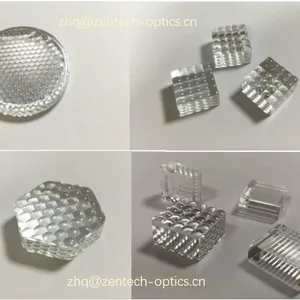
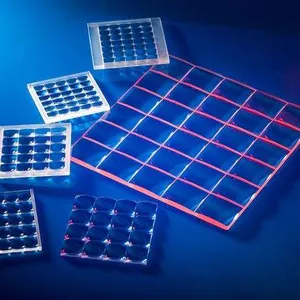
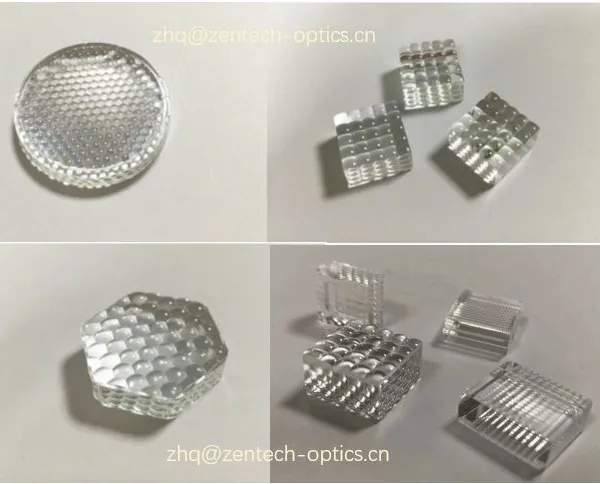
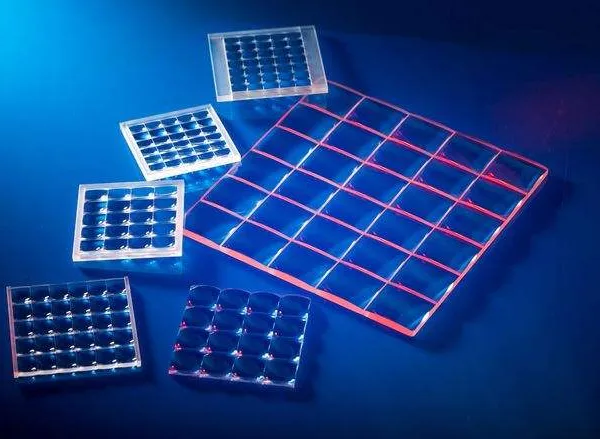
Quartz Double Compound Lens, Glass Single Compound Lens, Micro Lens Array, Flyeye

Related Products
Dual Focus Function: Double-sided lens arrays can independently focus light in two directions, providing more precise beam control.
High Integration: These arrays can be integrated into a compact space to achieve complex optical functions.
Beam Shaping: Double-sided lens arrays can be used to shape beams, such as transforming an elliptical beam into a circular one.
Beam Diffusion: They can diffuse or expand beams, increasing the uniformity of illumination or coverage area.
Adjustable Optical Performance: By design, the focal length, shape, and size of the lenses can be adjusted to meet specific optical needs.
Material Diversity: Double-sided lens arrays can be manufactured from a variety of materials, such as polymers, glass, or crystals.
Digital Imaging: In imaging systems, double-sided lens arrays can be used to improve image quality, especially in high-resolution imaging applications.
Laser Processing: In the field of laser micro-machining, they are used to focus the laser beam, achieving high-precision cutting or welding.
Microfluidic Systems: In microfluidic chips, double-sided lens arrays can serve as micro-optical elements for manipulating and analyzing tiny fluids.
Optical Sensors: In sensor technology, they can enhance the sensitivity and selectivity of sensors.
Optical Communication: Double-sided lens arrays can act as wavelength selectors or beam shapers in optical communication systems.
Biomedical Engineering: In biomedical imaging and therapy, they can be used to precisely manipulate and transmit light energy.
Integrated Optics: In integrated optical chips, double-sided lens arrays can serve as key components to achieve a variety of optical functions.
Double-sided fly-eyes
Material |
High Purity Silica Glass/quartz |
Transmittance |
Material 92 % / AR Coating 98 % (applicable range 360 - 500 nm) |
Maximum temperature resistance |
1,000 °C |
Surface quality |
Defined according to customer needs (detailed evaluation of design drawings) |
Dimensions range |
5 x 5 - 30 x 30 (unit: mm) |
Dimensional tolerance |
+- 0.10 mm |
Thickness tolerance |
+- 0.05 mm |
Minimum cell size |
0.15x 0.15(unit: mm) |
Cell size tolerance |
+- 0.02 mm |
Dead zone area width |
|
Radius of array cell |
Customized (detailed evaluation of design drawings) |
Radius deviation |
|
Alignment accuracy |
+- 0.02 mm |
Lens arrays
Material |
H-K9、H-K51、Borosilicate |
Transmittance |
AR Coating 98 % |
Maximum temperature resistance |
400 °C |
Surface quality |
60-40/80-50(S/D) ISO99211 |
Dimensions range |
10x 10 - 90 x 90 (unit: mm) |
Dimensional tolerance |
+- 0.10 mm |
Thickness tolerance |
+- 0.05 mm |
Minimum cell size |
0.5 x 0.5(unit: mm) |
Cell size tolerance |
+- 0.02 mm |
Dead zone area width |
|
Radius of array cell |
Customized (detailed evaluation of design drawings) |
Radius deviation |

Send Inquiry to This Supplier


You May Also Like
-
 KL6LM (A) Intrinsically Safe High Brightness Miner's Cap LampUS$ 120 - 150MOQ: 1 Piece
 -
Online Flying CO2 Laser Marking Engraving Machine With 110X110 Lens for PenNegotiableMOQ: 1 Set
-
Little Devil Eyes LED Children's Backpack(Wechat:13510231336)NegotiableMOQ: 2000 Pieces
-
KY01S KY01B High Quality Wholesale Blue Light Blocking Lens Smart Eye Wireless Glasses With Hidden AudioNegotiableMOQ: 1
-
PLASTICLENTICULAR Fly's Eyes Lenticular Sheet Cylinder pp 3d Suppliers-Lenticular Sheet Dot Lens Image PhilippinesNegotiableMOQ: 1000 Pieces
-
Wholesale Aluminum/Round/ Titanium/Welder/Seamless/Inconel/ Hastelloy/Nickel Alloy/304, 316L, 321, 430, 410 600 625 718 X750 N02200 Alloy Steel PipeNegotiableMOQ: 100000 Tons
-
Attapulgite EarthNegotiableMOQ: 2500 Tons
-
ProSoft's MVI56-MDA4: Your ControlLogix Gas Monitoring WorkhorseUS$ 9150 - 9500MOQ: 1 Piece
-
Ergonomic Hoe for Weeding, Rail Steel Blade Ideal for Garden and Farm WorkUS$ 1.07 - 1.27MOQ: 1200 Pieces
-
Non Sparking Beryllium Bronze Engineer Hammer Chipping Hammer 0.15kgUS$ 8.3 - 16.2MOQ: 1 Piece


