








 Contact Platform Support
 Help Center
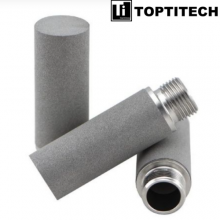
SS316L Seamless Sintered Candles for Catalyst Filter


Related Products
-
 30 Micron 5-Layer Sintered Mesh Filter for Hydraulic OilUS$ 10 - 50MOQ: 5 Pieces
 -
25-30% Porosity PM35 Porous Breathable Steel For Injection MoldingUS$ 5 - 20MOQ: 5 Pieces
-
Stainless Steel Micron Wire Mesh Filter TubeUS$ 6.95 - 10.56MOQ: 5 Pieces
-
40um Customized SS316L Filter Element For Process Liquids FiltrationUS$ 10 - 20MOQ: 1 Kilogram
-
Sintered SS316L Powder Filter Discs With a 1mm Ring OutsideUS$ 10 - 50MOQ: 5 Pieces
SS316L Seamless Sintered Candles for Catalyst Filter
Introducing SS316L Seamless Sintered Candles for Catalyst Filter, a remarkable filtration solution crafted from sintered metal powder through a meticulous process encompassing pressing, shaping, and high temperature sintering. These candles exhibit exceptional characteristics, including a consistent shape, optimal air permeability, and outstanding separation capabilities.
The precise configuration of pore size, distribution, strength, and air permeability in our SS316L Seamless Sintered Candles for Catalyst Filter is directly influenced by the refinement of the powder, the compaction techniques employed, and the intricacies of the sintering procedure. As a result, our filters achieve an impressive filtration rating spanning from 0.1 to 100 μm.
Parameters
Material:stainless steel 316L
Max. operating temperature:600 °C
Filter rating:0.2–100 μm
Porosity:30%–40%
Compressive strength:3 MPa
Max. differential pressure:0.6 MPa
Connection Type
When contrasting with polymer melt filtration, chemical filtration necessitates operating under lower temperatures and pressures. Consequently, the sintered porous candle filter offers a wide array of connection options that can be tailored to individual requirements. These connection types are customized based on specific requests, ensuring optimal compatibility and performance.
Standard connection (such as, 215, 222, 226)
Thread connection (M20, M30, M32, M42, etc.)
DOE
Customized connection
Working Principle
The operational principle of the sintered porous candle filter involves the entry of the filtrate at the lower section of the filter, followed by an upward movement. This upward flow aids in maintaining the suspended solids evenly distributed, allowing them to settle uniformly on the filter elements' surface. As a result, impurities are effectively captured and retained on the filter element's surface, while the purified filtrate is discharged through the register.
To regulate the filtration process, a control system halts the feeding mechanism once the filter reaches the predetermined pressure threshold. At this point, the residual liquid within the filter is drained, and the backblowing process commences. Once the backblowing cycle is completed, the dry cake formed by the captured impurities is discharged through the residue discharge nozzle. Subsequently, the residue discharge nozzle is closed upon the conclusion of the dry cake discharging.
Following these steps, the surface of the filter elements is left clean and prepared for subsequent filtration cycles, ensuring optimal performance for future filtration processes.

Send Inquiry to This Supplier

You May Also Like
-
TOPTITECH Sintered Porous Air Sparger Nano Oxygen GeneratorUS$ 6 - 9MOQ: 5 Pieces
-
480MM DOE Stainless Steel Pleated Filter Cartridge For Oil FiltrationUS$ 5 - 20MOQ: 10 Pieces
-
Sintered SUS316L Wire Mesh Filter Tube With Perforated Support LayerUS$ 5 - 20MOQ: 5 Pieces
-
50 Micron Custom Threaded SS316L Powder Sintered Filter ElementUS$ 34 - 50MOQ: 5 Pieces
-
10mm Thick Stainless Steel Sintered Filter Disc for Chemical DecarbonizationUS$ 5 - 50MOQ: 5 Pieces
-
φ80mm SS316L Sintered Porous Filter Cylinder for Decarburization FiltrationUS$ 10 - 20MOQ: 1 Piece
-
40um SS316L Sintered Metal Wire Mesh Filter CartridgeUS$ 46 - 100MOQ: 5 Pieces
-
10-20 Microns Stainless Steel Sintered Powder Filter for Liquid ChromatographyUS$ 4.78MOQ: 5 Pieces
-
5-Layer Sintered Wire MeshUS$ 35 - 45MOQ: 50 Pieces
-
5-Layer Sintered Wire MeshUS$ 45 - 60MOQ: 50 Pieces


