








 Contact Platform Support
 Help Center
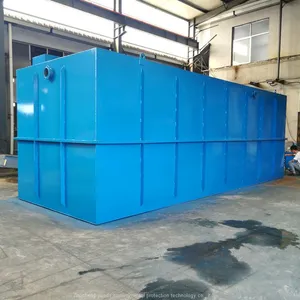
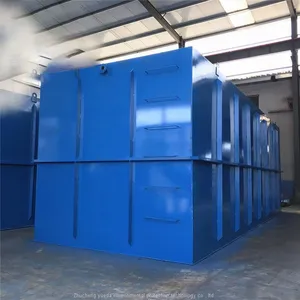
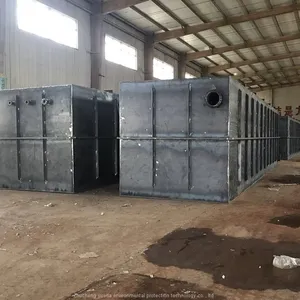
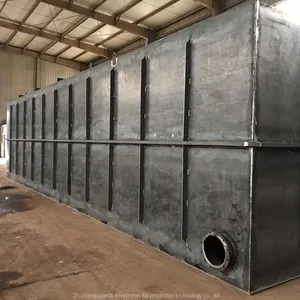
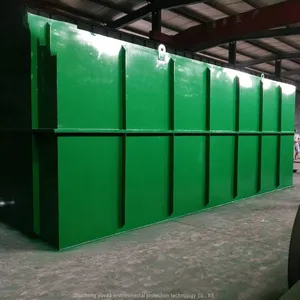
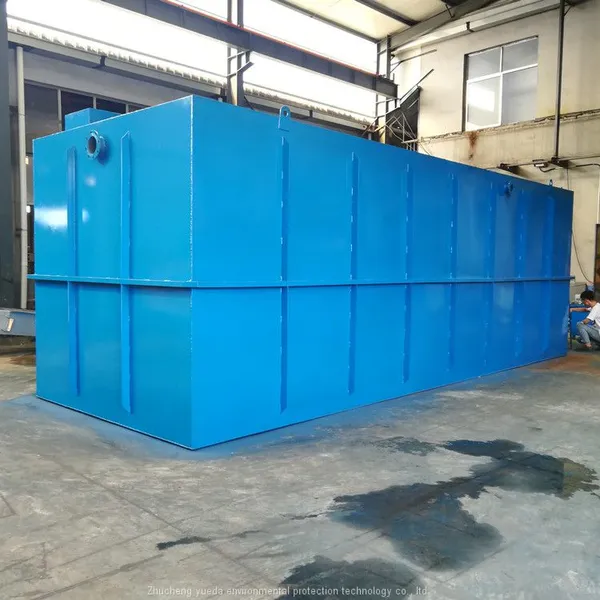
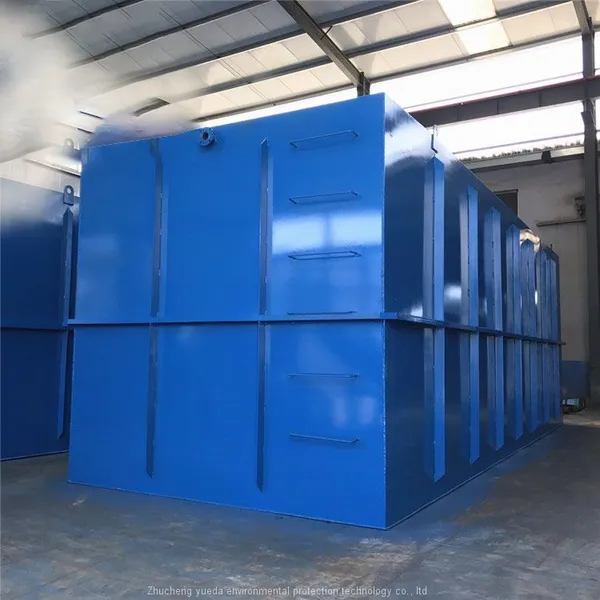
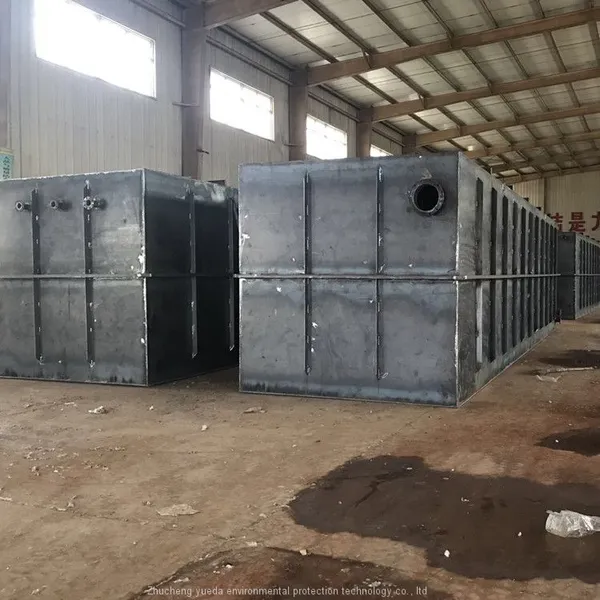
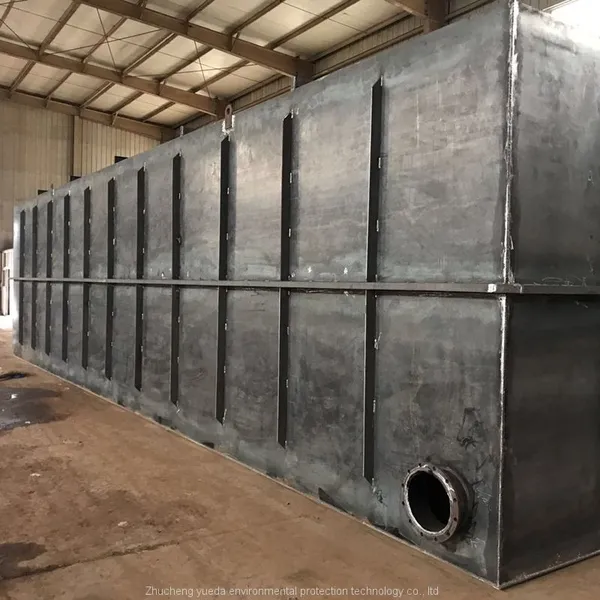
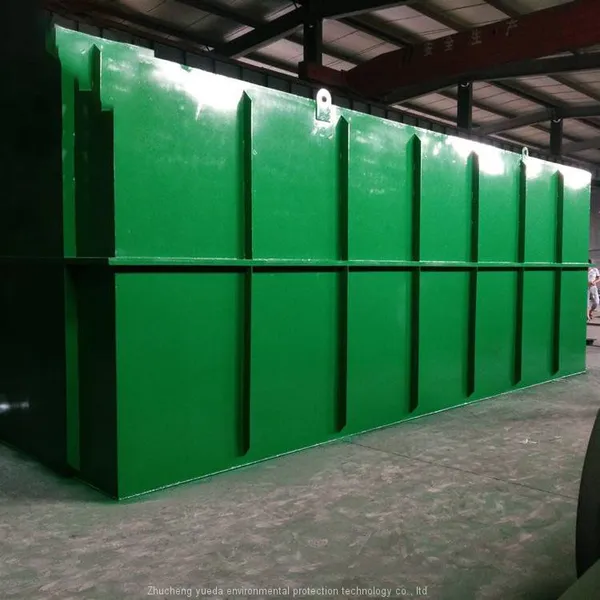
Vietnam Environmental Protection Integrated Sewage Treatment Equipment Domestic Sewage Slaughter Breeding Sewage Medical Sewage Industrial Chemical Sewage Biochemical Treatment Equipment


Related Products
-
 Integrated Sewage Treatment EquipmentUS$ 2000 - 20000MOQ: 1 Combo
 -
High-Capacity Integrated Sewage Treatment Equipment for Purification and DisinfectionUS$ 9300 - 821000MOQ: 1 Combo
-
Integrated Sewage Treatment EquipmentNegotiableMOQ: 1 Unit
-
Integrated Sewage Treatment EquipmentUS$ 10000 - 60000MOQ: 1 Chain
-
Integration Sewage Treatment Equipment, Integrated PlantUS$ 10,000 - 100,000MOQ: 1 Plant
Shandong Zhucheng Yueda Environmental Protection Technology Co., Ltd. is an environmental protection technology company engaged in the manufacturing and sales of domestic sewage treatment, slaughter and breeding sewage treatment, food processing and industrial sewage treatment, reclaimed water reuse, garbage incinerator and other equipment, as well as the design, construction, installation, commissioning and technical consulting services of various sewage treatment projects.
Our company adheres to the business philosophy of "honesty, quality first", and solemnly Chen Nuo to customers: Our company has an after-sales service management department, which can give a satisfactory reply within 24 hours, and regularly call back and follow-up services to open the door for customers.
Introduction:
A lot of water is used in papermaking process, and about 300~500m3 of water is needed to produce 1t paper. In papermaking wastewater, there are not only a lot of papermaking raw materials (about 20% of raw materials are lost with the wastewater), but also a lot of chemicals and other impurities, so if papermaking wastewater is discharged without any treatment, it will cause great harm to the water body. Characteristics of papermaking wastewater:
1. Waste liquor generated by cooking wood pulp (or straw pulp), also known as black liquor.
2. The sewage discharged from beater and refiner is called pulping sewage.
3. Paper machine sewage, which can be directly used as white water.
The main pollutions are as follows:
1. Suspended matter includes settable suspended matter and non-settable suspended matter, mainly fibers and fiber fines (i.e. broken fiber fragments and miscellaneous cells).
2. Biodegradable organic substances include hemicellulose with low molecular weight, methanol, acetic acid, formic acid, sugar, etc.
3. Biodegradable organic matter mainly comes from lignin and macromolecular carbohydrates contained in fiber raw materials.
4. Rosin acid and unsaturated fatty acid contained in toxic black liquor.
5. The ph value of alkaline pulping wastewater with acid-base poison is 9 ~ 10; The ph value of acid pulping wastewater is 1.2~2.0.
6. The residual lignin contained in chroma pulping wastewater is highly colored.
The concentration of SS and COD in waste paper papermaking wastewater is high, while COD consists of insoluble COD and soluble COD. Generally, insoluble COD accounts for most of the total COD. When SS is removed from the wastewater, most of the insoluble COD will be removed at the same time. Therefore, the main problem to be solved in waste paper papermaking wastewater treatment is to remove SS and COD.
Technology:
(1) regulating pool: the regulating pool is used for homogenization and equalization. Generally, it can also be considered to have the functions of precipitation, mixing, dosing, neutralization and pre-acidification. It can adjust the water quantity and quality, adjust the pH value and water temperature of sewage, have the function of pre-aeration, stir and oxygenate the water body in the pool, prevent the precipitation of suspended impurities, and can also be used as emergency drainage.
(2) Contact oxidation tank: after adjusting the tank, the effluent flows to the contact tank for biochemical treatment, and the contact oxidation time can be up to 6 hours. The filler is semi-soft filler (that is, hard plastic is used as a bracket, and soft fibers are attached to it), which can prevent the specific surface area of the filler from being reduced after the fibers grow into balls, and it is easy to conjunctiva and not blocked.
(3) Sedimentation tank: Biochemical sewage flows to the sedimentation tank, which is an inclined plate sedimentation tank. Inclined plate sedimentation tank uses the principle of counter-current flow, which has the advantages of high separation speed of mud and water, stable water flow and good separation effect. Compared with other sedimentation tanks such as advection type, its separation speed of mud and water and surface hydraulic load are twice as high, and the discharged mud is lifted to the sludge tank by air.
(4) Disinfection pool and disinfection device: the disinfection pool is disinfected with mature ozone, and the contact time of the disinfection pool is more than 12min.
(5) Sludge tank: the sludge in the sedimentation tank is pumped into the sludge tank by sludge pump. The clear liquid of the sludge tank flows back to the contact oxidation tank for reprocessing. There is little excess sludge, which is usually cleaned once every 1-2 years. Methods To clean up, a dung suction truck can be used to extend from the inspection hole of the sludge pool into the bottom of the sludge, and then it can be pumped out.

Send Inquiry to This Supplier

You May Also Like
-
Underground Integrated Sewage Treatment EquipmentUS$ 1,000 - 10,000MOQ: 1 Set
-
Buried Integrated Sewage Treatment EquipmentUS$ 5,000 - 20,000MOQ: 1 Set
-
MBBR Integrated Sewage Treatment Equipment Industrial Water TreatmentUS$ 10 - 10000MOQ: 1 Set
-
Integrated Sewage Treatment Equipment Sewage Treatment Sewage Equipment Buried IntegrationUS$ 6500 - 22500MOQ: 1 Set
-
ZYWS Integrated Sewage Treatment Equipment for Hospital Waste Water Treatment MachineUS$ 1 - 100,000MOQ: 1 Set
-
Integrated Sewage Treatment Equipment: Purify Sewage to Help Enterprises Meet Environmental Protection StandardsUS$ 430.77 - 461.54MOQ: 1 Unit
-
Prefabricated Integrated Sewage Treatment Equipment Skid-mounted With PLC Control SystemUS$ 5500 - 6500MOQ: 1 Combo
-
Sewage Treatment Equipment for Livestock and Poultry Breeding in Slaughterhouses, Buried Integrated Sewage Treatment Equipment, Multi-stage FiltrationUS$ 1352.31 - 3046.15MOQ: 1 Unit
-
The Integration of Sewage Treatment EquipmentNegotiableMOQ: 1 Set
-
Yihai Environmental Protection Integrated Sewage Treatment Equipment Domestic Sewage Slaughter, Breeding, Medical Treatment and Other Sewage Treatment EquipmentUS$ 4000 - 5000MOQ: 1 Cubic Foot


