








 Contact Platform Support
 Help Center
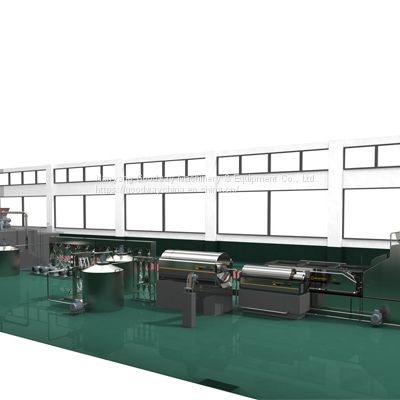
Cassava Starch Machine


Related Products
Cassava (tapioca) Starch Process Description and Flowchart:
Goodway has been continuously developing cassava starch processing equipment since 1991 to maximize product quality. From cassava root hopper until the packaging stage, we can supply machines (tapioca processing machine) together with production process know-how.
The production process of cassava starch(tapioca) comprises the steps such as delivery and unloading cassava, washing, peeling, crushing, slurry and residues separation, desanding & desilting, starch concentrating and refining, de-watering, starch drying by using the starch drying machine, and packaging in the cassava starch processing plant.
As one of the most professional cassava starch processing machinery manufacturers, we provide below a brief description of the main steps of the cassava starch(tapioca) production process. To meet the demands of cassava starch market, we offer the cassava starch machine, also known as the tapioca starch machine.
Note: Goodway updates the cassava starch processing equipment and cassava starch production line technology and machinery based on the latest experience.
Cleaning and Washing Cassava (tapioca) Roots
Wash the fresh cassava (tapioca) roots in clean water to remove the surface mud and sand. It's the first step of cassava starch process and very important for the quality of final cassava starch(tapioca).
Peeling Cassava (tapioca) Roots
Peel the washed cassava (tapioca) roots to remove the outer brown skin and inner thick cream layer. The water source should be checked regularly to ensure it is not dirty or contaminated.
Crushing Peeled Cassava (tapioca) Roots into Slurry
Crushing the peeled cassava (tapioca) roots into the slurry and separate to remove the coarse cassava residues to obtain uniformly smooth cassava slurry. The crushing drum and all food contact areas should be made from stainless steel.
Cassava (tapioca) Slurry and Residues Separation
The commonly physical operation to separate fine cassava residues from cassava slurry. Oversize particles of cassava residues cannot pass through the lattice structure of the filter, while fluid and small particles of cassava slurry can pass through to become filtrate.
Raw Starch Milk Desanding and Desilting
Solid control equipment that separates tiny sand and mud from the raw starch milk. Desander is installed before the desilter and normally the solids diameter for desander to be separated would be larger than for desilter.
Starch Refining and Concentrating
When raw starch milk enters the hydrocyclone, the pure starch milk of high density getting larger centrifugal force leaves from the underflow outlet, and the protein and other soluble impurities of low density getting smaller centrifugal force leave from the overflow outlet. Finally, achieve the purpose of various components of separation, and improve the quality of final starch with higher whiteness and purity.
Pure Starch Milk De-watering
De-watering the pure starch milk to low water content of 35-40% by the principle of vacuum suction filtration. Ensure sufficient water has been removed, otherwise, the starch will form into lumps during drying.
Drying Wet Starch into Dried Starch
Effectively dry the wet starch into dried starch(tapioca) with low moisture content by the principle of heat transfer exchange. The drying process is more reliable and of higher quality.
If you want to know more about tapioca starch production line, please visit our website.

Send Inquiry to This Supplier


You May Also Like
-
 Cassava Starch Hydrocyclone(Extraction Machine)US$ 7800 - 200000MOQ: 1 Set
 -
Cassava Flour Milling MachineUS$ 7800 - 200000MOQ: 1 Piece
-
Cassava Garri FryerUS$ 7800 - 200000MOQ: 1 Piece
-
Cassava Grinding MachineUS$ 7800 - 200000MOQ: 1 Piece
-
Cassava Peeling MachineUS$ 7800 - 200000MOQ: 1 Piece
-
Cassava Washing MachineUS$ 7800 - 200000MOQ: 1 Piece
-
Centrifugal Dewatering MachineUS$ 7800 - 200000MOQ: 1 Short Ton
-
Dewatering and Drying SystemUS$ 7800 - 200000MOQ: 1 Short Ton
-
Fufu MachineUS$ 7800 - 200000MOQ: 1 Short Ton
-
Garri Fryer(Cassava Garri Fryer)US$ 7800 - 200000MOQ: 1 Short Ton


