








 Contact Platform Support
 Help Center
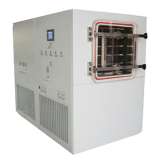
Standard Type Experimental Vacuum Freeze Dryer


Related Products
-
 Come Take a Look at the Different "composition Systems" of the Laboratory Freeze Dryer.NegotiableMOQ: 1 Bag
 -
Freeze-drying Machine Knowledge Analysis of Pre-freezing Stage of Freeze-drying TechnologyNegotiableMOQ: 1 Bag
-
How Much do You Know About the Refrigerant Used in Domestic Freeze Dryers?NegotiableMOQ: 1 Bag
-
The Main Features of the Small Freeze DryerNegotiableMOQ: 1 Bag
-
Discussion on Refrigeration Technology and Refrigeration System for Suppliers of Benchtop Freeze DryersNegotiableMOQ: 1 Bag
Sublimation is when a solid (ice) changes directly to a vapor without first going through a liquid (water) phase. Thoroughly understanding the concept of sublimation is a key building block to gaining knowledge of Standard Type Experimental Vacuum Freeze Dryer.
Sublimation is a phase change and heat energy must be added to the frozen product for it to occur.
Sublimation in the freeze drying process can be described simply as:
FREEZE The product is completely frozen, usually in a vial, flask or tray.
VACUUM The product is then placed under a deep vacuum, well below the triple point of water.
DRY – Heat energy is then added to the product causing the ice to sublime.
FREEZE DRYING EQUIPMENT
The main components of freeze drying equipment are:
Refrigeration System
Vacuum System
Control System
Product Chamber or Manifold
Condenser
The refrigeration system cools the (ice) condenser located inside the freeze dryer. The refrigeration system can also be employed to cool shelves in the product chamber for the freezing of the product.
The vacuum system consists of a separate vacuum pump connected to an airtight condenser and attached product chamber.
Control systems vary in complexity and usually include temperature and pressure sensing ability. Advanced controllers will allow the programming of a complete “recipe” for freeze drying and will include options to monitor how the freeze drying process is progressing. Choosing a control system for the freeze dryer depends on the application and use (i.e. lab vs. production).
Product chambers are typically either a manifold with attached flasks, or, a larger chamber with a system of shelves on which to place the product.
The purpose of the condenser is to attract the vapors being sublimed off of the product. Because the condenser is maintained at a lower energy level relative to the product ice, the vapors condense and turn back into solid form (ice) in the condenser. The sublimated ice accumulates in the condenser and is manually removed at the end of the freeze drying cycle (defrost step). The condenser temperature required is dictated by the freezing point and collapse temperature of the product. The refrigeration system must be able to maintain the temperature of the condenser substantially below the temperature of the product.
In shelf freeze dryers, the condenser can be located inside the product chamber (internal condenser) or in a separate chamber (external condenser) connected to the product chamber by a vapor port.
Manifold freeze dryers rely on ambient conditions to provide the heat of sublimation to the product. This heat input does not melt the product because an equivalent amount of heat is removed by vaporization of the solvent. Advanced shelf freeze dryers can provide a heat source to control/expedite the drying process and they can also employ the refrigeration system to allow freezing of product inside the unit.
If you have the needs of freeze dryers, freeze dryers, etc., you need to know the quotation, Please go to / to find the phone +86 10 58895379 or email: info@bjsyhx.com.cn Contact us, we will contact you in the first time.
Experimental Vacuum Freeze Dryer
/Standard-Type-Experimental-Vacuum-Freeze-Dryer_19.html
bench top type Freeze Dryer
/bench-top-type-Freeze-Dryer_114.html

Send Inquiry to This Supplier

You May Also Like
-
Food Process Freeze Dryer Drying ProcessNegotiableMOQ: 1 Bag
-
How to Solve Lyophilization Equipment Supplier in ChinaNegotiableMOQ: 1 Bag
-
Analysis of the Principle of In-situ Freeze DryerNegotiableMOQ: 1 Bag
-
Advantages of Floor Model Manifold Freeze DryersNegotiableMOQ: 1 Bag
-
Floor Type Freeze Dryer Precautions Before the ExperimentNegotiableMOQ: 1 Bag
-
How to Choose Experimental Freeze DryerNegotiableMOQ: 1 Bag
-
Beef Freeze Dryer ProcessNegotiableMOQ: 1 Bag
-
Which Foods Can be Lyophilized With a Freeze DryerNegotiableMOQ: 1 Bag
-
The Most Critical Compressor Selection Method for Freeze DryersNegotiableMOQ: 1 Bag
-
Future Freeze Dryers Will be Widely Used in the Medical FieldNegotiableMOQ: 1 Bag


