








 Contact Platform Support
 Help Center
Rubber Bridge Expansion Joints





Related Products
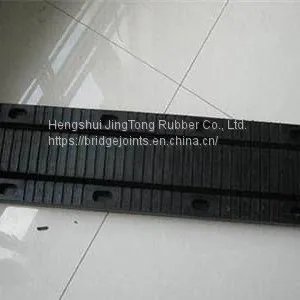
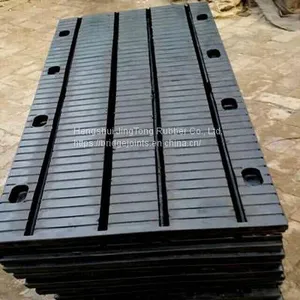
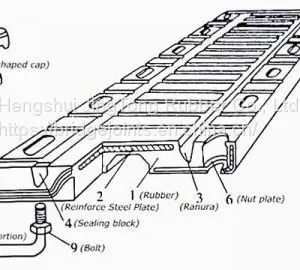
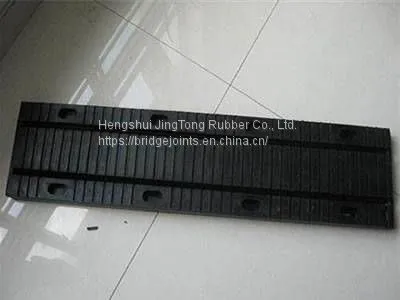
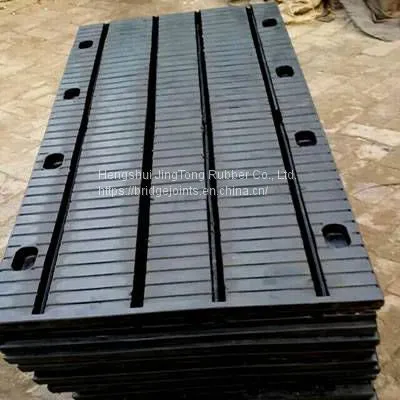
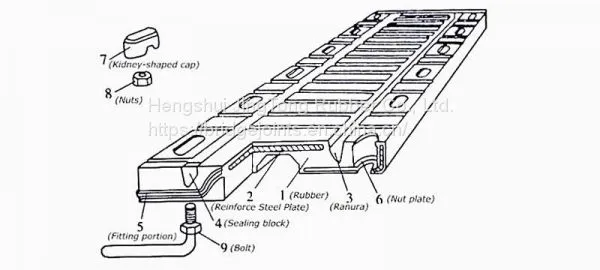
Rubber bridge expansion joints are mainly made of rubber, steel plate and angle iron. Steel plates are set in the rubber bridge expansion to strengthen the bearing capacity and they can slide freely along the angle iron to meet the expansion deformation of main grid.
Because of the excellent sealability and shock-absorbing effect of rubber, rubber bridge expansion joints do well in proofing water and reducing noise. The elasticity of rubber plates and its shear deformation in the telescopic channel helps the whole device to realize telescopic motion.
Features
Rubber bridge expansion joints made of prime-quality rubber are anti-aging and have a long service life. Being wear-resistant, this product can withstand reiteration function of vehicle load. During installation, bolt holes on the bottom and each junction are filled with adhesion agent which makes the whole rubber bridge expansion joints be highly water-resistant.
Application
Rubber bridge expansion joints for movements of up to 60 mm apply to normal bridges. Compared with expressway, rubber bridge expansion joints are more suitable for being installed on the flyovers. They are also good choices for building new bridges.

Send Inquiry to This Supplier

You May Also Like
-
 Rubber Bridge Expansion JointUS$ 5.6 - 1,205.6MOQ: 1 Set
 -
Rubber Bridge Expansion JointUS$ 3.872 - 999.8MOQ: 6 Sets
-
Rubber Bridge Expansion JointsNegotiableMOQ: 1 Set
-
Rubber Bridge Expansion JointUS$ 1 - 80MOQ: 200 Sets
-
Rubber Bridge Expansion JointUS$ 1 - 100MOQ: 10 Sets
-
Rubber Bridge Expansion JointUS$ 1 - 120MOQ: 100 Meters
-
Rubber Bridge Expansion JointUS$ 1 - 9MOQ: 1 Piece
-
Rubber Bridge Expansion JointUS$ 20 - 100MOQ: 1 Set
-
DIN Rubber Bridge Expansion JointsUS$ 10 - 1,000MOQ: 5 Pieces
-
Hydraulic Rubber Bridge Expansion JointUS$ 0.1 - 100MOQ: 1 Case


