








 Contact Platform Support
 Help Center
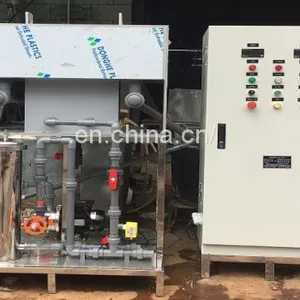
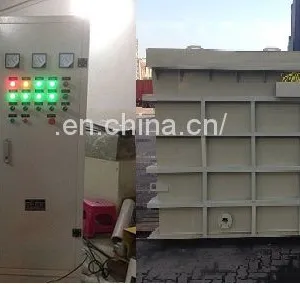
Electrocoagulation Plant
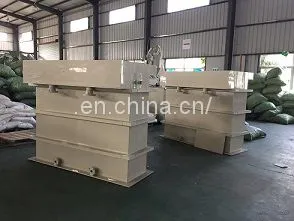
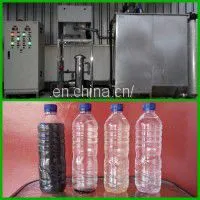
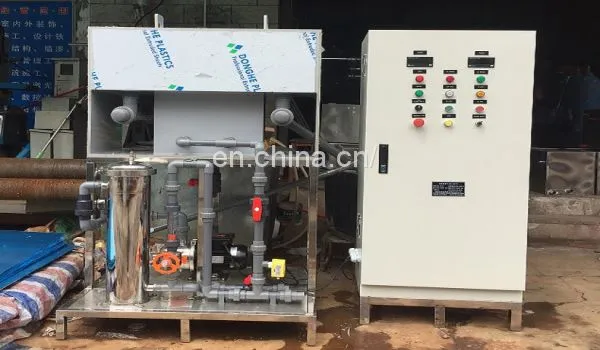
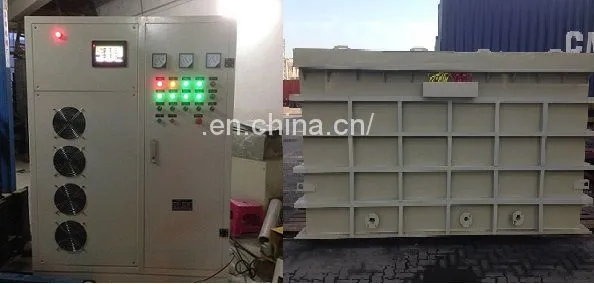


Related Products
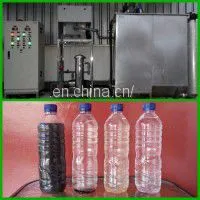
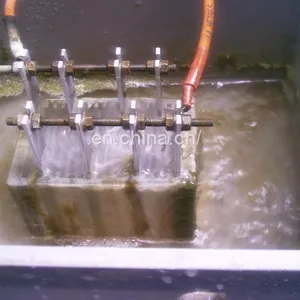
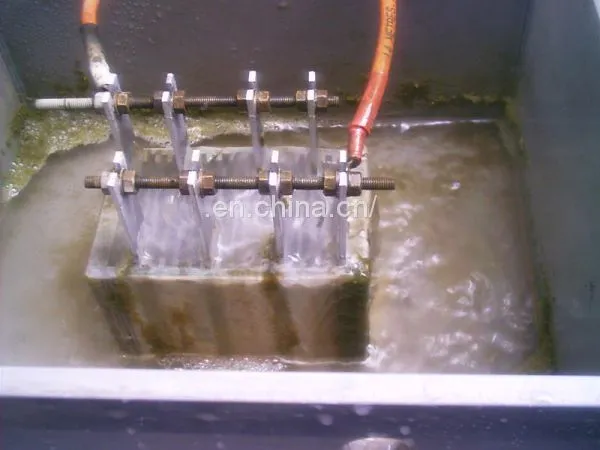
Electrocoagulation (EC) uses a direct current to dissolve a parallel electrode unit and thereby introduces metal ions with a positive charge into the wastewater stream (fig 1). These ions are attracted to the very fine negatively charged droplets and particles of the contaminants. Repelling forces between the droplets and particles are broken and the dispersed particles combine into larger separable aggregates. The resulting agglomerations increase in size until they are no longer stable in an aqueous medium. Once destabilized, positively charged ions react with negatively charged particles in the water resulting in floc that approach a highly stable state. The flocs either sink or float, depending on the characteristics of the waste stream (fig 2). Simultaneously, gases formed by electroanalysis form very fine bubbles that associate with the coagulated contaminants and buoy them up for removal by flotation. Because the floc is highly stable it can then be easily separated from the water by a number of conventional secondary separation techniques.
 fig1 fig2
In the electrocoagulation process, the electrical current is introduced into water via parallel plates constructed of various metals that are selected via different elimination to optimize the removal process. Several materials such as steel, aluminum, titanium and graphite are available for the reactor plates. Each material is specific to an application, although each can also treat a broad range within that application. Reactor design and plate selection are based on laboratory testing and our extensive experience with electrocoagulation.
Electrocoagulation operating effects are highly dependent on the chemistry of the aqueous medium, especially conductivity. Other influent characteristics such as pH, ionic charge, particle size, and chemical constituent concentrations will influence operating conditions. The flow rate of the aqueous medium through an electrocoagulation cell depends on the solution chemistry, the nature of the entrained suspension or emulsion, and the extent of electrocoagulation required to achieve the treatment objective. In addition, the treated effects of electrocoagulation also addresses the current and voltage.
Benefits
· Low Capital Costs
· Low Operating Costs
· Low power requirements
· Low maintenance
· Generally no chemical additions
· Small Space Requirements
· Easy operation and high automation degree
· Instantaneous Treatment
· Handles a wide variation in the waste stream and treats multiple contaminants
· Residual concentrations in effluent are far lower than most chemical processes
· Sludge minimization
· Sludge Stabilization
· Consistent and reliable results
· Comply with current and future regulations
· Wide pH range acceptance minimizes need for adjustment
· Greater potential for water reuse resulting in zero discharge
Basal Applications
·
Removal of radioactive species, especially in uranium, radium, plutonium
· Removal of algae
· Pretreatment for reverse osmosis, ultrafiltration, nanofiltration, etc.
· Removal of complex organics, especially in fats, grease, fibre, emulsified oils and PAHs
· Removal of pesticide
· Treatment of cooling towers water
· Removal of suspended and colloidal solids
· Process of multiple contaminants
· Process of marine bilge waters
· Process of landfill waters
· Sludge Dewatering
· Regeneration of antifreeze
· Process of commercial laundries waters
· Process of parking lots waters
· Process of steam cleaners waters
· Removal of negatively charged salts such as nitrate, phosphate, fluorides, cyanide, arsenide, molybdenum, sulphide, chromate, silicate and so on
· Removal of positively charged heavy metals such as copper, cadmium, nickel, lead, antimony, zinc, Chrome and so on
Model :
Model |
Flow rate |
Input |
Output max |
Output max |
Size(mm) |
CIF price(USD) |
EC-1 |
0-100LPH |
220V |
100V |
10A |
400×200×600 |
2500 |
EC-10 |
0-500LPH |
220V |
110V |
20A |
662×875×1100 |
5500 |
EC-20 |
100-1000LPH |
220V |
110V |
30A |
700×910×1300 |
6500 |
EC-30 |
500-2000LPH |
220/380V |
110V |
50A |
905×1020×1500 |
7500 |
EC-50 |
1500-3000LPH |
380V |
110V |
80A |
1100×1000×1600 |
95000 |
EC-60 |
2000-4000LPH |
380V |
110V |
100A |
1100×1000×1600 |
14500 |
EC-80 |
3000-5000LPH |
380V |
110V |
120A |
1200×1200×1800 |
17000 |
EC-100 |
5000-8000LPH |
380V |
100V |
150A |
1200×1400×1800 |
24000 |
EC-150 |
8000-15000LPH |
380V |
100V |
200A |
1200×1600×1800 |
29000 |
EC-200 |
15000-20000LPH |
380V |
100V |
250A |
2000×1600×1800 |
33000 |

Send Inquiry to This Supplier

You May Also Like
-
Most Stable 30.56Mhz High Frequency Electrocoagulator for Treating Spid, ElectrocoagulatorUS$ 990 - 2,000MOQ: 1 Set
-
Dropshipping Skin Whitening Electrocoagulator MachineUS$ 1 - 55MOQ: 1 Piece
-
Powerful 3 in 1 Multi-function Machine Movable Screen 10HZ Electrocoagulation Hair RemovalUS$ 1 - 8,500MOQ: 1 Unit
-
Electrocoagulation PlantUS$ 2200 - 25000MOQ: 1 Set
-
Good Treatment Machine Electrocoagulation With Wholesale PriceUS$ 1 - 5,000MOQ: 1 Set
-
Promotion! High Frequency Electrocoagulator for Treating Spider VeinsNegotiableMOQ: 1 Set
-
Electrocoagulation Wastewater Treatment Volute Dewatering MachineUS$ 10,000 - 53,000MOQ: 1 Set
-
FM-900E Best-selling Medical Electrocoagulators for ClinicNegotiableMOQ: 1 Unit
-
China Quality Factory Price CE Certificate Electrocoagulation InstrumentsUS$ 1 - 99MOQ: 1 Piece
-
High Corrosion Resistance Electrocoagulation Wastewater Treatment With Low Maintenance CostUS$ 5,000 - 50,000MOQ: 1 Unit


