








 Contact Platform Support
 Help Center
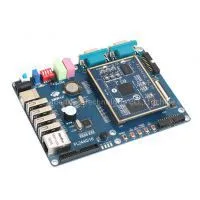
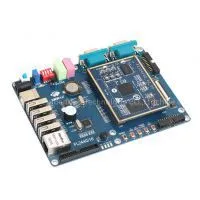
ARM9 FL2416 Single Board Computer/development Board/embedded Board With 64M DDRII, 256M SLC NANDFLASH



Related Products
-
 Cortex-A8 OK335xD Single Board Computer 512M RAM 256M NANDFLASHUS$ 139 - 139MOQ: 1 Piece
 -
Cortex-A8 OK210 Single Board Computer 512M RAM 512M NANDFLASHUS$ 139 - 139MOQ: 1
-
ARM11 OK6410-A Development Board/embedded Board 256M, 1G NANDFLASHUS$ 109 - 109MOQ: 1 Kilogram
-
ARM11 OK6410-B Embedded Board/evaluation Board/single Board Computer With 256M 1G NANDFLASHUS$ 109 - 109MOQ: 1 Set
-
1756-OF8I Allen-Bradley ControlLogix Analog Output ModuleNegotiableMOQ: 1 Piece
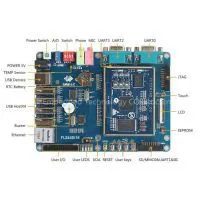
FL2416 is the successor of FL2440. There are more interfaces, more drivers, more functions with more reliable chips and other components. It is almost completely compatible with all that of FL2440’s modules and software functions.
First choice for ARM9 user
Perfect successor of OK2440
Samsung S3C2416 processor based on ARM9 architecture, main frequency: 400 MHz
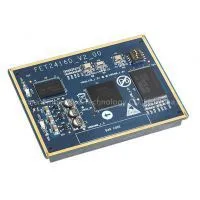
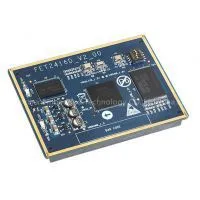
FET 2416 CPU module integrates all 2416 chip function
8-layer PCB stepped construction, immersion gold process design
More stable and reliable
EMC, temperature, vibration and aging tests make it more stable and reliable
Multiple modules to satisfy your demands
The richest software resources and system compatibility
Support Linux and WinCE
Most testing program source code are open to users
CPU Module Features
CPU: Samsung S3C2416X processor, ARM926EJ kernel, 65nm CMOS, main frequency up to 400MHz
RAM: 64M Byte DDRⅡ
Flash: 256M Byte SLC NandFlash
Operating Temperature: -10℃ ~ +70℃
Dimension: 730mm×548mm
Voltage: 5V
Storage Temperature: -40℃ ~ +85℃
Humidity: 10%~95%
OS Compatibility: WinCE6.0, Linux 3.1.8
EINT/GPIO: 16x EINT ; GPIO up to 100
LCD: RGB 24-bit
EBI BUS: 16x EBI BUS
Audio: 1x AC97/IIS/PCM(multiplexing)
IIC: 1x IIC
SPI: 1x SPI
UART: 4x UART(three 3-line, one 5-line) or 3x UART( one 3-line, two 5-line)
USB HOST: 1x USB HOST 1.1
USB Device: 1x USB Device 2.0
SD/MMC: 2x SD/MMC
AD: 10x 12 byte AD, including 4-channel resistive touch interface
2D/3D: Support 2D graphic acceleration
PWM: 4x PWM
RTC: 1x RTC
Boot: 7 pins
JTAG: 1x JTAG
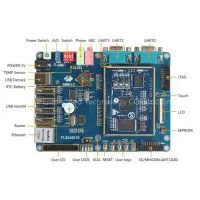
Base Board Features
LCD: RGB 24-bit
10x A/D
1x IIC
1x SPI
4x UART( three 3-line, one 5-line) or 3x UART(one 3-line, two 5-line)
USB HOST
4x USB HOST
1x USB Device
2x SD/MMC
1x 10/100M adaptable Ethernet interface
1x JTAG
4x keyboard
16x EINT
Support SD card and NAND booting
Audio: IIS interface
4x LED
Temperature Sensor:18B20
IRDA: HS0038B
1x reset
Power switch
One power supply interface
1x Buzzer
Dimension:144mm×105mm
1x CR1220 button battery to keep the time on when power off
OS Linux
Cross-compiler: arm-linux-gcc-4.2.2
Flashing Method
1. Flash image file to NandFlash via USB(could be used to flash certain files, easy to debug)
2. Flash image file to NandFlash via SD card(simple and swift, appropriate for mass production and system-updating in bulk);
3. Fully upport flashing under Windows XP
U-boot
U-Boot-1.3.4
Nand boot
Support USB OTG2.0 download
Support command line flashing of uboot.bin, kernel zImage and file system yaffs2
mmc.bin
Support SD card offline flashing
Support flashing Linux via SD card
Support USB OTG2.0 flashing Uboot, kernel and file system
Linux Kernel
Version: Linux-3.1.8
Support file system YAFFS2
Watchdog driver
RTC driver
4x LED driver
4x user button driver
PWM control buzzer driver
ADC driver
Touch screen controller driver in CPU
LCD driver ( 4.3", 5.6", 7", 8", 10.4")
USB Host driver, support U-disk, bluetooth, USB WiFi, USB 3G and other USB devices
USB mouse and keyboard
USB camera
SD card driver
3G driver
Support GPS with interface driver
LCD to VGA driver
Serial port driver
USB WiFi driver
Audio driver (UDA1341)
Ethernet (DM9000)
USB to serial port driver
Infrared receiver driver
Temperature sensor driver
File System: busybox-1.13.3
Command Line Testing Program
ADC convert testing procedure
Keyboard testing program
LED testing program
IIC testing program
SPI testing program
Watchdog testing program
PWM control buzzer testing program
Graphic Display
Resolution: 480*272, 640*480, 800*480, 800*600 pixels
Graphic System
Qtopia- 2.2.0: classic embedded graphic interface system. Under Linux, it will automatically run. Both screen touch and USB mouse are available with it while the former is the default one.
Support screen touch and USB mouse
Qtopia2.2.0 is optional.
Graphic Application Testing Programs
Qtopia2.2.0 is default, including Forlinx application testing programs, whose source codes are open and just for your reference. The program list is as follows:
LED test: to test whether LED blinks or not as required
Buzzer test: to test whether PWM could control buzzer by changing the PWM frequency
ADC test: to test whether values shown on interface changes with rotating it.
3G dial-up: support WCDMA, CDMA2000 and TD-SCDMA. After dialling up, we could surf the Internet through browser.
WiFi: USB WiFi is acceptable. DHCP could be used to allocate IP, gateway and DNS. After connection, Internet surfing is available.
Picture viewer
Media player
Calendar, clock, calculator and IE browser
File management
Terminal
Multiple games

Send Inquiry to This Supplier

You May Also Like
-
General-purpose Integrated CircuitNegotiableMOQ: 2700 Pieces
-
New Original Imported Genuine Products UPD780226GF-018-3B9 D780226GF Automotive Computer Board ChipUS$ 48 - 68MOQ: 100 Units
-
Latest Electronic Components GEC034US$ 0.5 - 0.8MOQ: 1000 Pieces
-
A76L-0300-0035/TNegotiableMOQ: 10 Pieces
-
Mobile Phone IC Components SpreadtrumNegotiableMOQ: 50000 Units
-
Taiwan All Kinds Of Device For The Bathroom Home SupplyUS$ 0.7 - 1MOQ: 1000 Pieces
-
Best Price Wireless Bluetooth ModuleUS$ 4 - 6MOQ: 2000 Pieces
-
OP277-6 OP227 6AV6643-0BA01-1AX KeypadNegotiableMOQ: 1 Piece
-
AKE390B Industrial 3 Axes Analog Vibration Sensor With Over Current Protection From Reliable Shenzhen SupplierNegotiableMOQ: 1 Set
-
Original Manufacturer Long Range 13.56MHz Rfid Reader/writer Module Microchip ReaderUS$ 10 - 30MOQ: 1 Piece


