








 Contact Platform Support
 Help Center
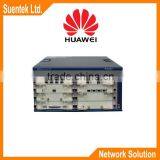
HUAWEI NetEngine 20E/20 Series Multi-service Router NE20-8


Related Products
-
 HUAWEI NetEngine 20E/20 Series Multi-service Router NE20-4NegotiableMOQ: 1 Set
 -
Huawei AR120 Series Enterprise Routers AR121NegotiableMOQ: 1 Piece
-
Huawei AR120 Series Enterprise Routers AR129NegotiableMOQ: 1 Piece
-
Huawei AR150 Series 802.11b/g/n Enterprise Routers AR151NegotiableMOQ: 1 Piece
-
Huawei AR150 Series Enterprise Routers AR151G-HSPA+7NegotiableMOQ: 1 Piece
Overview
The HUAWEI® NetEngine 20E/20 series multi-service router (abbreviated as NE20E/NE20) is among Huawei's 5th generation routers and adopts centralized forwarding design. The NE20E/NE20 router can be deployed at the edge of carriers' IP networks, or at the core and the convergence layers of various business and enterprise networks. The NE20E/NE20 series router includes four models: NE20-8, NE20-4, NE20-2 and NE20E-8.
The NE20E-8 is an enhancement of the NE20. It adopts the bus technique of the Huawei core routers, has a backplane capacity of 40G, and boasts of better scalability.
Features
High Forwarding Performance
As a member of Huawei's 5th generation router family, the NE20E/NE20 adopted Network Processor (NP) technology, taking advantages of both ASIC and CPU. So it features hardware-based high performance (4.5 Mpps) and software-based high flexibility. The NE20E/NE20 router can support fast packet-forwarding on all kinds of interfaces, including the packet with QoS and security information.
Supporting IPv4 and IPv6 Protocol Stacks
The NE20E/NE20 supports IPv4 and IPv6 protocol stacks.
The NE20E/NE20 also supports IPv4-to-IPv6 transition technologies such as manually configured tunnel, automatically configured tunnel, 6to4 tunnel, Network Address Translation-Protocol Translation (NAT-PT), and IPv6 Provider Edge (6PE).
Abundant Services
Supports L2TP-based layer 2 tunnel and GRE-based layer 3 tunnel. Provides a complete suit of network security schemes, such as access control, connectionless integrality and data source authentication, encryption as well as traffic classification, combined with IPSec technologies.
Provides powerful MPLS VPN functions, such as L2/L3 MPLS VPN, traditional L2 VPN, transparently transmitting L2 data of users on MPLS networks, and PE hierarchical architecture (Hierarchy of PE, HoPE).
Supports standard Differentiated Service (Diff-Serv) consisting of complex traffic classification, Traffic Policing (TP), Traffic Shaping (TS), congestion management (PQ/CQ/WFQ/CBQ) and congestion avoidance (WRED), accurately assures the bandwidth and delay for various services. Supports advanced congestion control algorithms such as SARED.
Provides authentication, authorization and accounting (AAA) such as RADIUS and HWTACACS. Supports data transmission using plain-text and Message-Digest Algorithm 5 (MD5) methods. Supports packet filtering (interface-based ACL and ACL based on time range).
Supports NAT.
Carrier-class Reliability
Adopts dual-power redundancy (1+1 backup) module, supports AC-input or DC-input power supplies as well as hot swap. All service interface cards as well as the fan support hot swap. The fan can automatically adjust its speed according to the environment condition.
Provides Backup Center function and Virtual Router Redundancy Protocol (VRRP) technologies to assure unblocked data communication by providing a backup scheme in the event of faults occurring to communication lines or devices, effectively enhancing the network robustness and reliability. The Backup Center supports the backup load balancing function.
Convenient Maintenance Management
Supports local or remote maintenance via Console port, AUX dial-in and Telnet as well as Secure Shell (SSH), preventing attacks such as IP spoofing and plain-text password intercept.
Supports SNMP (V1/V2c/V3) and Client/Server architecture, and can be managed by Network Management System -- iManager N2000.
Supports the automatic fault diagnosis function, which assists the maintenance engineer in locating the system-level fault quickly and accurately via the fault diagnosis software.
| Attribute | NE20-8 |
| Bus bandwidth | 8G |
| Throughput | 4.5Mpps |
| Number of Slots | 10 slots |
| Weight in full configuration | 27.5kg |
| Rated power | 320W |
| Dimension (W×D×H) | 436.2mm x 420 mm x 219.5mm |
| Command line interface | Performs local configuration through the console port Performs local configuration or remote configuration through the Aux port Performs local configuration or remote configuration through Telnet Performs local configuration or remote configuration through SSH login Command hierarchical protection to ensure the unauthorized users cannot access the router Detailed debugging information helps to diagnose network faults. Provides network test tools such as TRACERT and PING commands to quickly diagnose whether the network is normal Uses the Telnet command to log in to and manage other routers FTP Server/ Client: Uses FTP to download and upload configuration files and application programs TFTP Client: Uses TFTP Client to download and upload configuration files and application programs Uses Xmodem protocol to download configuration files and application programs locally Supports log Virtual file system User-interface configuration. Provides multiple modes of authentication and authorization for login users |
| IPv4 | Static route management Dynamic unicast routing protocols: RIP-1/RIP-2 OSPF IS-IS BGP-4/MBGP/BGP VPN V4 Routing policies |
| IPv6 | IPv4-to-IPv6 transition technologies: manual configuration of the tunnel, automatic configuration of the tunnel, 6 to 4 tunnel, NAT-PT on the hardware. IPv6 static route, BGP4/BGP4+, RIPng, OSPFv3, and ISISv6 dynamic routing protocol IPv6 MIB: ICMPv6 MIB, UDP6 MIB, TCP6 MIB, and IPv6 MIB |
| Maintainability | Automatic fault diagnosis function Remote configuration and maintenance through AUX |
| Device reliability |
GR Protocol-level GR: IS-IS, OSPF, BGP and LDP Other features Backup Center VRRP |
| QoS |
Traffic classification Simple traffic classification Complex traffic classification, based on port number, layer 2, layer 3 and layer 4 packet information Traffic policing and shaping Supports traffic policing and shaping based on srTCM and trTCM Supports EF and AF services based on Diff-Serv GTS Congestion management LLS, LLQ, NLS, PQ, CQ, WFQ, and CBWFQ Congestion avoidance RED, WRED and SARED Policy-based routing Route re-direction, and distribution of LSP explicit route of MPLS MPLS QoS Mapping between DSCP and EXP at the domain boundary L2 QoS 802.1p mark and DSCP/IP Precedence mark |
| Safety compliance | Passed the safety certifications, such as CE, UL and TUV |
| Security |
AAA service CHAP authentication PAP authentication RADIUS HWTACACS Local user management NAT Pure IP address translation, and simultaneous translation of IP address and port number Load balancing between multiple public network egresses Internal servers Hybrid addressing of internal networks Various NAT ALGs Supports a public network to multiple private networks, and a private network to multiple public networks Traffic limit and rate limit to specific users Traffic limit to BT NAT statistics NAT log Other security features Terminal access security Packet filtering (interface based ACL and time-range based ACL) Firewall (packet filtering firewall and state firewall) Port mirroring NetStream Unicast Reverse Path Forwarding (uRPF) Hierarchical protection of commands to ensure that the unauthorized users have no access to the router |
| Operating temperat-ure | Normal: 0°C to 45°C Short-term -5°C to 55°C |

Send Inquiry to This Supplier

You May Also Like
-
ALLINGE MDZ3233 WE1626 Router Support USB Modem With 4 External Antennas 802.11g 300Mbps Openwrt Wireless WiFi RouterNegotiableMOQ: 1
-
Huawei CR5D0L5XFA70 03030PMC P51-5x10GBase LAN/WAN-SFP+-A LPUF-51 5-Port 10GBase LAN/WAN-SFP+ P51-A for Huawei NE40E NE80EUS$ 1 - 50MOQ: 1 Piece
-
Network Hardware Platforms Appliance With Motherboard Based on a Range of Processors From Intel® Atom™, Intel® Core™, Xeon for Your ProjectNegotiableMOQ: 1 Piece
-
Industrial 5-port 4G Card Router, Industrial Wifi Module, Video Surveillance Electric Pile CPE Internet Access MR500UNegotiableMOQ: 1 Combo
-
ISR4321/K9 ISR 4321. (2GE,2NIM,4G FLASH,4G DRAM,IPB). New Sealed Cissco RouterNegotiableMOQ: 1 Piece
-
Main Treatment Board 02353354 03050AXP ES0Z1B06ACS0 03050DEP ME0D0SRUAH70 IG2D0SRUAD02NegotiableMOQ: 1 Piece
-
Plery R602 2.4GHz 300Mbps Unlocked 4G Wifi Hotspot Routers Wifi6 Internet SIM Card Router for RuralUS$ 13.9 - 19.9MOQ: 5 Pieces
-
SA NSA Waterproof IP 65 Outdoor 5g RouterUS$ 220 - 260MOQ: 1 Piece
-
NetPower 16P CRS318-16P-2S+OUT Outdoor SwitchNegotiableMOQ: 1 Piece
-
MT7628 Industry Wireless Sim Card Routers 150Mbps Cat4 4G LTE CPE 2.4Ghz Wifi 1 Wan 1 Lan 2Port Mini 3G 4G Industrial M2M RouterUS$ 55 - 60MOQ: 1 Piece


