








 Contact Platform Support
 Help Center
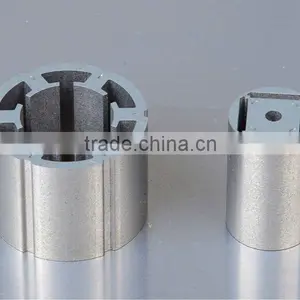
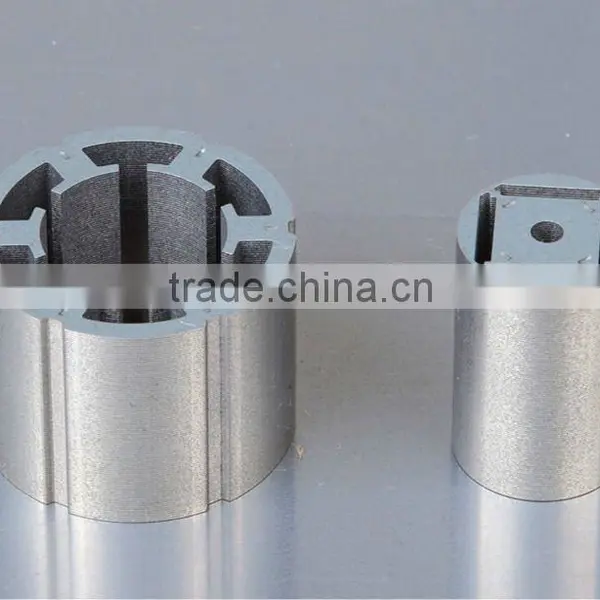
Motor Rotor and Stator Lamination Core in the Stamping Die


Related Products
-
 Manufacturing Rotor and Stator Lamination Core in the Stamping DieUS$ 0.89 - 1.98MOQ: 5000 Sets
 -
Manufacturing Rotor and Stator Lamination in the Stamping DieUS$ 0.89 - 1.98MOQ: 5000 Sets
-
Motor Lamination Core Products Stamping Die ToolUS$ 1,000 - 20,000MOQ: 1 Set
-
Metal Hardware Parts Air Condition Bracket Stamping Parts Deep Drawing PartsUS$ 0.1 - 10MOQ: 1000 Sets
-
Aluminum Die Casting ProductUS$ 1 - 10MOQ: 5000 Sets
Design strategy
Design strategy based on mechanistic understanding of how
materials & process interactions affect product performance
Product quality & performance ensured by design & operation
of effective & efficient processes
Flawless execution:
Accelerate time to market
Less trial and error
Improve efficiency
Successful companies deliver
innovative products first and
profitably
Producing finished stacks of rotor and stator laminations in the die has many advantages to the manufacturers of electric motors, particularly the elimination of downstream manual or mechanical assembly operations such as riveting or welding. Staking in the die also can produce stacks of more uniform height.
A die capable of staking laminations together requires a specially designed die cavity and special staking punches. The staking punches create protrusions that cause the individual laminations to stick together as they become a stack in the die cavity. Whether as many as four or more staking punches should be used depends on the size and design of the rotoror stator part.
Rotation is not necessarily confined to rotors. If a stator is perfectly symmetrical, it also may be rotated in a staking die cavity. In addition, when motor manufacturers require loose rotor laminations, the laminations may be rotated without being staked together and loaded into stacking chutes. When these loose laminations finally are assembled, they will also exhibit improved perpendicularity and balance.
Many motor designs incorporate a skew angle in the rotor assembly to improve motor performance. In Oberg-produced dies that contain the rotating skewing cavity, the skew angle to the rotor stack is quickly set by entering the desired skew angle into the control system. Skew angles may be set in addition to the rotation or by themselves without any other rotation in the lamination.
The Rotor is the rotating part of the generator. As it rotates within the stator, a vortex is created, which sucks the product to be processed into the generator or working zone. In this process, the product is accelerated axially and pushed to the outside through the tooth apertures of the stator by centrifugal force. The Rotor is the rotating part of the generator. As it rotates within the stator, a vortex is created, which sucks the product to be processed into the generator or working zone. In this process, the product is accelerated axially and pushed to the outside through the tooth apertures of the stator by centrifugal force.

Send Inquiry to This Supplier
You May Also Like
-
Vigorun Tech VTC550 Gasoline Grass Trimmer High-Speed 4KM/H Four-Stroke Robot Cortador De Pasto Working Degree 35°US$ 1600.00 - 1690.00MOQ: 1 Set
-
Drum Weigh/Inspenction/IsolationNegotiableMOQ: 1 Set
-
Engine Driven Brick Making Machine Small Hollow Brick Making Machine Clay Brick Making MachineUS$ 355.00MOQ: 1 Ton
-
Tu0 C1011 C10100 C110 Pure Copper Bar Customized Industrial Seamless Good QualityNegotiableMOQ: 1 Ton
-
Basement Dehumidifier System Precision 20l HumidityUS$ 1 - 10000MOQ: 1 Piece
-
Cremation Machine for Australia Market no Smell Human Crematory Machine Automatic Loading Conveyor Cremation EquipmentNegotiableMOQ: 1 Set
-
Metal Processing Machinery PartsNegotiableMOQ: 2600 Sets
-
Customizable Metal Shredders; Shredding Equipment With Adjustable Capacity and Discharge SpecificationsUS$ 6531MOQ: 1 Set
-
PLC Intelligent Large Caliber Kraft Paper Core Fabrication LineUS$ 5000 - 30000MOQ: 1 Set
-
Hardened Steel CNC Machined Components for Heavy-Duty Machinery ApplicationsNegotiableMOQ: 500 Pieces


