








 Contact Platform Support
 Help Center
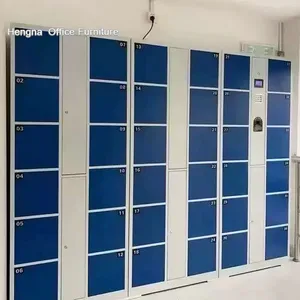
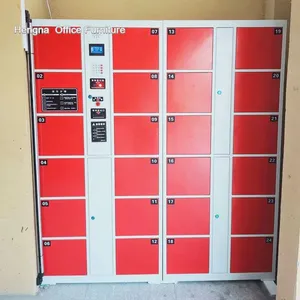
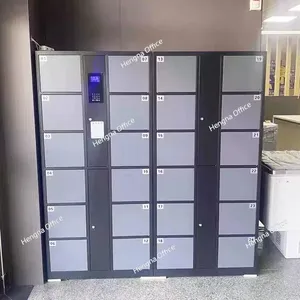
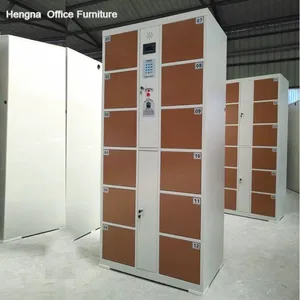
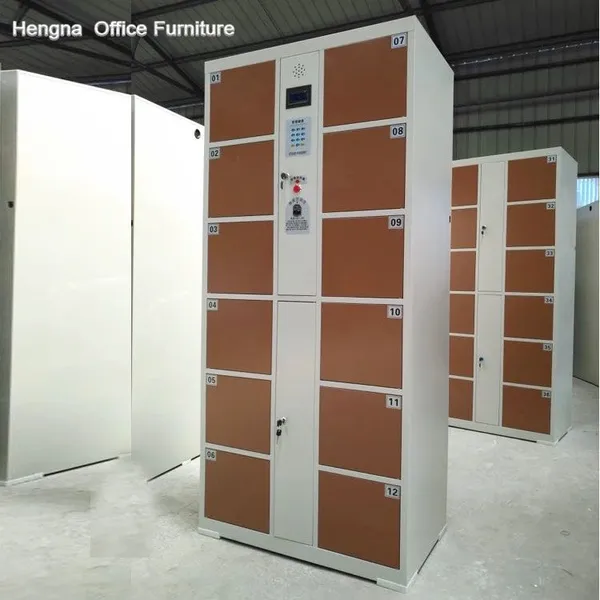
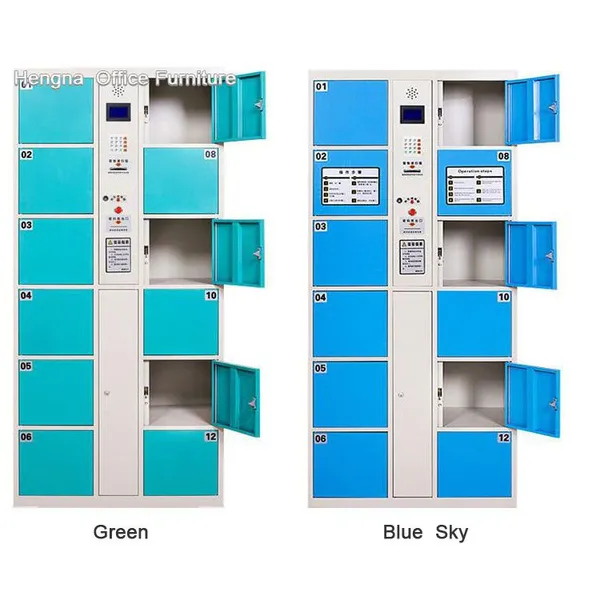
Supermarket Smart Locker 12-36 Doors – Barcode or Face Access | Built for Rush Hour Crowds
Product Spotlights



Related Products
-
 Office Smart Locker, Staff & Visitors – Self-Coded Password, Voice Guidance | Self-ServeUS$ 99 - 699MOQ: 5 Combos
 -
Hospital Visitor Electronic Locker 12-Door Card Operated Steel Cabinet Secure Storage for Patient FamilyUS$ 100 - 700MOQ: 1 Piece
-
Commercial Smart Locker System for Shopping Malls – 12/24/36 Door Steel Storage Cabinet With Barcode Access | Bulk Order AvailableNegotiableMOQ: 1 Piece
-
12/24 Door Electronic Storage Locker With Barcode System – Steel Smart Locker for Shopping Mall & Supermarket Public UseUS$ 100 - 700MOQ: 3 Pieces
-
Suitable fo Mall & Supermarket Electronic Locker-24 Door Keypad Code Bag Storage LockerNegotiableMOQ: 1 Piece
Supermarket Smart Locker 12-36 Doors – Barcode or Face Access | Built for Rush Hour Crowds
Where the paper ticket goes to die
A shopping center in Kuala Lumpur ran a free bag-drop at the entrance — three banks of barcode lockers, thousands of shoppers a day. On paper, the system worked: take a ticket, store a bag, scan to leave. In practice, every weekend produced the same pile of casualties at the service counter: paper tickets folded into pockets until the barcode would not scan, tickets left in trousers that went into the wash, tickets soaked by rain between the car park and the door, and the classic — a ticket thrown away with the receipt.
Each casualty meant the same ritual: a shopper with no ticket, a queue behind them, a staff member with a master key opening the wrong locker twice, and an apology. The counter logged a dozen of these a day on weekends. The thermal printer jammed during exactly the hours the store was fullest.
The center replaced the banks with smart lockers that send the barcode to the shopper’s phone — an SMS code that lives where nobody loses it. Members who shop weekly enrolled their face once and stopped carrying anything at all. The weekend ticket graveyard at the service counter disappeared. So did the queue.
The lesson: in a high-traffic venue, the locker is the first and last thing every visitor touches — and it sets the tone for the whole visit.
Rush hour is three exams at once
A locker bank at a supermarket entrance faces a stress test no office installation ever sees. Three things hit at once:
The crowd surge — 40 shoppers arrive in the ten minutes after a promotion starts. Each needs a door open in seconds. Any friction multiplies by forty.
The credential chaos — first-timers, tourists, families sharing one phone, elderly shoppers who never enrolled anything. The system has to serve people who have never used it — in one gesture.
The capacity gamble — too few doors and the bank flashes FULL at 3 pm on a Saturday; too many and the entrance looks like a storage warehouse. Neither mistake is cheap.
A locker that survives rush hour answers all three: a credential flow fast enough for surges, simple enough for first-timers, and a capacity plan that scales.
The barcode moves to the phone
The difference between a paper ticket and an SMS barcode is the difference between a receipt and a record:
| Thermal paper ticket | SMS barcode | |
|---|---|---|
| Where it lives | Pocket, hand, bin | The shopper’s phone |
| Survives rain | No | Yes |
| Survives the wash | No | Yes |
| Shared by a family | No — one ticket, one user | Yes — one phone, four codes, four doors |
| Runs out | Paper rolls jam at peak | Never — no consumable, no printer to jam |
| Lost-ticket ritual | Service counter, master key, apology | None — the code is re-readable from the message thread |
The flow reads the same either way — store the bag, take the code, scan to leave — but the failure modes vanish. No paper to jam at the Saturday rush, no rolls to restock, no counter queue explaining that the ticket went through the wash.
For shoppers who prefer not to use a phone number, the same cabinet serves self-set passwords — store, punch in your own code, leave. Two credential paths, zero paper, one flow.
The face lane for returning shoppers
Weekly shoppers, staff, and members make up a large share of any mall’s traffic — and they are the easiest to serve: the face recognition model enrolls them once and opens their locker with a look. No card to issue, no code to type in front of a queue, nothing for a child to crumple.
The recognition module runs the check in seconds at the door panel — the shopper glances at the screen, the door pops, done. For operators, the face lane moves repeat visitors through the fastest path, leaving the SMS and password lanes for first-timers who need the guidance screen.
Sizing for the surge: 12, 36, and then a wall
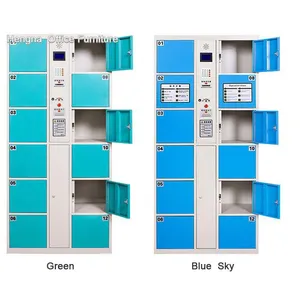
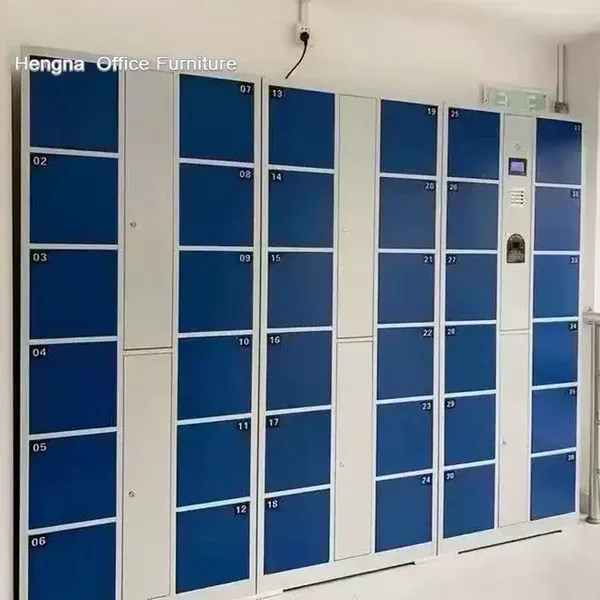
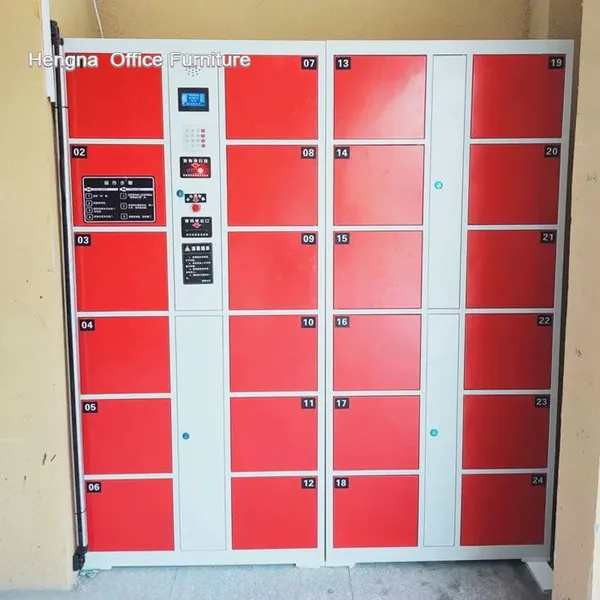
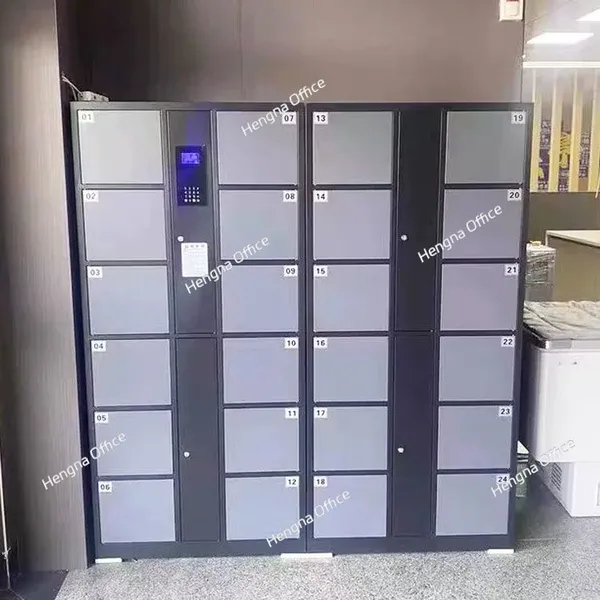
Capacity planning is where locker installations succeed or embarrass themselves. The cabinets come in 12, 24, and 36-door units, 1800mm tall, and they link side by side into rows:
12 doors — a side entrance, a pharmacy section, a small format store.
24 doors — the neighborhood supermarket default: one bank covers the entrance flow of a mid-size store.
36 doors — the hypermarket and mall anchor: three doors wide, one wall, built for promotion weekends.
Linked rows — banks connect into 72, 108, or more doors behind one installation, so capacity grows cabinet by cabinet as footfall grows.
The door opening fits handbags, backpacks, luggage trolley bags, and grocery totes. For venues with seasonal surges — Ramadan bazaars, holiday markets, back-to-school weeks — cabinets can be added for the season without changing the shopper flow.
Built for the lobby, not the office
The environment at a mall entrance is its own climate: doorways open to street heat and rain, cleaning crews run wet mops daily, and the bank runs every day of the year. The cabinets are cold-rolled steel with electrostatic powder coating that shrugs off the mops, the humidity, and the duffel-bag scrapes. Doors close on electromagnetic locks — no latch springs to fatigue under a hundred thousand open-close cycles — and every cabinet carries the emergency mechanical key override, so a power blink is a staff key turn, never a queue with a crowbar.
Who buys this locker
Supermarkets and hypermarkets — The primary buyer: bag-drop policies need a locker bank that survives weekend crowds without staff babysitting it.
Shopping malls — Central bag-drop zones near entrances and cinema levels, where visitors flow in from every direction.
Tourist attractions and theme parks — Seasonal surges, international visitors, and a service counter that cannot afford a lost-ticket ritual in four languages.
Train and metro stations — Commuters storing bags for the day, served by SMS codes that survive the round trip.
Exhibition centers — Rotating crowds every morning, one credential flow first-timers learn in seconds.
Factory-direct from Luoyang
This supermarket smart locker is made by a steel furniture factory in Luoyang, China — the center of China’s steel furniture industry — and shipped to retail operators and distributors worldwide: Factory-direct pricing with drawings and configuration lists in every quote. KD flat-pack shipping in carton plus wooden crate. OEM and ODM welcome — your door count, your color, your logo. Runs on 220V; other voltages available on request.
Whether you are upgrading a ticket-paper system or building out a new mall wing, the process is the same: send your entrance footprint and daily footfall, confirm the configuration, receive the container.
Questions retail operators ask
What happens when a shopper loses their phone code? The code stays in the message thread on their own phone — that is the difference from paper. If the phone itself is dead, staff opens the door with the emergency mechanical key after a simple identity check. The ritual shrinks from a counter queue to a thirty-second key turn.
Does the thermal printer problem disappear completely? Yes — the SMS model sends the barcode to the phone, so there is no paper roll to jam, restock, or fade. For the password lane there is nothing printed at all. The printer — the part that failed every Saturday — is gone from the process.
Is face recognition okay for family visitors? Children and adults both enroll easily, and anyone who prefers not to enroll simply uses the SMS or password lane. The three credentials run side by side, so no visitor is forced down any single path.
How many doors does our entrance need? Count your peak-hour entries, not your daily total. Then expand by linked cabinets as the data comes in. Send your footfall numbers and we will size the bank with you.
Can we start with 12 doors and grow? Yes — cabinets link side by side. Start with one bank where traffic is, add cabinets as weekends prove demand, and the shopper flow never changes.
The entrance that starts the visit right
A shopper’s visit begins at the locker bank and ends at it. Paper tickets turn that moment into a gamble — a strip of thermal paper asked to survive pockets, rain, and laundry. An SMS barcode lives where the shopper lives, the face lane clears the regulars in a glance, and the linked cabinets grow with the footfall instead of against it. Rush hour stops being the test the locker fails.
Send your entrance footprint, your peak footfall, and your port. We will confirm the configuration, the door mix, and the freight in one reply.

Send Inquiry to This Supplier


You May Also Like
-
Commercial Infrared Barcode Electronic Lockers |Gym Electronic 12 - Door Secure Digital LockerUS$ 300 - 550MOQ: 15 Pieces
-
Customized Oem Small Lockers Wholesale Factory|24-door Electronic Locker for SchoolUS$ 300 - 550MOQ: 15 Pieces
-
36-door Automatic Bag-Storage Cupboard QST-036 Electronic Lockers SuppliersUS$ 300 - 550MOQ: 15 Pieces
-
Face Recognition Smart Locker Price | 50-door Public Places Cell Phone Smart LockerUS$ 203 - 750MOQ: 15 Pieces
-
School Gym Lockers Price |Parcel Delivery Storage Locker 12-door FactoryUS$ 203 - 750MOQ: 15 Pieces
-
Smart Phone Charging Locker 40-door|Fingerprint Lockers Intelligent Parcel Delivery CabinetUS$ 203 - 750MOQ: 15 Pieces
-
QST-24 Barcode Controlled Storage Cabinet With Voice Guidance |Self-service Storage Locker for GymUS$ 300 - 880MOQ: 15 Pieces
-
JUNTUO-12 Self-Service Barcode Locker System for Supermarkets and Libraries With User-Friendly InterfaceUS$ 300 - 880MOQ: 15 Pieces
-
QSX-TMG 36-Door Barcode Smart Storage Locker With User-Friendly Interface |Designs for Small SpacesUS$ 300 - 880MOQ: 15 Pieces
-
Smart Barcode Storage Locker With Digital Keypad and LCD Display|Blue 24-door Barcode Depository LockerUS$ 300 - 800MOQ: 15 Pieces

