








 Contact Platform Support
 Help Center
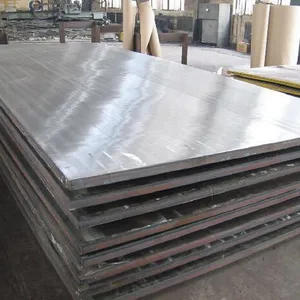
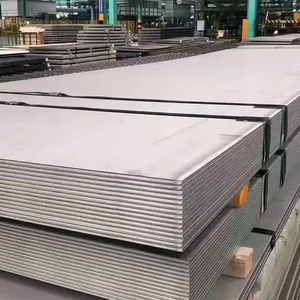
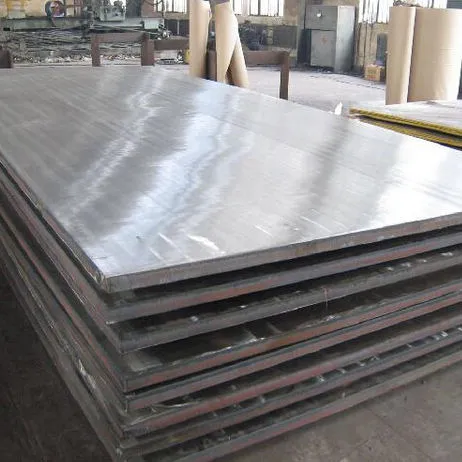
2205 Duplex Stainless Plate | 5mm | High Strength | ASTM A240
Product Spotlights



Related Products
-
 ASTM A240 304 Stainless Steel Sheet, 0.3-100mm Thickness, 4x8ftUS$ 1.75 - 2.55MOQ: 100 Kilograms
 -
Stainless Steel Sheet 304/316/321 ASTM A240 JIS G4305 Thickness 1-50mmUS$ 1.85 - 4.15MOQ: 100 Kilograms
-
316L Stainless Steel Sheet Corrosion-Resistant Plate 2-20mm for Industry UseUS$ 2.85 - 4.2MOQ: 100 Kilograms
-
304 Stainless Steel Sheet Mirror Finish 0.5-6mm DIN ASTM Standard PlateUS$ 1.85 - 2.55MOQ: 100 Kilograms
-
High-Strength Stainless Steel Plate 310S 1-25mm for Heat-Resistant ApplicationsUS$ 5.75 - 7.15MOQ: 100 Kilograms
2205 Duplex Stainless Steel Plate
ASTM A240 UNS S32205/S31803 | EN 10028-7 1.4462 | JIS G4304 SUS329J3L
1. Product Overview
2205 duplex stainless steel plate is a nitrogen-enhanced, chromium-molybdenum-nickel alloy with a dual-phase austenitic-ferritic microstructure, typically balanced at approximately 50% austenite and 50% ferrite. This microstructure gives the grade a combination of properties not available in either single-phase austenitic (304/316L) or ferritic stainless steels: yield strength roughly double that of 316L, and resistance to chloride-induced pitting, crevice corrosion, and stress corrosion cracking (SCC) that exceeds standard austenitic grades.
The grade is produced to internationally recognized specifications, including ASTM A240/A240M and ASME SA240 (UNS S32205 / S31803), EN 10028-7 and EN 10088-2 (steel number 1.4462), and JIS G4304/G4305 (SUS329J3L). It is also widely referenced under the trade designations 2205, SAF 2205, and UR 2205.
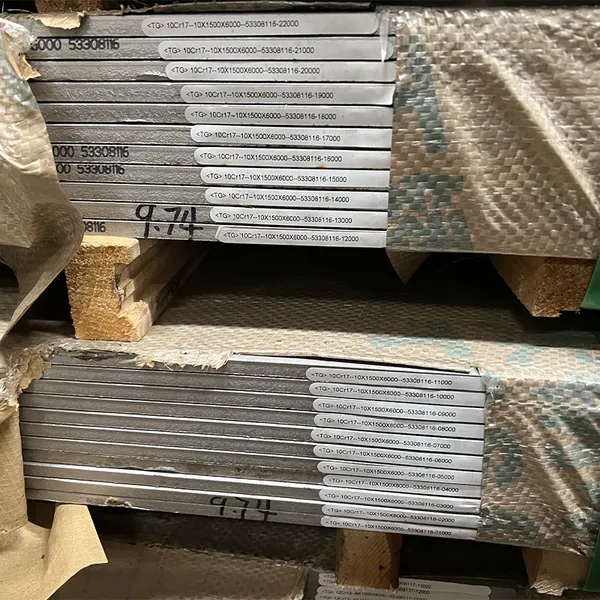
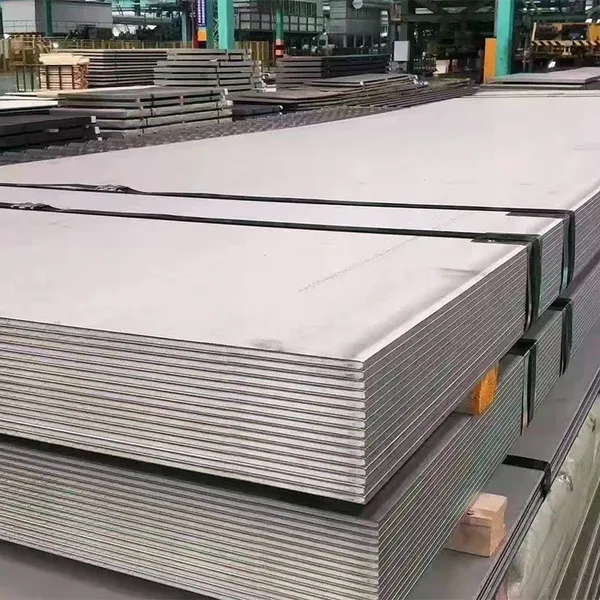
Standard supply covers hot-rolled plate from 3 mm to 100 mm in thickness, with widths up to 2,000-2,500 mm and lengths up to 6,000-12,000 mm. Custom cutting, slitting, and shearing to buyer-specified dimensions is available for both stock and mill-direct orders.
Item |
Specification |
UNS No. |
S32205 / S31803 |
EN No. |
1.4462 |
JIS Grade |
SUS329J3L |
Applicable Standard |
ASTM A240/A240M, ASME SA240, EN 10028-7, EN 10088-2, JIS G4304 |
Thickness Range |
3 mm - 100 mm |
Width Range |
1,000 mm - 2,500 mm |
Length Range |
2,000 mm - 12,000 mm |
Delivery Condition |
Hot-rolled, annealed and pickled (Solution Annealed) |
2. Chemical Composition
Chemical composition is controlled to ASTM A240/A240M limits. The elevated chromium, molybdenum, and nitrogen content produce a Pitting Resistance Equivalent Number (PREN = %Cr + 3.3 x %Mo + 16 x %N) of 35 or higher, placing 2205 firmly in the standard duplex category, above 316L (PREN approximately 24) and below super duplex grades such as 2507 (PREN approximately 42).
Element |
Min (%) |
Max (%) |
Carbon (C) |
- |
0.030 |
Chromium (Cr) |
22.00 |
23.00 |
Nickel (Ni) |
4.50 |
6.50 |
Molybdenum (Mo) |
3.00 |
3.50 |
Manganese (Mn) |
- |
2.00 |
Silicon (Si) |
- |
1.00 |
Phosphorus (P) |
- |
0.030 |
Sulfur (S) |
- |
0.020 |
Nitrogen (N) |
0.14 |
0.20 |
Iron (Fe) |
Balance |
Balance |
PREN ≥ 35 (calculated from mid-range Cr, Mo and N values) supports a critical pitting temperature (CPT) typically at or above 25°C in ASTM G48 Method A ferric chloride testing, and resistance to chloride stress corrosion cracking in environments where austenitic grades are prone to failure.
3. Mechanical & Physical Properties
Mechanical properties are verified by tensile, hardness, and impact testing on each heat/lot in accordance with ASTM A370. Typical minimum requirements per ASTM A240 for solution-annealed plate are summarized below.
Property |
Value |
Test Standard |
Tensile Strength (Rm) |
≥ 620 MPa (90 ksi) |
ASTM A370 |
Yield Strength 0.2% (Rp0.2) |
≥ 450 MPa (65 ksi) |
ASTM A370 |
Elongation (A, 50 mm gauge) |
≥ 25% |
ASTM A370 |
Hardness |
≤ 293 HB / ≤ 31 HRC |
ASTM E10 / E18 |
Impact Energy (Charpy V, -50°C) |
≥ 60 J (typical) |
ASTM A370 |
Density |
7.80 g/cm³ |
- |
Thermal Conductivity (100°C) |
19 W/m·K |
- |
Coefficient of Thermal Expansion (0-100°C) |
13.7 x10⁻⁶ /°C |
- |
Modulus of Elasticity |
200 GPa |
- |
The near-doubled yield strength compared to 316L (typically ≥ 205 MPa) allows for thinner plate sections in pressure-retaining and structural applications, reducing material weight and, in many cases, total installed cost despite a higher per-kilogram alloy price.
4. Surface Finish Options
2205 duplex plate is most commonly supplied in mill (hot-rolled) finishes for structural, pressure vessel, and piping applications. Cold-rolled finishes are available for thinner gauge sheet/coil-derived plate on request.
Finish |
Description |
Typical Ra |
No.1 |
Hot-rolled, solution annealed, pickled - standard mill finish for plate |
N/A (matte, non-reflective) |
2B |
Cold-rolled, annealed, pickled, skin-passed - smooth, semi-reflective |
≤ 0.5 μm |
2D |
Cold-rolled, annealed, pickled - dull, non-reflective |
≤ 1.0 μm |
No.4 |
Brushed/satin, unidirectional grain |
0.3 - 0.6 μm |
Note: as with austenitic sheet products, a 2B or bright-annealed (BA) finish is not equivalent to a polished mirror finish; mirror-grade surfaces require additional mechanical polishing beyond the standard annealing/pickling line and are typically reserved for architectural or sanitary applications outside the primary use range of this grade.
5. Key Features and Technical Advantages
• PREN ≥ 35: chromium, molybdenum, and nitrogen combine to resist pitting and crevice corrosion in chloride-bearing water, brine, and seawater.
• Chloride stress corrosion cracking (SCC) resistance substantially higher than 304/316L, suited to hot chloride environments where austenitic grades commonly fail.
• Yield strength ≥ 450 MPa - approximately double 316L - permits thinner, lighter-weight plate for the same design pressure or load.
• Higher thermal conductivity than austenitic grades reduces distortion and required heat input during welding and fabrication.
• Good weldability using GTAW, SMAW, and SAW processes with matching filler metals (ER2209 / E2209) that preserve phase balance in the weld and heat-affected zone.
• Lower nickel content than 316L (4.5-6.5% vs. 10-14%) provides more stable raw-material pricing relative to nickel-market volatility.
• Sour service capability: meets hardness and metallurgical requirements of NACE MR0175/ISO 15156 for H2S-containing oil and gas environments, subject to order-specific qualification.
6. Application Industries
The corrosion resistance-to-strength ratio of 2205 duplex plate makes it the standard mid-range duplex grade across industries handling chloride-bearing process fluids, seawater, or sour hydrocarbons.
Industry |
Typical Components |
Oil & Gas (onshore/offshore) |
Separator vessels, subsea manifolds, flowlines, sour-service pressure vessels |
Desalination & Water Treatment |
MSF/MED/RO plant piping, evaporator components, seawater intake structures |
Chemical & Petrochemical Processing |
Storage tanks, heat exchangers, reactors handling chlorides, acids, and mixed acids |
Pulp & Paper |
Digesters, bleach plant washers, black liquor evaporators |
Marine & Shipbuilding |
Cargo tanks, ballast systems, hulls of chemical tankers |
Power Generation |
Flue gas desulfurization (FGD) absorber components, condenser water boxes |
7. Value-Added Processing Services
Plate is supplied mill-direct or with the following in-house or coordinated processing, reducing downstream fabrication lead time for the buyer:
• Cut-to-size: CNC laser, plasma, and waterjet cutting to drawing or DXF file.
• Plate rolling and cone/dish forming for pressure vessel heads and shells.
• CNC machining, drilling, and beveling (single-V, double-V, J-prep) for weld joint preparation.
• Solution annealing and water quenching (typical range 1,020-1,100°C) to restore phase balance after forming or welding, per ASTM A480 requirements.
• Third-party dimensional and NDT inspection coordination prior to shipment.
8. Quality Assurance and Certification
Each production lot is manufactured and tested under a documented quality management system, with full traceability from heat number through final shipment.
• General requirements per ASTM A480/A480M; plate manufactured per ASTM A240/A240M.
• Mill Test Certificate (MTC) issued per EN 10204 Type 3.1, with Type 3.2 (third-party witnessed) available on request.
• Chemical analysis by optical emission spectrometry, one test per heat.
• Tensile, hardness, and Charpy V-notch impact testing per ASTM A370.
• Intergranular corrosion resistance verified per ASTM A923 Method C (Charpy impact criterion) to screen for detrimental intermetallic phases.
• Pitting resistance testing per ASTM G48 Method A available for critical service orders.
• Ultrasonic testing (UT) per ASTM A578 offered for pressure vessel and offshore-grade plate.
• Third-party inspection can be arranged through SGS, Bureau Veritas, TUV, or Lloyd's Register prior to loading.
9. Packaging and Delivery
Export packaging is designed to prevent surface damage and corrosion during ocean freight to buyers across North America, the EU, Southeast Asia, and the Middle East.
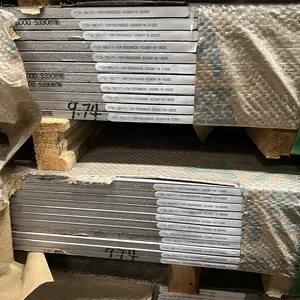
• Interleaved waterproof/anti-rust paper between sheets, secured with steel strapping and edge/corner protectors.
• Wooden pallet or crate packaging compliant with ISPM-15 fumigation standards for international shipment.
• Standard production lead time: 15-30 days depending on thickness, quantity, and testing requirements; ex-stock plate available for expedited dispatch.
• Shipping terms: FOB, CFR, CIF, or EXW; FCL/LCL sea freight standard, air freight available for urgent or sample orders.
10. Frequently Asked Questions
Q1: How does 2205 duplex differ from 2507 super duplex?
2205 (PREN ≥ 35) is the standard duplex grade suited to most chloride-bearing and moderately sour environments. 2507 super duplex carries higher chromium and molybdenum content (PREN ≥ 40) for more aggressive conditions such as high-chloride seawater or higher H2S partial pressures, at a higher material cost.
Q2: Is 2205 plate suitable for sour (H2S) service?
Yes. 2205 is widely used in sour oil and gas service and can be supplied to meet NACE MR0175/ISO 15156 hardness and metallurgical requirements; specific service conditions should be confirmed against the applicable NACE/ISO limits at time of order.
Q3: What is the recommended operating temperature range?
2205 is generally suitable for continuous service from approximately -50°C to +300°C. Prolonged exposure between roughly 280°C and 500°C should be avoided due to the risk of 475°C embrittlement, which reduces toughness in the ferrite phase.
Q4: Is 2205 duplex plate magnetic?
Yes. Because the microstructure contains roughly 40-50% ferrite, 2205 is measurably magnetic, unlike fully austenitic grades such as 316L. This is a normal metallurgical characteristic of duplex stainless steels, not an indication of nonconformance.
Q5: What filler metal is used for welding 2205 plate?
Matching filler metals ER2209 (GTAW/GMAW wire) or E2209 (SMAW electrode) are recommended to maintain the correct austenite-ferrite phase balance in the weld metal and heat-affected zone.

Send Inquiry to This Supplier



You May Also Like
-
Stainless Steel Sheet 430 Cold Rolled 0.8-10mm GB/JIS Standard Metal PlateUS$ 1.85 - 3.95MOQ: 100 Kilograms
-
Precision Stainless Steel Sheet 316Ti 0.3-12mm Industrial Plate SuppliersUS$ 2.85 - 4.25MOQ: 100 Kilograms
-
304 Stainless Steel Sheet Brushed Finish 1-20mm Corrosion Resistant MaterialUS$ 1.85 - 2.45MOQ: 100 Kilograms
-
Stainless Steel Sheet 201/304/316 Stainless Plate Coil 0.5-12mm ThicknessUS$ 1.05 - 4.3MOQ: 100 Kilograms
-
SUS316 Stainless Steel Sheet Annealed Finish 2-25mm DIN JIS GB StandardsUS$ 2.9 - 4.35MOQ: 100 Kilograms
-
Stainless Steel Sheet 2205 Duplex Alloy 1-10mm Corrosion Resistant PlateUS$ 3.15 - 4.5MOQ: 100 Kilograms
-
304 Stainless Steel Sheet Polished Finish 0.8-12mm for Construction ProjectsUS$ 1.85 - 2.55MOQ: 100 Kilograms
-
316L Stainless Steel Sheet Industrial Grade 2-20mm for Marine ApplicationsUS$ 2.85 - 4.35MOQ: 100 Kilograms
-
Stainless Steel Sheet 430 Magnetic Grade 0.5-6mm GB/T 4237 PlateUS$ 1.75 - 4.05MOQ: 100 Kilograms
-
321 Stainless Steel Sheet Heat-Resistant Alloy Plate 1-25mm ASTM JISUS$ 2.95 - 4.25MOQ: 100 Kilograms


