








 Contact Platform Support
 Help Center
Glass Door Steel Filing Cabinet – Medical Record Storage | Adjustable Shelves | Easy Clean
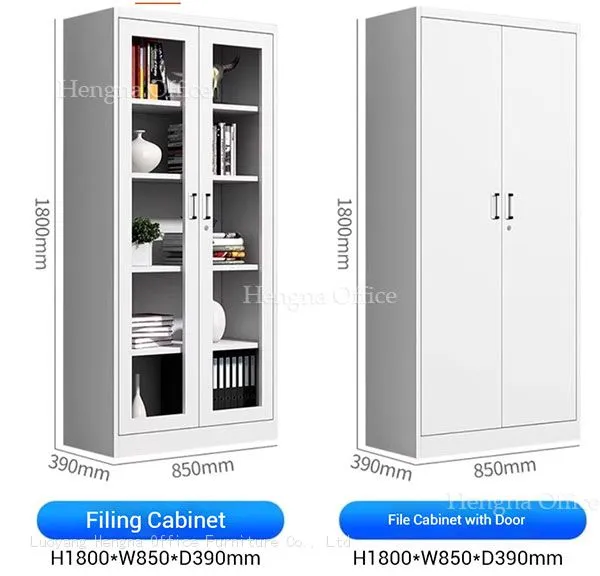
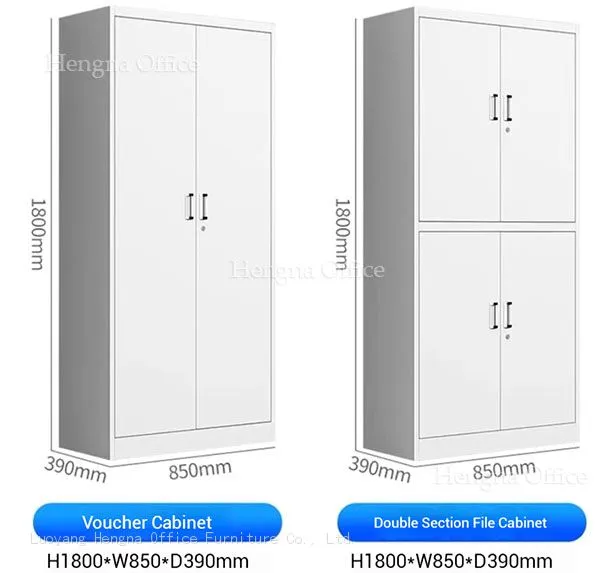
Product Spotlights



Related Products
-
 Glass Door Steel Filing Cabinet – Flat Pack KD Design | Adjustable Shelves | Easy AssemblyUS$ 198 - 400MOQ: 5 Combos
 -
Professional High-Density Mobile Shelving for Office File Storage Library Archive Cabinets With Locking SystemUS$ 60 - 250MOQ: 5 Combos
-
Space-Saving Mobile Steel Shelving Unit With Hand Push-OEM Manufacturer of Filling Archive Cabinets for Office and Library - HengnaUS$ 60 - 250MOQ: 5 Combos
-
Adjustable Mobile Shelving System With Locking System for Office and Industrial Use-Safe Document StorageUS$ 60 - 250MOQ: 5 Combos
-
Efficient Mobile Shelving for Museums and Art Galleries Global High- Quality Mobile Compact Shelving Manufacturer Based in LuoyangUS$ 60 - 250MOQ: 5 Combos
Glass Door Steel Filing Cabinet – Medical Record Storage | Adjustable Shelves | Easy Clean
The cabinet in the treatment room is the one nobody trusts
Walk into any clinic and look at the filing cabinet. It is usually in the corner, behind the desk, covered with a stack of papers that do not belong in it. The doors are solid. The paint is chipped. The drawers stick. And every time a patient file needs to be pulled, someone opens the door, squints into the dark, and starts flipping.
That cabinet was chosen because it was cheap. It was not chosen because it works.
In a medical setting, a filing cabinet is not furniture. It is part of the workflow. Patient files, insurance forms, lab results, prescription records — these documents get pulled during appointments, filed between patients, and stored for years. The cabinet has to do three things: let you find the file fast, let you clean it between patients, and keep it locked when you are not in the room. Most medical filing cabinets fail at least one of these.
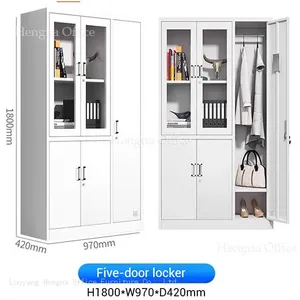
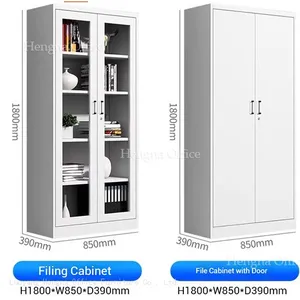
This cabinet does not. It is a glass door steel filing cabinet built for medical record storage: transparent doors that let you see the file without opening, an epoxy powder coat surface that wipes clean with standard disinfectant, and a locking mechanism that keeps patient files secure. It is built for the treatment room, the records room, and every space in between where medical documents live.
The hygiene problem nobody talks about
Filing cabinets in medical settings take a beating. Hand sanitizer drips on them. Coffee spills on them. Disinfectant spray hits them daily. Over time, the finish on a cheap cabinet starts to peel, crack, and absorb moisture — creating exactly the kind of surface that harbors bacteria.
The standard in medical environments is not just “wipe it down.” The standard is that the surface has to hold up to daily chemical exposure without degrading. This is where the finish matters more than the steel.
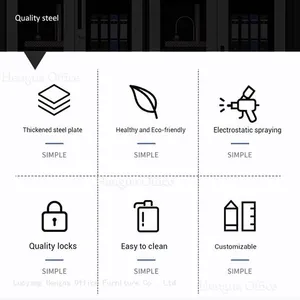
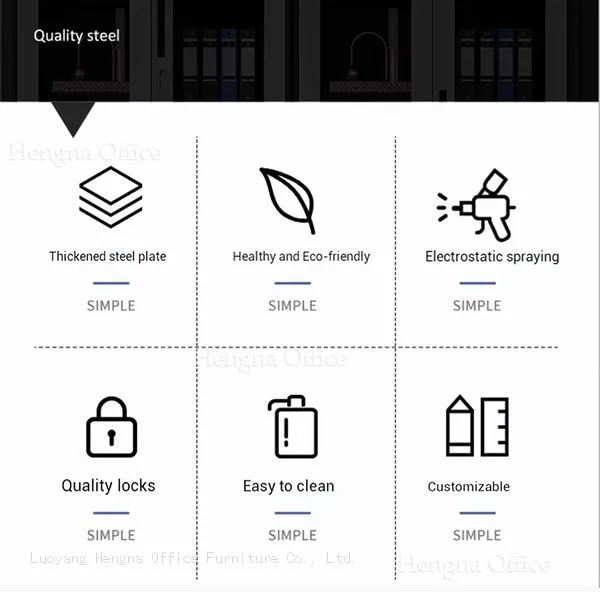
This cabinet uses an epoxy powder coat finish, applied electrostatically and cured at high temperature. The result is a hard, smooth surface that does not peel, does not crack, and does not absorb moisture. When a nurse wipes it down with hospital-grade disinfectant between patients, the surface stays intact — no peeling, no flaking, no residue.
| Standard painted cabinet | This cabinet |
|---|---|
| Paint chips after 1-2 years of chemical exposure | Epoxy coat holds for years without degradation |
| Surface absorbs moisture, harbors bacteria | Smooth, non-porous surface wipes clean |
| Disinfectant causes peeling and discoloration | Resistant to standard hospital-grade chemicals |
| Requires replacement when finish fails | Maintains finish through years of daily cleaning |
For a clinic that cleans surfaces between every patient, the cabinet finish is not a nice-to-have. It is a compliance issue.
Glass doors: see the file, pull the file, move on
A patient is in the chair. The dentist needs their X-ray history. The assistant walks to the filing cabinet, opens the door, scans the folders, finds the right one, pulls it, and closes the door. That sequence takes thirty seconds to a minute, depending on how organized the cabinet is.
Now multiply that by twenty patients a day. Twenty cabinet openings, twenty scans, twenty closings. In a week, that is a hundred trips to the cabinet, each one taking a minute of the assistant’s time.
With glass doors, the sequence changes. The assistant walks to the cabinet, looks through the glass, sees the folder, opens the door, pulls it, and closes the door. The scan happens before the door opens. The difference is not dramatic in a single interaction — but across a week, across a month, across a year of daily clinic work, the minutes add up to hours.
Glass doors do not just save time. They reduce errors. When you can see the contents before opening, you are less likely to pull the wrong folder. In a medical setting where pulling the wrong patient file is a compliance issue, that visibility is not a convenience — it is a safeguard.
Adjustable shelves for the files you actually store
Medical offices do not store one size of document. There are standard letter-size patient folders, oversized X-ray envelopes, thick insurance claim packets, and storage boxes for long-term archiving. A cabinet with fixed shelves wastes space — too much room above the small folders, not enough room for the large ones.
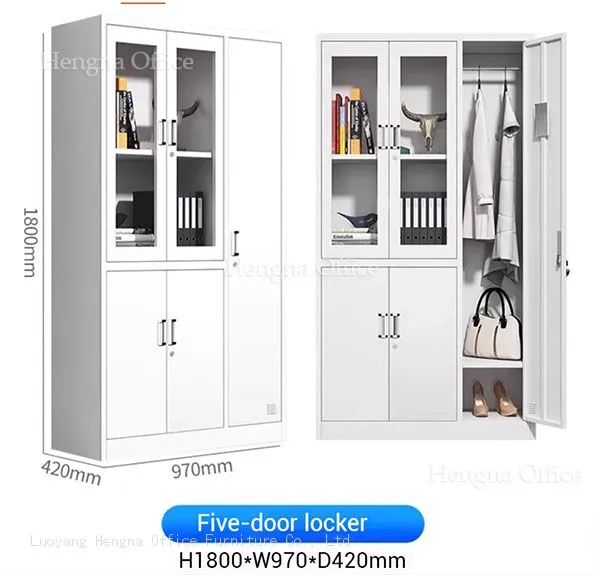
This cabinet has adjustable steel shelves. Each shelf can be moved up or down to match the height of the documents you store. The standard configuration is five shelves, giving six storage levels. X-ray envelopes need more vertical space than standard folders. Insurance packets need more than prescription records. The shelves adjust to fit.
The shelves are steel, not particleboard or laminate. In a medical environment where humidity and chemical exposure are constants, particleboard swells and delaminates. Steel does not.
Patient confidentiality: lock it and forget it
Every medical record is confidential. Every clinic has a policy about who can access patient files. The cabinet has to support that policy with a lock that works — not a flimsy latch that pops open with a nudge, but a real locking mechanism that holds.
This cabinet comes with a standard steel locking mechanism. The lock engages across the door frame, not just at the handle. When the cabinet is locked, the files inside are not accessible — not to visitors, not to cleaning staff, not to anyone who does not have the key.
For clinics that need to meet HIPAA or equivalent data protection standards, the lock is not optional. It is part of the compliance checklist.
Where this cabinet works in a medical facility
Dental clinics
Patient charts, X-ray envelopes, treatment plans, and insurance forms — all stored in glass door cabinets that let the assistant find the right file without opening every door.
General practice clinics
Medical histories, prescription records, lab results, and referral letters — organized by patient number, visible through glass, retrievable in seconds during appointments.
Specialty clinics (dermatology, ophthalmology, ENT)
Patient files with oversized attachments — imaging reports, test results, and specialist referral documents — stored in adjustable shelves that accommodate different file sizes.
Hospital outpatient departments
High-volume patient files that get pulled and filed dozens of times a day — the glass door design reduces retrieval time, and the epoxy surface stands up to constant cleaning.
Pharmacy records rooms
Prescription records, controlled substance logs, and pharmacy audit documents — locked for confidentiality, visible for quick retrieval during compliance checks.
Color coding for medical file organization
The cabinet color is not decorative — it organizes the records room:
White — active patient files (current appointments)
Grey — archived patient files (completed treatment)
Blue — insurance and billing documents
A row of color-coded cabinets tells anyone in the room which cabinet holds which category of files, before they read a single label. In a busy clinic where multiple staff access the records, that visual system prevents mistakes.
The spec at a glance
| Item | Spec | Why it matters |
|---|---|---|
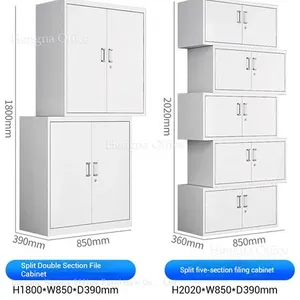
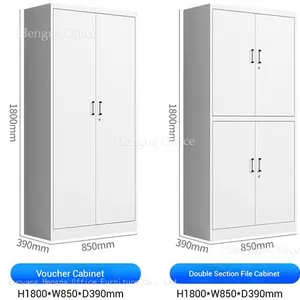
| Height | 1800mm | Full-height; fits standard clinic rooms |
| Width | 900mm or 970mm | Fits between standard medical furniture |
| Depth | 400mm or 500mm | 400mm for folders, 500mm for X-ray envelopes |
| Door type | Glass, transparent | See files without opening |
| Shelves | 5 adjustable steel shelves | Configure for folders, envelopes, boxes |
| Construction | KD knock-down, steel | Ships flat, assembles on site |
| Finish | Epoxy powder coat | Resists disinfectant and humidity |
| Colors | White, grey, blue | Color-code by file category |
| Lock | Standard steel lock | Patient file confidentiality |
KD advantage: arrives fast, assembles anywhere
The cabinet ships flat-packed (KD design), which means it arrives in a compact carton that fits through standard clinic doorways — no need to remove doors or disassemble existing furniture to make room for a new cabinet.
Assembly takes minutes with basic tools. The panels join with engineered fasteners, the shelves sit on adjustable brackets, and the glass doors hang on pre-drilled hinges. A clinic can receive the cabinet in the morning and have it filled with patient files by the afternoon.
For distributors and medical supply companies, the KD design means more units per container, lower freight costs per cabinet, and faster delivery to clinics that need the cabinet now — not in six weeks.
Built for export — factory-direct, your spec
This glass door steel filing cabinet is made by a steel furniture factory in Luoyang, China, and it is exported to clinics, hospitals, and medical facilities worldwide:
Factory-direct pricing, with drawings and packaging spec included in every quote
KD design for economical shipping and easy on-site assembly
OEM and ODM welcome — your logo, your colors, your branding on the packaging
Epoxy powder coat finish tested for medical-grade chemical resistance
Standard and custom colors — match your clinic’s filing system or corporate identity
Whether you are a clinic manager outfitting a new treatment room, a medical supply distributor, or a hospital procurement department, the process is the same: confirm the spec, check the sample, receive the container.
Questions clinic managers ask
What makes a filing cabinet suitable for medical records?
Three things: a surface that holds up to daily disinfectant cleaning, glass doors for quick file retrieval, and a lock for patient confidentiality. Standard office filing cabinets are not designed for medical environments — their finish degrades under chemical exposure, and they lack the security features that patient data protection requires.
How do you clean this cabinet?
The epoxy powder coat surface wipes clean with standard hospital-grade disinfectant. No special cleaning products are needed. The surface does not peel, crack, or absorb moisture, so it maintains its integrity through years of daily cleaning.
Is the lock secure enough for patient files?
The cabinet uses a standard steel locking mechanism that engages across the door frame, not just at the handle. When locked, the files are not accessible to anyone without the key. The lock meets the physical security requirements for confidential document storage.
Can I adjust the shelves for different file sizes?
Yes. Each shelf sits on adjustable brackets that can be moved to any position along the upright rails. Standard letter-size folders, oversized X-ray envelopes, and thick insurance claim packets all fit — you set the shelf heights to match your files.
What is the difference between this and a standard filing cabinet?
A standard filing cabinet has solid doors, a painted finish, and fixed shelves. This cabinet has glass doors for visibility, an epoxy powder coat for chemical resistance, and adjustable shelves for different file sizes. It is built for medical environments, not offices.
How does delivery work?
Sea freight worldwide, flat-packed. Send your port, quantity, and configuration, and we will reply with the packaging dimensions, container plan, and delivery time.
The cabinet your clinic actually needs
A medical filing cabinet is not a place to store paper. It is part of the clinical workflow — the thing that lets your assistant find a patient file in three seconds instead of thirty, the surface that holds up to daily disinfectant, and the lock that keeps patient data where it belongs. This cabinet was built for that workflow. It is not the cheapest cabinet. It is the one that works in a clinic.
Request a quote with your configuration and your port. We will confirm the spec, the colors, and the freight in one reply.

Send Inquiry to This Supplier



You May Also Like
-
Hengna Blueprint Storage Cabinet for Architects | Large Format Plan File Cabinet for Office SupplierUS$ 99 - 199MOQ: 2 Sets
-
Heavy Duty Blueprint Cabinet | Large File Storage for Engineering & Construction PlansUS$ 99 - 199MOQ: 2 Sets
-
Plan Storage Cabinet for Office & Studio | Blueprint File Organizer With Adjustable ShelvesUS$ 99 - 199MOQ: 2 Sets
-
Hengna Steel Blueprint Cabinet for Architects & Engineers | Durable Storage for Large Documents ManufacturerUS$ 99 - 199MOQ: 2 Sets
-
Blueprint File Cabinet With Locking Doors | Secure Plan Storage for Offices & Studios DistributorUS$ 99 - 199MOQ: 2 Sets
-
Hengna Modern Corporate Blueprint Cabinet - Secure Drawing Storage for Professional WorkspacesUS$ 99 - 199MOQ: 2 Sets
-
Professional Print Shop Blueprint Cabinet - Large Capacity File Storage for High-Volume PrintingUS$ 99 - 199MOQ: 2 Sets
-
Hengna Engineering Drawing Cabinet - Specialized Blueprint Storage for Design Institutes SupplierUS$ 99 - 199MOQ: 2 Sets
-
Industrial Blueprint Storage Cabinet - Heavy-Duty Drawing Organization for Manufacturing FacilitiesUS$ 99 - 199MOQ: 2 Sets
-
Hengna Office Blueprint Cabinet - Secure Document Storage for Administrative Facilities SupplierUS$ 99 - 199MOQ: 2 Sets


