








 Contact Platform Support
 Help Center
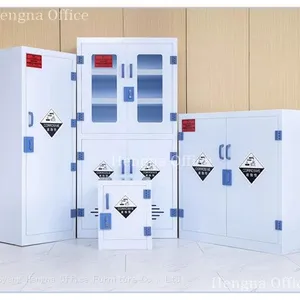
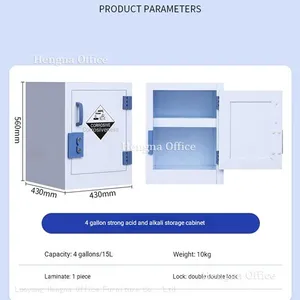
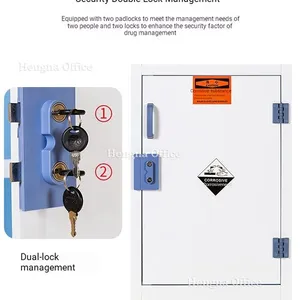
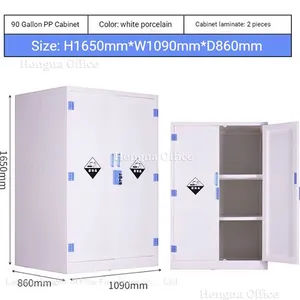
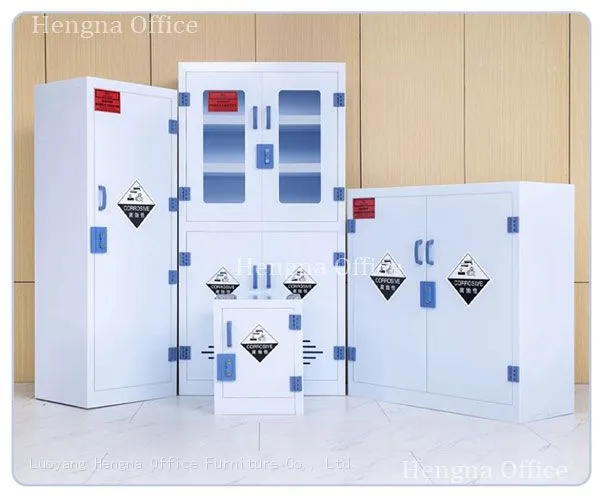
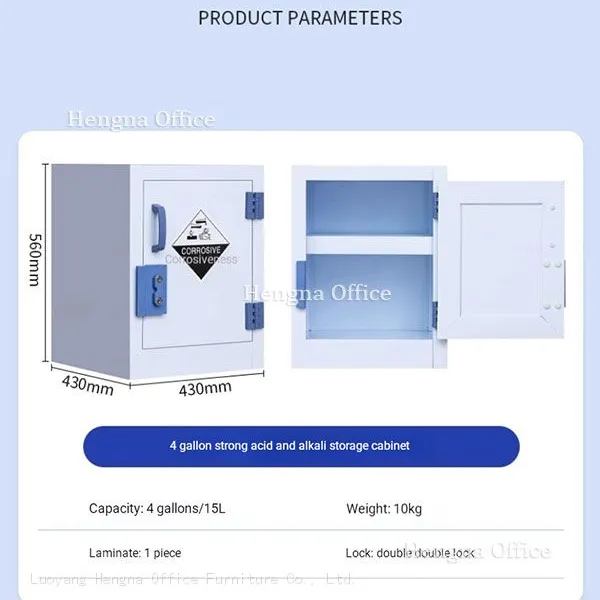
Polypropylene Acid Cabinet HN-PP400 — Fully Molded PP Body Outlasts Steel Cabinets in Wet Labs | 1-Yr Warranty

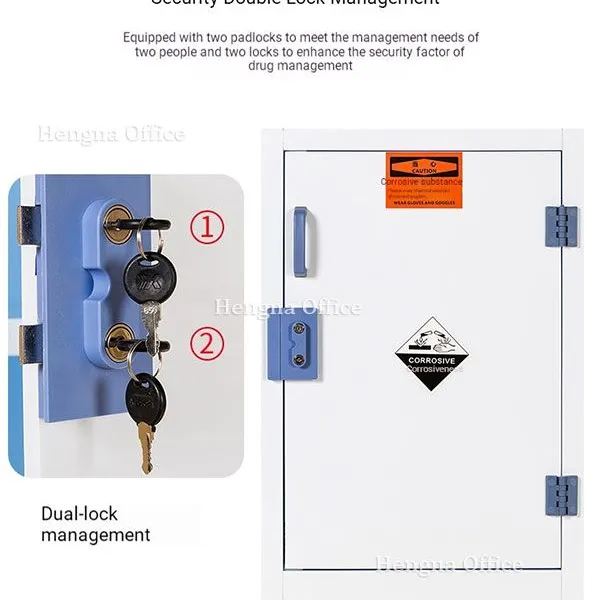
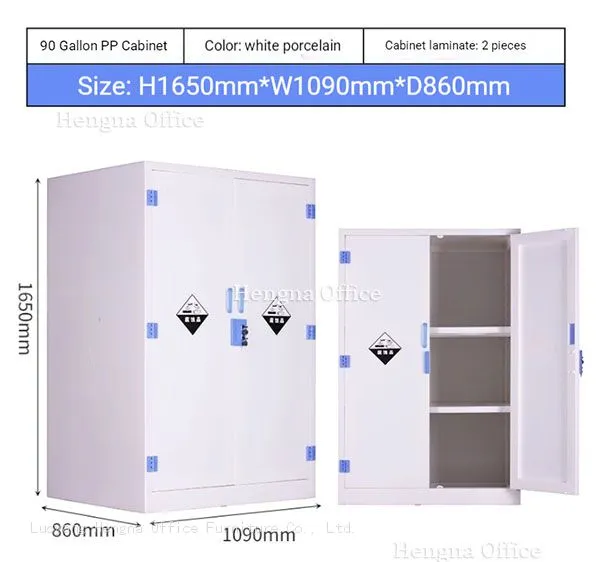
Product Spotlights



Related Products
-
 4 - Gallon Corrosion-resistant Safety Cabinet for Hazardous Chemicals Acid SupplierUS$ 340 - 500MOQ: 5 Combos
 -
22 Gallons /80 L PP Acid - Base Cabinet: Safeguard Chemical Storage Supplier OEMUS$ 500 - 600MOQ: 5 Combos
-
Laboratory Polyethylene Acid and Corrosive Chemicals Safety Storage PP CabinetUS$ 340 - 600MOQ: 5 Combos
-
4 Gallon Laboratory PP Acid and Alkali Resistant Storage Cabinet With Adjustable Spill-Proof Shelf - OEM/ODMUS$ 500 - 600MOQ: 5 Combos
-
Full PP Anti-Corrosion Safety Cabinet for Corrosive Storage, White Porcelain, Leak-Proof DesignUS$ 500 - 600MOQ: 5 Combos
What a "wet lab" actually does to storage cabinets
A wet lab is not just a room with chemicals. It's a room with three factors working together against storage equipment:
High humidity. Humidity in a wet lab runs 50-70% on a normal day. Near sinks, washing stations, and autoclaves, it hits 80% or higher. That level of moisture in the air settles on every surface — cabinet doors, shelves, hinges, the space between the cabinet back and the wall.
Chemical vapor. Open reagent bottles, ongoing titrations, and fume hoods that don't capture everything release acid and alkali vapor into the room. The vapor concentration is low enough that people don't notice it, but high enough that it reacts with metal surfaces over time. Combines with humidity, the result is continuous low-level chemical attack on every exposed metal part.
Frequent water contact. Sink splashes. Hose spray from equipment cleaning. Condensation drips from water baths and chillers. Water finds the bottom edges of cabinets, the seam between the back panel and the side wall, the hinge pivot points.
A steel cabinet with a powder coat handles two of these three factors poorly. Humidity accelerates coating breakdown wherever the coating is thin — edges, corners, hinge mounts. Chemical vapor penetrates through coating micro-defects. Water pools at the bottom seam and works its way under the coating through capillary action.
A polypropylene cabinet handles all three. PP is not affected by humidity. Chemical vapor does not react with the surface. Water sits on PP without being absorbed or causing corrosion. The material itself is the barrier — there is no coating to fail.
The replacement cycle: steel in wet labs has a predictable timeline
Based on feedback from labs that switched from steel to PP, the failure sequence for steel cabinets in wet environments follows a pattern:
Year 1-2. Powder coating looks intact. Hinges and latches start showing surface rust at the contact points. The bottom edge of the door may show discoloration from standing in water.
Year 2-3. Visible rust spots on the lower half of the cabinet where water and vapor concentrate. Coating starts lifting around the bottom corners. The lab manager notices the cabinet needs wiping down more often to catch rust flakes before they fall on the floor.
Year 3-5. The bottom shelf or base panel may need replacement. In severe cases, the cabinet floor develops pinholing. Lock mechanisms become stiff from corrosion. The cabinet is functionally still usable but requires regular maintenance attention.
Year 5+. Replacement is typically planned. The cabinet has reached the point where repair costs exceed the benefit of keeping it.
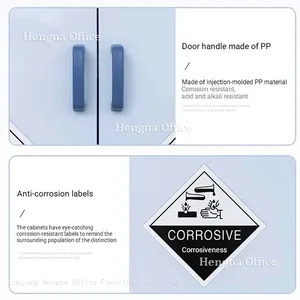
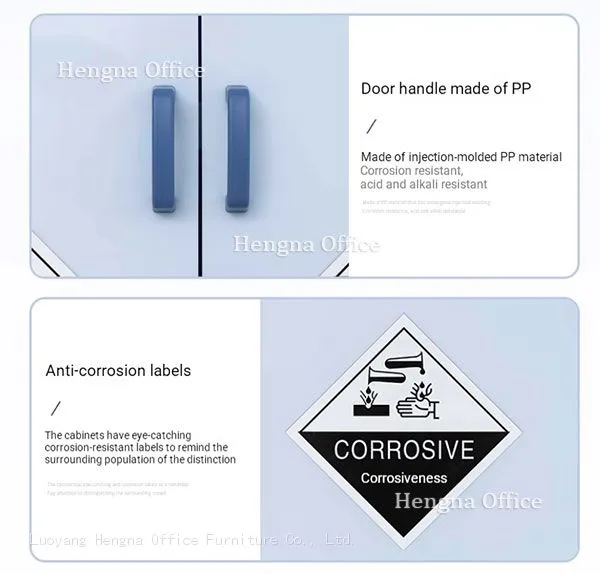
Compare with a PP cabinet in the same environment: the HN-PP400 shows no visible degradation at year 5 because there is nothing to degrade. The polypropylene does not react with humidity, vapor, or water exposure. Hardware is molded PP, not metal. The only wear indicator is physical — scratches, impacts, and UV exposure if positioned near a window.
The realistic service life in a wet lab is not determined by material decay but by the building's own renovation schedule. Most labs refit every 10-15 years. The PP cabinet lasts through one or two refit cycles. The steel cabinet doesn't make it past the first.
This is not a claim about steel being "bad." In a dry warehouse or office, a steel cabinet runs fine for decades. In a wet lab, the environment is incompatible with coated metal. PP addresses the incompatibility at the material level.
What "fully molded" means for wet lab performance
The HN-PP400 body is injection molded from polypropylene resin. The mold forms the entire back, sides, floor, and top in one cycle — no seams, no joints, no overlaps where moisture can wick in.
In a steel cabinet, the back panel is a separate piece attached with screws or spot welds. The gap between the back panel and the side wall, however small, creates a moisture trap. Once water or vapor enters that gap, it stays there because airflow doesn't reach behind the back panel. Over time, that trapped moisture corrodes the fasteners and the back edge of the side wall.
In a welded polypropylene cabinet (used for larger sizes like 60 and 90 gal), the weld is a material bond, not a mechanical fastener. The welding rod is the same PP as the sheets being joined. The joint is chemically identical to the surrounding material — no crevice, no differential expansion, no starting point for moisture damage.
The practical difference. A lab manager running a steel cabinet checks once every quarter for rust spots, coating damage, and hinge condition. A lab manager running a PP cabinet wipes it down and moves on. The inspection checklist item for a PP cabinet in wet storage reads: "Visually inspect cabinet integrity." That's it. No repainting. No touch-up. No bottom shelf replacement. The cabinet either works or it doesn't, and it takes years of abuse before it doesn't.
Wet lab applications that see the biggest difference
Coastal tropical labs. Singapore, Malaysia, Indonesia, Philippines, Vietnam, coastal China, southern India — ambient humidity runs 70-90% year round. Steel cabinets in these regions show rust within the first year even in climate-controlled labs, because the building's air intake brings in high moisture content that condenses in cooler areas (like inside a closed cabinet). PP cabinets eliminate this failure mode entirely.
Wastewater treatment plant labs. These labs test effluent samples using strong acids, strong bases, and heavy metal reagents. The testing area is often a small room adjacent to open treatment tanks, meaning humidity is high and the floor is frequently wet. Chemical vapor concentration in these rooms is higher than in most analytical labs because sample prep happens in an open bench, not a fume hood.
Food and beverage QC labs. pH testing, acidity titration, and preservative analysis generate moderate acid vapor throughout the workday. These labs also have steam from autoclaves and hot water from dishwashing stations. Steel cabinets in food QC environments develop corrosion at the same pattern as chemical labs, but the failure takes longer to be noticed because the coatings are thicker on food-grade equipment.
Pharmaceutical stability testing. Long-term stability chambers run at 25°C / 60% RH and 40°C / 75% RH. The cabinets used to store reagents and standards in these rooms experience constant high humidity combined with mild acid vapor from the reagents. Steel cabinets have a shorter service life here than standard lab conditions.
Electronics failure analysis labs. These labs use chemical etchants and solvents in warm, humidity-controlled environments. PP cabinets are chosen not just for corrosion resistance but because they do not shed metal particles that could contaminate sensitive analysis equipment.
What the 1-year warranty signals
The warranty covers manufacturing defects for one year. In practice, for a fully molded PP cabinet, defects that appear within the first year are rare — the molding process either produces a sound part or fails immediately during production. Most warranty claims on PP cabinets relate to shipping damage (cracks from impact during freight), not manufacturing issues.
The warranty exists as a standard industry term, not because PP cabinets have a high defect rate. It matches what most buyers in B2B procurement expect: one year coverage, non-wear parts replaced free of charge, shipping costs handled on a case-by-case basis.
Replacement parts covered: locks, hinges, shelf brackets, door seals, and the cabinet body itself if a material defect is confirmed. Not covered: damage from chemicals outside PP's published chemical resistance range, physical abuse, or modifications made after delivery.
FAQ
What is a "wet lab" exactly?
Any laboratory where water is used extensively — sink stations, washing areas, autoclave rooms, stability chambers, wastewater test stations. The common factor is sustained humidity above 50% combined with chemical vapor exposure.
Is the HN-PP400 suitable for dry chemical storage too?
Yes. It works in any environment where acid and alkali are stored. The wet lab focus is just where it provides the biggest advantage over steel.
Does assembled shipping work for international orders?
Cabinets up to 22 gallons ship fully assembled in foam-lined cartons. Larger sizes (60-90 gal) ship with doors removed and strapped to the crate body — two bolts per door, no tools needed.
What if I need several cabinets for a project order?
Hengna can palletize multiple units and crate them for ocean freight. For bulk project shipments, assembled units are stacked with foam boards between them. Request a project shipping quote for the packing arrangement.
Can I get a color other than white?
Yes. Standard is porcelain white. OEM orders accept Pantone-matched color. Minimum order for custom color: 10 units.
What's the warranty claim process?
Email photos of the defect. If the diagnosis confirms a manufacturing issue, the replacement part is shipped within 5-7 business days. For complete cabinet replacement (rare), the same process applies with shipping coordinated from the original shipment port.
Where can I get a quote?
Contact Hengna with the required capacity, quantity, and destination. FOB or CIF pricing. Quote within 24 hours.
About Luoyang Hengna Office Furniture Co., Ltd.
Nine years of laboratory cabinet production. The HN-PP series is manufactured in Luoyang, China, and exported directly — no distribution partners. CE certification active. OEM projects accepted from single units to facility-scale orders. For a quotation, send the required capacity and quantity. Response within 24 hours.

Send Inquiry to This Supplier


You May Also Like
-
12 Gallon Industrial PP Corrosive Chemical Safety Cabinet With Anti-Leak Trays and Optional Venting for Chemical PlantsUS$ 500 - 600MOQ: 5 Combos
-
Heavy-Duty Full PP Corrosion-Resistant Safety Cabinet With Sealed PP Hinges, Chemical Storage FacilitiesUS$ 500 - 600MOQ: 5 Combos
-
School Laboratory PP Reagent Storage Cabinet With Double Lock Security - Custom SizesUS$ 500 - 600MOQ: 5 Combos
-
Customizable PP Chemical Storage Cabinet for School Science Labs - Acid & Alkali Resistant With Spill-Proof Adjustable ShelvesUS$ 500 - 600MOQ: 5 Combos
-
PP Anti - Corrosion Safety Cabinet for Hospital Testing Labs, Metal - Free Rust - Proof BuildUS$ 500 - 600MOQ: 5 Combos
-
Research Lab PP Acid and Base Cabinet With Adjustable Shelves, ODM Branding SupportedUS$ 500 - 600MOQ: 5 Combos
-
Pharmaceutical PP Corrosion-Resistant Chemical Cabinet With Optional Exhaust SystemUS$ 500 - 600MOQ: 5 Combos
-
Full Polypropylene Acid Cabinet, Leak-Proof, Heavy-Duty, Suitable for Bulk Ordering Hengna OfficeUS$ 500 - 600MOQ: 5 Combos
-
Cleanroom PP Corrosion-Proof Storage Cabinet, Odor-Free and Easy to Clean|PP Chemical Storage CabinetUS$ 500 - 600MOQ: 5 Combos
-
Industrial PP Acid Base Cabinet With High Anti-Corrosion Structural Strength|PP Acid and Base Storage CabinetUS$ 500 - 600MOQ: 5 Combos

