








 Contact Platform Support
 Help Center
Supply of Explosion-proof Walls and Explosion-proof Panels for Chemical Plants. Sizes Can be Customized. Suyun Industry. Quick On-site Arrival of Anti-explosion Wall Workers



Related Products
-
 Explosion-resistant Walls, Firewalls, and Explosion-venting Walls. Supply of Fireproof Boards, Explosion-venting Boards, and Explosion-resistant Boards. Direct From the Manufacturer.US$ 12.92 - 13.23MOQ: 100 Square Meters
 -
Explosion Venting Wall, Explosion-proof Wall, Anti-explosion Simulation Analysis, Suyun Industry, Anti-explosion Board and Explosion Venting Board, Material Wholesale, Design and ConstructionUS$ 12.92 - 13.23MOQ: 100 Square Meters
-
Design of Explosion-resistant Walls and Blast-proof Walls. Free Consultation. Installation of Explosion-resistant Panels and Blast-relief Panels is Included. Suyun Industry. Fully Qualified.US$ 53.85 - 61.54MOQ: 10 Square Meters
-
Aluminum Coil 1050 1060 3003 H14 H24 Plain Aluminum Coil Roll Uncoated Aluminum Coil for Industry Roofing GutterUS$ 2000 - 2200MOQ: 1 Ton
-
1100 3003 Mill Finish Channel Letter Aluminum Sheet Plate Strip Coil 0.5mm 0.6mm 0.8mm 1mm Thick Channelume Aluminium RollUS$ 2000 - 2200MOQ: 1 Ton
Methods and requirements for explosion-proof walls
The explosion-proof wall uses explosion-proof slate as the main raw material. After melting, the four-roll centrifugal cotton-making process is adopted to spin the high-temperature melt of explosion-proof slate rock wool into non-continuous fibers of 4 - 7 microns. Then, a certain amount of binder, dust-proof oil, and water-repellent are added to the rock wool fibers. Through processes such as sedimentation, solidification, and cutting, for equipment in the industrial and mining industries, industrial kilns, steel, ovens, large-diameter storage tanks, and ship insulation, in different working environments, the rock wool material requires functions such as anti-condensation and moisture-proof. This requires pasting a protective layer on the outer layer of the insulation material. Lingxu has a variety of facings to choose from.
The explosion-proof wall can be made into rock wool products such as explosion-proof boards, rock wool strips, rock wool felts, rock wool blankets (rock wool felts), and rock wool tubes with explosion-proof boards and mineral wool. Various rock wool products are further divided into the following according to their main properties: explosion-proof boards, fireproof and explosion-proof boards, waterproof explosion-proof boards, aluminum-foil-laminated explosion-proof boards, high-density explosion-proof boards, and explosion-proof boards. Rock wool felts include rock wool joint felts and wire mesh rock wool felts. Rock wool tubes include waterproof rock wool tubes, fireproof rock wool tubes, and aluminum-foil-covered rock wool tubes. Rock wool is a type of mineral wool. Rock wool is made from natural rocks such as explosion-proof slate, gabbro, dolomite, iron ore, bauxite, etc. as the main raw materials, and is made into fluffy short and fine fiber cotton by high-temperature blowing.
The explosion-proof wall melts natural rocks, ores and other raw materials in a cupola or other tank furnaces (at a temperature below 2000℃), and blows them strongly with a pressure of 50 atmospheres and quenches them into fibrous form. Or use the wire-spinning method to let the molten liquid flow fall on multi-stage rotating rotors and spin it into fibers by centrifugal force. The diameter is generally 3 - 9 microns, and the bulk density is 50 - 200 kg/m^3. The thermal conductivity at room temperature is 0.029 - 0.046 W/m, and below 600℃ it is 0.111 - 0.145 W/m. It is non-combustible, non-mildew, and non-moth-eaten. According to the service temperature, it is divided into ordinary rock wool and high-temperature rock wool. Rock wool can withstand high temperatures. It is used as ablation-resistant and heat-insulating materials for single crystal furnaces, metallurgical casting, oil cracking, and space technology. It is also used as sound-absorbing and heat-insulating materials for buildings and equipment, and as a substitute for natural asbestos, used as cement products, rubber reinforcement materials, high-temperature sealing materials, high-temperature filtering materials, and high-temperature catalyst carriers, etc.
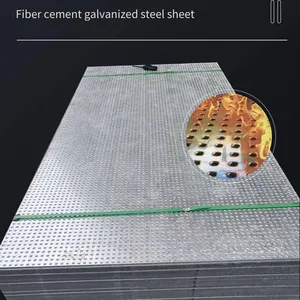
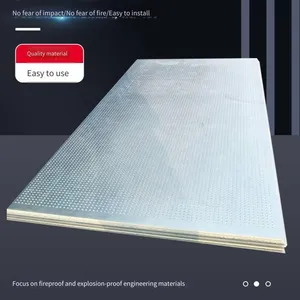
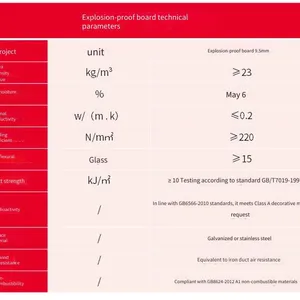
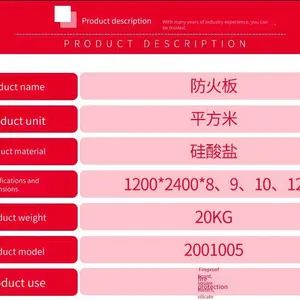
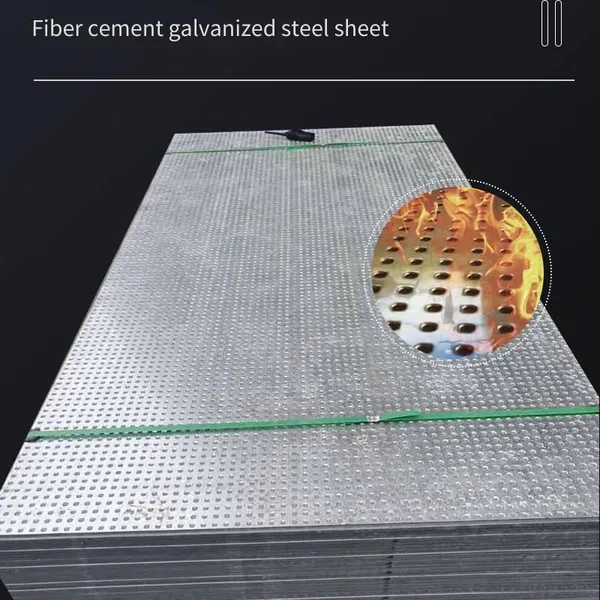
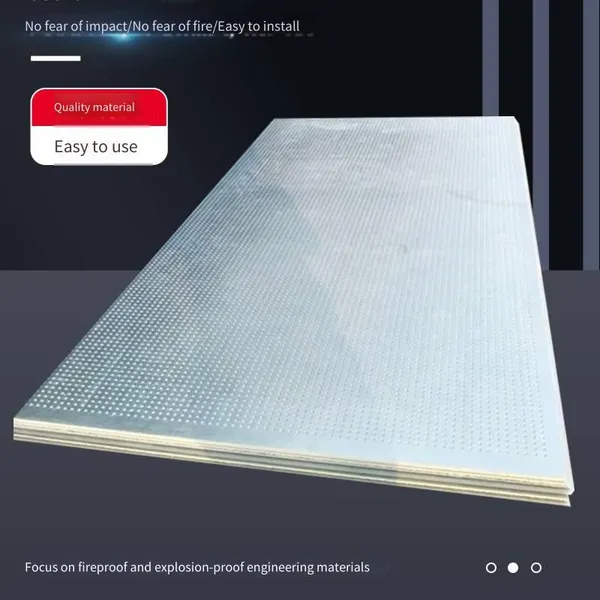
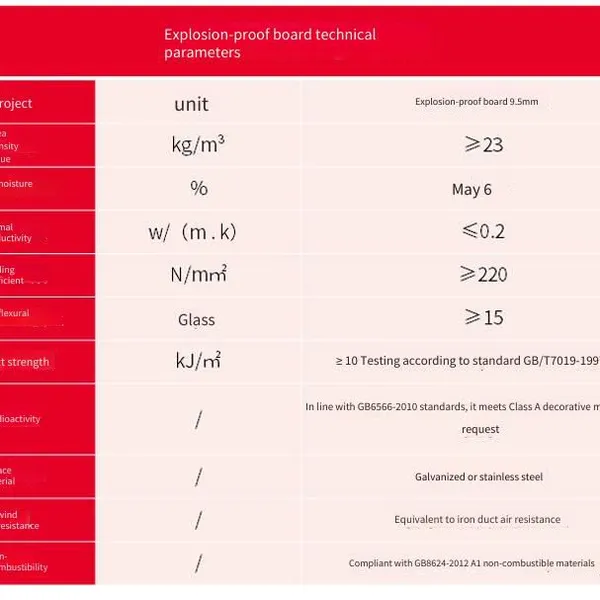
The explosion-proof wall is a composite board made by combining a fiber cement board and a perforated galvanized steel plate. Its material is a material that can be effectively predicted and has high fire resistance. Generally, its non-combustible grade should meet the standards of BS 476 and Part 4:1970. After experiments, it meets the recognition for explosion-proof boards.
Product features of the explosion-proof wall:
1. Strong water impermeability.
2. High tensile strength, large elongation, good dimensional stability, and strong adaptability to the shrinkage deformation and cracking of the base layer.
3. Good performance in resisting high and low temperatures. The explosion-proof board is suitable for building waterproofing in lower temperature environments, while APP is suitable for building waterproofing in higher temperature environments.
4. Good performance in puncture resistance, abrasion resistance, tear resistance, mildew resistance, and weather resistance.
5. Easy to install. The hot-melt installation method can be operated all year round, and the joints are reliable.
6. Waterproofing and moisture protection for key waterproofing projects and the roofs, walls, basements, bathrooms, etc. of industrial and civil buildings.
7. Waterproofing for buildings such as bridges, roads, parking lots, swimming pools, tunnels, and reservoirs.
8. Especially suitable for buildings in areas with frequent structural deformation and cold regions, as well as for the protection, wrapping, and moisture protection of pipes and anti-corrosion layers.
Explosion-proof walls can be made into rock wool products such as explosion-proof boards, mineral wool explosion-proof boards, rock wool strips, rock wool felts, rock wool blankets (rock wool felts), and rock wool tubes. Various rock wool products are further classified according to their main properties as follows: Explosion-proof boards, fireproof and explosion-proof boards, waterproof and explosion-proof boards, aluminum foil-laminated explosion-proof boards, high-density explosion-proof boards, and explosion-proof boards. Rock wool felts, sewn rock wool felts, and wire mesh rock wool felts. Rock wool tubes, waterproof rock wool tubes, fireproof rock wool tubes, and aluminum foil-covered rock wool tubes. Rock wool is a type of mineral wool. Rock wool is made from natural rocks such as explosion-proof boards, gabbro, dolomite, iron ore, bauxite, etc. as the main raw materials, and is made into fluffy short and fine fiber cotton through high-temperature blowing.

Send Inquiry to This Supplier


You May Also Like
-
Pre-painted Color-Coated Aluminum Coil Sheets With PVDF 1060 3003 3004 5052 Customized Color for Roofing ConstructionUS$ 2800 - 3000MOQ: 1 Ton
-
6061 6063 Solid Aluminum Bar Extruded Anodized Round Positive Negative Tolerances Complete Range Zero-Cut SpecificationsNegotiableMOQ: 1000 Pieces
-
1100 3003 Mill Finish Channel Letter Aluminum Sheet Plate Strip Coil 0.5mm 0.6mm 0.8mm 1mm Thick Channelume Aluminium RollUS$ 2.8MOQ: 1000 Kilograms
-
Black Gold Silver Color Anodized Aluminum Sheet 1050 1060 3003 5052 Anodised Aluminium Plate for Signage and NameplateUS$ 3.5MOQ: 1000 Kilograms
-
Household Foil Rewinding Material Food Grade 8011 O 0.006-0.02mm Household Foil With Cutter Foil Jumbo Roll Rewinding MaterialUS$ 15MOQ: 1000 Rolls
-
Marine Grade 5000 6000 Series Aluminum Checkered Tread Plate 1.5mm / 2.0mm / 3.0mm 5 Bar Pattern Anti-Slip Ship DeckNegotiableMOQ: 1000 Kilograms
-
1060 3003 Orange Peel Aluminum Sheet, 5052 H24 Stucco Embossed Aluminum Plate, 0.5mm Orange Peel Pattern Aluminum SheetUS$ 3.5MOQ: 1000 Kilograms
-
Heavy Duty 12-20mic Industrial Food Grade Aluminum Foil Roll Jumbo for Cooking Baking 8011 0.006mm-0.02mm Aluminum FoilUS$ 15.8MOQ: 1000 Rolls
-
Aluminium Hydrophobic Fin Stock Foil 1235 8006 8011 Aluminum Foil Air Conditioner Heat Sink 0.006-0.02mm Factory PriceUS$ 16.4MOQ: 1000 Rolls
-
Heavy Duty 12-20mic Industrial Food Grade Aluminum Foil Roll Jumbo for Cooking Baking Bending 8011 0.006mm-0.02mm Aluminum FoilUS$ 5MOQ: 100 Pieces


